The travel blogging world is enormous, intensely competitive, and — for those who approach it strategically — still one of the most rewarding niches for building a genuine online authority. A well-placed travel guest post on the right platform doesn’t just earn a backlink. It puts your voice in front of an audience that’s already in discovery mode, already planning trips, already looking for exactly the kind of insider knowledge you carry.
But here’s what most guides won’t tell you: the travel niche has one of the highest rejection rates for unsolicited guest post pitches. Editors at established travel blogs receive dozens of submissions weekly, and the vast majority land in the bin before they’ve been read past the first sentence. Generic pitches, recycled topics, and thin content have conditioned editors to be ruthless gatekeepers.
This guide gives you the complete, practitioner-level strategy for getting published on high-authority travel blogs in 2026 — from vetting the right platforms and crafting pitches that cut through, to writing content that editors champion and readers bookmark. And if you want to skip the months of manual outreach and get straight to verified placements, we’ll show you exactly how PRNews.io makes that possible.
Why a travel guest post is still one of the highest-value content plays in 2026
Travel is one of the few content categories where readers arrive with intent already switched on. They’re not passively scrolling — they’re actively researching a destination, comparing itineraries, and making decisions that involve real money. When your content appears on a platform they trust during that research phase, you’re not just earning a backlink. You’re entering a purchasing and planning conversation at the moment it matters most.
The numbers confirm it. The global travel and tourism market is projected to generate $1.07 trillion in revenue in 2026 according to Statista, with online sales accounting for the majority of that — and already more than 80% of travel planning happens online. Travel blogs sit inside that research ecosystem as trusted, peer-level voices. A survey cited by OptinMonster found that 33% of US travellers actively use travel blogs for destination advice. That’s not a niche audience — it’s a substantial, commercially active one.
From an SEO standpoint, the travel niche offers unusually high link equity potential. Well-established travel blogs often carry domain authority scores in the 50–80 range, built over years of consistent, high-quality publishing. A single contextual in-content backlink from a publication in that range, pointing to a relevant piece of your own content, can meaningfully shift your keyword rankings in a way that 20 lower-quality directory placements can’t replicate. In-content backlinks generate 387% more referral traffic than bio-only links — and in travel, where referral traffic from trusted blogs converts at high rates, that differential matters financially, not just as an SEO metric.
For travel operators, tourism boards, accommodation providers, and independent travel writers, a consistent travel guest post programme is one of the most cost-efficient authority-building strategies available — provided you’re executing it against the right targets, with the right content quality, and the right pitch mechanics.
How to find and vet high-authority travel blogs worth your effort
The travel blogging landscape includes thousands of sites that technically “accept guest posts.” Most of them aren’t worth your time. The sites that will meaningfully move your domain authority, drive qualified referral traffic, and build your professional reputation occupy a much smaller, more discerning tier — and identifying them requires a few minutes of proper vetting, not a Google search and a bulk pitch blast.
Start with the three-tier framework. First, major travel publications with consistent editorial standards — platforms like Wanderlust, Lonely Planet’s community section, Matador Network, and Travel + Leisure’s contributor programme. These carry the highest domain authority (often 70+) and the most demanding editorial requirements. Getting accepted here requires a strong track record, a genuinely novel angle, and an impeccable pitch. Second, high-DA niche travel blogs — destination specialists, adventure travel platforms, budget travel blogs, luxury travel sites — with domain authority in the 45–70 range and genuine, engaged audiences. These are often the sweet spot for a first placement: meaningful SEO value, editorial rigour that protects that value, but a more accessible pitch process than the major mastheads. Third, regional and language-specific travel blogs that may have lower global DA scores but carry exceptional topical authority and audience trust within a specific geography — particularly valuable for tourism operators targeting specific source markets.
When vetting any travel site, apply a minimum threshold of Domain Rating 40+ (Ahrefs) and 1,000+ monthly organic visitors. Below that floor, the SEO equity transferred through a backlink is negligible and the audience reach doesn’t justify the content production effort. Beyond metrics, look for genuine editorial behaviour: are articles consistently well-edited? Are there clear guest contribution guidelines? Does acceptance require back-and-forth with an editor? Sites with real editorial oversight will also carry real audience trust — and it’s the combination of both that makes a placement genuinely valuable.
One signal many guest posters miss: check whether the publication specifies dofollow backlinks in its contributor guidelines. Some well-known travel blogs — Wanderlust being a noted example — explicitly state that no backlinks are included in contributor pieces. Knowing this before you invest time in a pitch prevents wasted outreach on placements that don’t serve your link-building goals.
For finding targets, combine Google search operators with your specific sub-niche. “[destination] + write for us”, “[destination] + guest author”, or “[travel niche] + guest post guidelines” surface platforms actively seeking contributors. For adventure travel: “adventure travel blog write for us.” For budget travel: “budget backpacking guest post guidelines.” These combinations surface intent-signalling publications rather than generic directories.
Off-page SEO in the travel niche runs on editorial trust. When authoritative trip-planning platforms link back to your site, search engines treat those links as industry-verified votes of confidence — and organic traffic is the metric that can’t be manipulated.
How to write a travel guest post that editors champion
Getting a “yes” on your pitch is only half the challenge. The guest post itself has to deliver on what you promised — and deliver it in the publication’s specific register, for their specific audience, at a quality level that makes the editor look good for commissioning it. That’s a higher bar than most contributors anticipate.
The first structural principle is actionability over narration. The most common failure mode for travel guest posts is what experienced editors call the “journal entry trap” — a beautifully written account of what the author experienced, with almost no information a reader can actually act on. Travel blog audiences don’t primarily want to know how you felt on a Tuesday in Lisbon. They want to know how to replicate the best parts of your trip, avoid your mistakes, and make informed decisions about their own plans. Practical specifics — actual costs, transport options, recommended accommodation price ranges, seasonal timing, logistics — are what transform a travel narrative into genuinely useful content.
Structure every travel guest post with clear H2 and H3 subheadings, short paragraphs of two to four sentences, and a logical progression that serves both the reader and search engines. A reader skimming for the practical information they need should be able to navigate the article by heading alone. That navigability also signals content quality to Google’s algorithms, which favour readable, structured content over dense blocks of prose.
The “So What?” factor should drive every paragraph. Before publishing any section of your article, ask whether a reader can take an action or make a better decision based on what you’ve written. If the answer is no, the paragraph is decoration — cut it or transform it into something useful.
Authenticity is a genuine differentiator in a niche flooded with glossy, frictionless travel content. If the guesthouse bathroom was cold, the border crossing took three hours longer than expected, or the famous viewpoint was underwhelming on a cloudy morning, say so. Readers trust writers who acknowledge reality. That trust is what converts a one-time reader into a returning audience member — and it’s what editors mean when they ask for content that’s “authoritative but personal.”
SEO optimisation for a travel guest post follows the same principles as any content targeting organic search. Identify a specific long-tail keyword — “budget solo travel Japan under $50 a day” rather than simply “Japan travel” — and include it naturally in the title, first paragraph, at least one subheading, and the meta description. Long-tail keywords in the travel niche are significantly less competitive than head terms, and because they carry specific intent, they attract readers who are genuinely planning rather than casually browsing.
On images: high-quality original photography is not optional for serious travel publications. Most editors will ask for images formatted to their specifications — typically 1200px wide minimum, landscape orientation, with clear licensing or original authorship. Send image assets via a shared Google Drive folder rather than embedding large files in an email, and label each image with descriptive filenames that double as alt text suggestions.
How to use PRNEWS.io for your travel guest post strategy
The most time-intensive part of any travel guest posting programme isn’t the writing — it’s the research, vetting, outreach, and negotiation that precede every single placement. Finding the right publication, confirming their metrics, identifying the correct editorial contact, waiting for pitch responses, managing follow-ups across multiple outlets simultaneously: for a consistent programme targeting five to ten placements per quarter, this outreach overhead can easily consume more time than the content production itself.
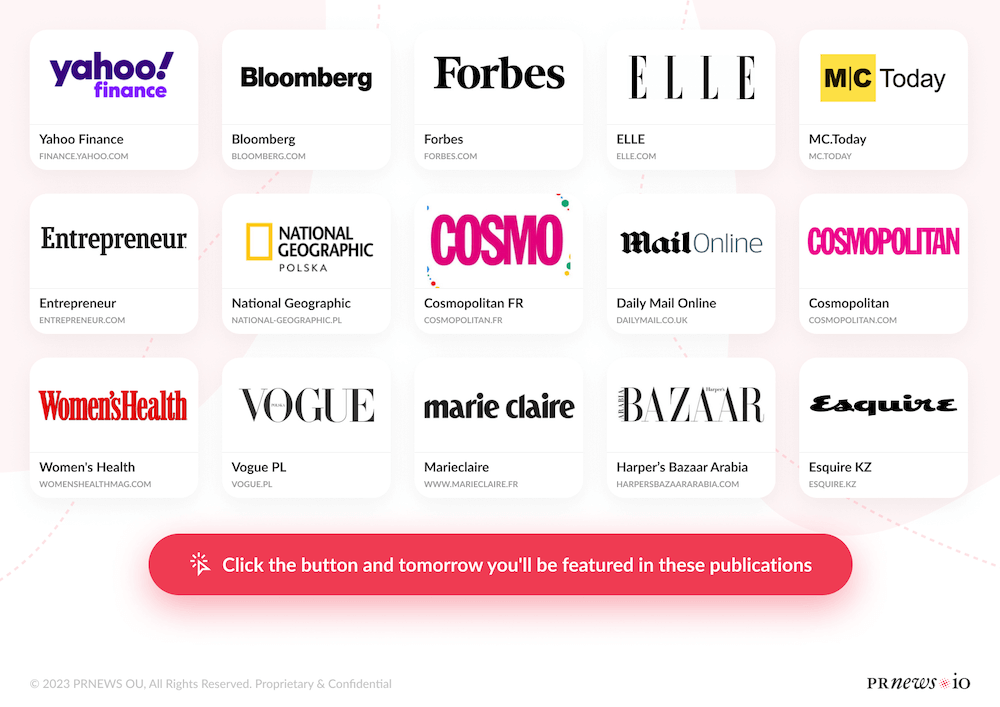
This is exactly the problem that PRNews.io solves. Founded in Ukraine in 2017 and now operating as one of the world’s largest content distribution marketplaces, PRNews.io gives you direct access to a verified catalogue of over 100,000 media outlets across 175 countries and 77 languages — with integrated data from Ahrefs, Semrush, Moz, and Majestic so every metric you see is real-time and accurate. You’re not guessing at domain authority or estimating traffic. You’re filtering with confirmed data.
Here’s the step-by-step workflow for using PRNews.io specifically for travel guest posting:
Step 1 — Filter the catalogue by niche and metrics. Navigate to PRNews.io’s publisher catalogue and filter by the Travel category. Apply your minimum Domain Rating threshold (40+ for meaningful SEO value, 55+ for premium placements). Set minimum monthly traffic to filter out low-audience outlets. Depending on your strategy, you can also filter by country or language — invaluable for targeting specific source markets if you’re a tourism operator or destination marketer seeking readers in the UK, Germany, Australia, or other high-value travel origin countries.
Step 2 — Review publisher profiles for editorial standards. PRNews.io’s publisher profiles show the outlet type, audience demographics, content guidelines, and pricing. Use this information to assess whether the publication has genuine editorial oversight and a real audience — not just metrics. Prioritise placements where the profile indicates review-and-approval processes rather than automated publication. Those are the placements that carry both SEO weight and genuine audience reach.
Step 3 — Select your placements and submit content. Once you’ve identified your target publications, PRNews.io’s fixed-price, no-subscription model means you pay only for the placements you select — no monthly retainer, no minimum commitment. You can submit your own content or commission PRNews.io’s content writing service to produce a platform-ready article on your behalf. Either way, the submission process eliminates the most friction-heavy stages of traditional guest posting outreach.
Step 4 — Track placements and scale systematically. PRNews.io’s dashboard provides visibility on publication status, live links, and performance data. As you identify which publication types and topic categories drive the most referral traffic and domain authority improvement, you can scale those categories deliberately — building a travel guest post programme with compounding returns rather than a series of disconnected one-off placements.
For travel brands, tour operators, accommodation providers, and independent travel writers looking to build consistent authority across verified global travel media, PRNEWS.io’s guest posting service provides the infrastructure to run that programme at scale — without the months of manual relationship-building that traditional outreach requires.
| Travel Blog Type | Best Content Angle | Typical DA Range | PRNews.io Filter Approach |
|---|---|---|---|
| Major Travel Publications | Trend pieces, destination deep-dives, narrative with strong practical angle | 70–90+ | Travel, DA 70+, English, high monthly traffic |
| Adventure & Outdoor Blogs | Route guides, gear logistics, safety planning, itinerary specifics | 45–70 | Travel + Adventure, DA 45+, English or target language |
| Budget Travel Platforms | Cost breakdowns, transport hacks, free activities, accommodation alternatives | 40–65 | Travel + Budget, DA 40+, filter by audience geography |
| Luxury Travel Media | Premium experiences, exclusive access, high-end comparisons, insider service tips | 50–75 | Travel + Luxury/Lifestyle, DA 50+, high ARPU audience |
| Regional/Destination Blogs | Local expertise, off-the-beaten-track itineraries, cultural specificity | 40–60 | Travel + target country/language, DA 40+, localised traffic |
Post-Publication: the force multiplier most travel writers ignore
Publishing a travel guest post is not the end of the process — it’s the beginning of the return on your content investment. The professionals who extract maximum value from every placement treat post-publication promotion as a systematic part of the workflow, not an afterthought.
Within 24 hours of publication, share the article across your own social media channels. Tag the host publication and, where you can identify them, the commissioning editor. This serves two purposes simultaneously: it drives additional traffic to the piece (which makes the editor look good for commissioning it) and it signals to the publication that you’re an invested contributor who amplifies their content — not a one-and-done backlink seeker. That distinction is what gets you invited back rather than requiring you to pitch again from scratch.
Write a brief, value-added summary of the piece for your own LinkedIn or professional blog, linking back to the full article on the host publication. This “reverse link” extends the referral traffic life of the placement beyond its initial publication window and builds a documented content trail that future editors can review when assessing your credibility as a contributor.
Respond to every comment the article receives on the host platform. Active comment engagement signals ongoing contributor investment — and travel blog audiences who see an author responding to questions convert at higher rates from casual readers to email subscribers or direct followers. The relationship between your guest post and your own growing audience compounds over time in ways that a passive placement simply doesn’t.
Finally, keep the editorial relationship warm. A brief thank-you note to the editor after publication — acknowledging the editorial improvements they made to your piece, or simply expressing genuine appreciation for the opportunity — costs two minutes and meaningfully increases the likelihood of future commissions. Most guest contributors never send it. Those who do are remembered.

Common mistakes that get travel guest posts rejected
The gap between a pitch that gets accepted and one that goes straight to the bin is often smaller than writers assume. Editors are pattern-matching for specific signals — both positive and negative — and a single common mistake can override an otherwise strong submission.
The most damaging: submitting a piece that’s been published elsewhere. Duplicate content is an immediate disqualification at every credible travel publication, and editors increasingly run submissions through plagiarism checkers before replying. Every piece you pitch must be original and exclusive — written specifically for that platform, not repurposed from your own blog or a previous submission.
Close behind it: over-promotional linking. Including multiple links back to your own homepage, product pages, or commercial content reads as SEO manipulation rather than genuine value-add — and 79% of editors already approach guest submissions with this suspicion primed. Every link you include should point to a specific, genuinely useful piece of content that serves the reader’s interest at the point where the link appears. A single contextual link to a relevant deep-dive article on your own site is both more editorially acceptable and more SEO-effective than three links to your homepage.
Submitting without reading the guidelines is a surprisingly common rejection trigger. Most established travel blogs publish specific contributor guidelines covering word count, image requirements, link policies, and preferred topics. Ignoring them signals to editors that your pitch is a bulk submission — exactly the kind of approach they’ve learned to dismiss without reading further.
And perhaps the subtlest mistake: writing in your own voice when the publication has a clearly established one. Travel blogs have distinctive registers — some are conversational and personal, others professional and instructional, others lyrical and narrative-driven. Your guest post should sound like it belongs on that specific platform, not like it was written and then placed there. The difference between the two approaches is what separates contributors who get one placement from those who get invited back.
Conclusion: build your travel authority publication by publication
A well-executed travel guest post programme is one of the most durable authority-building strategies available to travel brands and writers in 2026. The global travel and tourism market is approaching $1.07 trillion in annual revenue, with digital content sitting at the heart of how travellers research, plan, and make booking decisions. The publications that shape those decisions are the ones worth appearing in — not every platform that technically publishes guest content.
The approach that works is deliberate and specific: a short list of genuinely high-authority travel publications, pitches built around documented editorial gaps, content written with reader utility as the primary standard, and a post-publication routine that builds the editorial relationships that generate future opportunities.
And for the outreach and placement infrastructure — the part that typically consumes the most time relative to value delivered — PRNews.io provides a verified, globally scalable solution. With 100,000+ media outlets across 175 countries, real-time SEO metrics, and a no-subscription pay-per-placement model, the platform gives you the reach to match your content with the right travel audience worldwide, without the months of manual relationship-building that traditional outreach demands.
Start with three target publications. Do the gap analysis. Build the pitch around what they’re missing. And use PRNews.io to extend your programme into the verified travel media landscape at a pace that manual outreach alone can’t sustain.

FAQs: Frequently Asked Questions About Travel Guest Posts
What is a travel guest post and how does it work?
A travel guest post is an article written by an external contributor and published on an established travel blog or publication, typically in exchange for a contextual backlink to the contributor’s own website. The arrangement benefits both parties: the publication gets fresh content and a new perspective, while the contributor gains exposure to an engaged audience, domain authority from the backlink, and referral traffic. The quality of both the content and the host publication determines how much value the contributor actually receives from the placement.
How do I find travel blogs that accept guest posts?
The most targeted approach combines Google search operators with your specific sub-niche: use strings like “[destination] + write for us”, “[travel niche] + guest post guidelines”, or “[destination] + guest author”. This surfaces publications actively seeking contributors in your specific area rather than generic travel directories. Alternatively, PRNews.io provides a verified, filterable catalogue of travel publications with confirmed metrics — allowing you to identify suitable targets by domain authority, country, language, and audience type without manual vetting.
How long should a travel guest post be?
Word count requirements vary by publication, which is why reading editorial guidelines before submission is essential. As a general benchmark, most high-authority travel blogs expect a minimum of 1,200–1,500 words for destination or itinerary content, with practical how-to guides and deep-dives often running to 2,000–2,500 words. The correct answer for any specific publication is always what their guidelines specify — defaulting to a generic word count without checking is itself a signal that you haven’t done the basic research.
Can I include links back to my website in a travel guest post?
Most credible travel publications allow one or two contextual backlinks within the article body, provided they add genuine value for the reader and point to relevant, high-quality content. Some publications — notably several major travel titles — specify in their guidelines that no backlinks are included or that links are limited to the author bio. Check the contributor guidelines before pitching. When links are permitted, point to a specific deep-dive piece or case study on your own site, not your homepage — this is both more editorially acceptable and more SEO-effective.
Does travel guest posting still help with SEO in 2026?
Yes — with important caveats. A contextual in-content backlink from a travel publication with genuine editorial oversight, real audience traffic, and a domain authority above 50 carries meaningful SEO weight and generates qualified referral traffic. What has changed is Google’s approach to low-quality guest post farming: scaled, generic placements on low-authority outlets with no real audience now carry negligible SEO value and can actively harm a domain’s trust signals. The strategy that delivers durable results is a smaller number of genuinely high-quality placements rather than a high volume of indiscriminate ones.
How can I scale my travel guest posting without manual outreach?
Platforms like PRNews.io allow you to browse, filter, and purchase verified placements across 100,000+ media outlets — including a broad catalogue of travel publications — without the time investment of traditional cold outreach. You filter by niche, domain authority, country, and language; review publisher profiles; select your targets; and submit or commission content directly through the platform. For travel brands, tourism operators, or independent writers running a consistent guest posting programme, this approach reduces the research and outreach overhead dramatically while maintaining placement quality.