As we enter 2025–2026, the PR industry is undergoing a profound transformation of the information environment. While the number of journalists is declining, the role of artificial intelligence in creating, distributing, and consuming content is growing rapidly. Modern PR strategies focus on context, author expertise, interactive formats, and video and audio content. Brands are increasingly using multifunctional content, user-generated content (UGC), and employee-generated content (EGC) to adapt to new sources of trust and audience attention.
The biggest PR trends for 2025-2026
The field of PR is changing quickly. The most significant PR trends for 2025–2026 demonstrate that brands must reconsider their communication strategies, prioritize trust, and adjust to the evolving ways in which people discover and consume content. Here are the most relevant ones with examples:
Content optimization for AI search and LLMs
The most obvious trend is optimizing content for large language models (LLMs) and artificial intelligence (AI). In Europe, approximately one-fifth of companies utilize AI technologies in their operations, with large enterprises implementing them more actively than small ones. According to research, over two-thirds of organizations worldwide have integrated LLM tools into their workflows, reflecting these technologies’ growing impact on content creation and optimization.
In the future, AI will evolve into a personal assistant with integrated shopping capabilities through chat or voice. For now, businesses need to create content that will establish them as authoritative sources. This will result in more brand mentions in AI responses, increased recognition, and higher-quality customer attraction.
Optimizing content for AI search engines requires a comprehensive approach.
- Expert content (original research, guides, and tips).
- Structured data (H1-H4, lists, FAQs, how-tos, micro-markup).
- Using colloquial language instead of keyword repetition.
- Adding content in a question-and-answer format.
Another critical factor for ranking in LLM is the freshness and relevance of content because these are the most important factors in ranking. Currently, tools such as Ahrefs and Serpstat provide phrases for which websites are already ranked in AI-Overview, and these phrases can be used to create content.

Experience-driven content matters more than AI
Artificial intelligence has significantly streamlined and reduced the cost of the content creation process. According to Entail AI, modern AI tools enable content creators to produce large volumes of content much faster and with fewer time and resource constraints than traditional workflows. Consequently, it is now possible to create content on a large scale, achieve a high ranking in search engine results, and drive traffic more efficiently.
However, if everyone uses these tools, it becomes more difficult to stand out. Your unique perspective and experience are much more important. AI does not yet have that. According to AI creativity research published on Arxiv, AI models primarily generate content by recombining existing data patterns, rather than producing insights based on real-world experience or firsthand knowledge.
Therefore, rather than creating more AI-generated content, focus on creating content based on personal experience and a deep understanding of the topic. Conduct your own research and share success stories as well as cases where things went wrong.
Shopify Europe is a strong example of experience-driven content. Instead of using generic, AI-generated content, Shopify uses practical case studies of real businesses to share firsthand insights into how merchants build, scale, and optimize their operations. These stories are based on the real challenges, decisions, and results that businesses face, from entering new markets to overcoming operational or marketing obstacles.
SEO in social media is no longer optional
According to Sprout Social, if you only optimize the content on your website and blog but ignore content optimization on social media, you will miss out on 41% of Gen Z users, who use social media platforms like Instagram and TikTok to search for interesting places, products, and services.
Only 32% of people aged 13-28 use traditional search engines. Fortunately, social networks offer various optimization tools within their platforms. Here are some solutions for different platforms:
- TikTok
Trend Discovery is TikTok’s official tool for discovering popular keywords, hashtags, and sounds.
Meta Business Suite Insights analyzes which words in posts generate the most engagement. You can also use Inflact or Hashtagify.
- YouTube
Tools like vidIQ and TubeBuddy show which YouTube search keywords are popular and how competitive they are.
Interactive content drives higher engagement and conversions
The previous trend is the foundation for the next one, which relates to content creation. Research by HubSpot shows that text alone is no longer enough to drive conversions. Users expect additional value in the form of images, checklists, templates, research materials, videos, diagrams, and practical tools such as online calculators. Reports by Shopify and Adobe indicate that formats such as 3D product demos and AR filters enhance the user experience, help customers better understand products, and positively impact conversion rates.
IKEA is a prime example of interactive content in practice. The brand uses interactive formats to help customers better understand products before making a purchase. With IKEA Place and other AR tools, customers can visualize furniture in their own space and check sizes, colors, and placement. IKEA also offers online kitchen and wardrobe planners that allow users to design solutions tailored to their needs.
Real authorship and expertise shape search visibility
Within the framework of E-E-A-T, authorship and expertise are important in any subject area, not just specific niches. Google has updated its algorithms and can now identify real authors and experts. As stated in the Google Search Central and the Search Quality Rater Guidelines, search algorithms are placing greater emphasis on evaluating the authorship of content and whether the author possesses genuine experience and expertise. Therefore, publishing under a fictitious name is ineffective — real authors with experience build trust and improve search rankings.
In addition to being real experts, they should be visible not only on their social media profiles but also through mentions in other sources, Google citations, and participation in publications on well-known websites. Effective PR strategies focus on building an expert’s name through consistent mentions across multiple sources rather than concentrating distribution on a single platform. For example, they use platforms like PRNEWS.IO to secure placements on well-known websites. This approach strengthens authority signals, improves search visibility, and builds trust with audiences and algorithms.

UGC and EGC build trust and credibility
User-generated content (UGC) increases trust in a brand. UGC can be used in the form of customer reviews or photos, and it boosts sales. According to research by HubSpot, user-generated content (UGC) boosts engagement and drives sales. This makes UGC an effective way for businesses of all sizes to build trust without large marketing budgets.
The trend of employees creating content, or EGC (employee-generated content), will remain relevant, similar to UGC. This type of content helps brands showcase their internal culture, build trust with their audience, and support their HR brand. The Edelman Trust Barometer found that employees are among the most trusted brand spokespersons, second only to subject-matter experts. When employees share their experiences at work, they create a bridge between the company and the outside world and attract new talent.
McDonald’s actively uses user-generated content, encouraging customers to share photos, videos, and reviews of their restaurant experiences. At the same time, the company invests in employee-generated content, showcasing stories about employees’ career paths and daily work behind the scenes.
Short-form video dominates social media engagement

Short videos on TikTok and Instagram Reels have become the main content trend. These videos allow you to quickly share information about a product and receive 2.5 times more interactions than long videos.
According to Yaguara.co statistics, seventy-three percent of consumers use short videos to learn about products or services, and 47 percent of marketers believe short videos are more likely to go viral. Short videos are an effective format for grabbing attention and conveying key messages, with the ideal length being 11–60 seconds.
One good example of short videos getting people interested is Ryanair. The airline has established a notable presence on TikTok and Instagram Reels with humorous videos commenting on travel trends, customer experiences, and everyday situations in the airline industry. Instead of polished advertisements, Ryanair relies on quick, relatable videos that are often under 30 seconds and feel native to the platforms. This approach enables the brand to convey important messages, remain culturally relevant, and consistently generate significant engagement with minimal production effort.
Community platforms shape authentic brand communication
Brands should communicate with their customers where they already gather, such as in communities on Reddit, Discord, or LinkedIn. These platforms are not places for direct advertising, but rather for human communication. Share your news and successes, give useful advice, answer questions, and participate in conversations. As the HubSpot article on Reddit marketing points out, brands must participate as authentic members of the community first and as promoters second on community-driven platforms. Traditional social media tactics alone won’t work here.
Effective communication within communities fosters trust and long-term credibility, ultimately benefiting the brand. Users perceive answers and advice shared on these platforms as more objective and authentic because they come from real discussions rather than direct brand promotion. Additionally, high-quality conversations and problem-solving insights published in communities are frequently indexed by search engines. This allows brands to appear in search results when users look for answers to specific questions. Consequently, these platforms become effective spaces for informal, conversational communication that naturally integrates the brand into the user journey.
The crypto industry is a great example of community-driven communication. Rather than relying on direct advertising, brands like Coinbase, Ethereum, and Binance actively engage with users on platforms such as Reddit, Discord, and LinkedIn. Instead, these brands focus on open discussions, education, and transparent updates. This approach positions them as community participants rather than promoters. This approach helps build trust and credibility, fostering long-term relationships in highly competitive and trust-sensitive markets.
Video and audio content drive deeper engagement
Podcasts are here to stay. According to a Backlinko study, there will be 584.1 million podcast listeners worldwide by 2025. They are ideal for discussing complex topics, interviewing thought leaders, and providing practical insights. Additionally, highly specialized podcasts, such as those focusing on financial literacy, mental health, and technology, are growing in popularity.
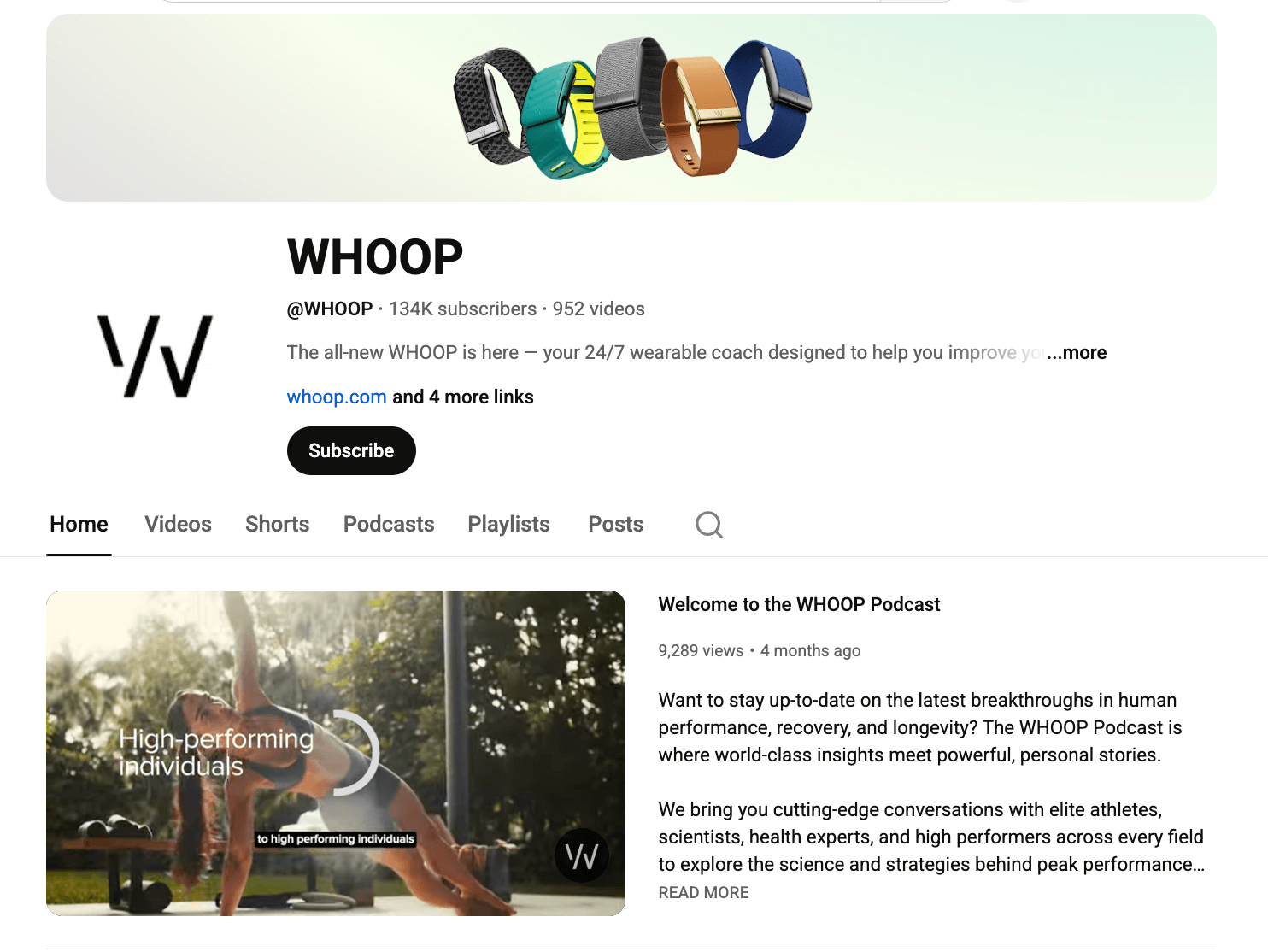
For example, WHOOP goes beyond text-based content by creating video clips and interactive advertising campaigns that effectively communicate the features and benefits of complex products. In a joint campaign with Infillion, It used TrueX interactive video advertising. Viewers were shown short videos explaining how WHOOP improves sleep and training performance. Then, they were given a clear call to action to sign up for a free trial.
It also produces an official podcast called the “WHOOP Podcast,” in which the founder and team discuss health, productivity, and high-performance habits. They also invite experts and share valuable insights with listeners. Additionally, the brand collaborates with renowned athletes and industry leaders. Notably, Cristiano Ronaldo, a WHOOP ambassador, lends his personal experience and authority to the brand, thereby reinforcing consumer trust and making the content more credible and authentic.
Content repurposing
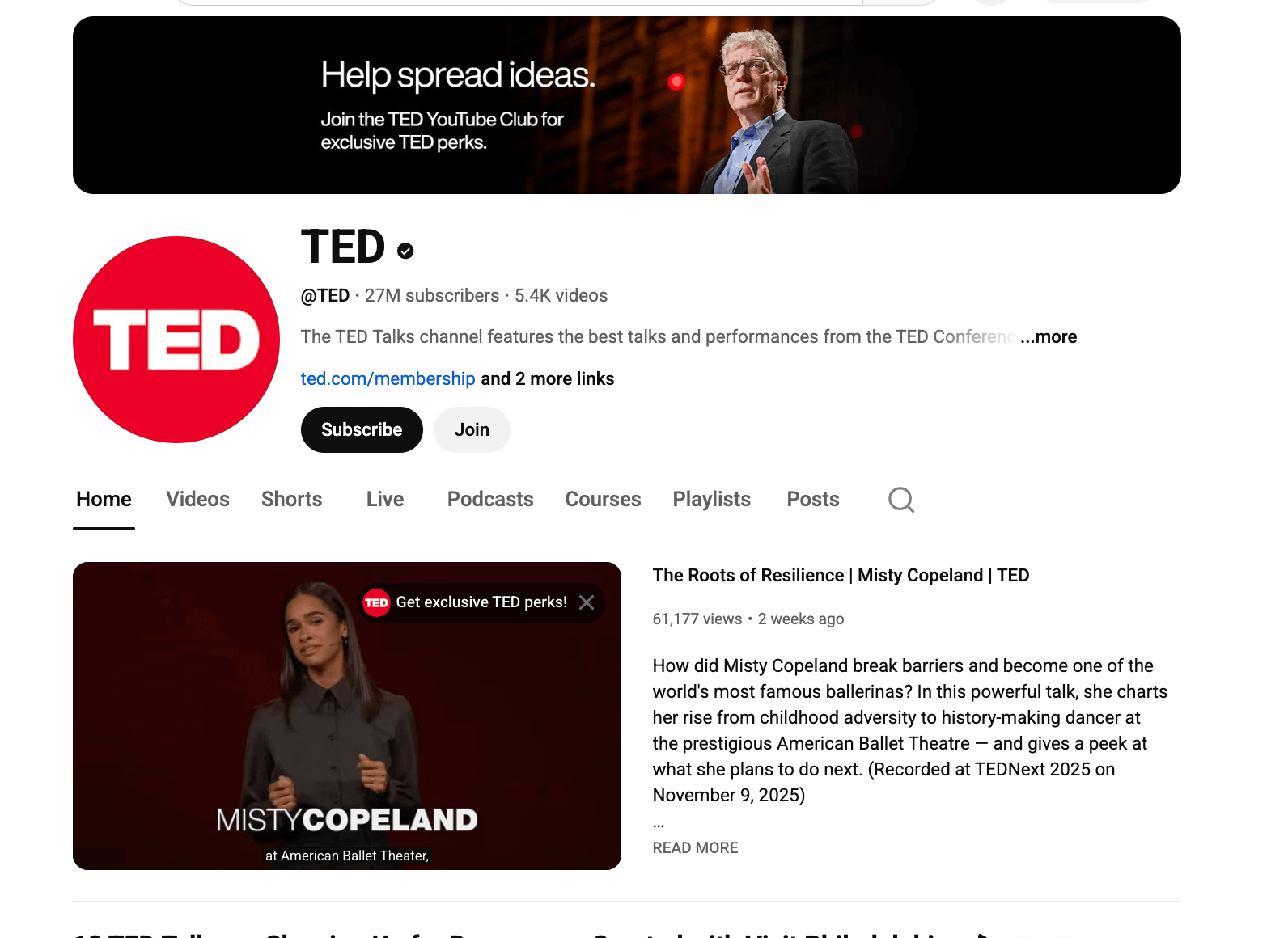
New content does not need to be created from scratch; it can be repurposed for different formats and platforms. For instance, TED Talks come in various formats, including video presentations, articles, short text summaries, social media quotes, and audio versions of presentations. The same speech is adapted for different channels of content consumption to reach audiences with different habits. Some people watch videos, some listen, and some find it more convenient to quickly read the key ideas. This approach allows you to scale your content, increase your reach, and strengthen your brand’s expertise without incurring additional production costs. At the same time, content from a website or blog can be used on social media.
Combating deepfakes and synthetic media
Deepfake technology represents a significant threat to trust in digital media. In 2025, companies must develop crisis plans to manage synthetic media threats. Deepfake incidents have already led to substantial financial losses, with an estimated $40 billion in fraud losses by 2027. PR teams must verify the authenticity of media assets and quickly address synthetic media crises.
Dynamic crisis playbooks
PR teams need to adopt dynamic, AI-driven crisis playbooks. These playbooks should be updated in real time, based on continuous monitoring, to differentiate between fleeting issues and those with staying power. Companies are using predictive AI to simulate various crisis scenarios, allowing them to prepare for potential issues before they arise.
The demand for dual fluency in PR professionals
As the PR industry evolves, professionals must possess both traditional communication skills and technical proficiency in data analysis and AI tools. Ongoing learning through platforms like LinkedIn Learning and Coursera is essential for staying competitive.
The rise of niche PR agencies
With 37% of PR agencies specializing in niche industries, there’s a growing demand for targeted expertise. This trend is evident as smaller agencies cater to specific sectors like fintech and healthtech. At the same time, fractional PR directors are becoming more common for startups needing senior strategic expertise on a part-time basis.
Hybrid work and employee engagement
As more PR professionals work in hybrid roles, maintaining high employee engagement is essential. Companies need to implement strong remote engagement strategies to ensure team collaboration and productivity.
To conclude
With the decline in the number of journalists and the increase in AI-generated pitches, PR teams must rethink their approach to media relations. Mass outreach and high-volume pitching will become less effective, and quality, relevance, and trust will become more important. In an increasingly competitive media landscape, teams that focus on building long-term relationships with a smaller group of key journalists and support their stories with original data, real expertise, and meaningful insights will be far more likely to earn coverage.