Media coverage of a product or service has become a crucial part of business marketing strategy. People have become more reliant on the media for information and opinions. Consequently, it’s natural that businesses wish to benefit from media coverage by providing their consumers with an extensive amount of content. If a company does not have the right coverage, it will quickly lose out on the public’s attention. That’s why understanding the benefits and the various options for creating various types of publications is important when you want to boost your business.
What is media coverage though? What are the benefits of media coverage for your project? And, finally how can you get effective media coverage? With this guide, we’ll give you the answers to all these questions.
What is media coverage?
Media coverage is content pitched by public relations (PR) experts or PR agencies and produced by journalists and writers to transfer a message of your brand or client. In other words, it is when a news outlet or publication writes a story about your business or includes you in its content.
If you or your company is mentioned in a credible media outlet that targets your perfect customers, it will have a much more significant impact on your brand reputation than the typical ad. It’s far more effective when an independent third party says good things about your business than if you say it about yourself.
Media coverage refers to the publication or broadcast of information about a company, product, or service by media outlets, including online publications, news portals, blogs, and social networks. Traditionally, media coverage relied heavily on earned media: journalists and editors deciding which stories to feature based on newsworthiness and editorial judgment. While earned media carries credibility, it is inherently unpredictable and difficult to scale.
Paid media coverage, by contrast, involves brands directly purchasing placements, ensuring visibility and control over the narrative. Native advertising—content crafted to blend seamlessly with the host publication—is another powerful form of media coverage that maximizes engagement while preserving editorial style and audience trust. Both formats are crucial for companies seeking to combine credibility, reach, and measurable results.
Why businesses and individuals need media coverage
Read on to find out the exact benefits of media coverage for your business or your personal brand:
Helps attract new clients
One of the greatest benefits of press coverage is that it will display your brand to a much wider audience to whom you didn’t have access previously. With your own website and marketing team, you are likely to only engage people who already know about your product or are looking to make a purchase. With wider coverage in the media and press, you can raise brand awareness, to attract entirely new audiences to your products and discover new target groups.
Media coverage can build a reputation
PR can help you accelerate and build your reputation quicker than you can do it yourself. By getting yourself featured in national or local outlets or even your local newspaper, people will look at you differently.
Another advantage of PR over other marketing techniques is that you’re getting a stamp of approval from a third person—the journalist or another influencer. This is a very effective way to earn lifelong loyal clients.
Media coverage is better than a Google review
While Google reviews are useful for people deciding whether to make a purchase with you, this will only get you so far. When prospects look you up online, a positive mention of you in a leading media outlet will do so much more to affect a customer’s decision than a Google review from a random person could ever do. Hence, a reliable publication can be your biggest cheerleader.
Media coverage leads to lasting connections
Media coverage is not only about making your brand look attractive to customers. It is also about connecting your business with the people who can make things happen. Media boost can quickly attract investors, collaborative partners, consultants and even more media outlets who want to message their stories to new audiences. In business, connections are everything and the media is often the most effective networking tool you can use.
For example, Marshall Communications, a boutique Maine-based PR firm, has been delivering tailored media strategies and earned coverage for clients since 1991, connecting regional brands with national outlets.
Empowers your SEO
SEO (search engine optimization) makes your website more appealing to search engines and its users. SEO is gold when it comes to PR. Being featured in online outlets or mentioned in articles or comment pieces greatly drives traffic to your website.
Types of media coverage (with examples)
Your brand can establish a strong presence in the market through the strategic use of four types of media coverage, each of which can be leveraged in different ways. The types of media coverage are as follows:
Paid media coverage
As its name suggests, paid media coverage is paid. You pay to have your brand mentioned on media platforms. With online media, your business pays for reach, views, and leads generated. This could include influencer marketing as a form of paid media coverage. Offline paid media coverage can consist of advertising on TV, radio, and print media.
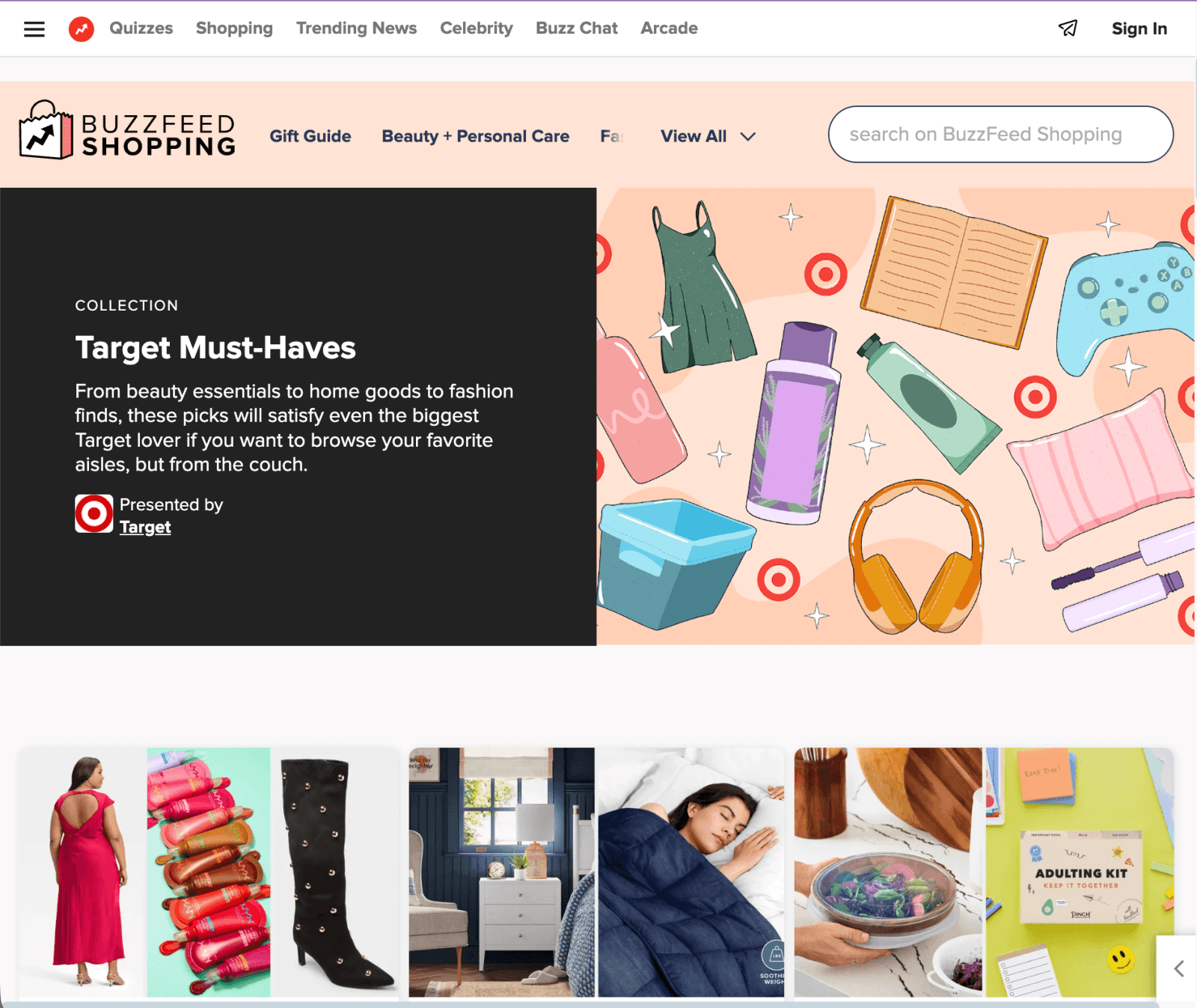
A clear example of paid media coverage is the “Target Must-Haves” collection from BuzzFeed Shopping, presented by Target. Although this content appears on BuzzFeed’s website in the same format as regular editorial shopping guides, it is clearly labeled as “Presented by Target.” Target pays for the collection’s placement and visibility, while BuzzFeed distributes it to its audience in an editorial format.
For example, a company could use PRnews.io to publish a press release or thought leadership article on a news distribution network. AdBlock360’s ongoing media strategy using PRnews.io is a strong real-world example of paid and earned media coverage. The company consistently ordered sponsored articles and brand mentions through PRnews.io, securing placements on well-known international media websites. Although the placements were paid for, the content appeared in trusted third-party publications. This allowed AdBlock360 to gain credibility, visibility, and backlinks beyond its own channels. Consequently, the brand reaped the benefits of earned media, such as increased trust, organic traffic, and wider recognition, despite the initial distribution being paid for.
Earned media coverage
This type of media coverage is earned, meaning your business did not pay for or contribute to it. In online media, for example, someone could tag your brand, or news portals could cover news about your brand.
Offline, it can be achieved through mentions of your brand on all platforms and during personal interactions.
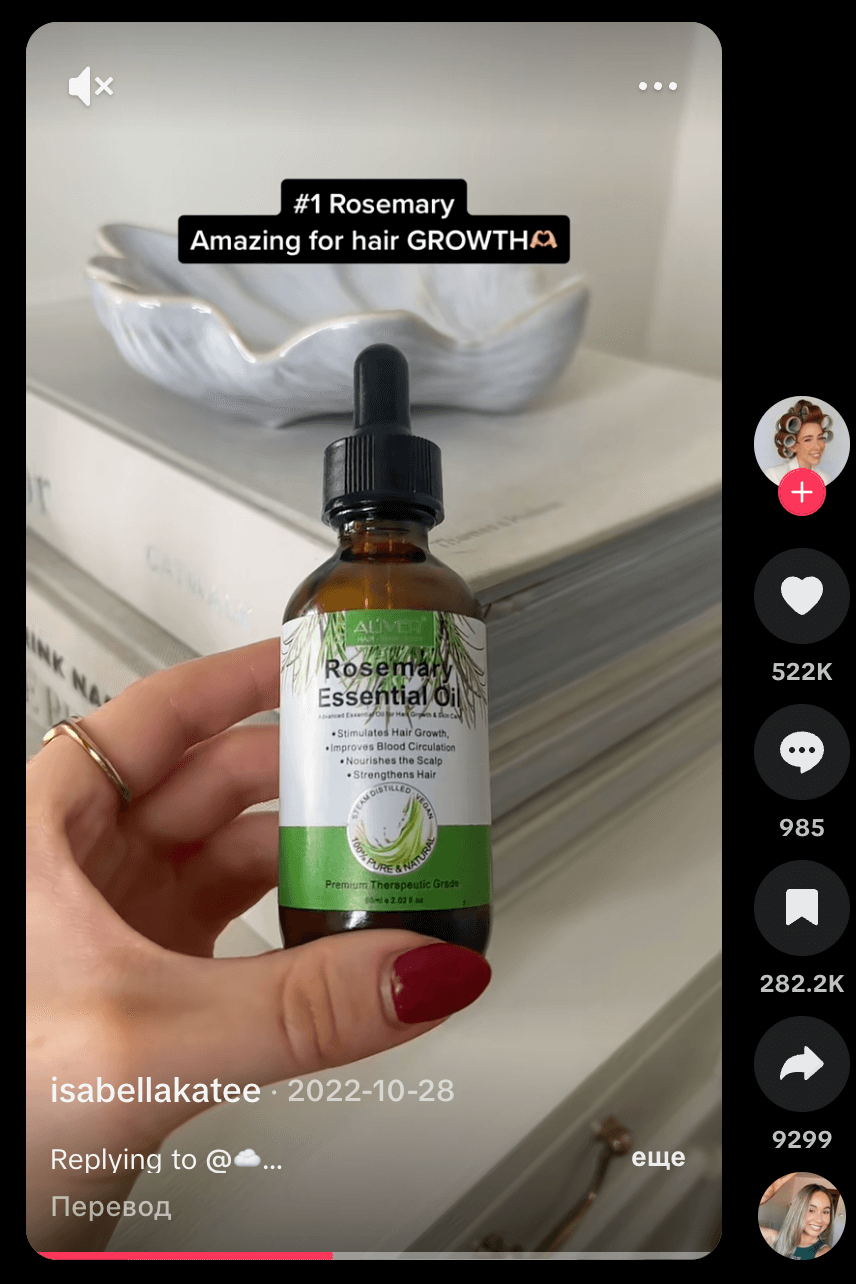
An example of earned media coverage combined with user-generated content is a TikTok video in which a creator shares personal recommendations for hair oils. In this case, the creator presents hair oils that she uses and recommends based on her experience.
There is no direct brand control over the content. The video gains reach organically through TikTok’s algorithm, audience engagement, and community interest.
Shared media coverage

Shared media coverage occurs when people share videos, posts, or other content published by your business.
For example, viral videos are shared by many people, and they are not paid for it.
One well-known example of this is Starbucks’ Red Cup Day. Starbucks publishes branded content on its social media channels to announce the limited-edition red holiday cups.
Customers then share photos and videos of the cups on TikTok, Instagram, and X (formerly Twitter), reposting Starbucks’ visuals and using branded hashtags.
Owned media coverage
The final type of media coverage is owned, meaning the platform used to publish content about your business is owned by your business. Examples include the company website, blog, and social media accounts. Offline examples include owned retail stores, brochures, and billboards.
One example of owned media coverage is when PRNEWS.io publishes original content on its platform that highlights a brand, product, or industry insight. The platform hosts a wide range of expert articles, case studies, and analytical materials emphasizing the importance of public relations and strategic media collaboration for businesses of all sizes. These publications demonstrate how PR can bolster brand credibility, increase market visibility, and promote long-term growth. They also provide practical guidance on implementing PR strategies in real business scenarios.
How to get media coverage for your startup (step-by-step)
Getting media coverage for a startup is harder than most founders expect. Unless you’re announcing funding, an acquisition, or a significant partnership, journalists won’t cover your company simply for existing. To succeed, you need a unique angle and a clear understanding of how the media works.
Step 1: Find a newsworthy angle (not “We launched”)
Ask yourself one simple question: Why would a journalist care about this story?
From a reporter’s perspective:
- Will this story make them look smart when they pitch it to their editor?
- Will readers actually find it interesting or useful?
Good angles include unique data or trends from your market, a surprising use case or customer story, an industry problem you can explain better than anyone else, and a broader trend your startup is part of.
So, don’t write: “We built a new product”. Instead, write: “What our startup learned after analyzing 50,000 transactions in [industry].”
Step 2: Be realistic about what media coverage delivers
Media coverage is not a growth hack. According to experienced founders and publicists, traffic spikes are usually short-lived, and customer acquisition is often minimal. Investor interest only increases if they missed your deal.
Before pitching, define your goal:
- Brand credibility?
- Backlinks and SEO?
- Thought leadership?
- Future relationship with journalists?
If you don’t know what you’ll do with your “15 minutes of fame,” media coverage won’t help much.
Step 3: Research journalists who already cover your topic
Journalists don’t want cold, generic pitches. Instead, you should:
- Find reporters who already write about your industry
- Read their recent articles
- Reference a specific story they’ve written in your pitch
This shows respect for their work and instantly increases your chances of receiving a reply. A tip from publicists: Journalists love use cases. If you have a customer, ask if they would be willing to be part of the story.
Step 4: Make the journalist’s job easier
The most effective mindset is – “How can I help this journalist write their story?”
Ways to do that:
- Offer real market data or insights
- Share anonymized trends
- Provide quotes or expert commentary
- Be available fast when they need clarification
Many successful startups get coverage not as the main subject, but as an example or expert source in a larger story.

Step 5: Prepare and send a ready-to-publish press release
If you’re announcing something genuinely relevant:
- Write the press release yourself
- Keep it clear, factual, and jargon-free
- Send it only to publications that actually fit the topic
You can usually find editor or newsroom emails in the footer of media websites. Building this list is boring, but it costs only time. Publishers are constantly looking for content — a clean, ready-to-publish release can be a win for both sides.
Step 6: Consider distribution — carefully
If you want a broader reach:
- PR firms may offer access to tools like PRNEWS.io
- You can often pay for one broadcast and handle follow-ups yourself
This is usually the only paid part of the process. Everything else can be done in-house.
Step 7: Repurpose your story on owned channels
Not every story needs top-tier media. You can:
- Self-publish more analytical versions on Medium or LinkedIn
- Share industry-focused content on niche platforms
- Send lighter versions to general “infotainment” outlets
Step 0: Use PRNEWS.IO
Another way to get media coverage for your company is to use the PRnews.io service. Our professional team will write, pitch media outlets and distribute your stories at a fixed price for publication.
PRNEWS.IO exemplifies a modern, self-service platform that automates media procurement, enabling brands to secure guaranteed coverage across 77 languages and 175 countries. Unlike traditional PR agencies, which require extensive consultations and negotiations, PRNEWS.IO offers an e-commerce-like experience: fast, transparent, and scalable.
Key Differentiators:
- Guaranteed Placement: Clients know exactly where their content will appear, at a fixed price, removing the uncertainty associated with earned media.
- Data Transparency: Publisher metrics, including traffic, geo-distribution, and domain authority, are publicly available, allowing informed investment decisions.
- Global Reach with Speed: Automated workflows enable rapid publication, providing real-time access to top-tier media worldwide.
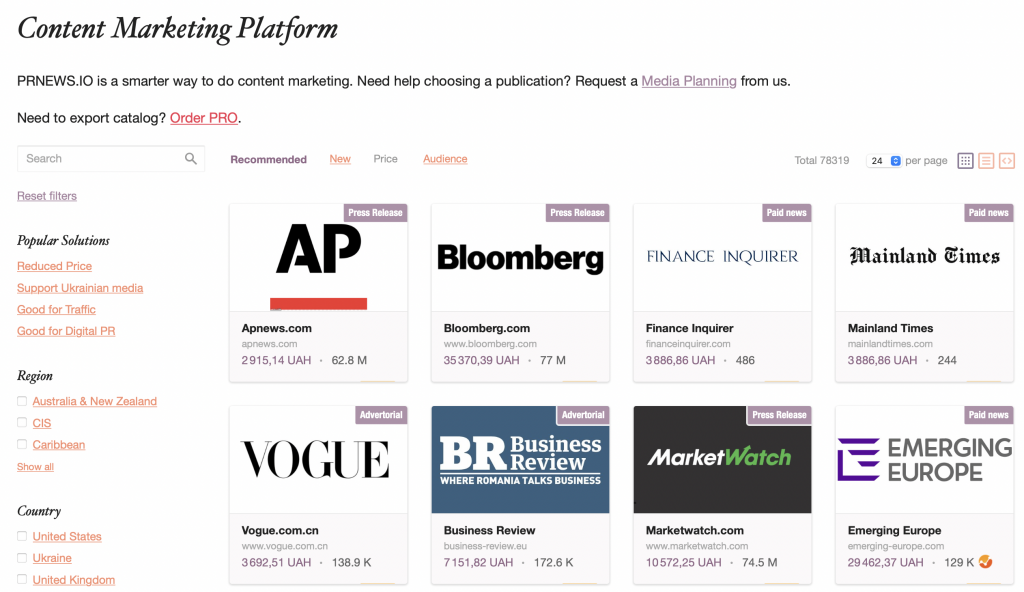
This combination of speed, transparency, and predictability transforms media coverage into a strategic tool, not just a promotional activity.
PRNEWS.IO offers two main content distribution models, each with distinct strategic advantages.
| Feature | Paid PR / Press Release | Native Advertising / Sponsored Content |
|---|---|---|
| Primary Goal | Guaranteed announcement, narrative control, SEO link equity | Audience engagement, brand affinity, content integration |
| Formats | Press Release, Mention, Paid News | Article, Listicle, Contributor Post, Interview |
| Content Origin | Client-provided | Client or publisher co-created |
| Disclosure | Varies by intent/regulation | Must align with platform standards; optional ad label |
| Outcome | Publication guaranteed at fixed cost | Publication guaranteed, optimized for engagement |
Strategic recommendations for businesses
- Prioritize High-Authority Sites: Focus on DR 35+ placements to maximize visibility and SEO benefits.
- Start with Test Campaigns: Use small-scale campaigns to evaluate platform performance before scaling globally.
- Integrate Compliance Protocols: Ensure proper labeling and internal approval processes to mitigate regulatory risk.
- Leverage Analytics: Use article-level engagement data to refine targeting, budget allocation, and future content strategy.
By combining the platform’s technological efficiency with strong internal governance, businesses can transform media coverage from a traditional, unpredictable function into a predictable, measurable growth engine.
How to get media coverage for free
Although there are several practical ways to get free media coverage without paying for placements, all of them require relevance, preparation, and value for journalists.
Competitor media analysis
Searching where and how your competitors are mentioned can help you identify journalists who cover your industry. Tools like Google Search (using brand names + keywords), Google Alerts, and specialized media intelligence platforms such as Meltwater, Muck Rack, or Cision allow you to see where competitors are mentioned and which journalists are writing about them. It only makes sense to reach out if you have a genuinely newsworthy angle that adds something new to the conversation.
Expert commentary
Another common route is offering expert commentary or interviews. Journalists often look for credible sources through expert request platforms such as HARO (Help a Reporter Out), Qwoted, and SourceBottle, where reporters actively seek expert opinions for upcoming stories. If your founder or executive can speak on a topic of local or industry interest, an interview can provide valuable exposure, especially with regional or niche publications.
Turn your business activity into a story
It is often more effective to turn your business activity into a story than to promote the business itself. Media outlets rarely cover companies directly, but they do cover initiatives, programs, and impact. For instance, a community project, educational initiative, or data-backed insight can transform a business into a publishable story.
Local news hooks
You can earn free media coverage by tying your business activity to local news hooks, such as community, city, or regional issues. Local journalists are more likely to cover stories about events, partnerships, job openings, or initiatives that directly affect their audience. This makes community relevance a strong driver of earned coverage, independent of paid promotion.
To Sum Up
Getting noticed in the media is just as important today as it has never been before. Positive media coverage is a powerful marketing tool because it positions you or your business in a favorable light by projecting the credibility, expertise, passion and image you want to convey. Best of all, it comes from an independent source; the only cost is the time it takes to organize.
Questions and Answers: Media Coverage
Which of the following gets the most media coverage?
In digital marketing, media is either paid, earned, shared or owned (also known as, the PESO model). While each of these media types has its own strengths and weaknesses, paid media is considered to be the most easily accessible and effective. Paid media includes social media marketing, search engine ads, pop-ups and other forms of premium advertising. These forms of media allow a business to get in front of its target audiences immediately. Hence, it gets the most media coverage.
What is media coverage?
Media coverage is any content created by reporters and writers and published by public relations experts to discuss your brand or client.
What is earned media coverage?
Earned media, or earned content, is any advertising or marketing about a business or service that has not been paid for by the company receiving the promotion. This type of media always comes from a third party.
How to get media coverage?
To get media coverage for your business, you have to follow these steps: 1. Pick your topic. You should make sure your story is newsworthy and fits the outlet you are pitching to. 2. Find media outlets to pitch. The second step is to find the right media outlets to pitch your story to. This covers newspapers, magazines, websites, blogs, and TV and radio stations. To facilitate this process and save time, use the PRNews.io service. 3. Write your press release. A press release is a short, newsworthy article that gives journalists all the information they need to write a story about your brand or product. 4. Pitch your story. You’ve written a great story and you’re ready to send it to editors. This step is not so easy because your email should get the journalists’ attention. Find out how to do it perfectly in this guide. 5. Follow up. It can take weeks or even months for an editor to respond. If you haven’t heard back after a reasonable amount of time, you can follow up with a brief email.