Welcome to PR Jobs project! We’re here to demystify the world of Public Relations. In our project, we break down different PR roles, covering salary, skills, and responsibilities. Our goal is to make PR more understandable for beginners and provide insights for professionals. Today, let’s focus on the Media Relations Manager role. We’ll explore the path to success and development in this ever-changing PR landscape.
Job summary
A Media Relations Manager is someone who handles communication between an organization and the media. They work to ensure positive coverage and effective messaging. Tasks include writing press releases, organizing media events, and being a spokesperson during crises to maintain a positive public image.
Media relations manager responsibilities
Building and Maintaining Media Relationships:
- Cultivate and nurture relationships with journalists, editors, and media professionals.
- Regularly engage with key media contacts to enhance the organization’s media presence.
Crafting and Distributing Press Releases:
- Develop compelling and newsworthy press releases that align with the organization’s messaging.
- Coordinate the distribution of press releases to targeted media outlets.
Monitoring Media Coverage:
- Track and analyze media coverage to gauge public sentiment and identify areas for improvement.
- Provide regular media coverage reports to internal stakeholders.
Content Creation and Editing:
- Create compelling written and visual content for media consumption.
- Edit and proofread materials to ensure accuracy and adherence to brand guidelines.
Adhering to Ethical Standards:
- Uphold ethical standards in all media relations activities.
- Ensure transparency and honesty in communication with the media.
* One of the main responsibilities of a Media Relations Manager is to work with the media and journalists. It involves timely securing business publications in the media. This used to be a highly complex task five years ago, as it required consistently building long-term relationships, spending time on journalist outreach, and finding ways to connect with them. Trips to conferences had a singular goal - to establish relationships with journalists from specific media outlets, so that when the need arose, quality coverage could be secured.

Today, times have changed, and PRNEWS.IO comes to the aid of Media Relations Managers as a sponsored content service. In just a few clicks, you can choose media outlets in your niche and pay for placement within a clearly defined timeframe.

This significantly saves resources and time.
Media relations manager salary
The pay for Media Relations Managers is influenced by several key factors. Experience plays a big role, with more experienced professionals earning higher salaries. The industry is crucial too, as some sectors offer better pay for media relations roles.
Location matters. Salaries can differ based on where the job is located, with cities often paying more to cover living costs. The size and financial strength of the organization also matter. Larger corporations and those in competitive markets tend to offer higher pay to attract top talent.
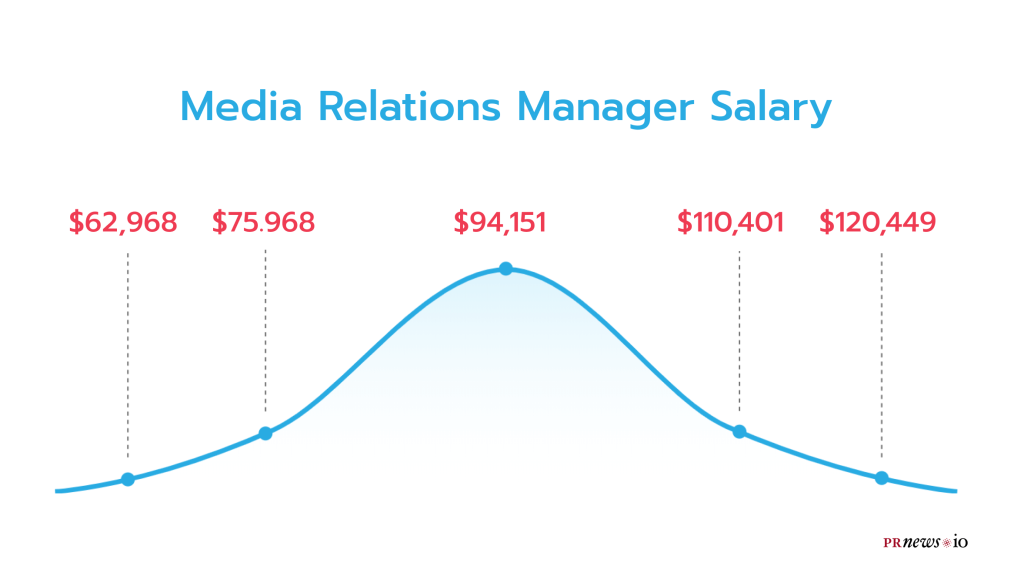
Salaries for Media Relations Managers can vary widely across industries. In the tech sector, the fast pace and high demand for good communication often mean higher pay. Non-profit organizations offer various salaries influenced by factors such as their size and available funding. In corporate settings, especially in Fortune 500 companies, experienced Media Relations Managers can expect attractive compensation. Government or public sector roles may have salaries tied to budget constraints and regulations.
Average Salary Statistics
Recent surveys and data analysis give us an average annual salary range for Media Relations Managers. These figures show the general salary trends in the profession. Where a person falls in this range can be influenced by factors like their job location, level of experience, and the specific industry they work in.
| Experience Level | Annual Salary Range |
|---|---|
| Entry Level | $50,000 – $70,000 |
| Mid-Level | $70,000 – $90,000 |
| Senior Level | $90,000 – $120,000+ |
Media Relations Manager Salaries in Top U.S. Cities
| City | Average Annual Salary |
|---|---|
| Baltimore, MD | $97,272 |
| New York, NY | $94,151 |
| Los Angeles, CA | $89,093 |
| Washington, DC | $83,235 |
| Chicago, IL | $82,702 |
| Dallas, TX | $82,267 |
| Arlington, VA | $71,380 |
| Boston, MA | $66,048 |
| Denver, CO | $62,968 |
Understanding these factors is crucial for Media Relations Managers seeking competitive pay and for employers looking to attract and keep top talent in the field.
Media relations manager career path
Within the role of a Media Relations Manager, there are pathways for advancement that allow individuals to take on more significant responsibilities and contribute to the strategic direction of communication efforts. This may involve overseeing larger teams, managing higher-profile projects, or spearheading critical media campaigns.
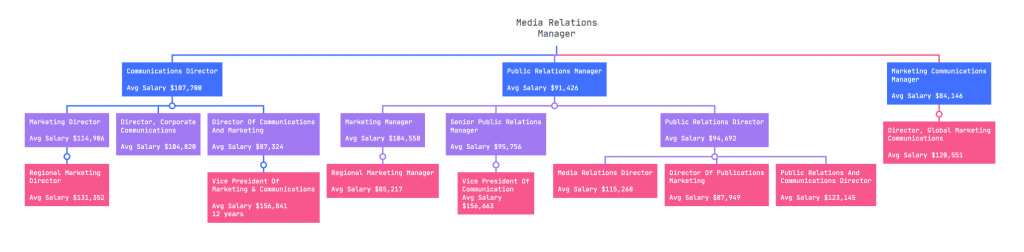
As Media Relations Managers accrue experience and expertise, they may find opportunities to transition into higher leadership positions within the broader spectrum of public relations or corporate communications. Positions such as Director of Communications, Head of Public Relations, or Chief Communications Officer become viable career progressions, allowing individuals to shape the overall communication strategy of an organization.
Skills and qualifications
A successful Media Relations Manager must possess a versatile skill set and a strong foundation of qualifications. These attributes are crucial for effective communication and relationship management. Let’s explore the key components:
A. Communication Skills
Communication is at the core of a Media Relations Manager’s role. Their ability to articulate messages clearly and persuasively, both in writing and verbally, is crucial. Proficiency in crafting compelling content ensures effective communication.
B. Relationship Building
Building positive relationships is essential. This extends beyond media interactions to stakeholders and internal teams. Cultivating and maintaining these connections contribute significantly to successful media campaigns.
C. Crisis Management Skills
In the unpredictable realm of public relations, crisis management is indispensable. A proficient Media Relations Manager should handle crises with agility, responding promptly and effectively. Maintaining composure during challenging times is crucial.
D. Industry Knowledge
A deep understanding of the industry is crucial. Knowledge of trends, key players, and potential challenges positions the Media Relations Manager strategically in the media landscape.
E. Digital Media Literacy
In the digital era, proficiency in digital media is essential. A Media Relations Manager should navigate and leverage digital platforms, including social media and online publications, to amplify messages.
These skills empower a Media Relations Manager to navigate the field’s complexities, ensuring effective information dissemination and cultivating a positive organizational image in the media landscape.

Educational requirements
When charting a path toward becoming a Media Relations Manager, individuals with degrees in fields such as Communications, Public Relations, Journalism, or Marketing are often favored. These disciplines provide a comprehensive understanding of the skills needed for effective media relations, including writing, strategic communication, and an awareness of media landscapes.
In addition to formal education, obtaining relevant certifications can enhance a Media Relations Manager’s credibility and skill set. Certifications such as the Accreditation in Public Relations (APR) or the Certified Public Relations Professional (CPRP) validate a professional’s expertise and commitment to best practices in the field.
Tips for aspiring media relations managers
- Consider pursuing degrees in Communications, Public Relations, Journalism, or Marketing for a solid foundation in essential media relations skills.
- Supplement your education with courses on media relations, crisis communication, and digital media literacy.
- Gain hands-on experience through internships or entry-level positions in PR agencies, media outlets, or corporate communication departments.
- Develop a portfolio showcasing writing samples, press releases, and successful media campaigns—practical examples set you apart in this competitive field.
- Attend conferences, seminars, and networking events in public relations and media to connect with professionals and stay updated on industry trends.
- Connect with industry professionals, join relevant groups, and engage in discussions on platforms like LinkedIn.
- Reach out to Media Relations Managers for insights. Learn from their experiences, seek advice, and build valuable connections in the field.
These tips provide a roadmap for aspiring Media Relations Managers to not only acquire the necessary education and experience but also to establish a strong network within the industry, enhancing their chances of success in this dynamic field.
List of 10 media relations jobs
Read on to learn about the ten leading advertising and PR professions that are currently shaping the creative industry and could be the foundation for your dream career.
Brand manager
A brand manager is responsible for how consumers perceive the brand. Brand managers create promotion strategies, monitor market trends, plan advertising campaigns, and coordinate the work of their teams. The brand’s recognition and success depend on its decisions.
- Responsibilities: A brand manager is responsible for how the audience perceives the brand, from the overall impression to the smallest details, such as the color of the packaging or the tone of an Instagram message.
- Required skills: Strategic thinking, analytics, creativity, and an understanding of the market and audience.
- Salary overview: According to Indeed, the average annual salary for a brand manager is about $89,500 per year, with typical ranges from roughly $56,600 to $141,300 depending on experience and location.
Public Image Consultant
This profession combines creativity and psychology. Image makers shape the public image of individuals and companies. They help their clients appear confident and convincing in the media, on social networks, and during public appearances. This profession is ideal for individuals with good taste, a keen sense of context, and an interest in human nature.
- Responsibilities: Creates a public image for an individual or company — from clothing style to public statements and behavior on camera.
- Required skills: Empathy, communication skills, knowledge of psychology, media, and trends, keen sense of style.
- Salary overview: Image consultants in the United States earn competitive salaries, which depend on experience and location. According to Indeed, the average annual base salary is approximately $77,858, with typical salaries ranging from about $43,782 to $138,456.

PR specialist
A communications architect builds a company’s or an individual’s public image. They work with the media, organize press conferences, write news stories and articles, and plan crisis management strategies. Public relations (PR) specialists must be open-minded, strategic, and flexible—they always need to have a plan B.
- Responsibilities: shapes a positive image of a company or individual, prepares press releases, and organizes public events.
- Required skills: literacy, strategic thinking, communication skills, and the ability to work in crises.
- Salary overview: The average annual salary for a public relations specialist in the United States is approximately $69,161, with reported salaries ranging from about $36,565 to $130,815, depending on experience, location, and company size.
Advertising manager
A manager organizes the entire advertising process, from conception to launch. They plan budgets, select promotional channels, communicate with agencies and customers, and analyze the effectiveness of campaigns. This profession requires active, decisive, and sociable individuals who can manage processes and negotiate with anyone.
- Responsibilities: Plan, launch, and control advertising campaigns. Knows the best time, place, and way to “sell” an idea.
- Required skills: Organization, communication, basic marketing knowledge, and the ability to work with various advertising formats.
- Salary overview: The average annual salary for an advertising manager in the United States is about $104,542, with typical salaries ranging from around $43,254 to $252,670 depending on experience, location, and employer.
Art director
An art director is responsible for the visual aspects of a project, including style, color, composition, and design. They lead a team of designers, develop concepts, and ensure that all elements are cohesive, aesthetically appealing, and aligned with the core idea. This profession is ideal for individuals who perceive the world through aesthetics, possess strong visual thinking skills, and can inspire others.
- Responsibilities: Oversees the visual side of projects—from the initial concept to the final layout. An Art Director is a designer with a clear vision and strong leadership skills.
- Required skills: Creativity, a strong sense of visual aesthetics, proficiency in graphic design software, and hands-on experience in design.
- Salary overview: The average annual salary for an art director in the United States is approximately $94,317, with a typical range from $50,728 to $175,361, depending on experience, location, and employer.
Event manager
From the initial idea to the last guest, an event manager is responsible for organizing events. Whether the event is a store opening, a startup presentation, or a large PR campaign, the event manager is responsible for making it memorable. This profession is ideal for individuals who enjoy dynamic environments, excel at problem-solving, and can connect with all types of people.
- Responsibilities: Organizes events ranging from private press conferences to large festivals. Knows how to create a WOW effect.
- Required skills: Time management, stress resistance, communication, and organizational skills.
- Salary overview: The average annual salary for an event manager in the United States is approximately $66,118, with typical salaries ranging from about $35,225 to $119,931, depending on experience, location, and employer.
Read more: Tips for writing a press release for the event
Copywriter
A copywriter is a master of words who creates advertising texts, website content, slogans, and scripts. Copywriters must write in an interesting, clear, and convincing manner. Their work should inspire, sell products, and evoke emotions. This job is ideal for individuals who enjoy playing with language, have a good sense of rhythm, and understand the psychology of readers.
- Responsibilities: writes advertising copy—from slogans to longreads. Words are his tool of influence.
- Required skills: literacy, creative thinking, ability to write concisely and accurately.
- Salary overview: According to Indeed, the average annual salary for a copywriter in the U.S. is about $71,846, with typical salaries ranging from approximately $43,091 to $119,789, depending on experience, location, and company size.
Speechwriter
Speechwriters write texts for political, business, and public speeches. They know how to construct language so that it is listened to, understood, and remembered. Speechwriters adapt their style to the speaker’s personality, adding emotion, arguments, and persuasiveness. This is a profession for those who want to influence audiences with words.
- Functions: creates public speeches and helps clients speak convincingly and effectively.
- Required skills: eloquence, logic, political or business acumen, and audience awareness.
- Salary overview: Although specific information about speechwriter earnings is unavailable, the average salary for writers is approximately $52,948 per year.
Content manager
A content manager is responsible for all brand content, including that on the website, social media, and newsletters. The content manager plans posts, writes text, selects visuals, and analyzes statistics. They must be organized, creative, and able to work with different communication formats.
- Responsibilities: plan, create, and manage content for social media, websites, and blogs. This person stays attuned to the latest trends.
- Required skills: creativity, organizational skills, editing skills, and an understanding of the audience.
- Salary overview: The average annual salary for a content manager in the United States is about $78,284, with typical salaries ranging from around $46,942 to $130,553, depending on experience, location, and employer.

SMM specialist
A social media manager (SMM) creates posts, attracts followers, and builds communities for a brand’s social media accounts. SMM requires speed, relevance, and an understanding of the audience. This profession is ideal for individuals who are familiar with popular trends, understand how algorithms work, and know how people will react on platforms like TikTok, Instagram, and Threads.
- Responsibilities: promote companies on social media, create content plans, analyze statistics, and set up targeted advertising.
- Required skills: knowledge of social media platforms (e.g., Instagram, TikTok, and Facebook), creativity, and technical proficiency.
- Salary overview: Most social media specialists in the U.S. earn an annual salary ranging from $50,000 to $90,000, though salaries may be higher in large cities and for those with advanced expertise.
Wrapping up
The advertising and media relations specialization introduces students to this diverse field by equipping them with the knowledge and skills necessary for a successful career. Advertising and public relations are dynamic fields full of opportunities, allowing everyone to find their niche and grow into a top specialist.
If you like to make and manage images, think about a career as an image maker or PR specialist. If you love working with words, a career as a copywriter or speechwriter could be perfect for you. If you like planning and executing large-scale events, then a career as an event manager might be a good fit for you.
Read more:

Frequently Asked Questions
What are media relations and advertising jobs?
Jobs in advertising and media relations focus on promoting brands, managing public image, and communicating with audiences through media channels. Responsibilities include creating content, collaborating with journalists, managing campaigns, and shaping brand perception.
What jobs can you get in media relations?
You can work as a public relations (PR) specialist, brand manager, advertising manager, copywriter, content manager, social media (SMM) specialist, event manager, art director, or image consultant. Each role involves different aspects of communication, strategy, and creativity.
Is media relations a good career?
Yes, a career in media relations is promising, with strong demand across industries. The field offers creative work, opportunities for career growth, competitive salaries, and chances to work with global brands or remotely.
What skills do you need for advertising and media relations?
Key skills include communication, writing, creativity, strategic thinking, media literacy, analytics, and digital marketing. Soft skills, such as networking, adaptability, and teamwork, are also essential.
Do you need a degree to work in media relations?
While a degree in communications, journalism, marketing, or public relations is helpful, it is not always required. Employers often value practical experience and real-world skills more than formal education.
How much do advertising and media relations jobs pay?
Salaries vary by role and experience. In the U.S., average salaries range from approximately $65,000 to over $100,000 per year. Higher earnings are associated with senior positions, such as brand manager or advertising manager.
Can you work remotely in advertising and media relations?
Yes, many roles, especially those in copywriting, content management, social media marketing, and public relations, offer remote or hybrid work options, particularly at digital-first companies.
Is advertising a creative career?
Yes, advertising is highly creative. Through storytelling, visual design, strategy, and psychology, it influences how audiences perceive brands and messages.