Alright, marketers — buckle up. The holiday season has become a mix of adrenaline and opportunity. Shoppers are ready to spend, with data showing strong intent to open their wallets during the peak shopping months. Deloitte reports that average holiday spend recently reached $1,778, an 8% increase year over year — a clear signal that demand is very much alive.
Still, this isn’t a comfort zone. High spending expectations collide with low brand loyalty and sharp deal sensitivity. Shoppers want the magic of the holidays, but they also want proof they’re getting the smartest possible offer. Winning means balancing emotional storytelling with clear, tangible value.
AI has moved well beyond experimentation and into the core of holiday commerce. Online sales influenced by AI-powered recommendations are projected to reach $263 billion, accounting for 21% of all global holiday orders. For brands, visibility inside AI-driven discovery flows is no longer optional — it’s a competitive requirement.
Today’s shoppers move fast. Browsing has turned into speed-shopping, and AI accelerates every step of the journey, from discovery to decision. The impact is already visible: AI-driven traffic to U.S. retail sites on Black Friday surged by 805% year over year. If campaigns lack clarity or checkout flows introduce friction, revenue slips away in seconds. Speed, reliability, and operational confidence have become non-negotiable.
The holidays no longer start in Q4. Gift research and deal-hunting now begin as early as September, with tens of thousands of social posts about Black Friday and holiday offers appearing before fall even settles in. This extended buildup reshapes planning cycles and raises the stakes for early engagement.
The takeaway is simple: start sooner, think bigger, and design campaigns that can sustain momentum — from early curiosity through the final, frantic gift rush. Timing is no longer just a tactic; it’s a strategic advantage.

Strategic Timeline and Phased Holiday Campaign Architecture
Effective holiday marketing thrives on a phased approach, combining early preparation with precise timing to shape customer expectations and drive sustained sales momentum before, during, and after peak shopping periods.
The Pre-Season Imperative (September – October)
Campaign planning should start well ahead of the traditional November surge. Laying the groundwork in September ensures content, promotions, and strategies are ready to build momentum and capture early shopper attention.
Brands must optimize their digital infrastructure for the seasonal influx. Websites should feature subtle festive touches — seasonal colors, banners, or themed design elements — without sacrificing speed or usability. Copy and meta descriptions should incorporate seasonal keywords to enhance discoverability, and holiday-specific products or promotions need to be easily navigable.
Equally important is analyzing past campaigns to pinpoint lead sources and identify areas for improvement. All marketing assets — emails, ads, website updates — should be prepared in advance. This readiness allows teams to respond quickly and maintain flexibility once the competitive holiday landscape heats up. Even “spontaneous” promotions, such as flash sales or Black Friday specials, require careful pre-planning to execute successfully.
Mapping the Critical Holiday Calendar and Phasing Strategy
The strategic calendar must extend beyond the major sales events, incorporating crucial retargeting, fulfillment, and post-holiday retention phases.
| Phase | Timeframe | Primary Goal | Key Activities/Channels |
| Early Engagement/Teaser | Late Oct – Mid-Nov | Audience Warm-up, Early Deals | Teaser posts, loyalty offers, preparing flash sales. Testing AI chat assistants. |
| Major Sales Events | Late Nov (BFCM Week) | Maximum Conversion/Revenue Spike | Deep discounts, doorbusters, online-only deals (Black Friday, Nov 28; Cyber Monday, Dec 1), high-volume paid media, PR push. |
| Urgency & Retargeting | Early – Mid-Dec | Inventory Clearing, Shipping Guarantee | “Did you miss it?” follow-up emails, last-chance deals, highlighting shipping deadlines. Key dates: Green Monday (Dec 8), Hanukkah (Starts Dec 14). |
| Loyalty & Reflection | Late Dec – Jan | Retention, Data Collection | Thank-you emails, post-holiday surveys, new-year sneak peeks, community-focused campaigns (Kwanzaa starts Dec 26). |
A key consideration is how urgency messaging evolves as the holiday season progresses. During the late November peak — Black Friday and Cyber Monday — campaigns are dominated by deep discounts, doorbusters, and price-focused promotions. As the calendar moves into early December, messaging must pivot strategically. Dates like Green Monday (December 8) serve as crucial reminders for the “last chance for Christmas delivery.”
This shift requires mid-December communications to move from emphasizing value to emphasizing peace of mind and reliable fulfillment. Targeted emails, high-visibility media placements, and PR campaigns should reinforce shipping deadlines and operational certainty, appealing to late-stage shoppers who prioritize timely delivery over the absolute lowest price. Adapting messaging in this way keeps campaigns relevant, persuasive, and effective across the extended holiday purchasing window.
Data-Driven Channel Optimization and Budget Allocation
In the competitive holiday season, every marketing dollar counts. Budget allocation can’t rely on guesswork or competitor trends alone — historical performance data should guide every decision.
Resource Management and Flexibility
The guiding principle for Q4 budgeting is flexibility and prioritization. Most resources should go to channels that consistently deliver the best return on investment (ROI). A practical approach is to divide the budget into three parts:
- High-performing channels – the core drivers of leads, receiving the bulk of resources.
- Moderate or emerging channels – allocated a smaller share for testing new strategies.
- Brand-awareness channels – such as social media posts, given a modest portion for reputation-building.
Flexibility is essential. Budgets should be reviewed weekly or biweekly, with the freedom to shift resources away from underperforming tactics. Clear, measurable goals must be set from the start, whether the aim is generating more leads, reengaging customers, or filling the schedule.
Omnichannel Strategy and Mobile Focus
Holiday campaigns must run across all major channels — email, SMS, push notifications, social media, and web messages — to deliver a seamless, coordinated customer experience. Omnichannel isn’t just about visibility; it supports AI-driven personalization and ensures consistent inventory and messaging across every touchpoint, helping build loyalty and capture market share.
Mobile optimization is critical. With roughly 28% of holiday e-commerce sales happening on mobile devices, campaigns must prioritize smooth mobile advertising and checkout experiences to secure conversions.
Measuring What Matters
To justify budgets and earn executive trust, reporting must link campaign results directly to business outcomes. Social engagement should be evaluated not as a metric of awareness, but as a driver of growth.
Key performance indicators should focus on efficiency and profitability: Return on Ad Spend (ROAS), Cost-per-Acquisition (CPA), Average Order Value (AOV), conversion rates, click-through rates (CTR), and retention. Reports should go beyond data presentation to provide actionable insights — for example, recommending increased spend on a video ad campaign due to its strong ROI.
Accurate budget reallocation relies on robust data infrastructure. Data silos across social, CRM, and revenue systems make it impossible to measure cross-channel ROAS and CPA in real time. Investing in data unification tools isn’t optional — it’s a strategic necessity that enables agile decision-making, maximizes ROI, and keeps campaigns competitive in a fast-moving market.
The Technology Frontier: Conversational Commerce and Agentic AI
AI has become a central driver of holiday retail, transforming how consumers discover products and complete purchases.
AI-driven recommendations are projected to influence $263 billion in online sales and $1.6 trillion in in-store sales during the holiday season. Shopper behavior is already shifting: 7% of all consumers now begin product searches using AI chat assistants, rising to 10% among Gen Z.
This shift highlights the rise of conversational commerce. Modern AI agents go far beyond traditional chatbots, providing personalized product suggestions, price tracking, and even executing orders through natural, unscripted interactions. Major retailers are embracing this trend: Target, for instance, enables shopping directly within ChatGPT, allowing customers to select multiple items and fulfillment options seamlessly. Furthermore, 59% of shoppers using AI chat tools for recommendations plan to leverage them for holiday gift shopping.
Brands need to respond strategically by identifying where their presence is most valuable within these AI ecosystems and developing guided shopping agents on their own platforms. These tools can deliver the personalized, one-on-one experience consumers now expect, driving both conversions and loyalty.
Agentic AI: Transforming Operations
Beyond the consumer interface, Agentic AI — autonomous AI systems capable of making decisions without human input — is gaining traction, with 35% of retailers expected to deploy it this holiday season.
On the backend, these systems enhance productivity by optimizing supply chains, managing real-time fraud detection, streamlining order fulfillment, and dynamically adjusting pricing. For shoppers, Agentic AI enables highly personalized experiences by analyzing browsing history, purchase behavior, and real-time signals to provide tailored recommendations and answer complex questions.
Strategically, the effectiveness of consumer-facing AI depends on the seamless deployment of backend Agentic AI and strong unified commerce systems. Personalized recommendations can fail if data silos lead to inconsistent service, incorrect pricing, or out-of-stock suggestions. The first step for any retailer seeking to implement Agentic AI is data preparation: breaking down silos and harmonizing customer information across systems to ensure secure, reliable access for AI applications.

The Power of Earned Media and PR Strategy
In a crowded holiday media landscape, earned media plays a crucial role in building credibility, amplifying reach, and cutting through the noise of paid campaigns.
Effective holiday PR balances seasonal relevance with genuine brand authenticity. Research shows that 88% of consumers value authenticity in holiday marketing. Campaigns succeed when they maintain a consistent brand voice while weaving in holiday themes that truly resonate with the audience. The most memorable campaigns combine emotional storytelling with personalized touches, using traditions, rituals, and universal themes such as togetherness, kindness, and hope.
Brands should also encourage user-generated content (UGC), turning customers into active storytellers. Coca-Cola’s “Share a Coke for the Holidays” campaign is a prime example, blending offline product interaction with digital participation to expand organic reach.
Influencer Marketing and Trust
Influencers amplify reach and lend credibility, especially during the holidays. Effective strategies include live shopping events, product tutorials, festive account takeovers, and, for food and beverage brands, recipe content. With consumers often sensitive to deals, influencer-shared promo codes can significantly boost purchase intent.
Brands must support influencers with campaign briefs, holiday assets, hashtags, and tracking links — but without over-scripting. Creative freedom allows influencers to tell authentic seasonal stories rather than simply placing products.
Integrating Paid, Owned, and Earned Channels (POE)
Holiday PR works best when coordinated across channels. A typical sequence might involve teaser content on owned or paid channels, a main campaign on the holiday itself, and behind-the-scenes or recap content afterward. This keeps audiences engaged longer, creates multiple media coverage opportunities, and extends campaign impact.
Tracking metrics such as media mentions, social engagement, and conversion rates is critical for refining strategy. Beyond short-term visibility, earned media can deliver lasting value by boosting SEO through high-quality backlinks and referral traffic. Prioritizing outlets with strong audience fit and SEO authority ensures that Q4 PR investments contribute to sustained organic growth.
Maximizing Media Mentions with PRNEWS.IO
PRNEWS.IO addresses the logistical challenges of Q4 press outreach by guaranteeing placement of sponsored content in online media worldwide. It bypasses the resource-heavy processes of cold emailing and protracted negotiations, which are particularly difficult during the holiday rush. Users frequently cite the platform’s efficiency and speed as major benefits, noting it as a “huge time-saver” that quickly boosts visibility.
This rapid execution is critical for time-sensitive campaigns, such as flash sales. PRNEWS.IO also handles complex issues like financial logistics, translations, and media planning, ensuring seamless international distribution.
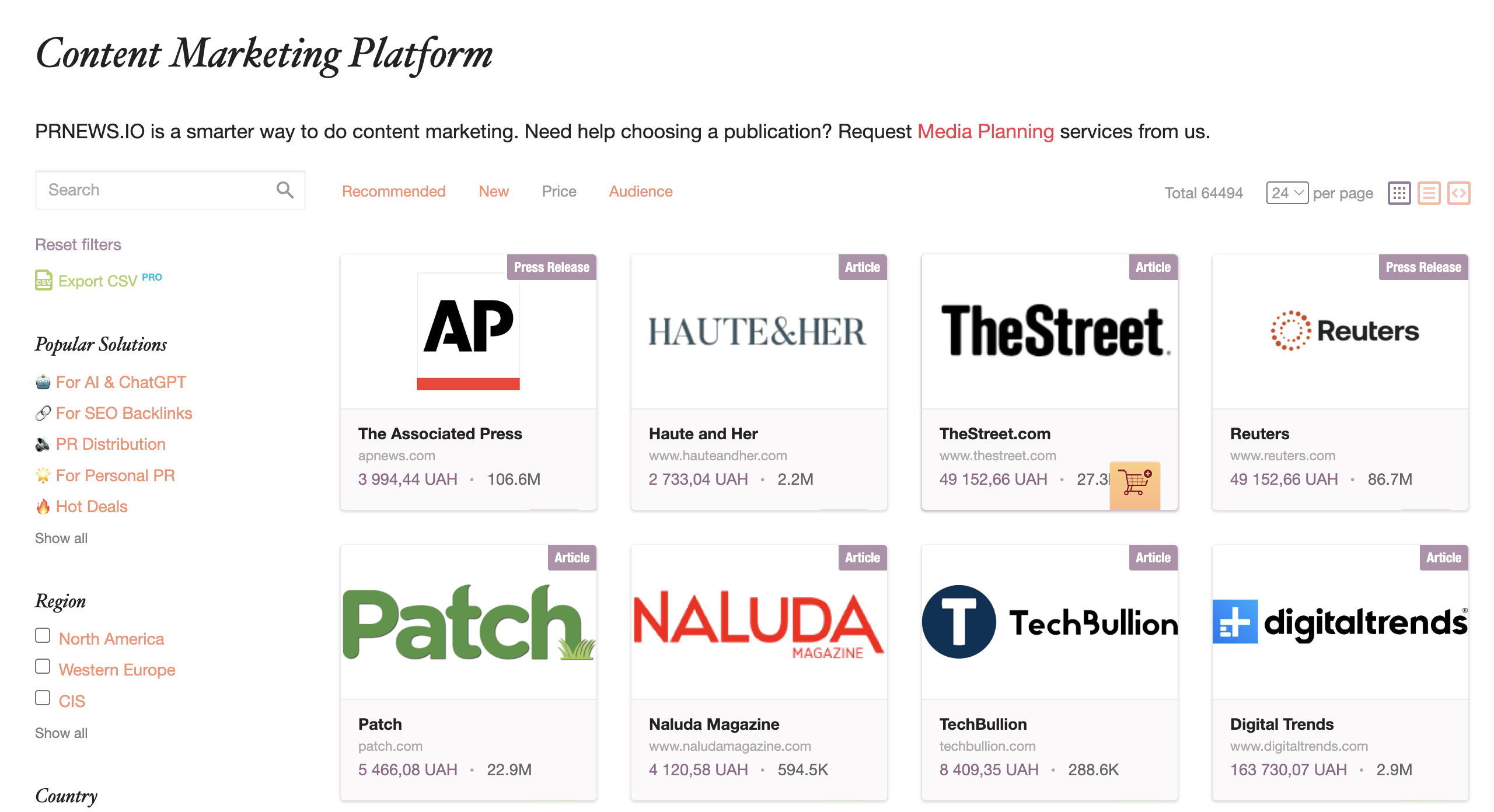
Beyond simple distribution, PRNEWS.IO provides quantifiable benefits. By securing high-quality backlinks from authoritative domains, the platform strengthens a brand’s search engine authority, improving domain authority, SERP rankings, and organic visibility during the competitive holiday search period.
For brands with international ambitions, PRNEWS.IO supports campaigns across 77 languages and 175 countries. For example, a small PR agency in Brazil successfully ran an international campaign on 30 U.S. news sites, highlighting the platform’s efficiency and ability to build media relationships globally. Its transparent, user-friendly interface allows marketers to plan campaigns effectively and maximize coverage.
The platform enables precise, data-driven media selection, ensuring Q4 marketing budgets are spent on high-impact outlets. Users can filter a catalog of media by industry, geography, audience type, and pricing, and view details such as audience size and SEO metrics.
| Feature/Benefit | Impact on Holiday Marketing | Q4 Strategic Implication |
| Guaranteed Placement & Speed | Ensures critical seasonal news (deals, launches) hits media outlets quickly, bypassing traditional negotiation bottlenecks. | Enables rapid execution of urgent, time-sensitive campaigns where speed is a core competitive edge. |
| Search Engine Authority Boost | Delivers high-quality backlinks, significantly boosting SEO/SERP rankings during competitive Q4 search windows. | Provides measurable, long-term ROI beyond immediate visibility, justifying PR expenditure as a growth investment. |
| Global Brand Reach | Facilitates coordinated international campaign distribution across 77 languages and 175 countries. | Essential for multinational retailers needing seamless, high-volume, global holiday promotion coverage. |
| Marketplace & Tracking Tools | Simplifies media planning by allowing users to filter outlets by audience and key SEO metrics and track post-publication statistics. | Ensures precision budget allocation, focusing spend only on relevant outlets with verifiable metrics. |
Conclusion and Expert Recommendations
The guiding principle for the 2026 holiday season is Agile Personalization. Brands must recognize the continued elongation of the shopping window, the rapid acceleration of product discovery through AI, and the critical importance of data-driven efficiency across every channel. Success will hinge on the ability to act quickly, deliver hyper-personalized experiences, and ensure operational and logistical reliability.
Prioritized Strategic Checklist
1. Early Preparation and Digital Readiness
Begin planning and optimizing digital assets by September. This includes subtle festive design touches, seasonal SEO keywords, and a fully pre-created set of campaign assets to capture early shopper interest and research behavior.
2. Data Unification and Flexible Budgeting
Adopt a weekly performance review cycle to enable real-time budget reallocation based on ROI and Cost-per-Acquisition (CPA). Focus spending on proven, high-performing channels while maintaining testing capacity for emerging platforms. Implement a unified commerce strategy to prevent fragmented data from undermining personalization, inventory management, and cross-channel coordination.
3. AI-Enhanced Customer Journeys
Invest in data readiness and product information optimization for AI chat assistants (e.g., ChatGPT, Google’s AI agents), acknowledging AI’s growing influence on online sales. Develop proprietary guided shopping agents on owned channels to meet consumer expectations for conversational, personalized discovery and to drive both conversions and loyalty.
4. Earned Media for Speed and SEO Impact
Leverage PR platforms that guarantee rapid placement of holiday announcements, such as flash deals or shipping reminders. Evaluate earned media not just by immediate reach, but by referral traffic, backlink quality, and long-term SEO authority to maximize the return on PR investment.
5. Balancing Emotion with Value
Craft campaigns that feel authentic and resonate emotionally, blending nostalgic storytelling with clear, tangible offers. High-trust channels, including influencer partnerships, can amplify specific promo codes and seasonal deals, meeting consumer demand for both meaningful experiences and strong value.