Public affairs jobs sit at the intersection of politics, regulation, business strategy, and strategic communication. Unlike traditional communications roles, public affairs (PA) professionals are not hired to generate attention or improve brand sentiment. They are hired to protect an organization’s ability to operate, influence policy outcomes, manage political risk, and ensure long-term viability in regulated environments.
As regulatory complexity accelerates and digital policy ecosystems fragment across jurisdictions, public affairs has evolved from a relationship-based function into a highly structured, data-informed, and technology-enabled profession. This shift has fundamentally reshaped public affairs job descriptions, required skills, and career trajectories.
This updated guide breaks down what public affairs jobs actually involve today, how roles differ across seniority levels, what skills employers expect, and why PA has become one of the most strategically important—and resilient—career paths in communications and governance.
Who is a public affairs specialist?
A public affairs specialist is someone who handles communication and cooperation between an organization and the public.
The main responsibility of this professional is all about shaping public perception of an organization to ensure an overall positive image in the public eye through different communication channels, such as social media, community outreach, media relations, and others.
Additionally, a public affairs specialist is responsible for managing communications and maintaining key relationships with the stakeholders.

What do public affairs professionals actually do?
At its core, public affairs work focuses on managing an organization’s relationship with its external policy environment. This includes governments, regulators, legislators, public institutions, industry bodies, and increasingly, civil society actors who influence policy outcomes.
While job titles vary, most public affairs roles revolve around six interconnected responsibilities:
Policy monitoring and intelligence
Public affairs professionals continuously track legislative proposals, regulatory initiatives, political debates, and enforcement trends that may affect their organization or sector. This is not passive news consumption; it involves structured analysis of policy direction, political momentum, stakeholder positioning, and timing.
PA roles require systematic engagement with policymakers, regulators, government advisors, trade associations, NGOs, and sometimes journalists who shape policy narratives. Relationship-building is strategic, long-term, and purpose-driven.
Advocacy and lobbying
Many public affairs jobs involve advocating for specific policy positions—either defensively (preventing harmful regulation) or proactively (shaping favorable frameworks). This includes preparing policy briefs, consultation responses, testimony, and direct meetings with decision-makers.
Issue and risk management
Public affairs teams identify emerging issues early, assess their potential impact, and coordinate internal responses before they escalate into regulatory or reputational crises.
Strategic communication for policy audiences
Unlike PR messaging, PA communication is designed for decision-makers, not mass audiences. Precision, evidence, credibility, and timing matter more than tone or virality.
Protecting the license to operate
Ultimately, all public affairs roles serve one overriding objective: maintaining the organization’s freedom to operate within legal, regulatory, and political constraints.
Public affairs jobs you should consider
| Role | Seniority Level | Core Responsibilities | Typical Focus |
|---|---|---|---|
| Public Affairs Assistant / Coordinator | Entry-level | Policy research and monitoring, briefing preparation, stakeholder database maintenance, internal reporting | Analytical support, political literacy, operational accuracy |
| Public Affairs Officer / Manager | Mid-level | Managing specific policy areas or jurisdictions, drafting position papers, coordinating stakeholder meetings, supporting lobbying and issue management | Policy advocacy, stakeholder coordination, execution |
| Government Affairs Manager | Mid-level to Senior | Direct engagement with policymakers and regulators, managing government relations in regulated sectors, representing organizational positions | Legislative influence, regulatory engagement, sector expertise |
| Head of Public Affairs / Director of External Affairs | Senior leadership | Setting PA strategy, budget oversight, risk prioritization, executive-level stakeholder engagement, aligning policy with business and ESG goals | Strategic leadership, risk management, cross-functional alignment |
| Chief Public Affairs Officer / VP Public Policy | Executive (C-suite interface) | Board-level policy strategy, political risk governance, long-term license-to-operate protection, integration with corporate strategy | Strategic influence, governance, value protection |
If you’re interested in public affairs, consider one of these 9 career options:
- Government relations specialist
A government relations specialist is a professional who facilitates interaction between an organisation (such as a company, NGO, or association) and government agencies, legislators, regulatory bodies, and political actors. The primary objective is to influence public policy and regulations in a manner that aligns with the organisation’s interests.
Key aspects of the job:
- Research political and legislative initiatives.
- Analyse the potential impact of new laws and regulations.
- Developing lobbying and advocacy strategies.
- Building effective relationships with officials, legislators, and regulators.
- Participate in hearings, committees, and working groups.
- Prepare reports and recommendations for management.
- Representing the organisation at public and internal events.
In the U.S. and other major economies, salaries range from $65,000 to over $120,000, particularly in large cities and for senior positions.
- Public affairs manager
A public affairs manager is a professional responsible for strategic communication between an organisation and its external environment, including the government, public, media, key stakeholders, and community groups. The Public Affairs Manager develops and implements strategies that protect the organisation’s reputation and promote its interests within the social and political context. This strategic management role combines government relations, communication strategy, media relations, and stakeholder engagement.
A public affairs manager’s typical day may include:
- Analyze new legislative proposals.
- Meet with legislators and partners.
- Prepare press materials and messages.
- Plan advocacy campaigns.
- Advise management on socio-political risk.
Public affairs managers in the US often earn $70,000–$120,000+ per year, while those in London, UK, earn £45,000–£80,000 per year.
- Lobbyist
A lobbyist is a professional who specializes in influencing public policy and legislative decisions. They represent the interests of companies, industry associations, non-governmental organizations, and individual groups before government authorities. Their main goal is to persuade legislators, government officials, and regulators to make decisions that benefit their clients or organizations while operating within the bounds of the law and transparency rules. Lobbying is a key tool in public affairs and government relations, particularly in the United States, the European Union, and the United Kingdom.
Lobbyists can work:
- In lobbying and public affairs agencies;
- Large corporations (in-house lobbyists);
- Industry associations;
- In non-governmental and international organisations;
- Analytical centres.
In the US, lobbyists earn $70,000–$120,000 per year, while top-level lobbyists earn over $150,000. In the UK, the annual salary ranges from £40,000 to £90,000, with some senior positions exceeding £ 100,000. In the EU, lobbyists earn €50,000–€110,000 per year, and even more in large consulting firms.
- Event planner
Event planners who work in public affairs coordinate every aspect of business events. They interact with the public by issuing press releases, advertising events on social media, and hosting events. They select the location, vendors, and entertainment, ensuring that the event messaging aligns with the corporate brand.
The specific responsibilities of an event planner in public affairs include:
- Develops the concept, goals, key messages, and format of the event (e.g., conference, forum, briefing, or roundtable).
- Plans the program, agenda, timing, speakers, and scenario for the event.
- Forms the budget, controls expenses, and prepares estimates and reports.
- Selects the location and negotiates the lease terms.
- Selects and coordinates with contractors for catering, equipment/AV, décor, security, transportation, and printing.
- Ensures event messages are consistent with corporate branding and public affairs objectives, including policy/advocacy, reputation, and stakeholder engagement.
- Oversees event on-site operations, including the team, technical rehearsals, and timing. Resolves force majeure situations.
In the US, event planners typically earn around $60,000–$70,000 per year. In Europe, salaries vary more widely. The highest salaries are in Switzerland, Iceland, and Luxembourg, ranging from $70,000 to $90,000. In many other countries, salaries range from $30,000 to $45,000+, depending on the job market.
- Social media manager
Social media managers craft a business’s message for digital media platforms. They engage with the public by responding to comments, planning campaigns, and generating visual and written content. Additionally, they ensure consistency in public messaging.
Responsibilities of a social media manager:
- Develops and implements content strategies for digital platforms such as LinkedIn, X (formerly Twitter), Facebook, and Instagram.
- Ensures the consistency of public messages with the PR, public affairs, and communication strategies.
- Plans and launches communication and information campaigns (corporate, advocacy, and reputation).
- Creates and coordinates visual and textual content, including posts, videos, graphics, and stories.
In the U.S., the average annual salary for a social media manager is $60,000–$75,000 (senior managers earn up to $90,000+). In the EU, the average annual salary is €35,000–€55,000, with higher salaries in Western Europe (€60,000+ for senior positions).
- Communications strategist
A communications strategist develops long-term communication strategies, formulates key messages for brands and organisations, coordinates public relations (PR), marketing, and public affairs communications, and ensures these efforts align with business and reputation goals.
In the US, the average salary is between $70,000 and $90,000 per year, with salaries for senior positions starting at $100,000. In the EU, the average salary is around €45,000 to €65,000, with higher salaries in Western Europe, reaching €70,000 for senior positions.
- Policy analyst
A policy analyst is a specialist who researches and analyses government policies, legislative initiatives, and regulatory changes. They assess the impact of these changes on society, businesses, and industries, and prepare analytical recommendations for governments, companies, and organisations.
In the US, the average salary is $65,000–$85,000 per year for a senior position, while in the EU it is approximately €40,000–€60,000. Higher salaries are found in Western Europe, with senior positions earning €65,000+.
- Political affairs officer
A political affairs officer is a specialist who analyses political environments, monitors political processes, and facilitates an organisation’s interactions with political institutions. This helps management make informed decisions in a socio-political context.
Main responsibilities:
- Monitors political events, elections, legislative initiatives, and the activities of political figures.
- Analyses political risks and opportunities for organisations and industries.
- Prepares analytical reports, policy briefs, and recommendations for management.
- Maintains contact with political institutions, parties, advisors, and experts.
- Coordinates political communications with PR, public affairs, and government relations teams.
- Participates in meetings, forums, hearings, and political events.
In the US, they make $65,000–$90,000 (senior — $100,000+), while in the EU, it’s €45,000–€65,000, with higher levels in Western Europe (€70,000+ for senior positions).
- Urban planner
An urban planner develops plans for cities and territories. They analyse land use, infrastructure, and socioeconomic factors to ensure sustainable, safe, and effective urban development. Urban planners work with authorities and communities to achieve these goals.
Key responsibilities include:
- Develops long-term plans for the development of cities, districts, and communities.
- Analyses land use, transportation networks, and residential and commercial development.
- Evaluates the impact of projects on the economy, environment, and quality of life.
- Collaborates with local authorities, developers, and community organisations.
- Prepares analytical reports, maps, zoning plans, and recommendations.
- Conducts public consultations and hearings with residents.
- Ensures projects comply with urban planning laws and regulations.
In the US, an urban planner earns an average of $65,000–$85,000 per year (senior — $95,000+). In contrast, the average annual income of a senior-level planner in the EU is approximately €40,000–€60,000, with more substantial earnings in Western and Northern Europe.

What are public affairs experts’ responsibilities?
Understanding the duties and responsibilities of public affairs experts is a vital part of our “What is public affairs?” discussion.
Public affairs is responsible for improving a company’s image and establishing strong relationships with customers and stakeholders. Professionals in public affairs work closely with management to discuss public perception and set goals. They create communication plans and guide corporate messaging by collaborating with marketing, public relations, and media experts. These roles include communications specialist, media coordinator, public policy manager, public relations, social media manager, and crisis management. Public affairs professionals are vital for businesses of all sizes, as engaging with the public is crucial for success.
Public affairs professionals need a diverse set of skills to be successful in their roles. These skills include negotiation, leadership, analytical thinking, time management, strong communication, and technical abilities.
- Negotiation skills are crucial in public affairs as professionals must balance corporate interests with public opinion. They often find alternatives and make concessions to achieve long-term business goals. For example, they may remove a product from stores to address public backlash, which can help build customer loyalty and show understanding and respect for their emotions.
- Leadership abilities are essential for guiding public perception and achieving business goals. Public affairs professionals with strong leadership skills can effectively communicate their message and initiatives to the community, encouraging public engagement and enhancing customer confidence in their abilities.
- Analytical skills are necessary in public affairs to gather information and draw relevant conclusions about public perception. Professionals with analytical skills can use data management software and statistical analysis to plan future campaigns and efficiently analyze large data sets, organizing them into valuable information.
- Time management skills are essential for coordinating events and activities that engage the community and create public awareness. Strong time management and organizational skills enable professionals to coordinate between vendors, media, and event attendees. Timing events and campaigns with current consumer interests help companies remain competitive.
- Strong communication skills are vital in public affairs, as professionals regularly draft press releases and speeches. They need excellent writing and proofreading abilities to communicate the same message effectively to diverse audiences, including the public and legislators. Adapting the message’s medium, phrasing, and tone based on the target audience is critical.
- Technical abilities are becoming increasingly important in public affairs, particularly in social media positions. Professionals must understand how to apply technology and often rely on data management software to organize consumer information. Proficiency in using technology allows for quicker analysis of larger data sets, aiding decision-making in public affairs roles.
Public affairs jobs vs. public relations jobs
Although public affairs and public relations often collaborate, they are structurally different professions.
Public relations roles focus on public perception, brand storytelling, and media visibility. Success is typically measured in reach, sentiment, or engagement.
Public affairs roles focus on policy outcomes. Success is measured by whether legislation is influenced, regulatory risks are avoided, consultations are secured, or enforcement conditions improve.
In practice:
- PR professionals speak to the public.
- Public affairs professionals speak to power.
This difference explains why PA jobs often sit closer to legal, compliance, or executive leadership functions than to marketing teams.
What is a typical day for a public affairs expert?
A typical day for a Public Affairs professional involves starting with government stakeholder mapping, categorizing them based on the required engagement level. Planning and prioritizing stakeholders according to their needs is crucial, engaging with some daily and others quarterly. Monitoring and flagging any political changes, including personnel and policy, even if they are still in the proposal stage, is essential as these changes can pose risks to the company’s operations and strategies.
Public Affairs professionals also collaborate with other departments to work on corporate social responsibility (CSR), ensuring they convey the right messages and enhance the company’s image while aligning with government initiatives. Additionally, they actively provide constructive feedback on draft regulations that may impact the business, engaging in advocacy through various tools such as influencing public opinion through the media or directly representing the company’s interests to stakeholders using their expertise and purpose.

Public affairs specialist salary
The salary for public affairs specialists can be influenced by many different factors. Just like in any other position, experience played a key role in getting higher pay. At the same time, the industry you work in is also important to be considered.
According to the Indeed platform, the average base salary for a public affairs specialist in the United States is around $59,500 per year. The general range of pay in this field is quite big – it can be anything from $31,000 to $114,000, depending on the experience and industry you’re working in.
However, location also plays a big role in setting proper salary expectations as a public affairs specialist. Here’s the list of the salaries in some states according to the reports:
- Washington, DC – $103,997 per year
- Sacramento, CA – $93,671 per year
- Portland, OR – $86,950 per year
- Chicago, IL – $78,434 per year
- Phoenix, AZ – $65,028 per year
- Philadelphia, PA – $57,638 per year
- Long Beach, CA – 56,191 per year
Additionally, the size of an organization is also a deciding factor for compensation in this field – larger corporations in competitive markets have the ability to offer higher pay to the top candidates.
Public affairs specialist career path
For public affairs specialists, career paths are often wide-ranging. With proper expertise and experience, you can grow into senior and executive-level positions more towards communications, marketing, or program management positions.
However, when it comes to progressing into a public affairs specialist role, you must start by thinking about your educational background, as it is vital to have all the necessary skills and experience to get started with such a responsible role.
As public affairs is a very diverse role, you must choose the specialty within your field. It is important to understand which part of this field you feel strongest in and continue skills development in that area.
Educational Requirements
If you are considering pursuing your career as a public affairs specialist, it would be beneficial to have an educational background in the field of political science, communication, public relations, or something similar.
There is no specific degree requirement for choosing this career path, but most of the professionals hold bachelor’s or master’s degrees in relevant fields.
For example, many universities offer business programs where students can choose the field of business they are most interested in. That way, they can diversify knowledge across different fields, making it a perfect knowledge base for anyone wanting to become a public affairs specialist.
Other than that, internships can play a massive role in building your career in this field, as they help you develop skills and prepare for your career. This approach will help you understand the daily duties and workflows of the public affairs departments within the company. Additionally, internships help you get mentors and letters of recommendation to easily land a job after graduation.
Technology and tools in public affairs jobs
Technology has become core infrastructure for public affairs work.
PA professionals routinely use:
- legislative and regulatory monitoring platforms,
- stakeholder relationship management (CRM) systems,
- digital advocacy and grassroots tools,
- media intelligence and reputation monitoring software.
A growing area of responsibility involves policy-centric content distribution. Policy arguments must appear in credible, searchable environments where decision-makers research issues.
This is where platforms such as PRNEWS.IO fit naturally into public affairs workflows. Rather than functioning as traditional PR tools, such platforms enable PA teams to:
- place expert policy content in authoritative media outlets,
- ensure visibility in legal, political, and industry-specific publications,
- reinforce credibility through third-party validation,
- control narrative positioning across search engines and AI-assisted research tools.
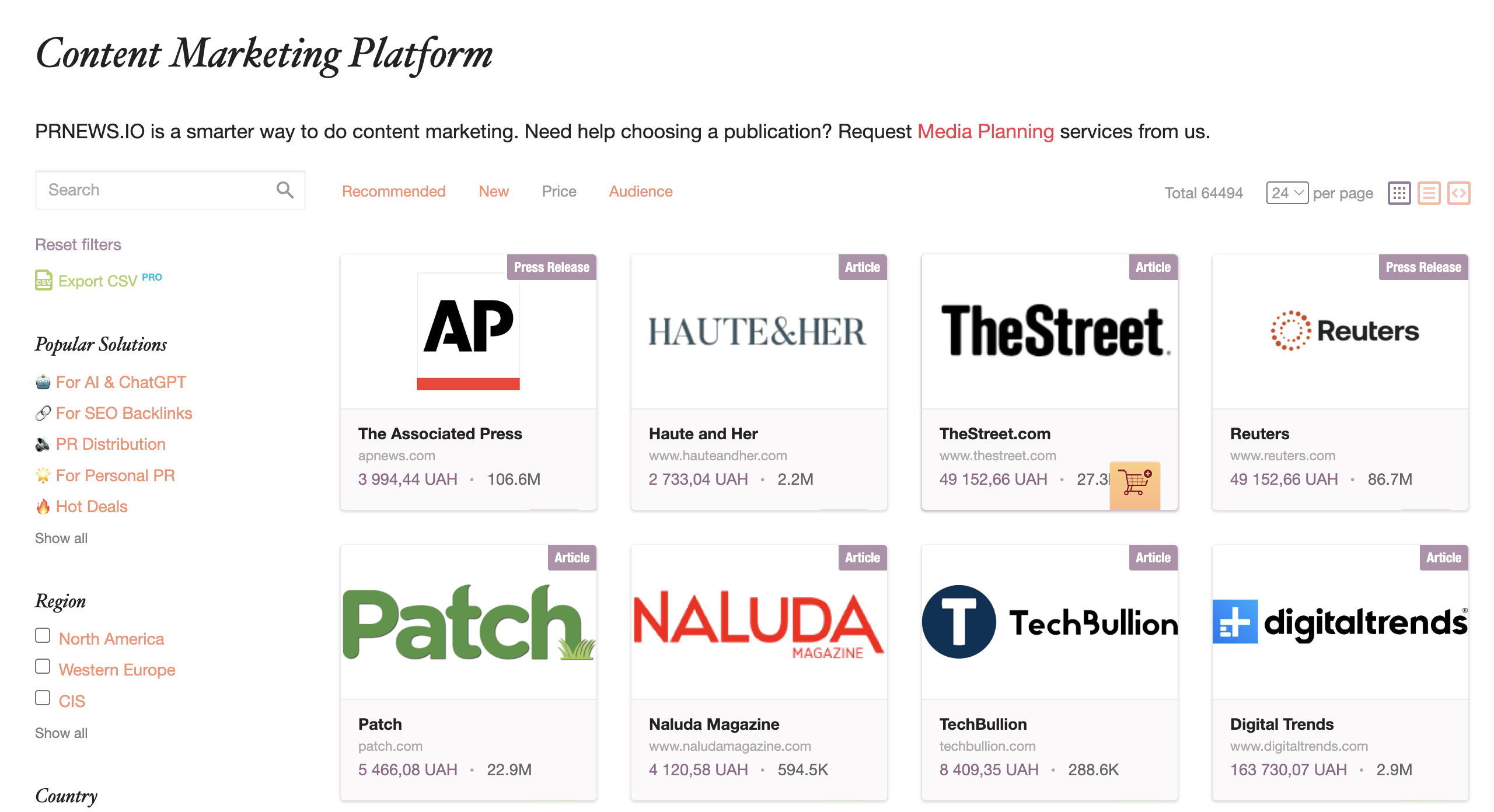
For public affairs professionals, distribution is not about promotion—it is about legitimacy, speed, and control during regulatory and policy debates.
Public affairs jobs and ESG responsibilities
Environmental, Social, and Governance (ESG) regulation has fundamentally expanded the scope of public affairs roles.
Today, PA professionals are often responsible for:
- monitoring sustainability and climate-related regulation,
- coordinating policy positions with internal ESG data and operations,
- engaging with regulators on disclosure frameworks and reporting standards,
- preventing accusations of greenwashing through evidence-backed communication.
This shift has elevated public affairs from a compliance-adjacent function to a core governance role within organizations.
Measuring success in public affairs careers
Unlike marketing or PR, public affairs performance is measured by outcomes, not outputs.
Success indicators include:
- being consulted before legislation is drafted,
- preventing unfavorable regulation or enforcement,
- securing favorable amendments or timelines,
- maintaining operational permissions across jurisdictions,
- reducing regulatory or compliance costs.
These outcomes directly affect business viability, which explains why experienced public affairs professionals are increasingly valued at executive level.
Why public affairs jobs are increasingly in-demand
Several structural trends are driving demand for PA professionals:
- expanding regulation across technology, climate, health, and data,
- geopolitical fragmentation and regional policy divergence,
- increased scrutiny of corporate behavior and ESG claims,
- rise of AI-driven misinformation and policy complexity.
As a result, public affairs jobs are among the most resilient and strategically protected roles in corporate and institutional environments.
Tips for aspiring public affairs specialists
There are certain skills and qualifications needed to thrive as a public affairs specialist. Let’s have a look at some tips on how to get started in this field:
- Build and maintain strong relationships with various media outlets and journalists, as it will play an important role in your careers. You should have the ability to handle media inquiries, pitch different stories, and organize press conferences.
- Constantly work on improving your communication skills, which is a core of public affairs. In this position, you have to be effective with your message delivery to different audiences, answer questions or concerns different parties might have, and proficiently use various communication channels, such as podcasts, newsletters, social media, and press releases.
- Consider pursuing a bachelor’s degree in the field of communication, political science, public administration, journalism, or public relations. On top of that, it would help if you volunteered in different international organizations to improve your skill set in this field.
- Develop strategic thinking methods, as it is essential to have the ability to anticipate potential challenges and opportunities at work. Effective strategies will help you assist organizations in reaching their goals and navigating through ever-evolving and complex political landscapes.
- Don’t be afraid to reach out to other Public Affairs Specialists for insights into this industry. Make sure you ask for their advice and keep their opinions in mind when it comes to strengthening your knowledge in this industry.
Final thoughts: public affairs as a career of strategic influence
Public affairs jobs are not about visibility—they are about influence without exposure. They require intellectual rigor, political awareness, ethical judgment, and the ability to operate under long-term uncertainty.
For professionals who want to work where communication, power, regulation, and strategy intersect, public affairs offers a career path that is increasingly central to how organizations survive, adapt, and grow.
As the policy environment becomes more digital, more global, and more complex, public affairs professionals equipped with analytical skills, technological tools, and credible distribution infrastructure will define the next generation of strategic influence.
Read more:
- Public Affairs Vs Public Relations: Two Sides Of The Same Coin?
- Exploring The Exciting Range Of Public Relations Jobs

Frequently Asked Questions About Public Affairs Jobs
What are public affairs jobs?
Public affairs jobs focus on managing an organization’s relationship with governments, regulators, and policy-shaping institutions. These roles aim to influence policy outcomes, reduce regulatory risk, and protect an organization’s ability to operate, rather than to build brand awareness or media visibility.
What is the difference between public affairs and public relations jobs?
Public relations jobs focus on shaping public perception and media narratives, while public affairs jobs focus on influencing policy, regulation, and decision-makers. Public affairs professionals work primarily with policymakers, regulators, and institutional stakeholders rather than mass audiences.
What qualifications do you need for a public affairs job?
Most public affairs roles require a background in political science, law, international relations, public policy, economics, or communications. Strong analytical skills, policy literacy, and the ability to write clearly for decision-makers are often more important than formal credentials alone.
Are public affairs jobs the same as lobbying?
Lobbying is one activity within public affairs, but not all public affairs jobs involve lobbying. Public affairs also includes policy monitoring, stakeholder engagement, issue management, strategic communication, and regulatory risk assessment.
What skills are most important for public affairs professionals?
Key skills include policy analysis, stakeholder mapping, strategic writing, regulatory literacy, political judgment, and risk assessment. Increasingly, employers also value data literacy, digital awareness, and the ability to manage policy narratives in online and AI-driven information environments.