The legal profession faces an era of profound transformation. Hyper-specialization, digital disruption, and shifting client expectations have made traditional competency a baseline rather than a differentiator. In this context, personal branding for lawyers has emerged as the decisive factor for professional visibility, client attraction, and sustained market relevance. Attorney personal branding is no longer a peripheral marketing tactic; it is a strategic asset. This article offers a comprehensive guide to constructing, deploying, and ethically managing a personal brand that distinguishes lawyers in competitive markets.
Defining purpose and core values
Effective personal branding begins internally. Before marketing materials, social media campaigns, or website redesigns, attorneys must perform an honest audit of their purpose, motivations, and professional values. This internal clarity:
- Guides decision-making across practice areas.
- Aligns career goals with client expectations.
- Signals authenticity to prospective clients, who increasingly evaluate lawyers digitally before the first consultation.
The brand often functions as a lawyer’s “digital first impression,” shaping perceptions long before any personal interaction.
Personal branding for lawyers in the age of AI
Today, clients often start their search not on Google, but in AI assistants like ChatGPT, which compile information from official websites, press releases, and media mentions.
This shift changes the rules of personal PR. It is no longer enough to rely solely on catchy ads or social media campaigns. What matters is accurate, consistent, and verified information about you across the digital ecosystem. In fact, a single well-crafted Wikipedia profile can bring more visibility than a multimillion-dollar marketing campaign. Classic tools, like press releases, professional directories, and structured online biographies, remain fundamental — they are where AI and journalists alike find trustworthy information.
Trust is now built through visibility and credibility. Every article, interview, award, or media mention contributes to a personal brand that signals authority and reliability. We’ve observed a nearly direct correlation between media presence and business results (0.98), proving that PR today is a measurable driver of success.
Digital assets: the foundation of personal branding in the AI era
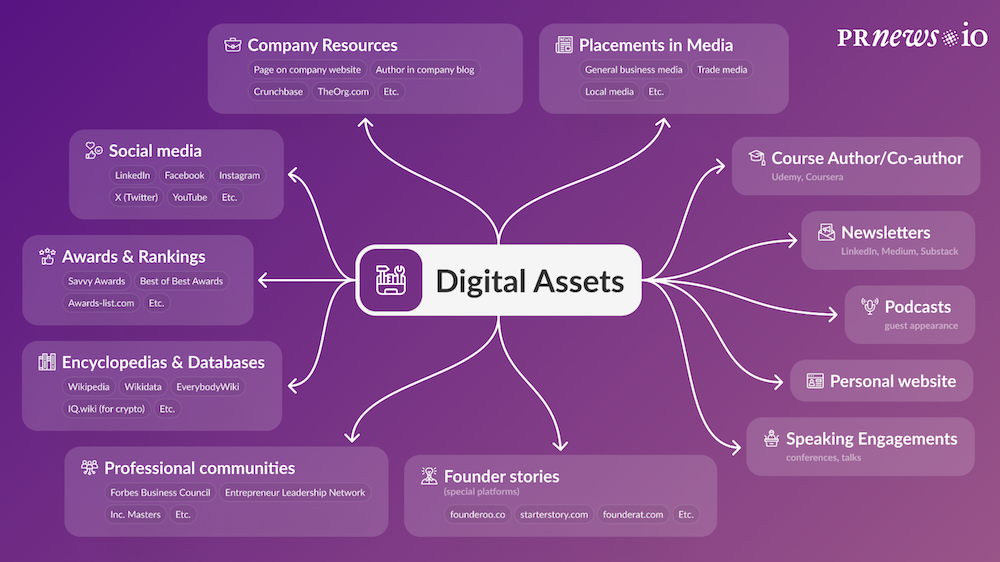
In the age of AI, personal branding is built not on one channel, but on a system of interconnected digital assets. These assets form a trusted information environment from which journalists, search engines, and AI assistants draw conclusions about who you are, what you do, and whether you can be trusted.
AI does not “discover” people randomly. It aggregates signals from public, structured, and authoritative sources. The stronger and more consistent your digital asset ecosystem is, the more accurately you are represented — and the higher your perceived credibility.
Below are the key categories of digital assets that shape a modern personal brand.
1. Personal website — the central hub
A personal website is the anchor asset of your brand. It acts as the primary source of truth for your biography, expertise, achievements, and media presence. It signals authority and provides AI systems with structured information to represent you accurately. Structured data (schema.org) helps search engines and AI understand your profile correctly.
Why it matters:
- Serves as a verified reference point for AI systems
- Consolidates all other assets (media, awards, speaking, publications)
- Allows full control over narrative and positioning
Best practices:
- Use a personal domain (firstname-lastname.com)
- Include biography, professional background, media mentions, and contact info
- Add structured data (schema.org Person markup) so search engines and AI can correctly interpret your profile
2. Media placements — external validation
Media placements are one of the strongest credibility signals in personal branding — especially in the AI era. Publications in independent media act as external validation of expertise. For AI assistants, search engines, and potential clients, media mentions confirm that a professional is recognized beyond their own channels.
For many professionals, the first challenge is simple: where do the initial media mentions come from?
At an early stage, when there is no established press history, the fastest and most controlled way to start building media presence is through media catalogs and publishing platforms.
One of these tools is PRNEWS.IO, which provides access to a large catalog of media outlets across different countries and industries. Using filters, you can select publications by:
- industry or niche,
- geography,
- language,
- domain authority and reach.
For example, within the catalog there are dedicated legal and law-related categories, where media outlets that regularly publish content about lawyers, legal practice, and regulations are collected. This allows professionals to place articles or expert materials exactly where their target audience — and AI systems — expect to find authoritative information.
Why this matters for personal branding:
- Media publications become verifiable third-party sources.
- Articles are indexed and later referenced by AI assistants.
- Early media presence helps unlock further opportunities: interviews, organic press coverage, and encyclopedic profiles.
Over time, paid or facilitated placements are complemented by organic mentions, expert quotes, and journalist requests. But the initial media layer is critical — without it, AI systems simply have nothing reliable to reference.
In the AI era, media visibility is not about one big feature — it is about building a consistent, documented media footprint that reinforces trust and authority.

3. Encyclopedias & public databases
Platforms like Wikipedia, Wikidata, and professional databases act as reference layers for AI.
Why they matter:
- Wikipedia is one of the most trusted sources for AI and journalists
- Wikidata structures facts in machine-readable form
- Databases help unify identity across platforms
A correct, well-maintained encyclopedic presence can deliver more visibility than expensive ad campaigns — especially in AI-generated answers.
4. Company resources & corporate page
If you are a founder, executive, or senior specialist, corporate assets strongly reinforce your personal brand.
Examples:
- Profile page on company website
- Author page in company blog
- Listings on Crunchbase, TheOrg, PitchBook
Why they matter:
- They link personal identity with business credibility
- AI uses corporate sources to validate roles and responsibilities
- They strengthen authority through organizational context
5. Social media profiles — identity consistency
Social platforms are identity confirmation assets, not just marketing channels.
Key platforms:
- LinkedIn (primary professional signal)
- X (Twitter), Instagram, YouTube, Facebook
Why they matter:
- AI uses them to verify identity and activity
- Consistency across profiles reduces ambiguity
- Public engagement signals relevance and expertise
Important: social media works best when it supports, not replaces, authoritative assets like media and websites.
LinkedIn remains the preeminent platform for lawyer branding strategies:
- Headline: Focus on client benefit, e.g., “Business Litigation Attorney Helping Clients Resolve Complex Disputes.”
- Summary/About Section: Clear, concise, approachable language explaining professional identity and goals.
- Experience & Skills: Highlight accomplishments with quantifiable results.
- Recommendations: Social proof from clients and colleagues reinforces trust.
Content strategy
| Content Type | Purpose | Outcome |
| Industry Commentary | Demonstrates insight on legal trends | Thought leadership |
| Client-Safe Success Stories | Illustrates results without confidentiality breaches | Credibility and proof |
| Behind-the-Scenes | Showcases firm culture and mentoring | Humanization |
| Polls & Q&A | Engages audience in dialogue | Network growth |
Consistency and authenticity, especially in video or short-form media, improve reach and engagement.
6. Professional communities & expert clubs
Membership-based communities provide institutional credibility.
Examples:
- Forbes Business Council
- Entrepreneur Leadership Network
- Industry associations
Why they matter:
- Membership implies vetting and professional recognition
- Many allow publishing expert articles that are indexed and cited
- AI treats these platforms as semi-authoritative sources
A personal brand extends beyond digital platforms:
- Pro Bono Work: Demonstrates values and competence.
- Board Service: Signals leadership and community integration.
- Local Sponsorships: Visibility and alignment with community values enhance brand trust.
Documenting offline engagement through digital channels reinforces both credibility and accessibility.
7. Awards & Rankings — Formal Trust Signals
Awards are structured proof of expertise and recognition.
Why they matter:
- They are easy for AI to interpret as authority markers
- They enrich Google Knowledge Panels
- They strengthen credibility for first-time clients
Even lesser-known awards add value when they are verifiable and documented.
8. Educational Assets (Courses, Authorship)
Being a course author or co-author signals knowledge leadership.
Examples:
- Udemy, Coursera courses
- Educational programs or workshops
Why they matter:
- Teaching is a strong authority indicator
- AI associates educators with expertise
- Enhances trust for consultants, realtors, and advisors
9. Podcasts & Speaking Engagements
Public speaking and podcast appearances humanize the brand.
Why they matter:
- Demonstrate recognition by third parties
- Create conversational and contextual data for AI
- Build emotional trust beyond static content
Conference talks, panels, and guest podcasts all reinforce visibility.
10. Newsletters & Long-Form Thought Leadership
Owned content channels help shape ongoing narrative.
Examples:
- LinkedIn newsletters
- Medium or Substack publications
Why they matter:
- Show consistency of expertise over time
- Provide fresh, indexable content
- Strengthen topical authority in AI systems
11. Founder Stories & Personal Narratives
Platforms dedicated to founder or professional stories add depth and personality.
Examples:
- Founderoo
- StarterStory
- Founderat
Why they matter:
- Create narrative context, not just facts
- Help AI understand “who you are,” not only “what you do”
- Increase memorability and differentiation
Why digital assets work together
No single asset is decisive on its own.
Personal branding in the AI era is about architecture, not isolated actions.
When these assets are:
- consistent,
- interconnected,
- publicly accessible,
- and regularly updated,
they create a clear, authoritative digital footprint that AI systems can confidently use to represent you.
In this new reality, visibility equals trust, and trust directly influences business decisions — long before the first meeting or call.
Crafting a UVP and selecting a strategic niche
The Unique Value Proposition lies at the heart of attorney personal branding. A UVP articulates how an attorney’s skills, experience, and approach uniquely solve client problems. To remain credible, the UVP must reflect real-world competence rather than aspirational claims.
Research shows that clients favor niche expertise over generalist knowledge. Focusing on a specific legal area:
- Simplifies the client decision-making process.
- Amplifies recognition within targeted markets.
- Reinforces the perception of authority and reliability.
| Specialized Legal Niche | Target Audience | Strategic Branding Benefit |
| Tech Startup Intellectual Property | Early-stage founders | Authority in innovation protection |
| High-Net-Worth Divorce | Affluent families | Demonstrates discretion and mastery of complex financial issues |
| Cross-Border Estate Planning | Multinational families | Positions attorney as a global tax and regulatory navigator |
| Renewable Energy Compliance | Clean energy firms | Signals alignment with evolving regulations |
| Single-Parent Family Advocacy | Divorcing parents | Humanizes practice through empathetic branding |
Selecting a niche requires self-awareness and deliberate skills acquisition to ensure the UVP is both credible and compelling.
Narrative architecture: humanizing legal expertise
By 2025, the “likability factor” has become a critical determinant in client retention. Legal clients often arrive at consultations with technical competence already verified; the differentiating factor becomes interpersonal resonance.
- Attorneys must incorporate personal stories, motivations, and passions into professional biographies.
- Social media serves as a platform for authentic storytelling, combining personal and professional identities.
- Narrative-based branding strengthens trust, deepens client relationships, and enhances collaborative environments.
The integration of personal narratives creates a holistic brand that conveys both expertise and relatability.
Visual identity
A lawyer’s visual identity communicates credibility before words are read. In 2025, design trends emphasize clarity, psychological comfort, and trust signaling.
Color psychology in legal branding
| Color Palette | Psychological Association | Ideal Application |
| Navy & Slate Blue | Trust, calm, intelligence | Corporate law, finance |
| Charcoal & Black | Authority, sophistication | Criminal defense, high-stakes litigation |
| Forest & Sage Green | Balance, renewal, growth | Estate planning, elder law |
| Crimson & Bold Red | Energy, fierce advocacy | Personal injury, workers’ compensation |
| Beige & Warm Gray | Approachability, grounding | Family law, mediation |
Consistency in color palettes fosters emotional loyalty. Studies indicate a 12–18% drop in engagement when brand colors change unexpectedly.
Web Design: Bento UI and glassmorphism
- Bento Design: Modular layouts inspired by Japanese bento boxes organize information into intuitive, stress-reducing blocks.
- Glassmorphism: Modern overlay and transparency effects create depth, lightness, and perceived sophistication.
- Eco-Design Principles: Optimized for energy efficiency and accessibility, signaling professionalism and sustainability.
Ethical compliance in personal branding
Branding for lawyers must comply with ABA Model Rules, especially Rules 7.1–7.5:
- Truthfulness (7.1): Avoid material misrepresentations; focus on verifiable achievements.
- Specialization Claims (7.2(c), 7.4): Only claim specialty if certified by approved organizations.
- Solicitation and Firm Names (7.3, 7.5): Respect limitations on client acquisition and naming conventions.
- AI Content Ethics: Human oversight is required for AI-generated marketing; confidentiality and bias must be carefully managed.
In 2026, a lawyer’s reputation is largely defined online:
- Client Reviews: Integrate review requests into case closure procedures; manage negativity professionally.
- Third-Party Validation: Leverage media mentions, awards, and bar association affiliations.
- Scholarly Presence: Publish in law journals or SSRN to build thought leadership.
- Speaking Engagements: Conferences and webinars amplify credibility and networking opportunities.

Media presence: amplifying authority through press coverage
Media exposure has become a critical pillar of personal branding for lawyers. Articles, interviews, and mentions in reputable publications serve as third-party validation, reinforcing credibility and authority far beyond what a lawyer’s own marketing materials can achieve. Media coverage communicates expertise to both potential clients and peers, often before any direct engagement occurs.
Why media mentions matter
- Trust and Authority: Being featured in respected outlets signals legitimacy and reliability. Prospective clients are more likely to engage with attorneys who are visible and cited in professional or mainstream media.
- Search Visibility: Media articles often rank highly in search engines, providing a persistent digital footprint that supports a lawyer’s online presence.
- Thought Leadership: Contributing articles or commentary on legal developments positions attorneys as experts who actively shape and interpret the law.
- Referral Magnet: Journalists, industry analysts, and fellow lawyers often reference widely-published articles, increasing opportunities for high-quality referrals.
PRNEWS.Io as a strategic tool for lawyer media outreach
PRNEWS.Io simplifies the distribution of press releases and professional articles to a wide network of media outlets. For lawyers and law firms, it offers several strategic advantages:
Targeted Media Distribution: PRNEWS.Io allows lawyers to reach journalists and publications relevant to their niche, whether it’s corporate law, intellectual property, or family law.
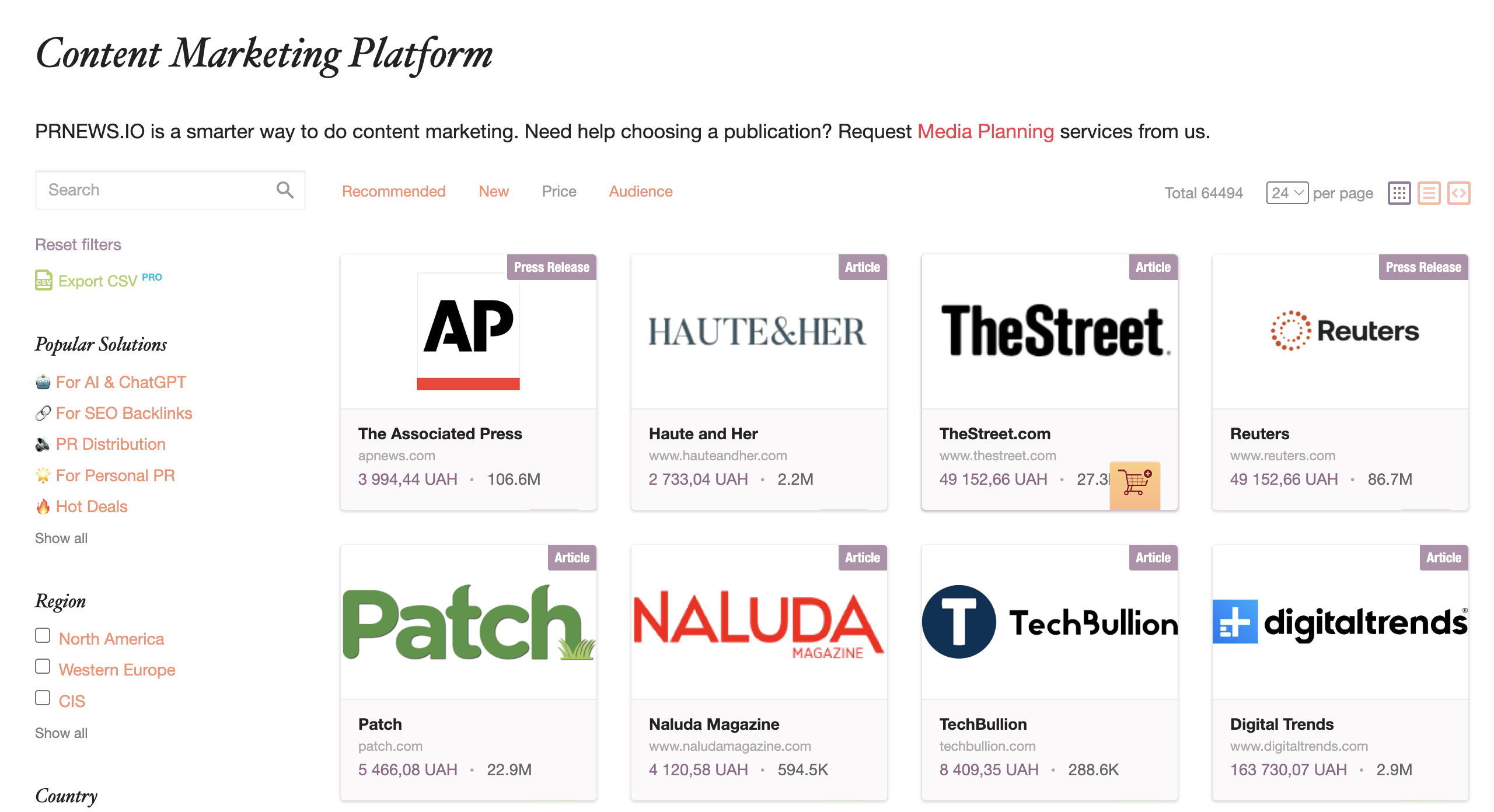
SEO Benefits: Press releases published through PRNEWS.Io include backlinks to a lawyer’s website or LinkedIn profile, boosting search engine authority and visibility.
The platform automates outreach to hundreds of media contacts, saving significant time compared to manual emailing.
By integrating PRNEWS.Io into a personal branding strategy, attorneys can consistently publish newsworthy content, enhance their professional reputation, and reinforce their position as thought leaders in their practice area. For example, a lawyer specializing in renewable energy compliance could release insights on new regulations or landmark cases, gaining recognition among both clients and industry peers.
Conclusion
Personal branding for lawyers in 2026 is a strategic synthesis of niche expertise, narrative humanization, visual design, digital engagement, ethical compliance, and technology adoption. The ROI is transformational: an attorney evolves from a commodity service provider into a trusted, referable advisor.
By committing to authenticity, consistency, and continuous engagement, lawyers not only attract ideal clients but also achieve professional growth and resilience in a market dominated by automation and hyper-specialization.