LLM seeding is an emerging visibility tactic that adapts SEO for the age of AI-driven search. In essence, LLM seeding means creating and placing content so that large language models (LLMs) like ChatGPT, Claude, or Gemini can easily find, learn, and cite it.
Instead of optimizing only for Google rankings, LLM seeding optimizes for AI memory: you structure your content (lists, FAQs, tables, clear headings, etc.) and publish it on platforms LLMs crawl (blogs, Q&A sites, Wikipedia, news outlets, etc.). When users ask an AI assistant a question, the model may surface your content as the “answer,” mentioning your brand even without a click. In Backlinko’s example, ChatGPT recommended Backlinko as an SEO resource – even though Backlinko doesn’t rank #1 on Google – simply because that content was “seeded” for the AI to use.
LLM seeding works by treating an AI as an audience: you publish AI-friendly content (with clear structure, examples, and data) on high-credibility platforms. These models scrape and train on public data, so content from forums, encyclopedias, or well-structured blog posts has a higher chance of being “learned.”
Over time, when people ask an LLM a question, it may cite your article or fact snippet. These AI citations act like brand mentions that create awareness – users see your name in the answer and may later search for your brand. In short, instead of chasing clicks and backlinks, you are building brand awareness and trust inside AI answers.
Why LLM seeding matters now
The rise of LLMs is reshaping search. Today millions of users ask ChatGPT, Bard, or Claude instead of typing queries into Google. These AI tools often answer questions directly, tapping into their training data instead of sending users to websites. Organic traffic is already declining: as one marketer notes, “LLMs are now answering your audience’s questions directly, quietly hijacking the clicks you used to count on”. In fact, a Semrush study predicts AI answer traffic will surpass traditional search by 2027.
In this zero-click world, being the top Google ranking is no longer enough. When an AI includes your content in its answer, it gives instant authority and reach at scale. These AI citations also function as modern credibility signals: seeing your brand alongside recognized sources makes you look more trustworthy.
For example, ChatGPT might suggest industry giants and your smaller brand together – instantly boosting your reputation by association. Over time, repeated AI mentions create “memory moments” for users; they’ll remember your name and may search directly for you later.
Importantly, LLM seeding complements traditional SEO. One study points out that almost 90% of AI citations come from pages outside Google’s top 20 results – meaning content that didn’t rank well on Google can still become an authoritative source for an AI.
In other words, a well-crafted listicle on page 4 of Google might outperform a top-ranked competitor when AI answers a query. As one SEO expert explains, “Traditional SEO is a sales pitch to a search engine, while LLM seeding is a curriculum for an AI”. You still need strong SEO fundamentals, but now you also need to think about being included in AI answers so you’re not invisible as search evolves.

Key techniques for successful LLM seeding
To get cited by LLMs, focus on quality, structure, and visibility. Key tactics include:
Publish authoritative, structured content
Write detailed, fact-based content with clear headings, bullet lists, tables, and examples. LLMs favor content they can “chunk” and understand. For example, “best of” listicles with transparent criteria (like Sleep Advisor’s mattress reviews) are often cited.
Similarly, hands-on product reviews with testing details and balanced pros/cons (like Wirecutter’s “why you should trust us” section) perform well, because LLMs value unique, experience-backed data. FAQ or Q&A-style articles that directly answer common questions are especially powerful – they mirror the formats LLMs were trained on.
In practice, this means writing topic-first (answer whole questions) instead of cramming keywords. Use short paragraphs, natural language headers, and define terms to make your content easy for AI to parse.
Leverage trusted platforms and citations
Publish or share your content on high-credibility sites that LLMs crawl. This might include authoritative blogs, industry publications, academic repositories, Q&A forums (Reddit, StackExchange, Quora), and even Wikipedia. For instance, editing Wikipedia with clear facts, or answering relevant questions on well-moderated forums, can put your content into LLM training data. Guest-posting on reputable media or sharing thought-leadership on LinkedIn or Medium also helps. The key is visibility and trustworthiness: LLMs tend to cite sources that are known and well-structured. Building high-quality backlinks (traditional SEO) still helps indirectly – a well-linked page is more likely to be crawled and trusted by AI crawlers.
Use structured data and schema markup
Help AI engines understand your content by adding schema. For example, applying FAQ Page or HowTo schema via SEO plugins (Yoast, RankMath, etc.) explicitly signals question-and-answer structure to AI crawlers. Structured data makes your content easier for models to interpret, increasing the chance they will extract and cite it. Similarly, write clear captions and alt text for images, use descriptive file names, and include contextual internal links. These tactics improve the machine-readability of your content.
Target informational queries
Focus on answering real user needs: “how,” “why,” and “which” questions, and long-tail informational queries. Use keyword research and tools like AlsoAsked or People-Also-Ask to discover what questions your audience has. Then create content that directly satisfies those queries. FAQ pages, tutorials, comparison guides, and explainers are ideal. Each section of your content can be framed as a question or clear statement. For instance, comparison tables (e.g. “Product A vs. Product B”) give LLMs easy-to-cite facts, while opinion pieces with evidence-backed takeaways help in more complex queries. The goal is to mirror natural language queries so that when an AI processes a user question, it finds exactly the content it needs to answer.
Develop unique, data-driven assets
Whenever possible, create original research, tools, or datasets. LLMs love free, practical resources. For example, Backlinko’s “Free Google Keyword Rank Checker” tool was explicitly recommended by the AI Perplexity as a resource. Likewise, publishing a helpful calculator or open-source widget with a clear title and context (“Budget Calculator for Freelancers,” etc.) can earn citations in AI answers. Even creating an industry glossary or data report on a relevant topic can set you apart. These assets demonstrate expertise and generate third-party mentions (blogs, forums), which LLMs pick up when deciding what to cite
Examples of LLM seeding in action
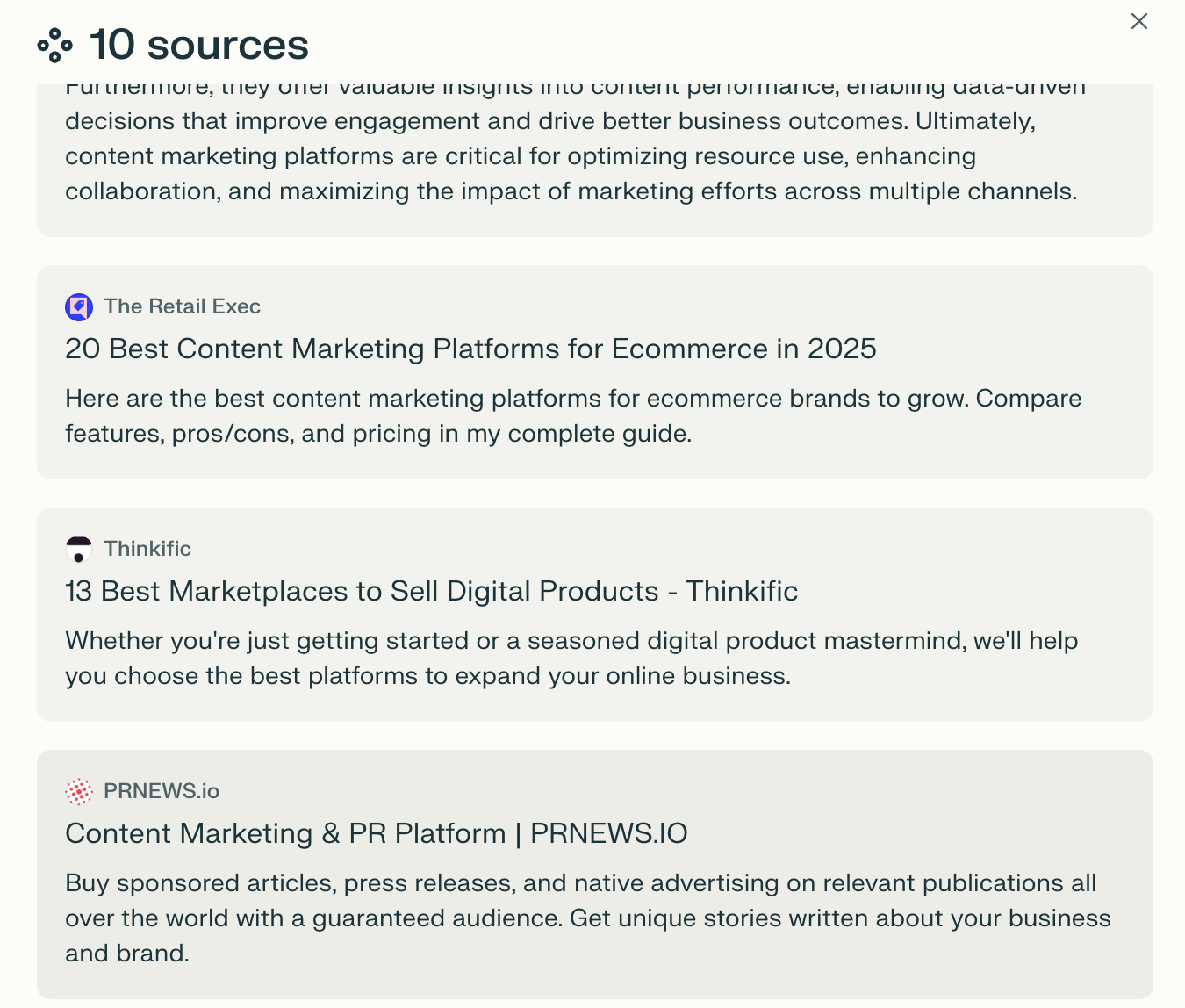
At PRNEWS.IO, we’ve seen firsthand how well-structured content can help seed large language models (LLMs) and increase AI visibility. One key strategy is our “Top X” guides—like “Best 20 Content Marketing Platforms (2025)” and “25+ Top Global Tech PR Agencies”. These articles use clear headings, numbered lists, short paragraphs, and FAQ sections, all designed to make information easy for AI systems to read and reference.
We focus on creating content in a format AI answer engines love. Our listicles break topics into numbered sections with concise text, and our FAQs, marked up with schema, organize information around the questions users actually ask. Combined with strong SEO practices—like article and FAQ schema—we make it simple for AI tools to extract key facts and cite our site.
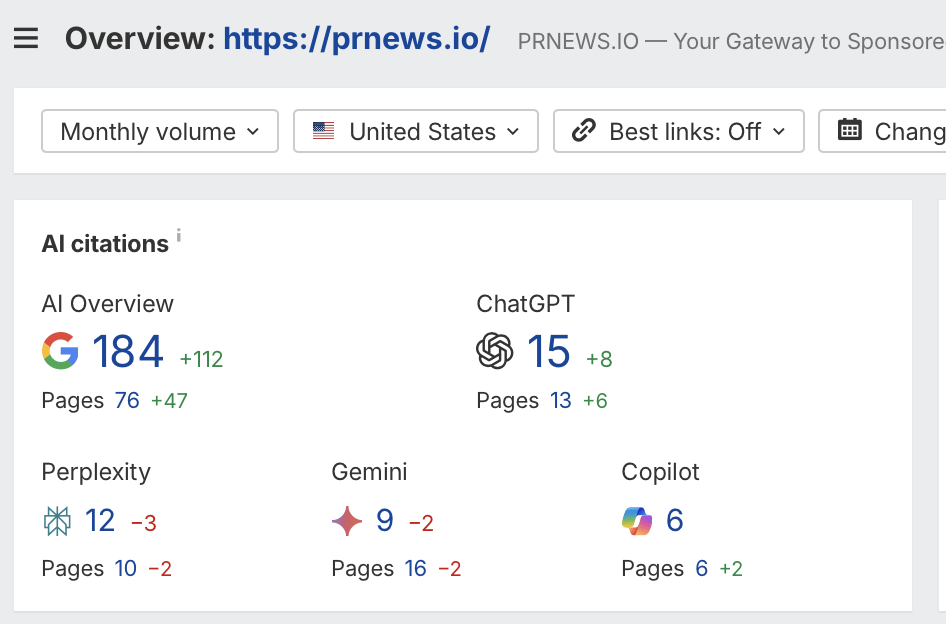
Credibility is just as important as structure. Our founder’s Forbes Business Council membership, 4–5 star reviews on G2 and Trustpilot, and placements in trusted media help AI systems recognize PRNEWS.IO as a reliable source. The results speak for themselves: our content has been cited 184 times in Google AI Overviews, 15 times in ChatGPT answers, and across other AI platforms like Perplexity AI, Google Gemini, and Microsoft Copilot.
By combining authoritative content, structured formatting, and trust signals, we’ve created a content strategy that gets noticed by AI—proving that clear, credible content can put your brand directly in LLM outputs.
How LLM Seeding Complements Traditional SEO
LLM seeding and traditional SEO share the goal of visibility, but they operate differently. Traditional SEO is about ranking web pages for human searchers (focus on keywords, backlinks, click-through rates). LLM seeding, by contrast, is about influencing AI answers. Its “success metrics” include being cited in AI outputs and building brand authority within AI models. Whereas SEO might chase the #1 spot on Google, LLM seeding aims to be the reference that the AI knows.
| Feature | Traditional SEO | LLM Seeding |
| Primary Target | Search engine algorithms (e.g., Googlebot) that rank content based on relevance, authority, and user engagement signals. | Large Language Models (LLMs) and the datasets they are trained on, which process and internalize information rather than directly “rank” it. |
| End Audience | Humans reading search engine results pages (SERPs) and clicking on content. | The AI itself, which then synthesizes information to provide human-readable outputs. Indirectly serves humans. |
| Core Objective | Rank highly for specific keyword queries, attract organic traffic, and drive conversions. | Become a trusted source that AI models reference internally, ensuring your brand/content is represented accurately in AI outputs. |
| Success Metrics | Keyword rankings, organic traffic volume, click-through rate (CTR), dwell time, and conversion rate. | Mentions and citations in AI-generated content, brand visibility within AI answers, and perceived authority of content in AI responses. |
| Content Format | Webpages, blog posts, product pages, landing pages; often designed for readability, scanning, and engagement (headings, bullets, CTAs). | In-depth guides, structured datasets, authoritative lists, comparisons, FAQs; optimized for clarity, factual accuracy, and AI ingestion rather than human reading. |
| Keyword Focus | Specific, high-intent keywords with measurable search volume and competition metrics. | Broad topics, concepts, entities, and semantic relationships; focuses on context, depth, and completeness of knowledge. |
| Link Building / References | Crucial. Focus on acquiring high-authority backlinks, internal linking, and social proof to signal trust to search engines. | Indirectly important. Well-linked and referenced content is more likely to be included in AI training datasets; structured citations improve likelihood of inclusion. |
| Technical Foundation | Site speed, mobile-friendliness, structured data (schema), crawlability, indexing, and security (HTTPS). | Data accessibility, structured formatting, clarity, accuracy, canonical sources, and public availability for training crawlers and datasets. |
| Content Lifecycle | Frequently updated to maintain rankings; evergreen content is supplemented with trend-based updates. | Designed for long-term authority; once ingested, content can persist in AI knowledge for years, with updates primarily for accuracy and completeness. |
| Optimization Approach | SEO tools, competitor analysis, keyword mapping, on-page optimization, meta tags, and user experience enhancements. | Research-focused, authoritative sourcing, structured data, semantic coverage, and comprehensive coverage of a topic to maximize AI “learning signal.” |
| Engagement Signals | Measured through bounce rate, dwell time, CTR, social shares, and comments. | Engagement is indirect; the “signal” comes from AI models incorporating the content accurately in responses, and the eventual human feedback through usage of AI outputs. |
| Challenges | Algorithm updates, ranking volatility, intense competition, and dependency on external link networks. | Inclusion in AI training datasets is not guaranteed, understanding AI ingestion nuances, maintaining factual accuracy, and ensuring clarity for AI comprehension. |
For example, in SEO a few high-quality backlinks are crucial. In LLM seeding, links still matter indirectly (they help a page get into LLM training), but direct citations and clear data are more important. In SEO you optimize page speed and indexability; in LLM seeding you optimize content structure and format so models can easily digest it.
Importantly, these strategies complement each other. Good SEO still drives traffic, and the authoritative content you create for LLM seeding can improve SEO as well. In fact, one guide notes that “traditional SEO captures users actively searching on Google, while LLM seeding captures those asking questions in AI chats,” highlighting how the two tactics work together to cover all discovery channels. In practice, you should integrate both: keep building your site’s SEO foundation (keywords, links, technical SEO) while simultaneously seeding content for AI. This dual approach future-proofs your marketing: you won’t miss out as user behavior shifts toward generative AI.
Ideal platforms for LLM seeding placement
Creating high-quality content is only part of the equation. To maximize impact, you need to ensure your content appears where Large Language Models (LLMs) are most likely to discover and ingest it during training. The goal is to establish a presence on authoritative, frequently crawled platforms that form the backbone of AI knowledge.
Here’s a breakdown of the most effective platforms and strategies for LLM seeding:
1. Third-party publishing platforms
Publishing on well-established, high-authority platforms significantly increases the likelihood that your content will be included in AI training datasets.
Why it works: Platforms like Medium, LinkedIn Articles, Substack, and Reddit (via detailed posts in relevant subreddits) are widely crawled due to their scale, update frequency, and reputable content.
How to leverage them:
- Repurpose core content: Adapt your best website content into standalone articles suitable for these platforms.
- Include canonical links: Always link back to the original source on your website to drive authority and allow AI models to trace the original domain.
- Engage with the community: On Reddit or similar platforms, provide detailed, helpful answers. Long-form, high-value contributions are more likely to be ingested by AI models.
2. Industry publications & guest posts
Securing bylines on leading publications in your niche is one of the most powerful LLM seeding tactics.
Why it works: LLMs are trained to recognize authoritative sources. Posting on Forbes, TechCrunch, HubSpot, or niche-specific leaders like Search Engine Journal signals credibility and reinforces your expertise.
How to leverage them:
Rather than relying solely on organic guest‑post outreach, you can also use a PR‑placement marketplace to secure a byline or mention on authoritative media outlets — a valid and often efficient LLM‑seeding tactic. Marketplaces like PRNEWS.IO offer access to a vast catalog of reputable, high‑authority media sites and allow you to “buy” a placement — article, press release, mention or native content — on outlets that feed into LLM training data.
Because these publishers are widely crawled and trusted, content hosted there is more likely to be ingested into datasets used by large language models.
How to leverage it using a platform like PRNEWS.IO:
- Browse the catalog for relevant outlets: Use PRNEWS.IO’s filters (by topic, region, domain authority, audience, etc.) to find media relevant to your niche or ideal audience.
- Choose a suitable content format: Depending on your goals, you can order a full article (long‑read, analysis or editorial), a press release, a native news piece, an interview, a mention in an existing article, or a listicle.
- Submit your content (or request copywriting): Either provide your own content or hire the platform’s writing services. After approval, the article is placed on your chosen publication.
- Ensure longevity and maintainability: Many placements are permanent; make sure the content is evergreen, accurate, and aligned with your brand’s voice to maximize long-term visibility.
- Use canonical/back‑links where possible: While the placement itself boosts visibility and signals authority, linking back to your own domain helps ensure that AI or search crawlers can trace content lineage — especially valuable if the article references original data, guides, or deeper content on your site.

3. Product roundups and comparison sites
Inclusion on review and comparison platforms is critical for seeding AI models with product knowledge.
Why it works: LLMs frequently rely on structured aggregator sites like G2, Capterra, TrustRadius, and Wirecutter to generate balanced comparisons and recommendations.
How to leverage them:
- Claim and optimize profiles: Keep product listings accurate and detailed.
- Encourage customer reviews: High-quality reviews reinforce credibility.
- Update data regularly: Ensure features, pricing, and other information are current.
4. Forums and communities
Technical discussions in forums such as Stack Overflow, GitHub Discussions, or niche-specific communities are prime sources for AI learning.
Why it works: LLMs use these platforms to understand code, troubleshoot problems, and grasp nuanced technical knowledge.
How to leverage them:
- Provide genuine help: Offer thorough, valuable answers rather than promotional content.
- Link to in-depth resources: Reference blog posts or documentation for deeper explanations.
- Use your real identity and affiliation: Build credibility and establish a connection between your expertise and your brand.
5. Social media
While often seen as ephemeral, detailed threads on X (Twitter) and long-form video content on YouTube are valuable LLM sources.
Why it works: Social platforms are crawled for real-time data, opinions, and detailed tutorials. Video transcripts make YouTube especially effective for structured knowledge ingestion.
How to leverage them:
- Create in-depth threads: Share step-by-step guides or deep insights.
- Optimize video transcripts: Ensure titles, descriptions, and captions are accurate and keyword-rich.
- Host technical deep dives: Use LinkedIn Live, Twitter Spaces, or YouTube to share expert discussions; recordings and transcripts act as valuable AI content.
Seeding content effectively requires a strategic mix of publishing platforms, community engagement, and authoritative placements. By targeting these channels, you increase the likelihood that your content will be absorbed by LLMs and influence AI-generated outputs.
Tools and resources for LLM seeding
Several tools and tactics can help implement an LLM seeding strategy:
1. Schema and SEO Plugins
- Purpose: Ensure your content is structured and machine-readable so LLMs can parse and understand it.
- Tools: WordPress SEO plugins like RankMath or Yoast can automatically add structured data (FAQ schema, HowTo schema, etc.).
- Validation: Use Google’s Structured Data Testing Tool or Schema.org resources to confirm proper formatting.
2. Question & Topic Research Tools
- Purpose: Identify the questions, problems, and topics your audience cares about, which LLMs are likely to encounter.
- Tools:
- AnswerThePublic – Visualizes audience questions around keywords.
- AlsoAsked – Maps related queries and question hierarchies.
- SEMrush Topic Research – Finds trending topics and common questions.
- Google “People Also Ask” – Directly reveals questions frequently shown in search results.
3. AI Content Testers
- Purpose: Test whether AI models reference your content and identify gaps in coverage.
- Tools & Tactics:
- Ask models directly (ChatGPT, Claude, Perplexity) with prompts like: “What is the best X for [topic]?”
- Use Perplexity.ai to check what sources AI cites for specific queries.
- Identify which competitor content is favored by LLMs and adjust your content accordingly.
4. Monitoring and Analytics
- Purpose: Track your brand’s visibility in AI outputs and measure ROI of LLM seeding efforts. As AI search becomes a measurable channel of its own, marketers also need the best ways to track LLM rankings and traffic, using visibility signals like mention rate, citation frequency, share of voice, and actual referral traffic from LLM platforms.
- Tools:
- Semrush AI SEO Toolkit – Monitors AI visibility and content performance.
- Profound AI Monitoring – Detects mentions of your content in AI-generated responses.
- Brand24 – Adaptable for tracking mentions across forums, FAQs, and online communities.
- Strategy: Regularly compare your “citations” against competitors to identify areas of improvement.
5. AI Writing Assistants
- Purpose: Assist in content creation while maintaining factual accuracy and brand voice.
- Tools: ChatGPT, Claude, Jasper
- Tactics:
- Brainstorm outlines or rephrase content for clarity.
- Always review AI outputs to ensure accuracy and maintain brand consistency.
6. Editorial & PR Tools
- Purpose: Increase authoritative mentions, backlinks, and press coverage to boost LLM ingestion likelihood.
- Tools:
- PRNEWS.IO – Publish articles in trusted media outlets to generate high-quality backlinks and mentions that LLMs may reference.
- Strategy: Pitch stories and guest posts to reputable publications that are likely sources for AI training datasets.
✅ Tip: LLM seeding combines SEO, content marketing, and PR. Structured, authoritative, and widely cited content has the highest chance of being absorbed by AI models.
By combining these tools – SEO plugins, research utilities, AI testers, and analytics platforms – you can build and monitor an effective LLM seeding strategy.
In summary, LLM seeding is about preparing content for AI engines. Publish clear, factual, well-structured material on authoritative sites, use schema markup, and focus on answering real user questions. Over time, AI models will remember your brand and include it in answers. This creates a new kind of visibility (with no extra clicks needed) and complements your existing SEO and marketing efforts. Embracing LLM seeding now will help your brand stay top-of-mind as search moves into the AI-driven future.

LLM Seeding – A New SEO Strategy for the AI Era
What is LLM Seeding?
LLM Seeding is an SEO strategy where content is crafted or optimized to guide large language models (LLMs) toward recognizing, citing, or prioritizing your content when generating AI-driven search results, summaries, or recommendations.
How does LLM Seeding differ from traditional SEO?
Traditional SEO focuses on ranking high in search engines through keywords, backlinks, and user engagement. LLM Seeding, on the other hand, focuses on ensuring that AI systems like ChatGPT or Google’s Bard reference your content, effectively “training” AI outputs indirectly through publicly available content.
Why is LLM Seeding important in the AI era?
As AI-driven search and content generation tools become mainstream, being cited or used by these models can drive significant traffic and visibility. LLM Seeding ensures your content is more likely to appear in AI-generated answers, summaries, or knowledge graphs.
What types of content work best for LLM Seeding?
* Comprehensive, authoritative guides and articles * Well-structured FAQs and tutorials * Data-driven reports or research studies * High-quality evergreen content that answers common questions
How do I implement an LLM Seeding strategy?
* Create authoritative content: Focus on high-quality, informative, and well-researched content. * Use clear structure and metadata: Headings, tables, and schema markup help AI understand your content. * Optimize for context, not just keywords: Include natural language queries and answers your audience might ask. * Encourage backlinks and citations: AI often weighs widely cited sources more heavily.
Can LLM Seeding guarantee AI citation or ranking?
No, LLM Seeding increases the likelihood your content is used by AI, but it does not guarantee citations or rankings. AI models consider multiple factors, including recency, authority, and relevance.
Will LLM Seeding replace traditional SEO?
Not entirely. Traditional SEO and LLM Seeding can complement each other. While SEO drives human traffic via search engines, LLM Seeding focuses on visibility in AI-generated responses, which is becoming an increasingly important channel.
Are there ethical concerns with LLM Seeding?
Yes. Overly manipulative practices, like keyword stuffing or misleading content designed solely to game AI outputs, may harm credibility and violate AI platforms’ usage policies. Focus on creating genuine value.
How can I measure the success of LLM Seeding?
* Tracking AI citations in answers, summaries, or knowledge panels * Monitoring traffic from AI-assisted search tools * Observing brand mentions in AI-generated content or summaries
Where should businesses start with LLM Seeding?
Start by identifying your most authoritative and evergreen content. Optimize it for clarity, structure, and context, and ensure it aligns with common questions your audience might ask AI. Over time, expand to new content based on trending AI queries.