If you chase something for a long time, burnout will inevitably set in sooner or later. In this case, it was marketers who chased clicks because they believed these digital interactions influenced interpretations of intent and behaviour. Their ultimate goal was to understand us better so they could sell to us more effectively. However, the zero-click policy is now upending everything. Artificial intelligence and the emergence of generative search results, snippets, and information blocks mean that an increasing number of search queries do not result in a single click.
The zero-click marketing strategy aims to provide access to information without requiring additional clicks. This novel approach has the potential to enhance customer engagement and satisfaction considerably, so let’s dive in!
What is zero-click marketing?
A zero-click search is when a user finds what they’re looking for without having to click on a link on a search engine results page. In addition, this can also apply to other forms of search that don’t lead to a search engine results page (SERP), such as voice search and in-app search via social media apps, shopping apps, or tools like Google Maps.
Hence, zero-click marketing is not about driving traffic to your website, but about offering immediate and valuable engagement right where your audience is currently engaged. So, zero-click strategies make sure that brands are always meeting their audience where they are, right? Like, whether that’s through Google’s featured snippets, fun social posts, interactive content, and so on.
Zero-click marketing channels & examples
As they do not require funding, zero-click marketing campaigns can take many forms. You can use any social network for this purpose. Below are some examples of zero-click marketing channels:
Google snippets
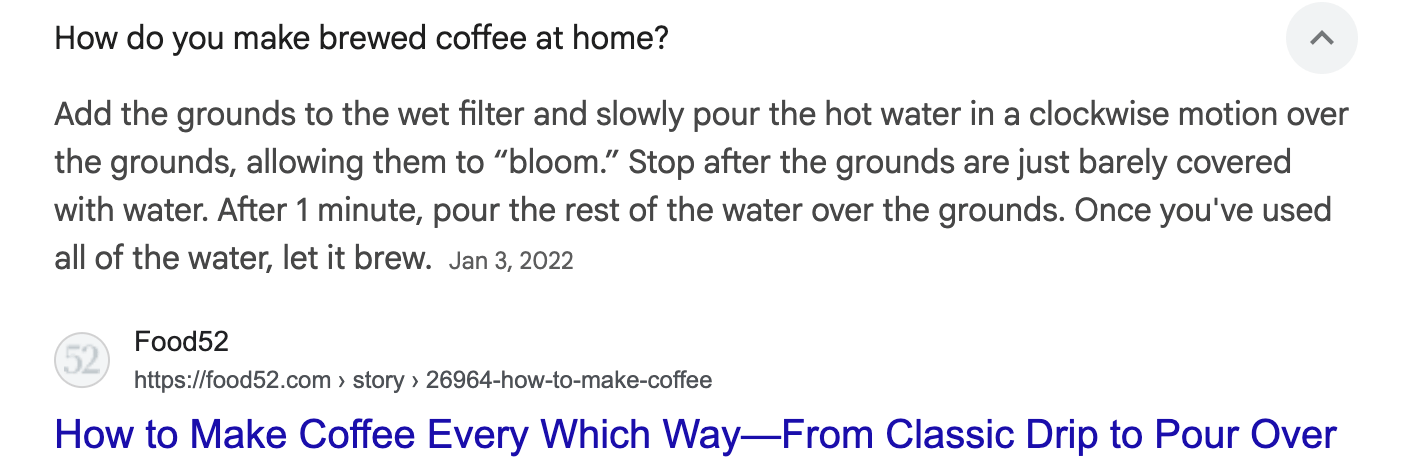
For example, if you enter the query ‘How do you make brewed coffee at home?’, Google can show a block with a definition taken from a specific site right at the top of the SERP. Google may show a definition block at the top of the SERP, taken from a specific site. Users see a short answer, the brand, and a link to the source, but often do not click on it. Other examples of zero-click elements on Google include: The Knowledge Panel, ‘People Also Ask’, the Google Maps local pack, and the Weather box. If your site appears in the featured snippet for the query ‘How do you make brewed coffee at home?’, users will be able to read step-by-step instructions on the Google page. However, they will still see the name and URL of your site — this is zero-click exposure.
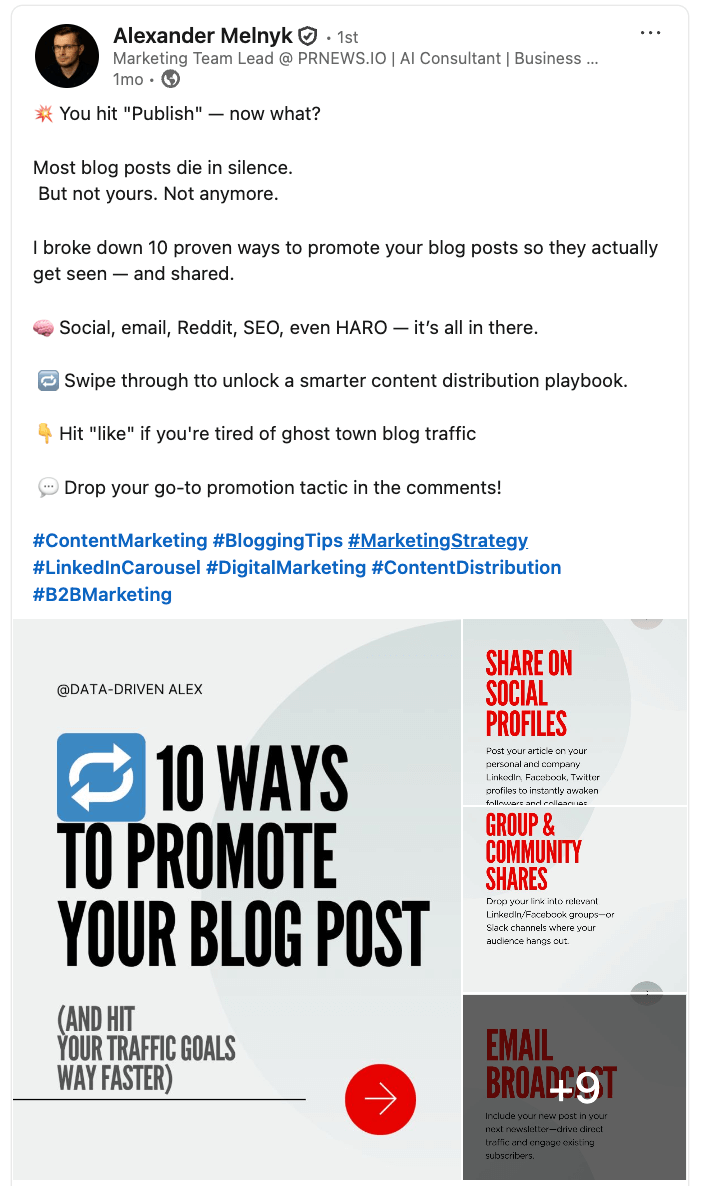
LinkedIn posts
LinkedIn posts are a separate, zero-click promotional channel because the content is consumed entirely on the platform. For example, consider the carousel with ten tips below. There is no need to click outside of LinkedIn to access information, and the author’s brand is established through their expertise and the way they present information. The visual format below holds attention well and provides a ready-made mini-guide. Hashtags (#ContentMarketing, #BloggingTips, etc.) attract a new audience within the platform. If users share the post, it remains zero-click — people see the content directly in their feed.
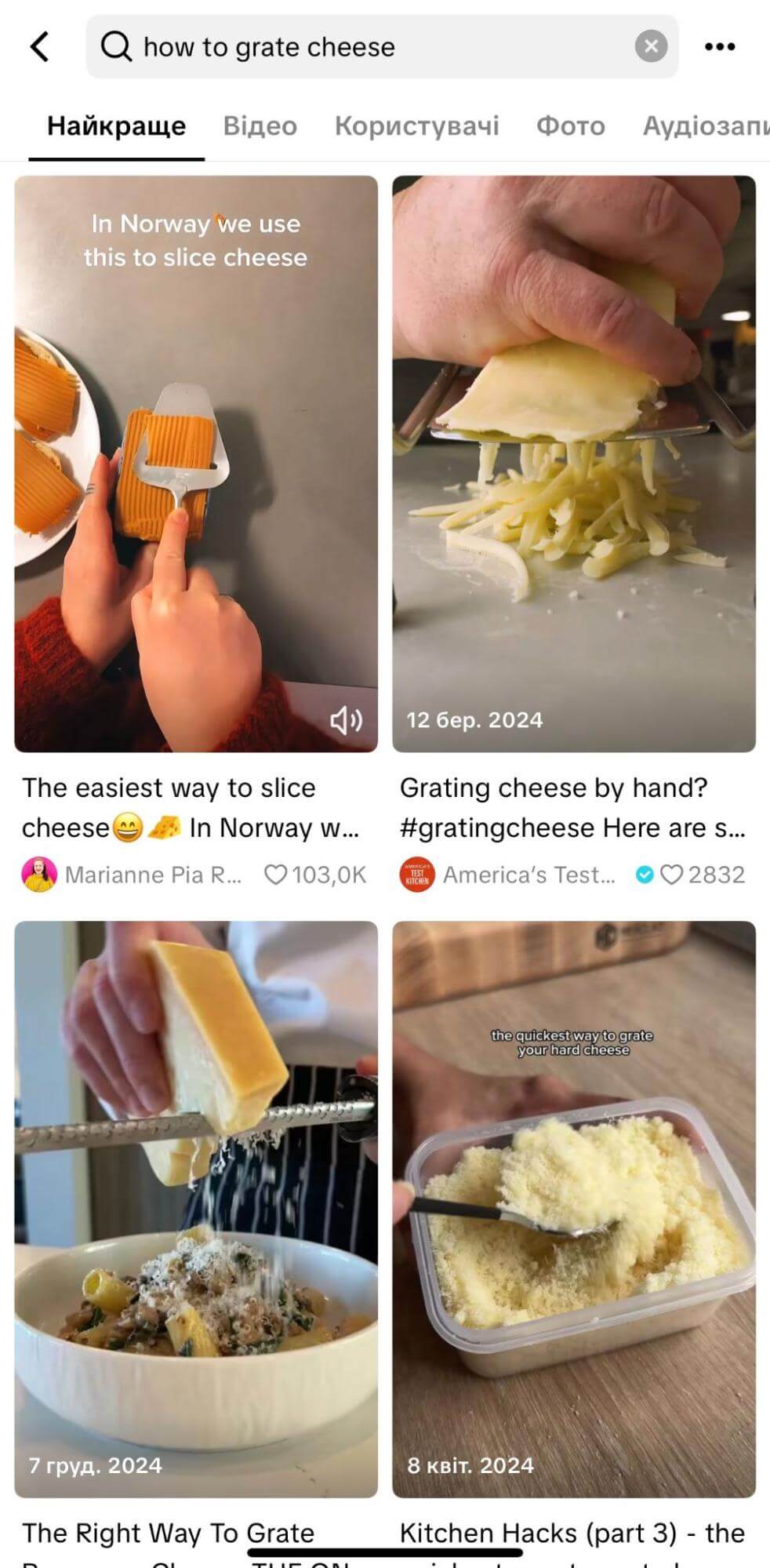
TikTok info videos
The benefit of TikTok videos is that viewers don’t need to visit the site to find answers or instructions. For example, in response to user requests: If you search for ‘how to grate cheese‘, you will find a video (lasting 30–60 seconds) that immediately shows the entire process, including the ingredients, steps, and tips. The viewer doesn’t need an external resource. As a result, the user gains knowledge and the author gains recognition and trust.
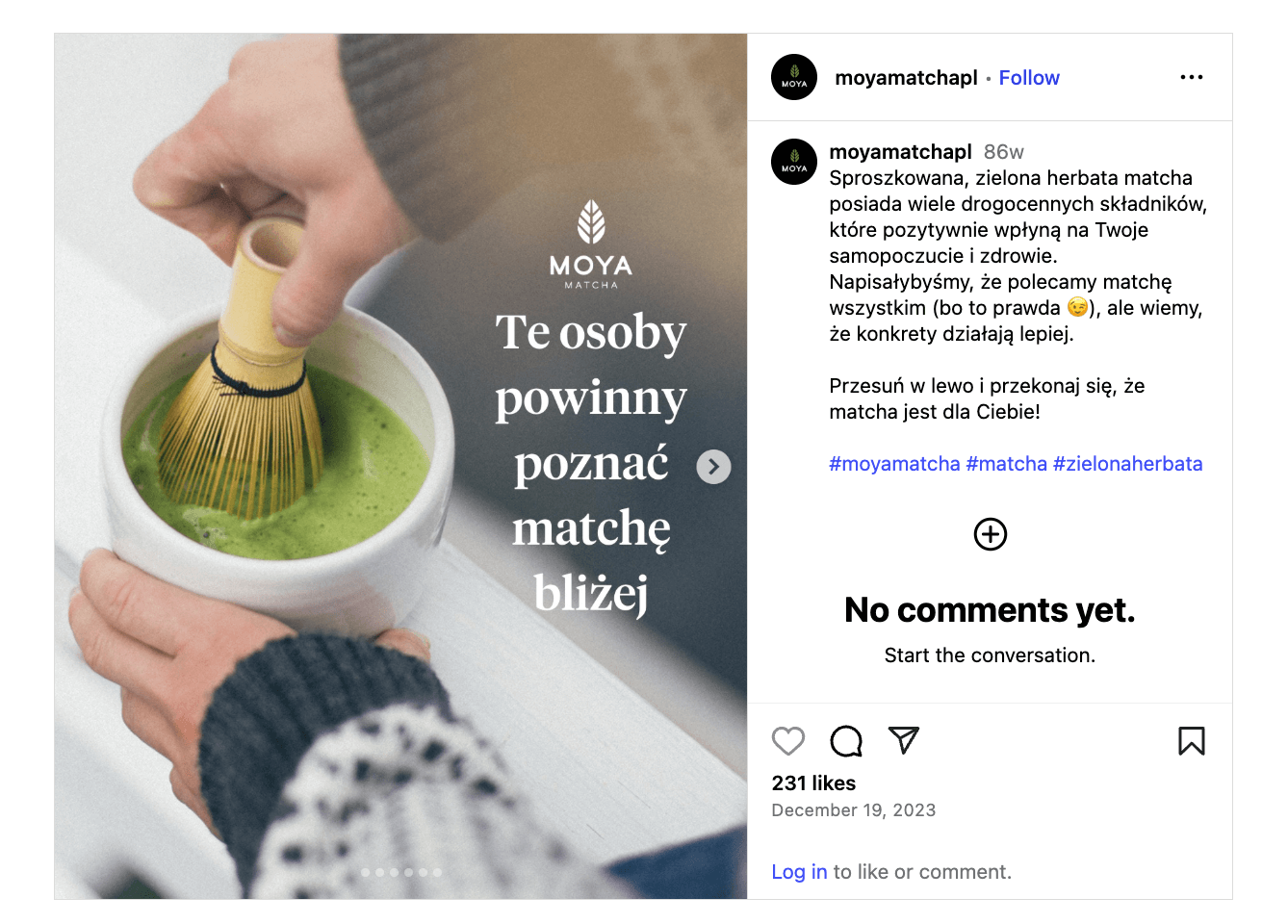
Instagram carousels
Instagram’s algorithm favours content that keeps users on the platform (swiping through a carousel increases viewing time). In the case of the post below from the Polish brand Moya Matcha, for example, all the information is contained within the carousel: users immediately receive information about who matcha is suitable for and its benefits. The call to action keeps users on the platform (‘Przesuń w lewo…’ → swipe on Instagram). Each slide contains a small amount of information, which can be consumed without leaving the app.
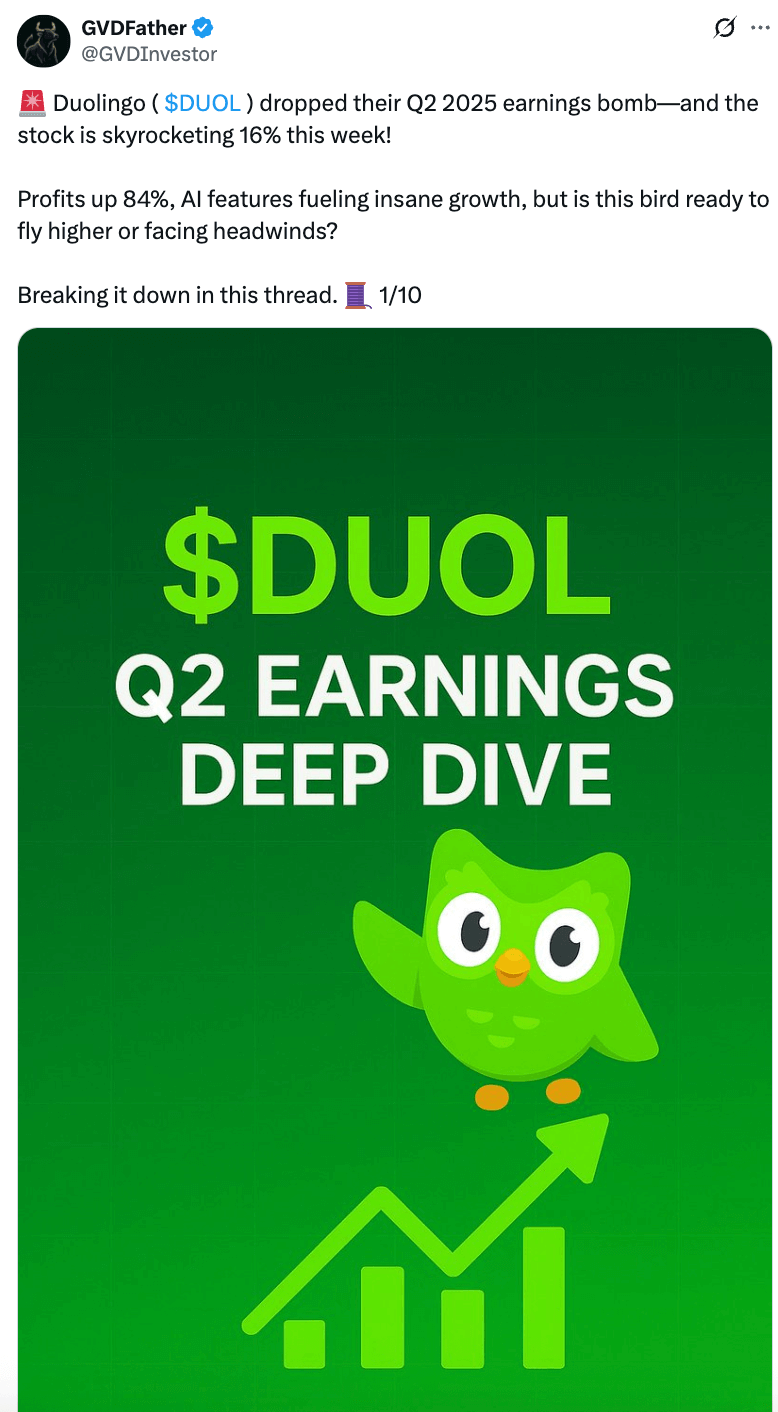
X (Twitter) threads
Each tweet in a thread contains complete analytics, including graphs, screenshots, and infographics (if applicable), and can be consumed directly on X. In the thread below, the first tweet immediately hooks the reader with a combination of emotion and numbers, such as ‘profits up 84%’ and ‘stock skyrocketing 16%’, as well as the promise to ‘break it down in this thread’, creating a clear expectation for the reader. The full content is available on the platform — even if it spans 10 tweets, the reader has the full picture after the last one.
Reddit comments
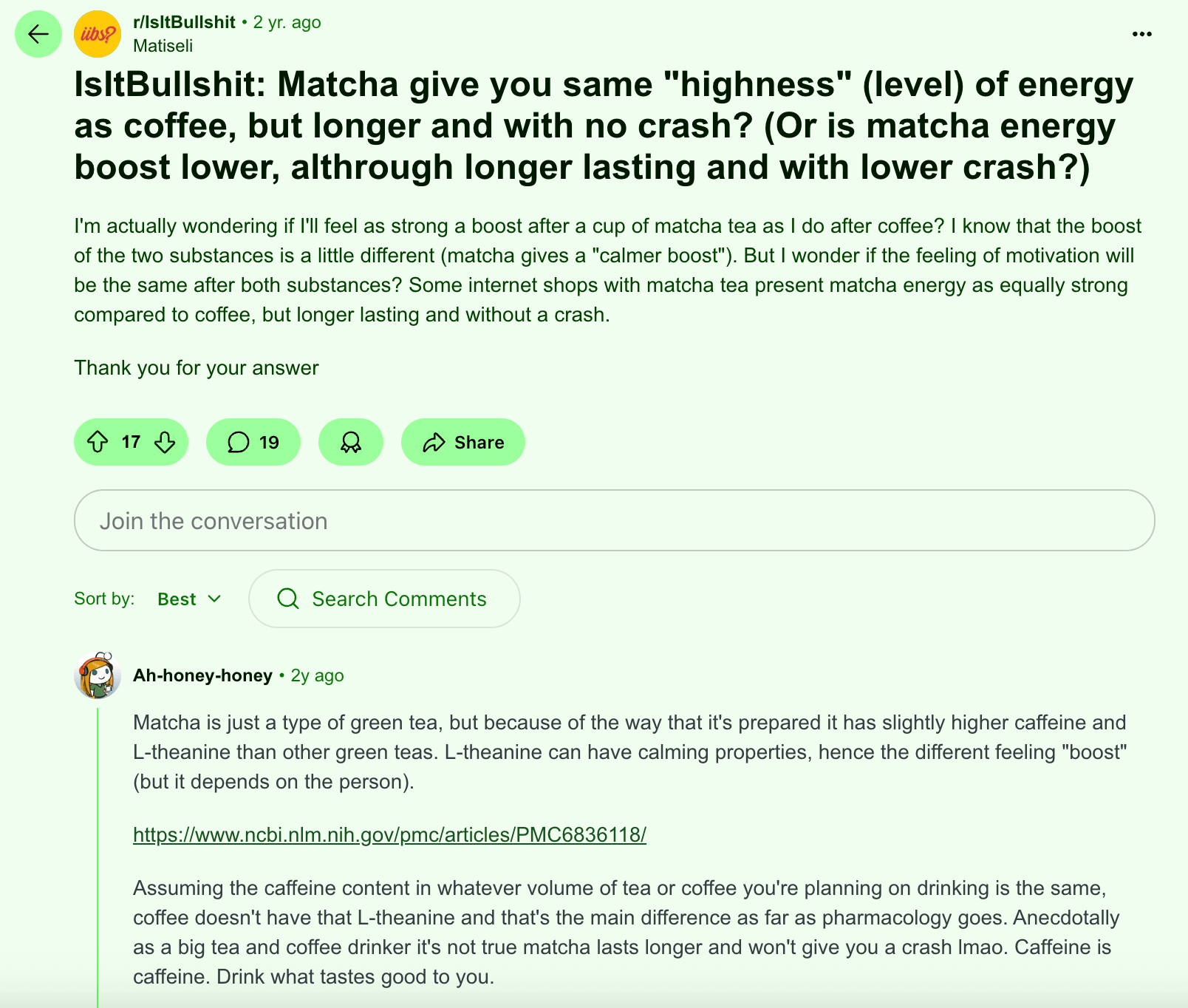
Reddit’s algorithms increase the visibility of popular comments, providing additional organic visibility. Users get useful information without feeling like they’re being sold a product, and popular comments can remain relevant and useful to new users for a long time. A Reddit discussion about Matcha provides the same energy as coffee, but with longer endurance, citing scientific studies that support the claim about the effect of L-theanine in matcha. Users can access detailed information about the differences between matcha and coffee, how matcha affects the body, and why its effects may be steadier without sharp drops. The answers do not contain direct advertising messages but provide useful information that may interest users in trying matcha.
Why it’s a smart strategy now
As you can see from the examples and distribution channels, zero-click marketing is used everywhere, even in places where you wouldn’t expect it. If you’re still not convinced of its value, let’s look at three key reasons why you should use zero-click content today.
Reason 1: People skim, not click
User behavior on social networks is a direct call to apply zero-click marketing for user comfort first and foremost. It’s a fact that users have become lazy, so businesses should adapt to this. Information should be provided in the post itself. Adding a link decreases the chances of engagement, but shortening the info from the link and including graphics and design increases reach. People will be happy to share your posts, and you will gain recognition.
Reason 2: Platforms keep users inside their ecosystem
The longer users remain within your ecosystem, the better. This means you will gain engagement, popularity, and reach. Platforms will promote you more effectively to other users, and algorithms will work in your favour. Social media platforms such as LinkedIn, Instagram, TikTok, and X are designed to reward content that encourages users to keep scrolling and swiping without leaving the app. Creating zero-click content, such as guides, carousels, threads, videos, or in-depth comments, gives users the full value right there.
Reason 3: Google’s zero-click results + social algorithms prioritize native content
Search engines and social platforms are increasingly prioritising content that keeps users engaged within their ecosystem. Google’s click-free search results, such as featured snippets, ‘People Also Ask’ boxes, and knowledge panels, provide answers directly on the search results page. This means that users often find what they need without having to visit your website. Similarly, social platforms such as Instagram, X, LinkedIn, and TikTok reward content created specifically for the platform that engages users directly. Features such as carousels, topics, and feeds allow users to swipe, scroll, and interact without leaving the app.
How brands can use zero-click marketing effectively
Creating zero-click content requires more work than sharing links. However, it can be great for engagement and audience-building.
- Deliver complete thoughts in posts
The first and most important criterion when creating zero-click content is offering complete thoughts and value. Good zero-click content teaches users something without them needing to leave the platform. Ask yourself these questions when crafting zero-click content to ensure you’re providing standalone value:
- What do you want to teach your audience?
- Keep basic storytelling principles in mind. Does it have a beginning, middle, and end?
- If this post appeared in your For You Page (FYP), would you learn something from it without visiting your website or consuming other content?
- Is there actionability?
- Use bold statements, summaries, and how-tos
Make your opening stand out to grab the reader’s attention. You could start with a shocking fact, ask a thought-provoking question, or make a bold, unexpected statement. This ‘hook’ is the gateway to your message and is designed to prevent readers from scrolling past. For instance, you might write: ‘Most of the SEO advice you’ve heard is wrong — here’s why.’
Ensure that complex information is presented clearly and concisely, using bullet points or short paragraphs to summarise key points. This will enable users to understand the full picture immediately. Give users step-by-step instructions that they can follow straight away without having to look for other resources. This format works on carousels, threads, and short videos — anywhere you want to give people lots of information quickly and get them to stay on the platform.
How to prevent clichés:
- Avoid trivial superlatives (“best ever”, “revolutionary”).
- Instead of saying ‘This will change your life’, say ‘Using this five-minute method, you can double your newsletter sign-ups in a week.’
- Numbers, cases, or contrasts help to highlight a statement without empty words.
- Don’t just rewrite headlines; add new value in a concise format.
- A brief, pragmatic manual is preferable to an extensive description that is difficult to implement immediately.
- Create quotable PR content
Create content that is so concise, insightful and memorable that people want to screenshot, repost or cite it without changing a word. In a zero-click context, ‘quotable’ means that your ideas can travel across platforms even when your link cannot.
How to apply this:
- Sum up a big idea in under 20 words with short, impactful statements.
- For example: ‘Your brand is the story people tell when you’re not in the room.’
- Share surprising statistics or research findings that are memorable and easy to repeat, such as: “84% of people trust online reviews as much as personal recommendations.”
- For instance, ‘84% of people trust online reviews as much as personal recommendations.’
- Package your advice into a named method or a formula of three to five steps.
- For example: ‘The 3C Rule of Content: Clarity, Credibility, Consistency’.
- Get published in media outlets that Google and social platforms trust
Reputable media outlets are crucial for building trust and positioning your content to appear in Google’s featured snippets, top stories, and knowledge panels. When trusted publishers cite your ideas or brand name, platforms are more likely to display that content directly in search results or social media feeds.
How to leverage PRNEWS.IO as the best solution:
PRNEWS.IO is the perfect partner for distributing your press releases, expert articles, and sponsored materials to hundreds of verified media outlets with strong SEO optimisation. But you’re probably wondering: how exactly can PR platforms help with zero-click marketing? Simple!
Firstly, PRNEWS.IO partners with over 100,000 sites, including Forbes, The Guardian, The Times, The Economist, and many others. This means:
- Articles on media with such a reputation have a high chance of getting into Google Featured Snippets, Top Stories, or Knowledge Panels, which are typical zero-click results.
- Even if the user does not click on the link, the brand gets recognised in search results and quotes on social media.
- When your company appears alongside well-known media, it increases the level of trust and expertise.
Secondly, you can easily customise your press centre to reflect your brand identity. This gives journalists and media outlets instant access to your logos, press releases, company facts, and PR contacts, eliminating the need to click or search on third-party resources. This means:
- The press centre works as a ‘zero-click shop window’ that immediately creates trust among those seeking information about the company.
- Journalists can immediately find ready-made information without leaving the page of your press centre.
- The easier it is for the media to find your materials, the more often they will quote the brand without further elaboration.
Finally, PRNEWS.IO offers transparent fixed pricing for placements, eliminating unexpected costs and long-term commitments. The platform also supports 77 languages across 175 countries and enables press releases to be published quickly, often within 24–48 hours, ensuring timely media coverage. Why is it crucial for zero-click marketing?
- The faster the news appears in major media outlets, the more likely it is to get into Google Top Stories, news carousels, and real-time social media feeds.
- Multilingual publications allow your content to appear in local Google zero-click blocks (snippets, knowledge panels) for different countries.
- Regular quick posts increase the chances that the brand will consistently appear in the zero-click environment (Google snippets, social media algorithmic recommendations, etc).
In other words, PRNEWS.IO makes sure that your brand appears ‘here and now’ in trusted media, and Google and social media algorithms pick up this content in zero-click formats.

Summing up
If you want to get people’s attention on the Internet, zero-click marketing is your new reality today. Make your content comfortable, readable, and useful for the audience – and your popularity will grow. However, don’t neglect PR: it isn’t just about headlines. It’s the backbone of your zero-click visibility. Let’s define 3 main zero-click marketing truths:
- Published articles = discoverability
- Media mentions = proof without needing a click
- PR helps dominate branded search and build instant credibility
PR establishes your brand wherever users are looking, while zero-click surfaces amplify it. Together, they generate credibility that doesn’t require clicks. Be the brand people trust — even when they don’t click. With PRNEWS.IO, you can publish news, thought leadership, and product updates right now!