In 2026, almost every client we talk to asks the same question: “You publish articles in media… but does anyone even need that anymore? Isn’t everything AI now?” The short answer: yes, AI matters. But the slightly longer—and far more important—answer is that publications are exactly how AI learns about you. Quality media placements remain the most effective pathway to visibility in ChatGPT, Google AI, and other emerging systems. Understanding this is no longer optional—it’s essential for modern PR strategy.
How AI actually works
Here’s the reality check: you can’t just feed information straight into AI systems. There’s no guaranteed shortcut, and even if someone claimed they had one, it’s probably either ridiculously complex or absurdly expensive. The truth is, AI engines like ChatGPT and Google AI gather data from sources they already trust. And what counts as a trusted source? Authoritative, reputable media outlets—the kind of places AI is already citing.
AI prefers sources published in the last year, with over half of all citations appearing within 12 months of publication. Timing is everything: the highest citation rates occur within just seven days of an article going live.
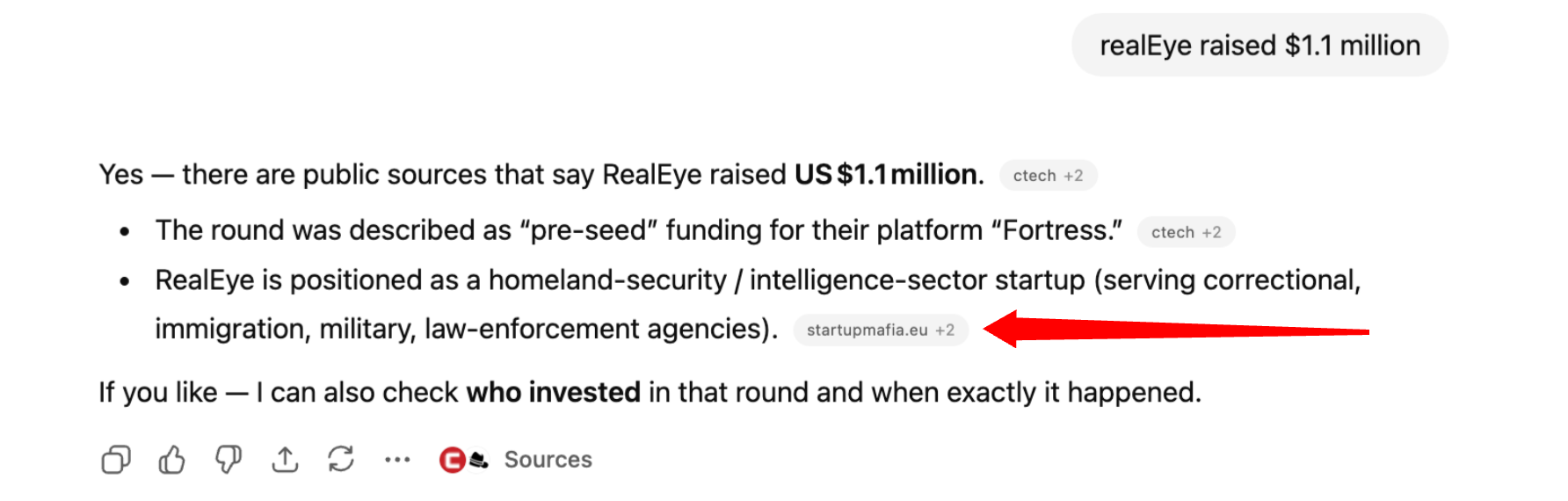
Press releases are also gaining ground. Since July, press release citations have increased fivefold, now accounting for 1% of all AI citations, up from 0.2%. Earned media still dominates, responsible for roughly 82% of cited links, though slightly down from 89% in July due to some shifts in AI’s source preferences. For example, OpenAI models have reduced reliance on aggregators like Wikipedia, and citations from corporate blogs and management consulting firms have decreased.
AI doesn’t just pick sources randomly—it pulls from a diverse range of high-authority outlets. The top-cited outlets shift depending on the model, but familiar names like Reuters, Yahoo Finance, and a handful of others consistently appear. Interestingly, there’s very little overlap across models: only outlets like CNBC and Bankrate are cited frequently by more than one AI system.
Authority matters—both of the domain and the author. Google evaluates website credibility, author trust signals, and the quality of backlinks pointing to content. Other factors, like geolocation, language preferences, and the context of user queries, also shape which documents are selected.
Freshness is another critical advantage. Newer or regularly updated pages are prioritized over older ones, consistent with Google’s standards for content relevance. This means staying visible in AI isn’t a one-time effort; it requires regular, high-quality publications that the AI systems can trust, cite, and learn from.
Bottom line: if you want AI to know your brand exists, you need to get your content into the right media channels—the ones that AI already respects, trusts, and cites.
Our methodology: finding the right media
After six months of research and testing, we built a systematic approach to identify which websites actually move the needle in AI visibility.
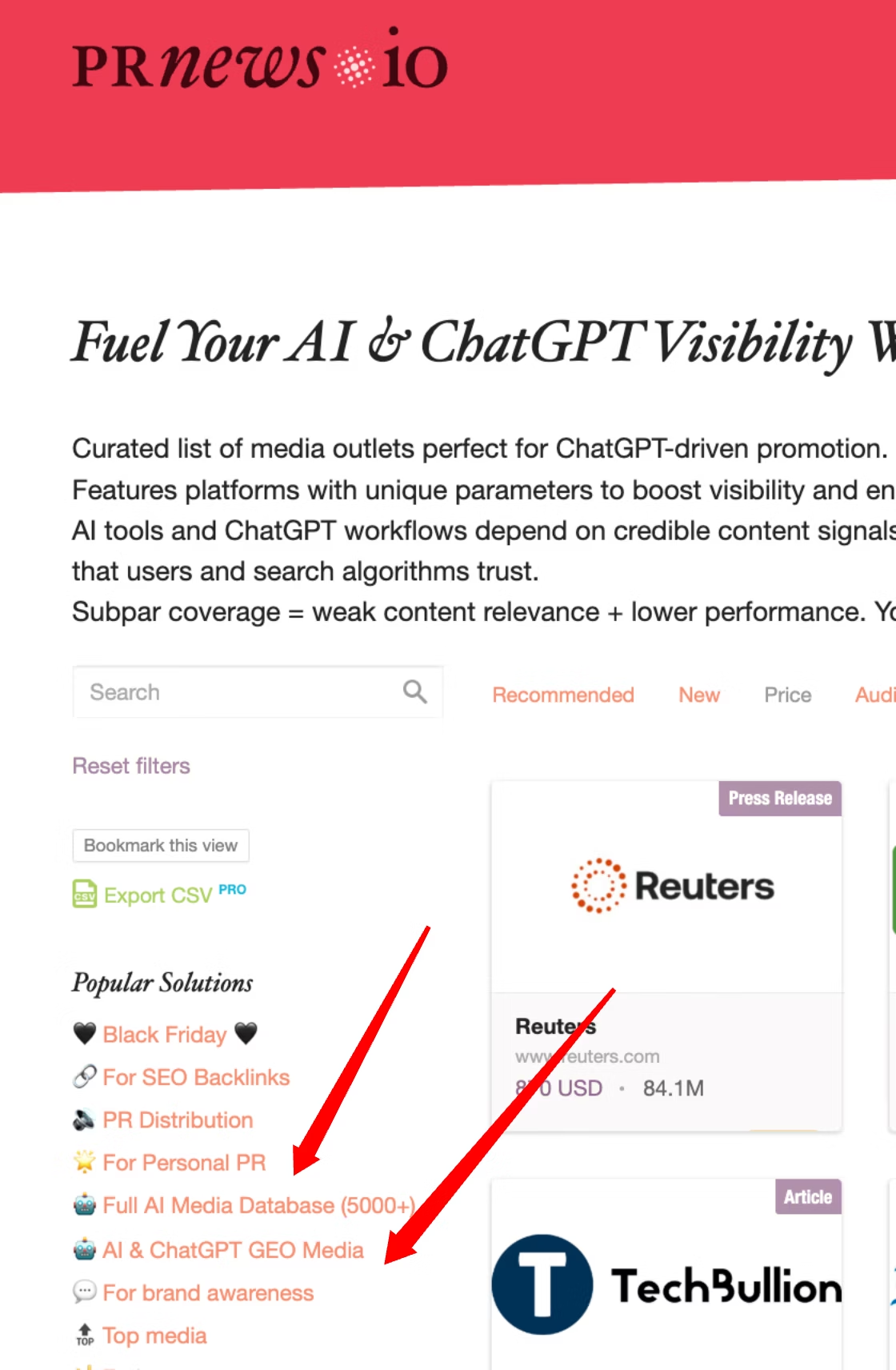
What we look for:
- Total traffic ≥ 50K (via SimilarWeb)
- Organic traffic ≥ 2K (via Ahrefs)
- Domain Rating ≥ 50
Then we dig deeper with AI citation analysis. Sites with higher mentions in ChatGPT and Google AI are obviously more likely to get your content noticed.
The result? A validated database of 6,000 websites proven to maximize AI recognition.
What our testing shows
Our testing has uncovered some fascinating insights. Tier-one outlets like USA Today naturally show high AI citation rates, which confirms the obvious.
But sometimes, smaller websites with modest traffic or lower domain ratings punch well above their weight. Example: https://prnews.io/sites/216186-dutablecom.html
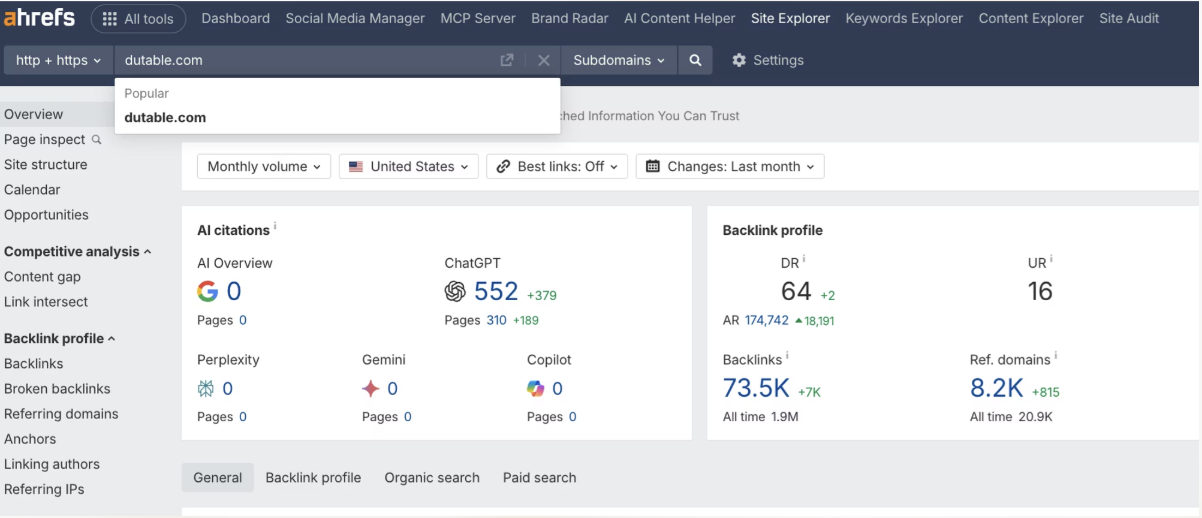
AI doesn’t just read the popular sites—it reads the right sites. And we know which ones those are. We even consider language and industry alignment, so your content reaches the right audience and the right AI systems simultaneously.
Setting realistic expectations
Of course, no one can promise instant inclusion in ChatGPT or Google AI. Think of it like search engine indexing—there’s no guaranteed timing or 100% certainty. What we do offer is something far more valuable: expert-backed strategic placement that dramatically improves the odds your content will be cited and recognized by AI.
What we don’t guarantee:
- 100% AI inclusion
- Instant results after one publication
- Exact replication of search indexing
What we do deliver:
- Access to sites heavily cited by ChatGPT and Google AI
- Strategic, expert-backed media selection
- Highest possible chance of AI recognition
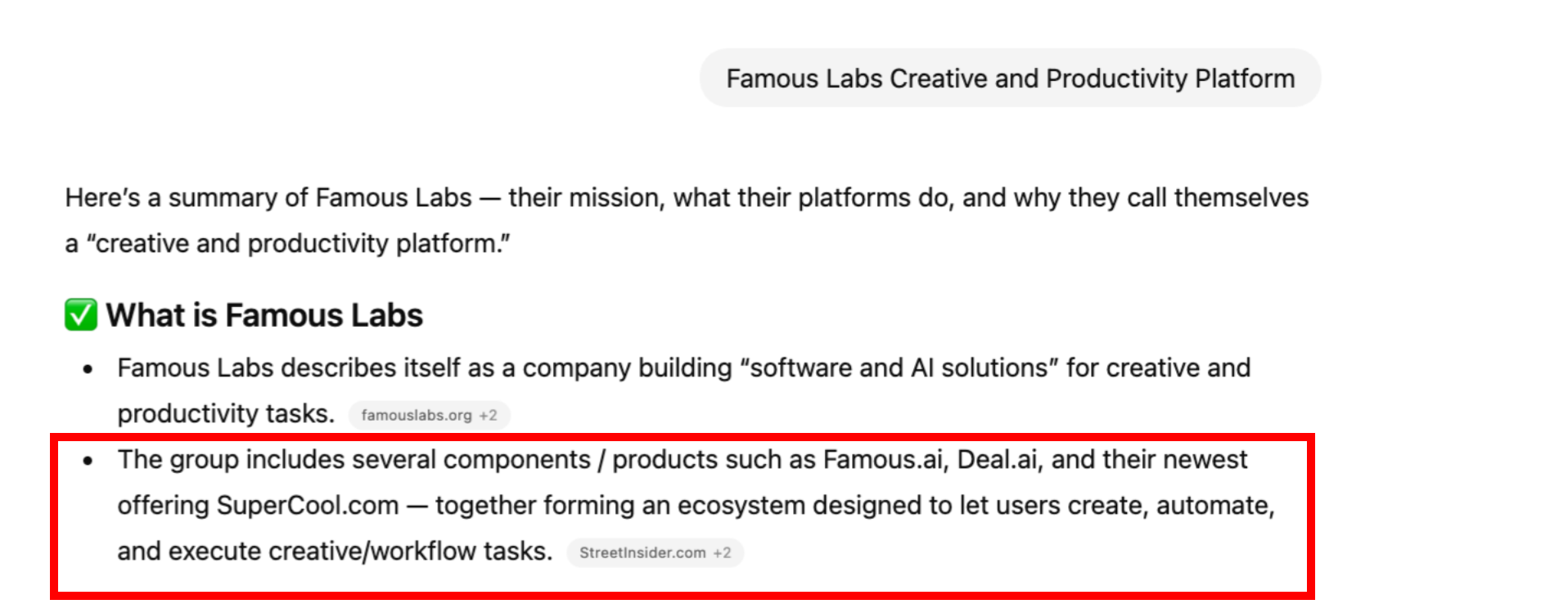
Special offer: AI GeoMedia package
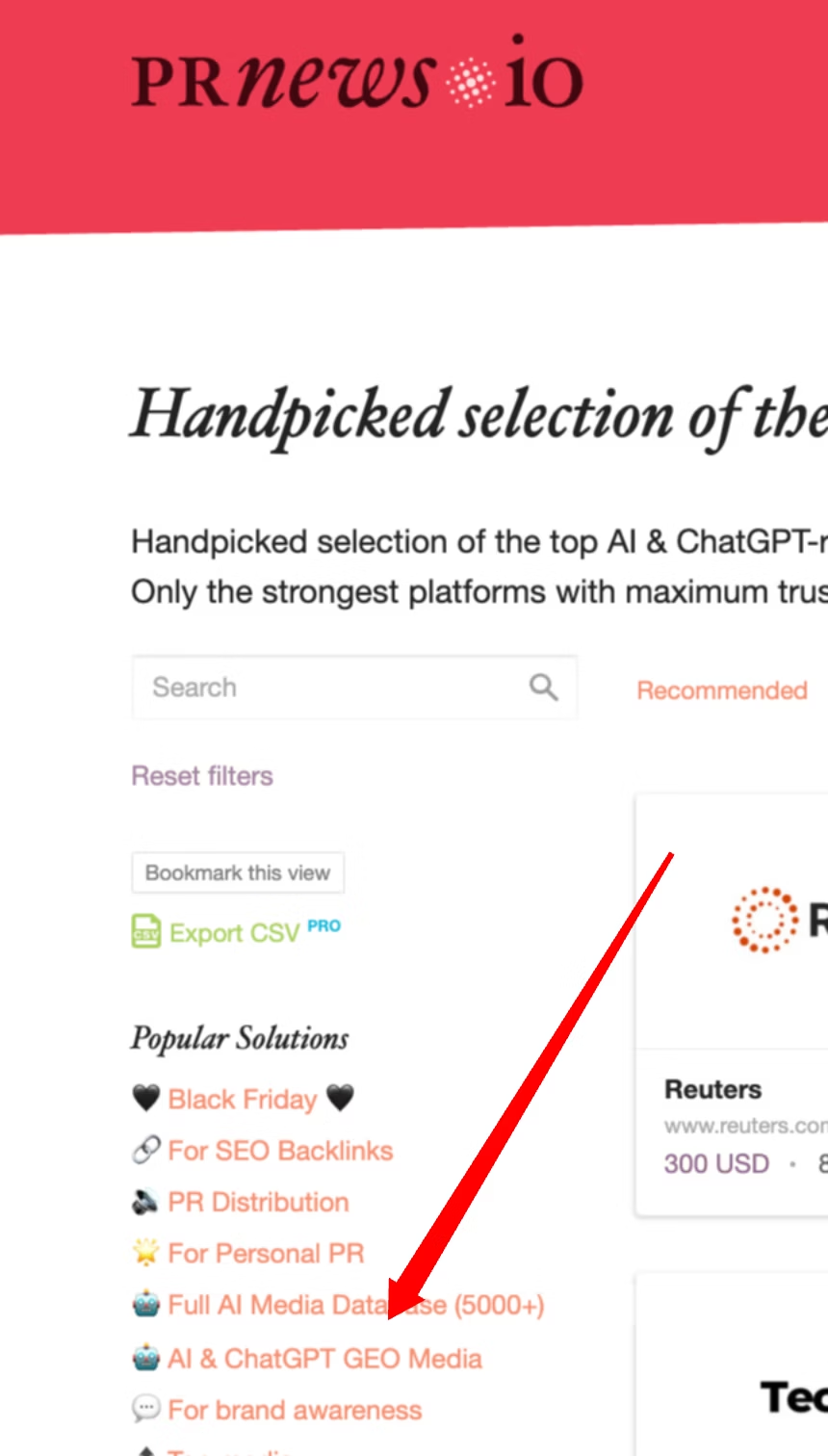
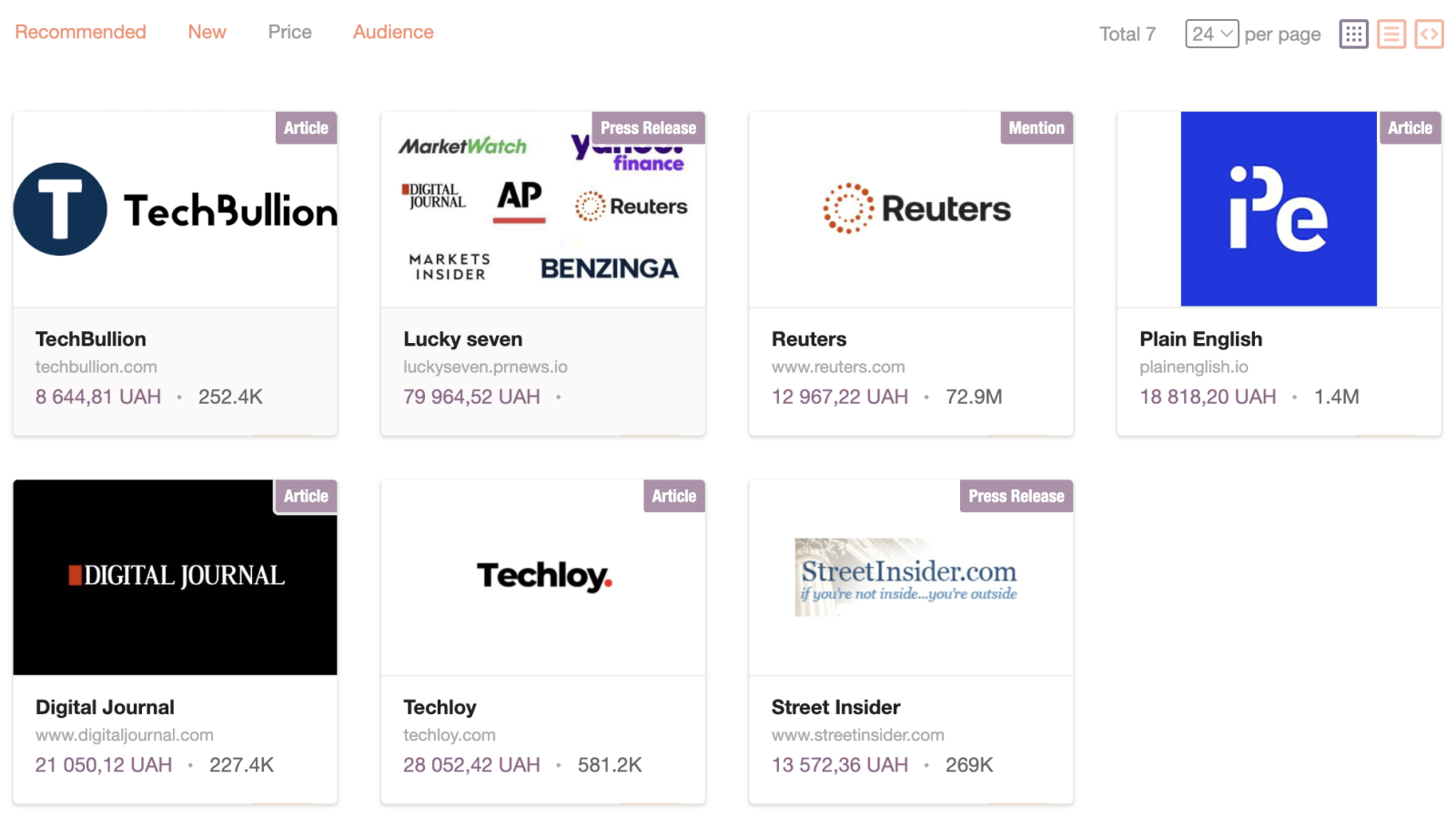
For clients looking for a turnkey solution, our AI GeoMedia Package offers placement on the 7 top-performing websites from our database.
These outlets consistently show high AI citation rates across industries and geographies.
Combined with high-quality content—especially listicles and other AI-friendly formats—this package maximizes the chances that your brand, products, and services will appear when AI users ask questions relevant to your business.
- 7 Top Websites: Curated from our validated 6,000-site database
- Multi-Goal Support: Works across industries, geographies, and languages
- Maximum AI Recognition: Very high citation rates in ChatGPT, Google AI, and emerging systems
How to find listicle sites and get mentioned to be recommended by AI
One of the most effective and accessible ways to achieve this is through listicle articles — content like “Best software platforms”, “Top tools for…”, and similar rankings that AI models actively use as reference sources.
Listicle articles are:
- assets for AI memory,
- a fast path to digital authority,
- a practical tactic already working for many teams.
Below is a step-by-step method for finding the right listicle sites, evaluating them, and turning them into real placements.
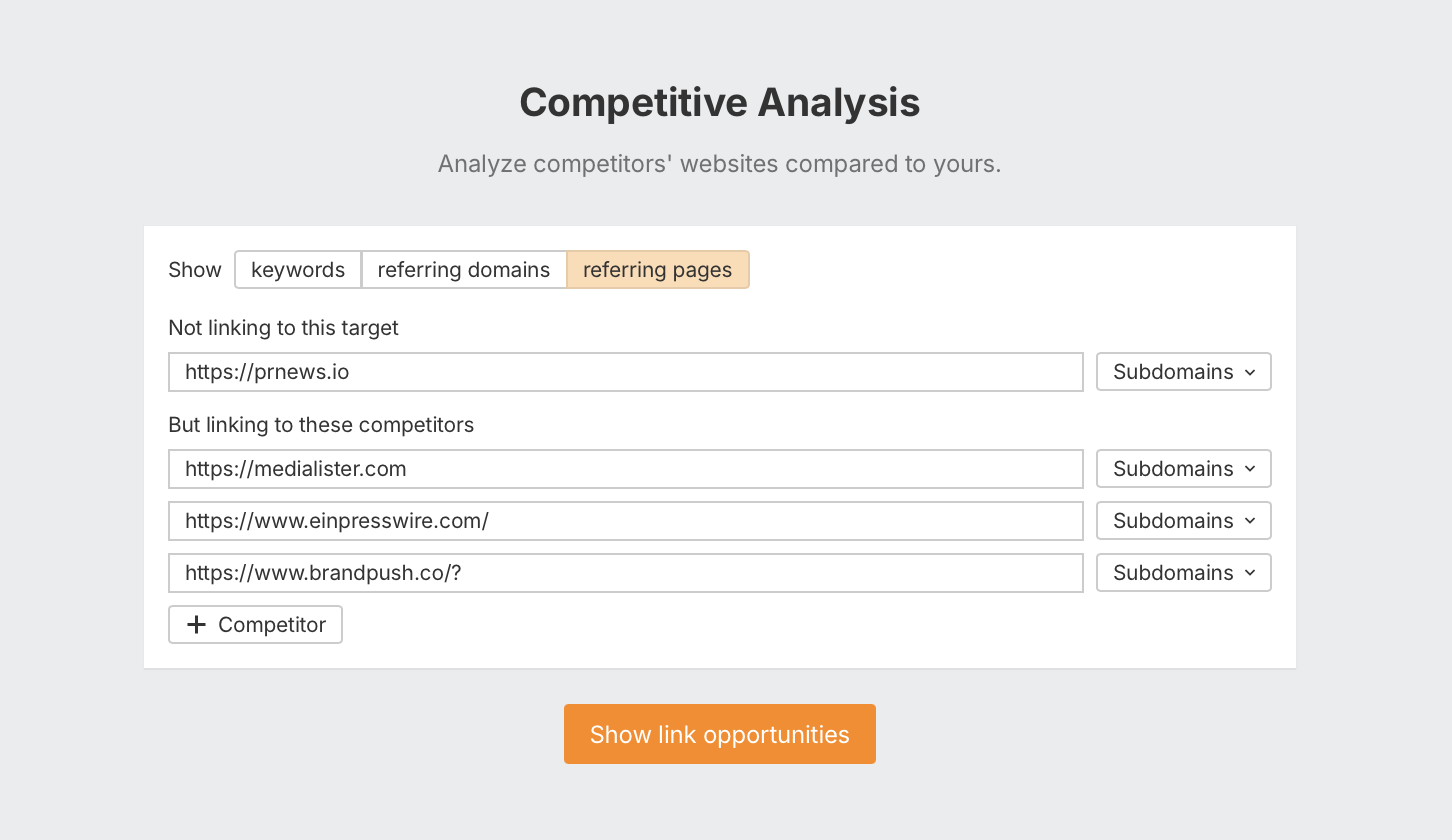
Step 1. Analyze Competitors Using Ahrefs
I use Ahrefs for this task. The process is straightforward:
- Select several direct competitors
- Open Ahrefs → Competitive Analysis
- Add competitors’ domains
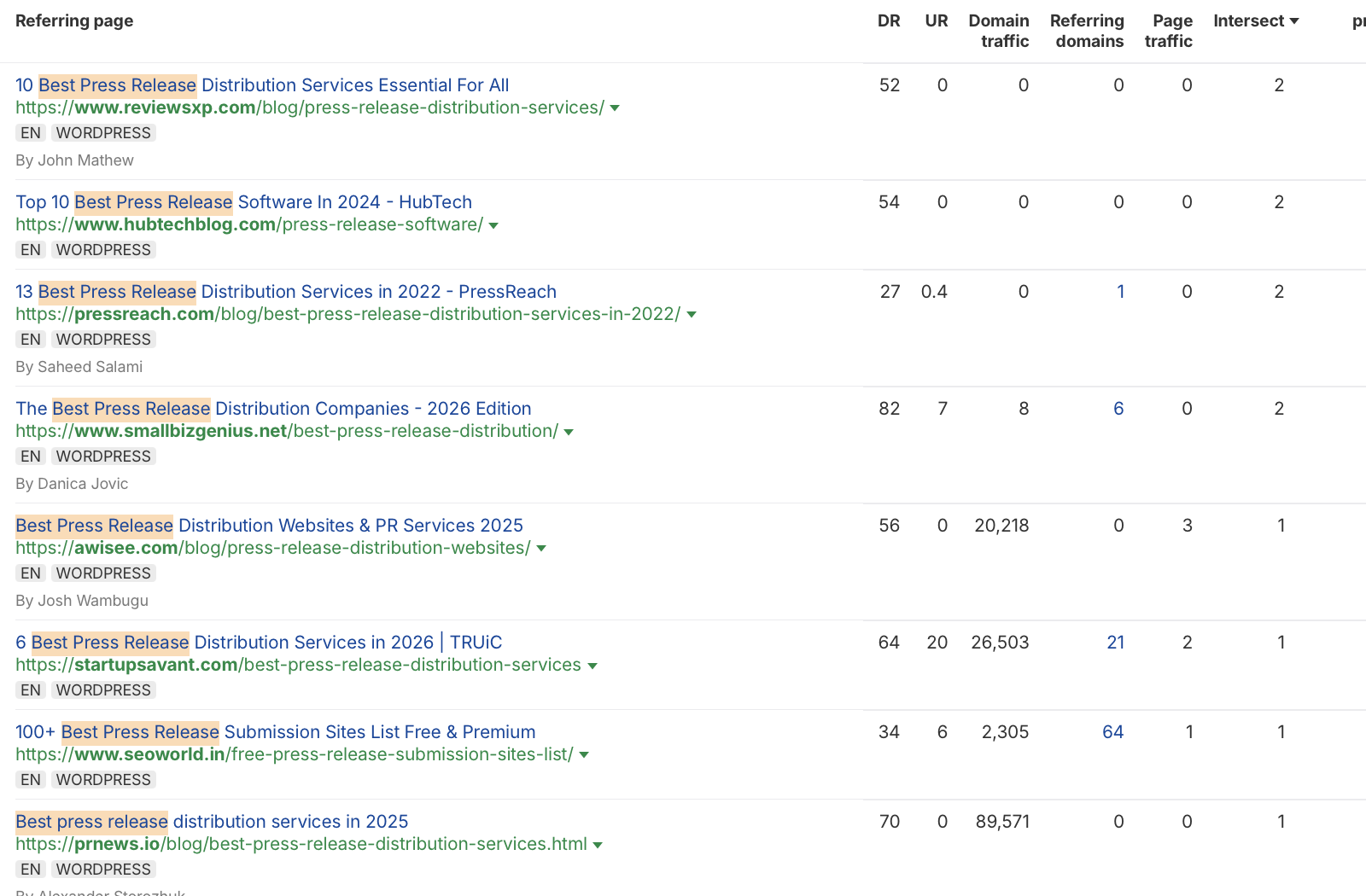
- Go to the Referring Pages report
At this stage, we are interested in pages that:
- already mention your competitors,
- but do not link to your website.
This is an important signal: these publications are already familiar with your niche and are open to recommendations — you are simply not included yet.
Step 2. Filter Only High-Quality Listicle Sites
To remove weak or irrelevant resources, I apply several filters.
The key criteria are:
- Organic search traffic: from ~5,000 visits per month
- Page type: editorial article, not an affiliate landing page or pure advertising
- Keywords in the title or URL, such as:
- best
- top
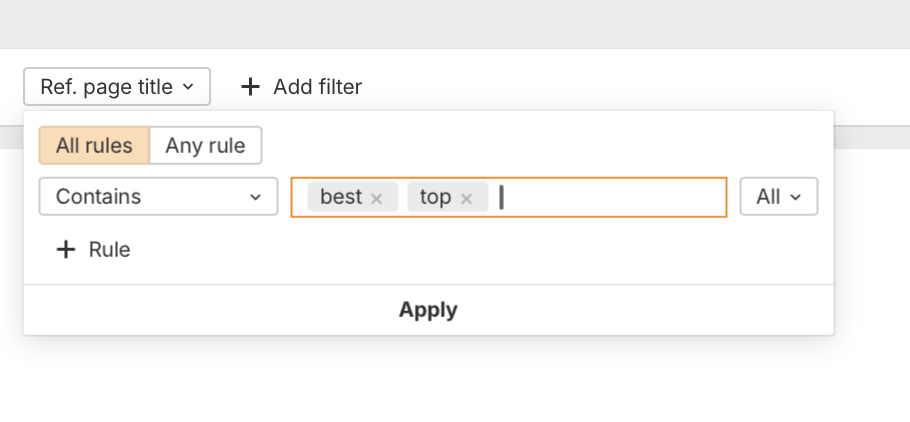
These keywords usually indicate listicle-style content, which AI systems actively rely on when generating recommendations.
Using this approach, it’s easy to collect 100+ relevant pages where it makes perfect sense to appear alongside competitors.
Step 3. Evaluate the Potential of Each Article
Not every listicle delivers equal value, so I always evaluate a few core factors:
- Google rankings
- Monthly organic traffic
Even 1,000–2,000 visits per month is perfectly fine if the article ranks consistently - Topic relevance, for example:
- “Top platforms”
- “Best tools”
- “Best software for [industry/use case]”
Many of these websites sell placements, and that’s completely normal.
It’s their business model. What really matters is that the article is alive, ranking, and trusted by search engines — and by AI.
Step 4. Analyze the Site List with PRNEWS.IO Bulk Site Checker
Once you’ve collected a list of relevant listicle articles and domains (for example, via Ahrefs competitor analysis), the next logical questions are:
- Where can I actually place my brand?
- How much does it cost?
- What budget should I plan?
This is where PRNEWS.IO Bulk Site Checker, available in PRO accounts, becomes essential.
You upload your list of domains into Bulk Site Checker, and the system automatically analyzes them.
As a result, you instantly see:
- placement cost for each website,
- media audience size,
- SEO characteristics of the resource,
- available content formats (native articles, mentions, press releases, etc.).
All this data can be exported to a CSV file and used for:
- budget planning,
- internal analysis,
- building your own PR database.
The key advantage is speed:
you get pricing immediately, without emailing dozens of editors, waiting for replies, or manually comparing conditions. This saves hours — sometimes days — of work.
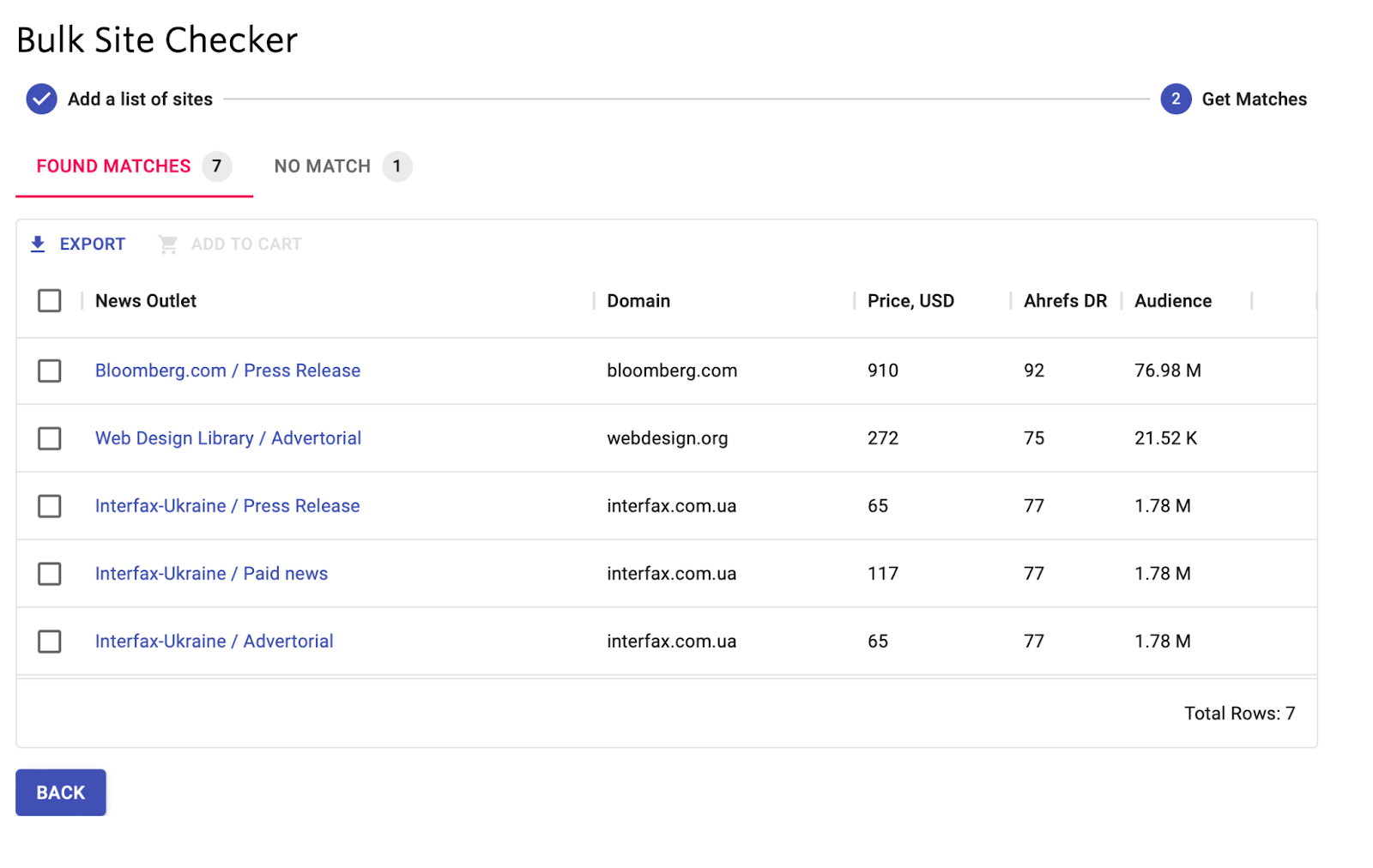
In your PRNEWS.IO PRO account, open Bulk Site Checker. You’ll see a simple form where you paste the list of domains you want to analyze. You can check up to 5,000 domains at once.
Click Next.
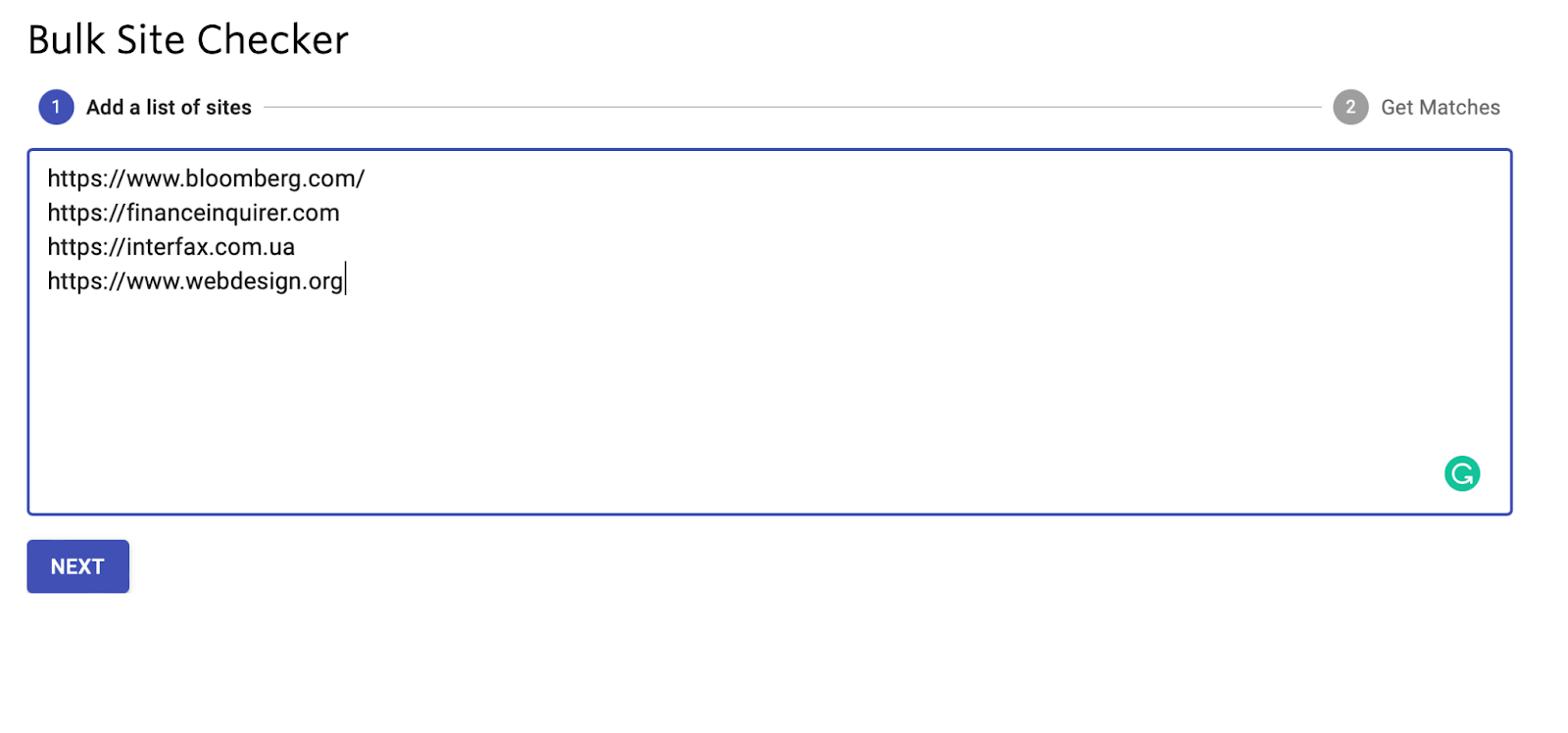
After the analysis is complete, the system provides detailed data for each media outlet, including:
- SEO metrics,
- audience size,
- placement cost,
- available publication formats.
This makes it easy to understand which sites are suitable for your specific goal — AI visibility, SEO impact, or classic PR. Export the data to CSV and use it to finalize your PR campaign plan.
Instead of a vague list of “nice-to-have” websites, you get:
- a clear budget understanding,
- real placement opportunities,
- predictability and control over your PR campaign.
In many cases, this approach is faster, more transparent, and more cost-effective than traditional PR based on manual outreach.
Important Note: You Can Do This Yourself
To get started, you don’t need:
- a PR manager,
- an agency,
- a complex strategy.
This is one of the easiest ways to take the first steps toward:
- appearing in listicle articles,
- being “remembered” by AI systems,
- getting recommended by ChatGPT and similar tools.
It’s just one tactic — but a very powerful one, especially at the early stage.
Who needs an AI visibility strategy?
Who should be thinking about AI visibility? Pretty much anyone who cares about how their business appears in digital interactions. Direct companies looking to control their AI narrative, PR and marketing agencies building authority in this emerging field, SaaS and tech firms, and even fintech and finance organizations where trust and authority drive business development.
- Direct Companies: Control your AI narrative and ensure accurate brand representation
- PR & Marketing Agencies: Build authority in this emerging specialty
- Tech & SaaS Firms: Be visible when AI users ask about solutions and tools
- Fintech & Finance: Trust and authority in AI responses directly impact growth
Why PRNEWS.IO?
Agencies specialized in AI presence are still rare—but they will exist soon. Early adoption puts your brand ahead of the curve, and at PRNEWS.IO, we have the hands-on knowledge, testing, and strategic approach to make it happen.
Getting your content into the right media isn’t just PR. It’s how AI learns about your brand. And if you do it right, you don’t just show up in Google—you show up in the AI-driven future that’s already here.
Got questions? Shoot an email to alina@prnews.io.