A few weeks ago, an aspiring writer self-published his debut poetry anthology on Kindle. The work was good, but sales were close to zero.
The issue wasn’t the product itself. It was the absence of an audience familiar with his voice and perspective. He launched his work before he had built up trust, visibility or a consistent presence.
Many experts face this same challenge — and it’s the reason roles like personal brand writer exist: to translate talent and expertise into visibility before launch.
Who is a personal brand writer?
A personal brand writer is a strategic partner who helps experts, founders and creators to express their ideas, values and expertise through written content, all the while preserving their authentic voice and way of thinking.
They play a key role in growing and scaling a personal brand through consistent, high-impact communication, particularly on platforms such as LinkedIn and X (formerly Twitter). They translate ideas, insights, and industry perspectives into clear, engaging content that builds trust, credibility, and long-term audience engagement.
A personal brand writer’s focus differs from that of a traditional copywriter, who tends to emphasise promotional messaging and one-off campaigns. They define positioning, establish a distinct tone of voice, and transform thinking into a coherent narrative across platforms, owning the content process from start to finish and ensuring consistency, clarity, and relevance at every touchpoint.
What tasks does a personal brand writer solve?
A personal brand writer’s role involves a combination of strategy, execution, and continuous refinement.
- Building personal brand content strategy
A personal brand writer researches topics relevant to the expert’s industry and audience. They then structure raw ideas into clear content frameworks and ensure consistency in tone, voice, and positioning. They also adapt messaging to best practices specific to each platform, providing the content is effective on channels such as LinkedIn, X (formerly Twitter), Instagram, or Facebook.
- Creating social and long-read content
Personal brand writers regularly publish engaging social posts and develop longer-form content, such as articles or newsletters, as required. They strike a balance between clarity, authority, and personality. They use humour and personal perspective deliberately to strengthen connections without undermining their credibility.
- Content optimization and iteration
A personal brand writer is constantly reviewing engagement and performance signals to improve hooks, structure, and messaging. They experiment with different approaches and formats, refining what works and collaborating with stakeholders to ensure alignment with broader goals.

Why does a business or expert need a personal brand writer?
Many executives ask this question without realising one simple truth: if you have a LinkedIn profile or any online presence, your personal brand already exists. This is your digital footprint — how others perceive you when you’re not present.
If not you, then someone else
In business, if you don’t define your brand, someone else will. And it will rarely be in your favour. The same rule applies to personal branding. Your values, positioning and message are shaped every day, either intentionally or by default.
Doing it alone is rarely effective
While it is technically possible to manage your personal brand alone, it is rarely effective. This isn’t because professionals lack intelligence or expertise, but because strategic communication requires a specific skill set, objectivity and time. Just as you wouldn’t perform your own surgery, you shouldn’t expect to master branding, positioning and content strategy to a professional standard while running a business or leading a team.
Hard to stand out in a noisy digital space
The internet is loud and crowded. Those with little substance dominate attention, while those with real expertise hesitate to show up. A personal brand writer can help to bridge this gap by turning knowledge, experience and opinions into clear and credible communication that commands attention and inspires trust.
Focus on what truly matters
For busy founders and executives, focus is also key. While they focus on building companies, leading teams and creating real-world impact, a personal brand writer can ensure that their online presence consistently and professionally reflects that work.
Personal branding as a long-term asset
Ultimately, people don’t just buy products. They buy brands. Similarly, investors don’t just invest in companies — they invest in people. A personal brand writer establishes a person’s credibility and respectability over time, turning personal branding into a long-term asset rather than a short-term marketing tactic.
Myths about personal brand writers
“Personal brand writers are only for celebrities or influencers”
One of the most common myths is that personal branding is only relevant for public figures or social media influencers. In reality, however, they can be just as valuable for business founders, company executives, subject experts and other professionals who want to build a strong reputation and stand out in their field.
“A personal brand writer is just about self-promotion”
Although visibility is part of the process, the role does not involve constant self-promotion. A personal brand writer’s focus is on communicating their expertise, experience and values in a way that resonates with the right audience, building long-term trust rather than empty hype.
“Personal brand writers only handle social media”
Social media is an important channel, but it doesn’t tell the whole story. A personal brand writer works across different platforms to ensure consistency of messaging and tone of voice in articles, newsletters, thought leadership content and other professional communications.
“Only entrepreneurs need a personal brand writer”
This role isn’t just for entrepreneurs. Clear positioning and strategic communication can benefit employees, executives, consultants and job seekers alike. A strong personal brand can support career growth, establish authority and enhance professional credibility at any stage.
“Personal branding is a one-time project”
Another misconception is that personal branding is a one-time task. In reality, it’s an ongoing process. A personal brand writer can help to maintain consistency and adapt messaging over time, ensuring that the brand evolves alongside the person behind it.

Where can a personal brand writer promote themselves?
Just as every piece of content needs a clear placement, the same applies to personal brand writers. The most relevant channels are listed below, along with concrete examples of how they can be used effectively.
It is the primary platform for achieving B2B visibility and securing high-value contracts. LinkedIn enables writers to showcase not only their writing skills, but also their strategic thinking and business acumen.
A personal brand writer can:
- publish thought leadership posts on personal branding, positioning, and content strategy
- break down client cases (without breaching confidentiality)
- share writing frameworks, hooks, and content breakdowns
- comment strategically on posts by founders and executives to increase visibility
Telegram or Substack
These are platforms for deeper connection and long-form communication. Here, a personal brand writer can:
- publish weekly essays or newsletters on branding, writing, and communication
- share behind-the-scenes processes and decision-making logic
- build a loyal audience that later converts into clients
Instagram and TikTok
Visual platforms help to humanise the brand and quickly expand its reach. Personal brand writers can:
- share short videos explaining branding concepts in simple terms
- show daily routines, writing processes, and content workflows
- repurpose ideas from LinkedIn or newsletters into bite-sized formats
Personal website or portfolio
This is the brand’s home base. Personal brand writers can use tools like Notion to create a website or portfolio. A personal brand website or portfolio typically includes selected writing samples and case studies, a clear positioning statement, details of services offered, testimonials, and contact information.
What if you want to go beyond platforms?
Sometimes, usual platforms aren’t enough for those who want more. Here you can start considering networking and sharing your visibility beyond standard LinkedIn or Instagram.
Collaborations with other experts
By partnering with founders, consultants or creators, personal brand writers can expand their reach and gain access to high-quality, aligned audiences. You can find one through:
- LinkedIn – follow founders, consultants, and creators in your niche or actively comment on their posts with thoughtful insights (not promotion).
- Events and public spaces – attend industry conferences, webinars, and online events or engage in Q&A sessions and follow up afterwards.
- Warm introductions – ask existing clients, peers, or collaborators for introductions or join professional communities, masterminds, or paid groups where experts already interact.
Guest posting and media contributions
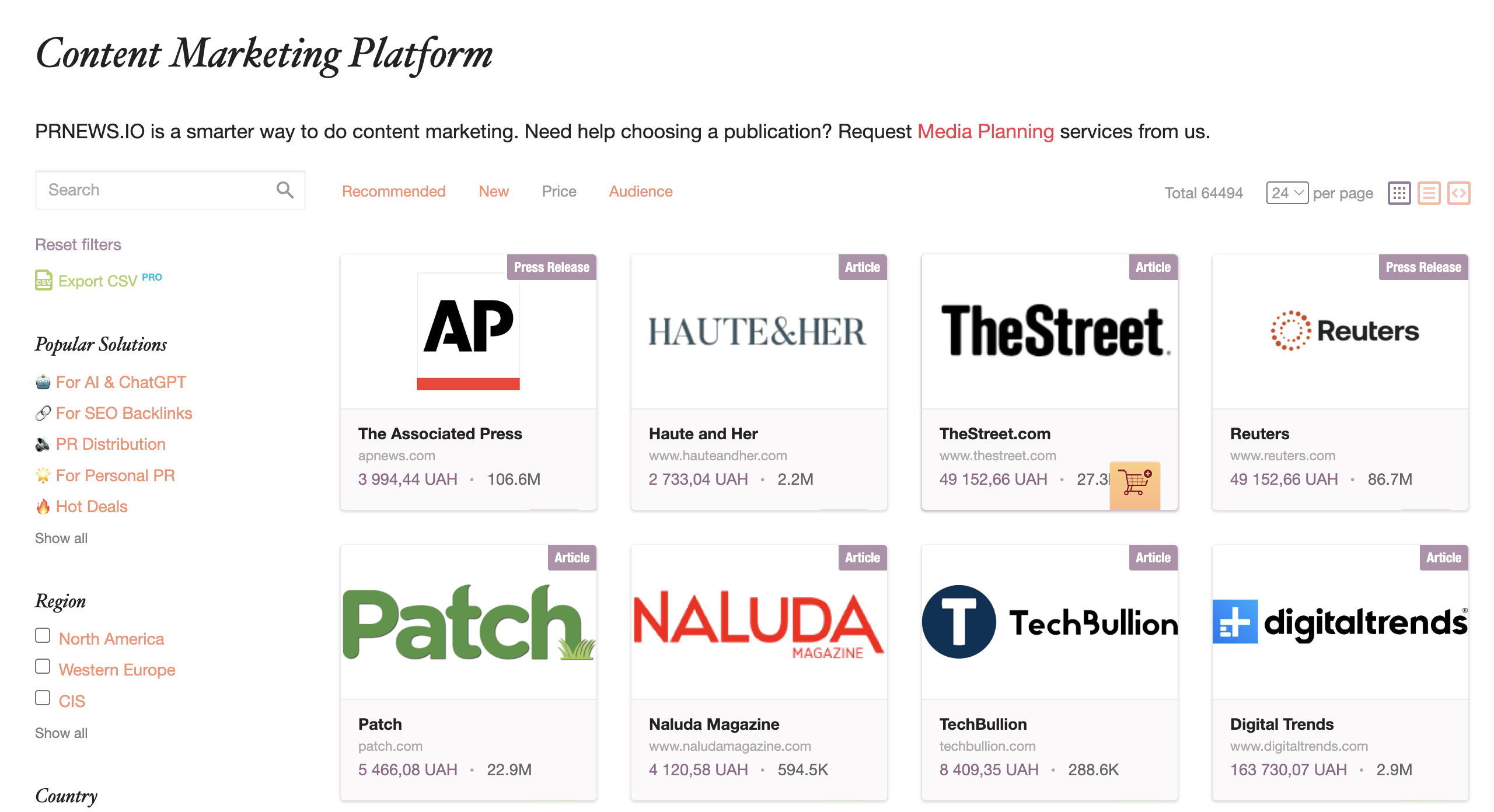
Publishing articles in niche media or on industry platforms establishes authority and positions personal brand writers as thought leaders. Platforms like PRNEWS.IO streamline this process, making it more professional and accessible, and providing greater predictability in terms of media visibility.
Why PRNEWS.IO?
- With an all-in-one pressroom, personal writers can easily access media materials, PR contacts and key information.
- With support for content distribution in 77 languages across 175 countries, PRNEWS.IO enables writers and their clients to establish authority beyond a single market.
- PRNEWS.IO partners with over 100,000 websites, including Forbes, The Guardian, The Times, and The Economist.
- Fixed pricing for placements removes the need for long-term commitments and hidden costs, which is particularly beneficial for independent writers and consultants.
- Content is usually published within 24-48 hours, making PRNEWS.IO ideal for time-sensitive campaigns and for sharing timely thought leadership content.
Speaking engagements and webinars
Public speaking, panel discussions and webinars enable personal brand writers to build trust and increase their visibility by demonstrating their expertise beyond written content. These formats enable writers to explain their thought processes in real time, share frameworks, and answer questions, thereby reinforcing their authority and credibility.

Frequently Asked Questions
What does a personal brand writer actually do?
A personal brand writer helps experts, founders and creators to transform their ideas, experience and opinions into clear and consistent written communications. Their work covers positioning, tone of voice, content strategy, writing and ongoing optimisation across platforms.
How is a personal brand writer different from a copywriter?
A copywriter’s focus is on selling a product or service. In contrast, a personal brand writer builds trust, credibility and long-term visibility for an individual. Rather than seeking conversion in a single post, the goal is to establish sustained authority over time.
Do I need a personal brand writer if I can write myself?
Many experts can write. However, few can do so in a strategic, consistent and objective manner while running a business or leading a team. A personal brand writer can provide structure, an external perspective and greater efficiency.
Is hiring a personal brand writer only for founders and CEOs?
Personal brand writers work with consultants, executives, employees, creators and subject-matter experts at all stages of their careers. Anyone whose reputation affects their career opportunities can benefit from strategic personal branding.
How long does it take to see results?
Personal branding is a long-term endeavour. While initial visibility and engagement may improve within weeks, meaningful trust, recognition and opportunities usually take several months of consistent work to build.
What platforms do personal brand writers usually work with?
The most common platforms are LinkedIn and X (formerly Twitter), but it can also be newsletters (e.g. Substack or Telegram), blogs, media publications and personal websites, depending on the goals and audience.
Can AI tools replace a personal brand writer?
Although AI can assist with drafting and ideation, it cannot define positioning, make strategic decisions or capture a person’s nuanced thoughts and experiences. Personal brand writers use tools; they don’t compete with them.
How can PRNEWS.IO help personal brand writers?
PRNEWS.IO helps personal branding agencies and their clients to secure media placements in relevant publications, bypassing the complexities of traditional PR. The platform streamlines the process of guest posting and content distribution, providing direct access to thousands of niche and high-authority media outlets worldwide.