Did you know that Emily Weiss, founder of the billion-dollar beauty brand Glossier, started with a simple blog called Into the Gloss back in 2010? She had no team, no business plan, just a passion for honest beauty reviews. One bold email to a Vogue beauty editor became her first published piece. That moment sparked the start of her journey in self-promotion. From blog posts to behind-the-scenes photos, candid Instagram stories, and spotlighting real women, she built a community around trust and authenticity. In 2014, Glossier was born, and today, it’s a global brand.
Her secret? No hype, no huge budgets. Just bold ideas, persistence, and being real.
Feeling inspired? In this article, we’ll guide you through the essentials of self-promotion, from the basics to expert-level strategies, so you can grow your business without spending a fortune. Let’s get started.
What is Self-Promotion?
Self-promotion is one of the most effective ways to showcase your skills, grow your brand, and connect with your audience, without needing a PR team or media outlet. At its core, self-promotion means sharing your work, content, or ideas directly, on your terms. Whether you’re an entrepreneur, artist, freelancer, or gamer, it’s your way to say: “Here’s what I do, and here’s why it matters.”
For example, if you run a gaming business, self-promotion could mean:
- Posting updates about your game on social media
- Sharing gameplay videos or behind-the-scenes content
- Writing blog posts or making videos about your development journey
And yes, you can share your content anywhere: forums, platforms, newsletters, your website. Just be mindful of the rules where you post (some places don’t allow promotional content).
Self-promotion isn’t bragging. It’s storytelling. It’s how people discover your work. And it’s how you build trust with the people you want to reach.
What is the difference between Self-Promotion and Personal Branding?
Many people confuse these concepts, but there is an important difference between them.
Self-promotion is when you independently talk about yourself, your product, or service on various platforms. It can be a social media post, a video, an article, or any other way to make yourself known.
Personal brand is how others perceive you. It is your style, your tone of communication, your visual design, your values, and the story you convey. In short, it is the image you create in people’s minds.
Your personal brand can include:
- brand colors and logo
- watermarks on content
- the way you present yourself and your business
- your principles and values.
Even if you have never thought about a brand, but already run a business, you already have one. Maybe it was just not consciously formed.
How does it work together?
Self-promotion is a tool.
Your personal brand is what you promote.
So, these two things are closely related. And if you want to be recognizable, gain trust, and attract customers, it’s important to work on both. By the way, if you’re interested in learning more about how to properly build your brand, read our article Personal branding: a complete guide to building your visibility and impact.
When is Self-Promotion necessary (or unnecessary)?
There’s a big difference between effective self-promotion and coming across as pushy or tone-deaf. Sometimes that line is razor-thin, and it takes tact and emotional intelligence to walk it well.
You can’t just walk into a place like Sephora and start pitching your brand to the staff in hopes of gaining attention. Promoting yourself at the wrong time or in the wrong context can backfire and turn into anti-promotion. People won’t remember your message; they’ll remember how uncomfortable it felt.
The key is to carry yourself with confidence and self-respect, never resorting to desperate tactics. But how do you know when self-promotion is a good idea? Let’s break it down.
If you’ve contributed to a project
Ask the organizers to credit you publicly. A simple mention can go a long way in helping others discover your work.
If you’ve received an award or recognition
Share it! People enjoy celebrating success stories. It’s a natural and effective way to show your credibility and achievements.
If you have a story to tell
Write an article about your brand, its journey, values, and mission, and publish it across platforms. People connect with authenticity, and they love being part of a brand’s story.
We often talk about how important self-promotion is, but here’s the truth: good self-promotion only exists because bad self-promotion exists too. And knowing the difference can make or break your reputation.
Sometimes, it’s not easy to judge whether it’s the right time to promote yourself. So let’s define a few clear cases where you shouldn’t do it.
At an awards ceremony honoring someone else
If you’re attending an event meant to recognize other people’s achievements, it’s not your moment. Trying to promote yourself there is like proposing at someone else’s wedding, you’re stealing the spotlight, and it won’t be appreciated.
Right after your competitor has self-promoted
If someone before you (especially a competitor) has already made a big statement about themselves, jumping in immediately afterward with your promo can come off as copycat behavior. It may make you seem like you lack originality or confidence. However, context matters. In some cases, if done with a bold and unique twist, following up can feel intentional and fearless. But tread carefully, timing and tone are everything.

For whom is Self-Promotion?
Think about this: have you ever been interviewed? Auditioned for a role? Applied for a competition, college, or student council? If yes, then congratulations — you’ve already practiced self-promotion.
In more formal terms, self-promotion becomes especially relevant for self-employed people: freelancers, entrepreneurs, creators, and anyone whose personal name is tied to their professional work. For these individuals, self-promotion isn’t optional — it’s essential for growth, visibility, and sales. In today’s world, self-promotion is everywhere. But here’s the thing: not everyone needs to promote themselves all the time. So, how do you know if you do?
Ask yourself these five questions:
- Is my work getting noticed?
If you’ve ever thought, “I’ve done so much, but no one knows about it,” that’s a clear sign.
- Am I being overlooked for promotions or new opportunities?
If you’re consistently excluded from important projects or discussions, it could mean you’re not visible enough.
- Am I relying only on my results to speak for themselves, but they aren’t?
Quality matters, but unfortunately, quiet excellence often goes unnoticed without visibility.
- Do I struggle to clearly state what I’m an expert in?
If talking about yourself feels like “bragging,” chances are you’re holding back on valuable self-promotion.
- Are my ideas only heard when someone else says them?
If your ideas gain traction only when repeated by others, this may be a sign that your voice needs more presence and authority.
Examples of Self-Promotion
Everyone perceives self-promotion differently. For some, it can be as simple as wearing clothing from their brand. The possibilities are endless — self-promotion leaves plenty of room for creativity and personal expression. You can shape it in any way that feels authentic to you.
That’s why we’ve put together a selection of effective self-promotion examples to inspire you — and we’re excited to share them with you!
Example 1: New Award or Certification
If you have a new certification, award, or title, this is a great opportunity to showcase your achievements.
You can start by telling a story about what you went through to get certified. Telling your story will make you sound less boastful and more inspiring. People like it when others not only brag about their success, but also about how they achieved it, which makes your post seem more relatable and lively, which is good for your reputation. Real, unvarnished success pays off.
For example, the International Institute of Business Analysis published an article about how Business Analyst Blueprint participants posted their certifications on LinkedIn immediately after completing the course. The result was high reach and engagement on the post, which increased engagement, and one participant received an offer from her own office, where she worked before!
Example 2: Positive Feedback
Customer reviews are always a good thing because they can help you build trust. Whether you work a 9-to-5 job or run a business, the next time you get positive feedback from a customer, don’t keep it to yourself! Share it with your manager or promote it on platforms where your potential customers can find it.
If you’re unsure about whether this is appropriate or okay, think of it this way: you’re sharing how you helped someone so that others know that you can help them too. So it’s not even self-promotion, but a vital communication skill.
For example, the Ukrainian IT course platform Mate Academy consistently stays up to date with its graduates’ success stories. They frequently share real-life cases showing how their courses transform lives.

One such post on their Instagram features a young woman who served in the Ukrainian Army. After completing her service, she decided to change her life by enrolling in IT courses — and today, she’s thriving in the tech industry.
Stories like this not only inspire but also build trust in the company. The brand is growing, the community is engaged — what could be better?
Example 3: Volunteer Work
We all know people who boast about every charitable act they do; it often feels fake or performative. Don’t be that person. Instead, focus on sharing why a cause matters to you and how others can get involved or support the mission.
For example, Ukrainian influencer and clothing brand founder Tanya Parfileva, who was featured in Forbes 30 Under 30, regularly supports children with cancer. She not only speaks out about the issue but also engages her audience through fundraisers, charity collections, and special campaigns, where proceeds from purchases go directly to donations. Her approach feels genuine and inspires others to take action too.
Recently, Tanya announced on her social networks a charitable “cherry” pop-up — an event, part of the proceeds from the sale of which go to support children with cancer. These are not just words — Tanya repeatedly calls for participation, the purchase of products, and help from children.
Example 4: New Job or Internship
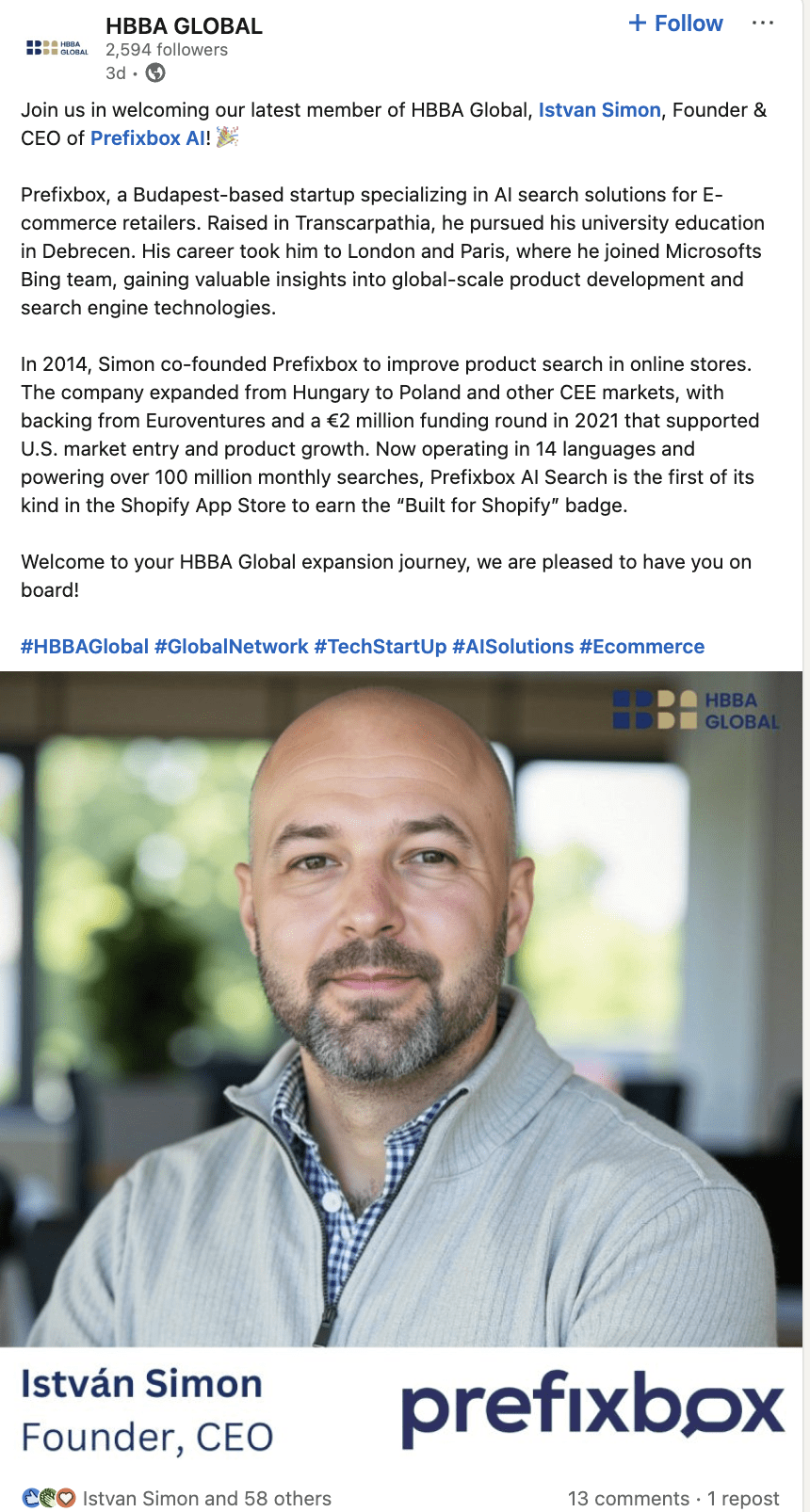
When you announce a new position or internship on LinkedIn, don’t make the entire post about the company you’re joining — they likely already have a PR team for that. Instead, focus on you. Share what you hope to achieve in your new role, or tell a personal story about your journey to this point. Self-promotion is about highlighting your skills, goals, and progress, so let your voice lead.
For example, HBBA GLOBAL once published a post welcoming a new team member, which served as a form of self-promotion both for the employee and the brand itself. By spotlighting his achievements and professional background, the company not only helped promote his personal brand but also reinforced its own image as a supportive and professional environment
Example 5: Press Coverage
The only thing better than self-promotion is when others promote you. If you’re mentioned in the media, make sure to highlight that press coverage on your social media platforms and website. Sharing press features is a win-win: it reinforces your credibility and gives additional exposure to the journalist or outlet that featured you.
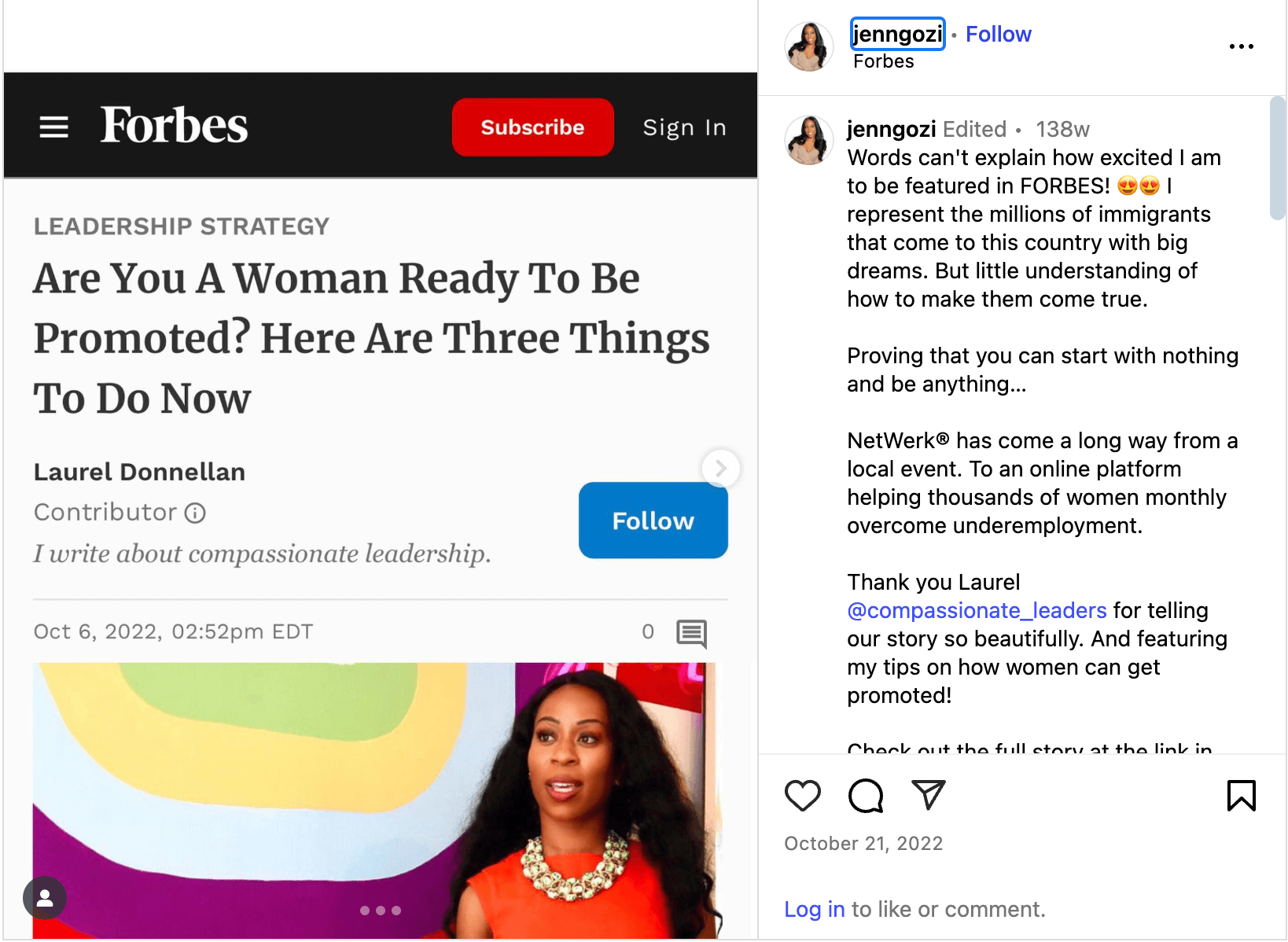
For example, well-known leader Jen Ngozi once shared her Forbes feature on LinkedIn, and the post gained significant traction, opening new doors and professional opportunities for her.
Self-Promotion Techniques
Sometimes this kind of recognition comes organically, and sometimes you need support to make it happen. That’s where strategic self-promotion tools come in. In our next section, we’ll dive into practical self-promotion techniques — including how platforms like PRNEWS.IO can help you share your story effectively, affordably, and at scale.
Technique 1. Value-Based Self-Promotion
It’s a well-known truth: we shouldn’t believe everything we read online. And let’s be honest, being 100% authentic is something we typically reserve for our closest friends and family. But that doesn’t mean all self-promotion is fake or disingenuous. Rather than striving for “perfect” authenticity, focus on aligning your self-promotion with your real values and ethics. This approach creates what we call sustainable authenticity, a version of yourself that you can confidently and consistently show to the world, without discomfort or regret.
For example, one of your core business principles can be radical transparency with your SEO clients. You openly share what’s working, what isn’t, and why, because it reflects your personal ethos of honesty and delivering genuine value. When you promote that transparency, it doesn’t feel forced or performative. It feels natural because you believe in it. And that sincerity resonates with others. When your ethics and self-promotion are in alignment, your message becomes stronger, more believable, and ultimately more effective. Your audience can feel the difference.
Technique 2. Be helpful first, promotional second
If every post you make starts with bragging about your wins or aggressively pushing your product or service, you risk alienating your audience, and honestly, it can make you feel gross, too.
Instead, shift your focus to sharing something genuinely useful to your audience. Think of a quick tip, insight, tool, or small piece of advice they can apply right away. Free, helpful content is far more powerful than a sales pitch.
This strategy works because it flips the traditional model of self-promotion: Instead of leading with “hire me,” you lead with “here’s something useful.” The promotion becomes a natural side effect of being helpful.
Do this consistently, and people will start to recognize you as “that helpful person who always has valuable tips.” And guess what? That’s the person people want to follow, trust, and eventually hire or buy from.

Technique 3. Your marketing channels belong to you
Your website, your social media, your newsletter, these are your spaces for self-promotion. When someone visits your site or follows you online, they’re choosing to engage with you. And just as easily, they can choose to leave, and that’s okay.
It might feel awkward when someone unsubscribes, but here’s a mindset shift: every unsubscription is helpful. It filters your audience down to the people who genuinely care about your message. You’re no longer worrying about bothering the wrong people; you’re speaking directly to the right ones.
This is especially powerful when it comes to your newsletter. If you’ve ever hesitated to hit “send” because you don’t like receiving too many emails, remember this: everyone on your list opted in. As long as you’re offering value, you have every right to show up in their inbox. Promote yourself with confidence. You’re not intruding – you’re inviting.
Technique 4. Networking without selling
Self-promotion often feels awkward when you’re introducing yourself to people who don’t know you, and whom you don’t know either. It can feel forced, like walking up to a stranger at a party and rattling off your resume. That’s exactly why so many people misunderstand what networking is.
Too often, we imagine networking as cold handshakes and rehearsed elevator pitches. But in reality, most meaningful networking starts with simple, human conversations: weekend plans, shared interests, or a recommendation for good bubble tea. Not everything has to be a pitch. If you show up to a networking event and talk only about your product or service, yes, you’ll be remembered. But not for the right reasons.
Instead, take the time to build genuine connections. Ask people about their work, their goals, and their challenges. Listen actively. Be curious, not transactional. Engagement doesn’t stop at the event. Subscribe to their newsletters. Leave thoughtful comments on their posts. Share their work. Show real support, not because you expect something, but because you care.
And when the moment comes that they need a service like yours, guess what? You’ll already be part of their trusted network, not because you promoted yourself aggressively, but because you showed up as a real person first.
Technique 5. Self-Promotion Through PRNEWS.IO
If you’re short on time or want to supercharge your self-promotion, turn to PRNEWS.IO.
PRNEWS.IO is a trusted platform that helps you share your story and boost your brand visibility through mentions, articles, or press releases on world-renowned media outlets like Forbes, The Guardian, The Economist, and many more.
You select a platform that fits your budget (prices start at just $6.20), pay quickly with no long-term contracts, and receive your publication within 24–72 hours. It’s fast, simple, and effective.
With support for 77 languages in 175 countries, PRNEWS.IO gives you global reach, whether you’re targeting local markets or international audiences.
This tool is perfect for:
- Entrepreneurs who want to grow their online authority
- Public speakers seeking more virtual engagements
- Coaches and consultants are ready to raise their rates
- Course creators looking for new students
- Real estate professionals aiming to position themselves as industry experts
- …and anyone who wants to be seen and trusted in their niche.
When you don’t have time for complex strategies, smart self-promotion starts here.
Conclusion
Self-promotion isn’t going away anytime soon, but it doesn’t have to make you feel uncomfortable or fake. Focus on being genuinely helpful, taking control of your channels, and building real connections. Most importantly, align your self-promotion with your core values. When you do this, self-promotion stops feeling like a necessary evil and becomes a natural extension of who you are.
FAQs
What does Self-Promotion mean?
Self-promotion is the act of advertising or promoting oneself, often to advance one’s career or personal goals.
What is the meaning of mere Self-Promotion?
“Mere self-promotion” refers to the simple act of promoting oneself, often with the implication that it’s done without substantial merit or genuine achievement.
What is the difference between Self-Promotion and Personal Branding?
Self-promotion is a tool. Your personal brand is what you promote.
Which item includes a Self-Introduction, some Self-Promotion, and a call for further action?
An Elevator Pitch is a short, concise speech in which you introduce yourself (Self-Introduction), talk about your achievements or strengths (Self-Promotion), and call for further action, such as contact or cooperation (Call to Action).
What is Self-Marketing?
Self-marketing is the process of promoting oneself to others, highlighting skills, experiences, and values to create a positive and memorable impression.