After the huge leap of the e-commerce industry, the retail content marketing scenario has changed drastically. E-commerce has also changed the buyer’s journey. Now, customers are expecting to get more offline or online services rather than just the product. Experience plays a crucial role in the buyer’s decisions. This is where retail content marketing can help!
In this post, you´ll learn comprehensive marketing techniques that can help the retail sector increase sales. Let´s start.
To succeed in retail, you must:
? Meet consumers’ increasing service demand. An omnichannel experience is one example.
?Manage a global competition. Chinese Shein and Spanish Zara are not “sleeping.”
? Win a piece of the consumer’s time. Here you are competing against Netflix, Facebook, and other categories.
What is retail content marketing?
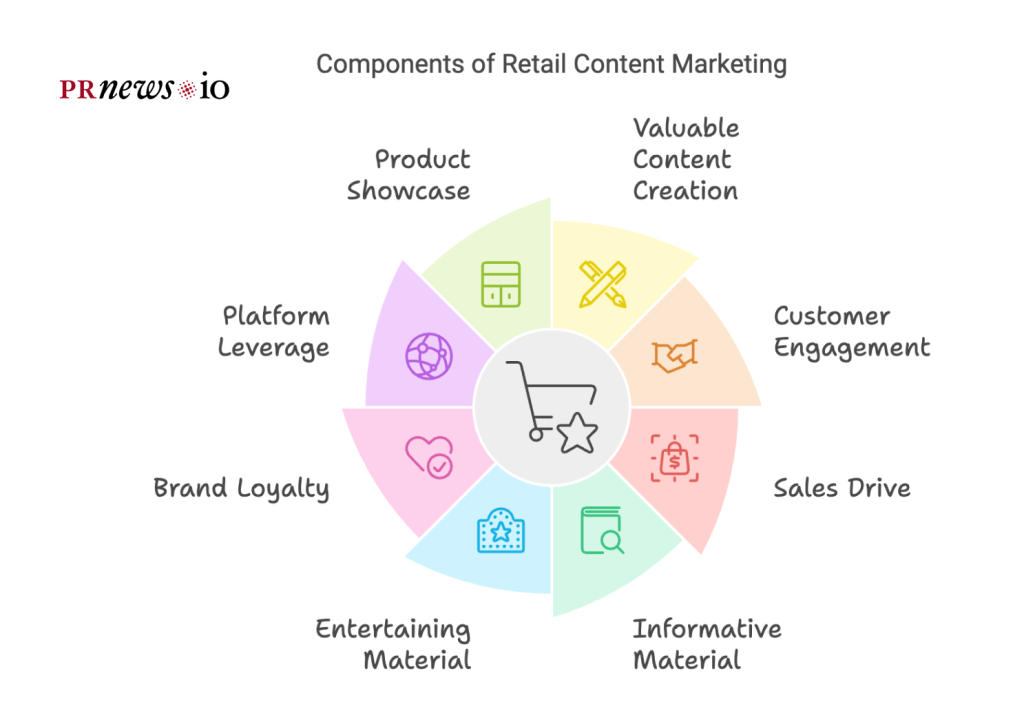
Retail content marketing is a strategy where stores create and share valuable content to attract and engage prospects. This can include blogs, social media posts, e-commerce stores, newsletters, and more.
The goal is to engage and drive customers to buy the products and services. You have to become a source of inspiration and knowledge for your target audience.
Retail content marketing usually includes resources to educate, entertain, solve problems, and connect with a target audience on an emotional level.
A thorough content marketing strategy should target to provide content that resonates with customers’ lifestyles, pain points, and needs.
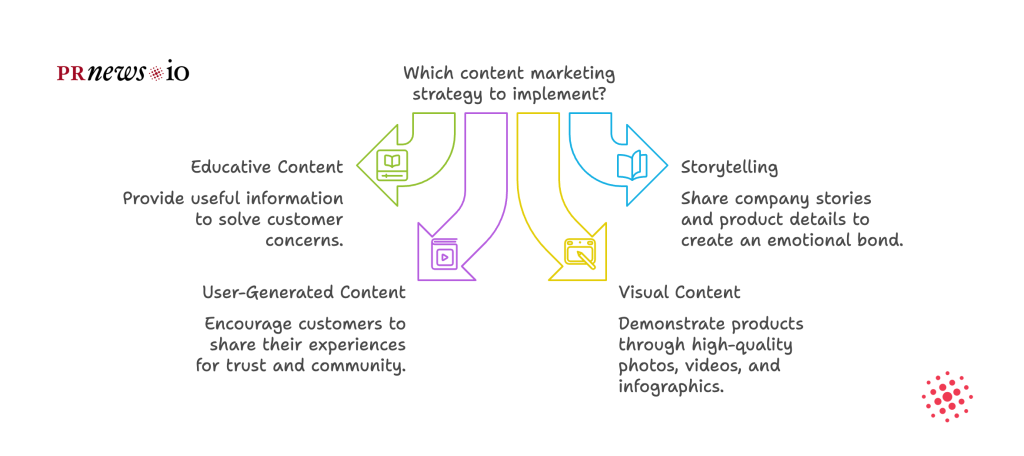
The following content types are important elements and strategies of retail content marketing:
▪️ Educative Content
Give your audience useful information to solve their concerns related to your niche. This can involve purchase guides, comparisons of products, and how-to tips.
▪️ Storytelling
Tell stories about the processes in your company, about your products and stuff, frequently emphasizing the goals, core principles, and history of the business. This creates an emotional bond with clients. Read more: The Power Of PR Storytelling
▪️ User-Generated Content
Encourage users to share content on social media about their experiences using the products. This may create a feeling of trust and community. Read more: User Generated Content (UGC): Leveraging A Strategy That Converts
▪️ Visual Content
Demonstrate products using photos, videos, and infographics of the highest standard. Show your clients and products in use.
▪️ Social media
Make use of social media channels by interacting with customers, sharing content, and increasing traffic to the retail website and physical stores.
▪️ Email marketing
Deliver pertinent and customized content straight to consumers’ inboxes. You can offer newsletters, product updates, exclusive deals, and tailored suggestions.
▪️ Blogging
Keep up a blog to offer in-depth details about goods, market trends, and other pertinent subjects. Blogs can raise the retail site’s organic traffic and search engine rankings.
Content lets you gather people from a variety of channels and bring them back to a central location: your store.
Why is Content Marketing Important for Retail Business?
Readability and visibility are the two components of content marketing. In traditional advertising and non-organic marketing, companies pay for ads that help them generate leads.
Content marketing is a long-term investment strategy. It focuses on building trust and fostering relationships. Businesses may pay for content too, but this builds a strong relationship that connects with the audience psychologically and emotionally. Usually, it’s leading to bigger profits and loyalty.
Here are the reasons why content marketing is vital for retail business.
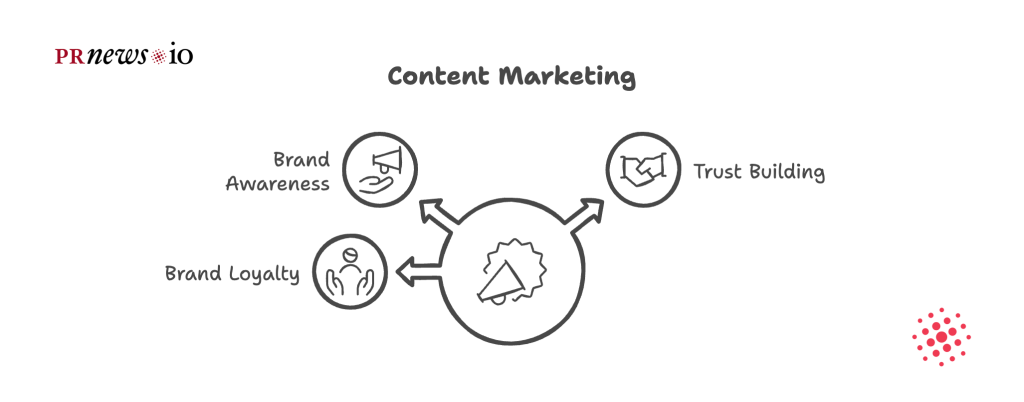
Increases Brand Awareness
Why do we associate brands with some traits? Because of their unique content marketing strategy that creates a distinct voice and brand personality. Think of Nike, it stands for innovations and achievements. By providing the audience with quality guides and/or useful videos you can create the perception of your company.
Builds Trust
Would you choose a brand that matters to your pain points and helps you or one that offers vague promises? The content that educates, entertains, or helps establishes your domain authority. When the audience relates to you as industry experts, they will become your clients.
Improves Brand Loyalty
With hundreds of brands to choose from, customers choose reliable brands. That’s when content marketing saves your day!
8 Steps to Build an Audience for Your Retail Business
So where to start? Building an audience for your retail business involves a mix of strategic and creative tactics. You’ll need to take a holistic view of your entire content strategy to make sure it will work.
Here’s how to act with each of the key content marketing channels for retail businesses:
Create a blog people want to read
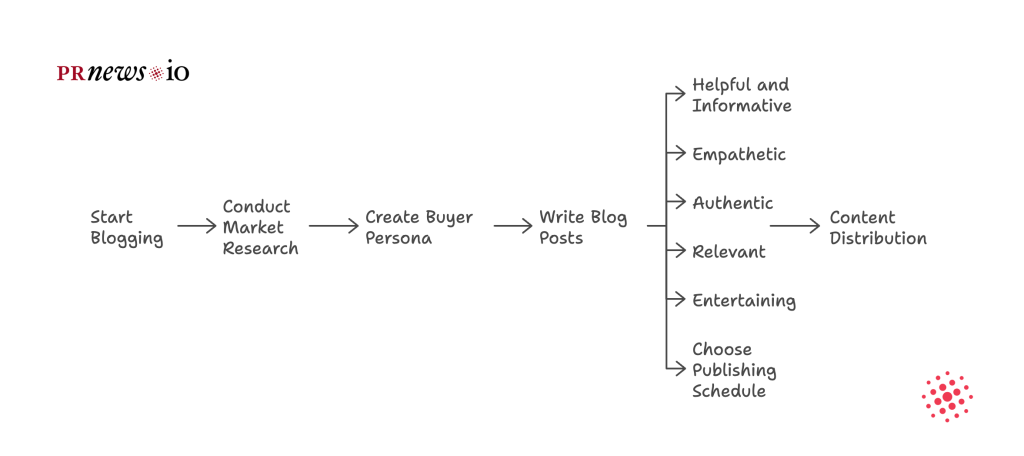
Blogging is still one of the main ways to start building an audience. Before you start writing, make sure you know your target community.
Conduct market research to identify and understand your target audience – its demographics, preferences, motivations, and buying behaviors. Then create a buyer persona for your customers, and use it to write your blog posts.
Your blog posts should be:
- Helpful and informative. Provide thorough, valuable, and actionable advice.
- Empathetic to your readers’ needs. Don’t sell directly.
- Authentic. Write in a way that’s true to the values of your brand.
- Relevant. You can tell a variety of stories, but they should all be focused on what your audience finds important.
- Entertaining. Think of your friends, if they would have fun reading it. Make it worth spending their time!
Once you’ve created a list of topics you want to write for your blog, choose a publishing schedule. You may publish once per week but try to be consistent with your content.
Using social media can help you boost your audience. It’s usually best to choose one or two platforms where your target audience spends time. If you try to grow an audience on multiple platforms, you run the risk of spraying yourself and posting inconsistently.
To develop your retail social media strategy, first, identify your target audience and find out their favorite social media platforms. Then post social media high-quality content on those platforms.
Here are a few best practices to follow:
- Stick to consistent brand visuals and tone of voice.
- Follow a regular publishing schedule so your audience knows when your content appears.
- Use platform-specific features, like hashtags, tags, geotags, and @mentions, so posts are easy to find, see, and search for.
- Publish different content formats like Reels, carousels, shoppable posts, and Stories.
- Interact with follower’s comments, tags, and mentions of your brand.
Here are a few content ideas to get started:
- Reels showing behind-the-scenes snippets of your brand
- Live Q&A sessions with your founder
- Stories counting down to a new product launch
- Videos with tips on how to use your product
- Posts that feature products, staff, store decorations, or relevant events you participate in or host
- Tutorials and product demos
Double-Down On Short-Form Video
Video is a particularly powerful tool for retailers because it gives you the ability to showcase your products, how they work, and the results they provide. This format is engaging and easy for your audience to consume.
Videos provide more information on how items work—and how to use them. It may make a more compelling case for your customers to buy than a blog post or photo alone.
Get Your Customers Involved
No one wants to see a constant shelling of sales content from any brand. Engage influencers and your loyal customers to present your products and push your sales through the power of word-of-mouth marketing.
Develop an email marketing strategy
Email marketing still works. Your email list includes some of the most engaged and loyal audience—they took the time to sign up or have already bought from you.
Place email sign-up forms on your website, checkout sequences, and social media channels.
Keep your messaging concise and customer-focused. Plan a schedule for promotional emails, newsletters, abandoned cart reminders, and seasonal campaigns to maintain consistent communication.
Experiment with other content types
Writing blog posts or publishing social media posts are among the classic pieces of content for retailers to create. But don’t feel limited to just these strategies.
Experiment with your content and analyze what mediums and topics resonate with your audience.
Think Beyond Single-Platform Silos
With technology so deeply integrated into our daily lives, customers want and need an omnichannel experience, taking them from their phones to the store and back again.
One of the successful partnerships recently has been between Pinterest (specifically the Pinterest Lens feature) and the Target app.
Within the Pinterest app, users can take a photo on their smartphone of products they like and the Target app will show them similar products in their collections.
While your retail company may not have the budget and customer reach you may find a service and cooperate with them.
Instead of creating content strategies based on just one marketing platform, think about how you can cooperate with other platforms and integrate your efforts to provide a memorable and unique experience for your customers.
Use Influencer Partnerships To Educate Your Audience
Partnering with influencers isn’t going anywhere anytime soon.
Strategically working with people your target audience already follows is a good way to get your company in front of new audiences and remind existing customers about what you offer.
What are the main difficulties you may encounter?
Any effective strategy must take into account the potential bottlenecks it will have to face. Planning is key to avoiding problems that everyone who knows what content marketing is has suffered at some point.
Below you will find some tips and aspects to keep in mind when implementing a content marketing strategy.
Good practices:
- Identify your buyer persona and their interests.
- Pay attention to the quality content distribution (choosing the right platform)
- Take care of the quality of the content to work more on the brand image and avoid errors that could harm it.
- Creating a content calendar will help you stay consistent and offer new information to users regularly.
Bad practices:
- Don’t sell from the beginning.
- Think carefully about your resources, don’t participate on all the channels.
- Choosing the quantity over the quality.
What tools are available to help with content marketing?
Several services that serve to improve the content marketing process are essential for its development. Below are some examples according to their typology:
For the blog: you need a CMS that will manage all your content. Some of the most used options are Drupal and WordPress.
For SEO: to propose new content and optimize old content, you can use the tools SEMRush, Ahrefs, or Google Keyword Planner.
On social media: Hootsuite or SimplyMeasured
For email marketing: some of the most used ones are HubSpot and MailChimp.
PRNEWS.IO offers a powerful solution for retail businesses looking to amplify their content marketing efforts. By leveraging our extensive network of top-tier media outlets, retailers can effectively distribute their branded content to reach wider audiences and boost their visibility.
Key benefits:
- Get your content featured on respected industry websites and news platforms.
- Reach specific demographics and markets relevant to your retail niche.
- Expand your reach beyond traditional marketing channels.
- Gain quality backlinks from authoritative sources to enhance your search engine rankings.
- Achieve greater ROI compared to traditional advertising methods.
- Easily submit and track your content distribution through our user-friendly platform.
- Receive guidance from our team to optimize your content for maximum impact.
By partnering with PRNEWS.IO, retailers can transform their content marketing strategy, ensuring their message reaches the right audience through trusted media channels. Boost your brand’s credibility and drive customer engagement with strategically distributed content.

Examples of brands that use content creation
Some of the brand’s success stories can serve to illustrate the advantages of launching a content marketing initiative:
Canvas Design School
Over time, Canva has become an essential assistant to master for designers, influencers, and content marketers.
Beyond designing, Canvas Design School is an amazing initiative for budding professionals in the niche. To educate the audience, it offers different courses, tutorials, and live sessions for beginners and experts.
ASOS
ASOS are masters of content and how to seed it via social channels. Their ‘Unboxing’ campaign on Vine gives fantastic results in social media.
The brand makes an exciting showcase of its products through this campaign – encouraging its customers to create a Vine video of them opening (or unboxing) their new delivery, and then tagging the Vine with #ASOSUnbox. By taking the potentially unglamorous act of opening an ASOS box, they introduced a little bit of magic to online shopping.
Forever 21
In the past three years, the ‘fast fashion’ brand, Forever 21, has exploded. With sales of over 3.5 billion dollars, a strong foothold in Europe and Asia in addition to their popularity in the U.S. they are holding a strong position on the market. So how have they achieved this success? Of course, their trendy clothes and heavy investment have done a lot of work, but they are also extremely successful in their social media strategy.
Their ‘Blogger Crushes’ campaign on Pinterest is a perfect example. Appealing to the interest of the fanatically followed fashion blogger community, they have motivated bloggers to ‘pin’ photos of themselves demonstrating the latest Forever 21 lines to their own Pinterest accounts. Forever 21 let them be the first before showing this content on their own company Pinterest profile. As a result, they are constantly receiving amazing product photos, reaching their audience via a medium that’s perfect for mobile and short attention spans. It’s simple but very successful.
The Bottom Line
The goal of content marketing efforts should be to build the trust of the target audience. The best way to do it is to tell your story in a way that’s real and authentic. And the best way to keep your audience coming back? Tell stories that include relevant, helpful, and valuable information for the people you want to attract.