Over the past decade, public relations has undergone a structural transformation. What once functioned as a discipline of message amplification has evolved into a system of cultural architecture—one where brands do not merely communicate to audiences, but design experiences with them.
Between 2015 and 2026, virality stopped being accidental. It became engineered.
In an environment dominated by algorithmic discovery, short-form video, and generative AI, the success of a creative PR campaign is no longer measured by reach alone. Instead, it is defined by a campaign’s ability to:
- Embed itself into everyday digital behavior
- Trigger emotional and social responses that compel sharing
- Sustain narrative momentum across platforms and formats
- Convert cultural relevance into tangible business outcomes
This article analyzes the most influential viral PR campaigns of the last decade, not as isolated stunts, but as strategic systems built on psychology, narrative intelligence, and cultural timing.
The science behind why campaigns go viral
At its core, virality is a behavioral phenomenon. Research across behavioral economics, neurobiology, and social psychology consistently shows that people share content not because it is “good,” but because it satisfies deep human needs:
- Status signaling
- Social belonging
- Emotional regulation
- Curiosity resolution
Modern PR excellence sits at the intersection of these forces.
The STEPPS Framework as a strategic lens
Jonah Berger’s STEPPS framework remains one of the most reliable models for analyzing contagious content:
| Principle | Strategic Role | Psychological Driver |
| Social Currency | Makes sharers look smart or “in the know” | Identity signaling |
| Triggers | Keeps brands top-of-mind | Associative memory |
| Emotion | Drives action | High-arousal dopamine response |
| Public | Creates imitation | Social proof |
| Practical Value | Encourages usefulness | Altruism |
| Stories | Enhances retention | Narrative transportation |
The campaigns that defined the last decade rarely relied on a single principle—they layered multiple triggers into one coherent experience.
Viral & creative PR campaign examples
Example 1: Michael CeraVe — the Gold Standard of Transmedia PR
Category: Prank-based PR / Cultural Absurdism
Year: 2024
Agency: Ogilvy
The Michael CeraVe campaign represents one of the most sophisticated examples of engineered virality in modern PR history.
Why It Worked
The campaign amplified a long-running internet joke suggesting actor Michael Cera was the creator of the skincare brand CeraVe. Instead of denying it, the brand leaned into the myth, turning speculation into a multi-phase narrative:
- Fake News Phase – Influencers and paparazzi footage hinted at Cera’s “involvement”
- Debunking Phase – Conflicting statements fueled doubt and curiosity
- Revelation Phase – A Super Bowl commercial resolved the mystery with satire
This approach weaponized Social Currency. Audiences didn’t just consume content—they participated in decoding it.
Strategic Impact
- 32 billion media impressions
- Highest one-week moisturizer sales in brand history
- #1 beauty brand share of voice during Super Bowl lead-up
- Cannes Lions Grand Prix winner
Key PR Insight: Virality scales fastest when audiences feel like detectives, not spectators.
Example 2: Tubi’s Interface Interruption — Risk as a Visibility Multiplier
Category: Media Play / Disruptive PR
Year: 2023 (Super Bowl LVII)
Tubi’s 15-second Super Bowl ad simulated a TV interface accidentally switching away from the game. Viewers thought someone in the room had changed the channel.
The result: confusion, anger, laughter—and massive conversation.
Why It Went Viral
- Exploited cognitive disruption during a high-attention moment
- Triggered high-arousal emotions, particularly outrage
- Forced immediate social reaction (“Who changed the channel?”)
Results
- Most talked-about brand of the night
- Trending globally on social media
- Significant lift in new users within 24 hours
Ethical Trade-Off
The campaign sparked debate about manipulation and household conflict, underscoring a critical lesson:
Not all attention is neutral.
Disruptive virality carries reputational risk that must be strategically weighed.
Example 3: Barbie — When PR Becomes a Cultural Ecosystem
Category: Entertainment PR / Omnichannel Cultural Saturation
Year: 2023
The Barbie campaign wasn’t a marketing push—it was a cultural takeover.
Strategic Architecture
- 165+ brand partnerships
- Total visual domination via “Barbie Pink”
- AI-powered selfie generators
- Fashion-driven press strategy
- Embracing (not resisting) the Barbenheimer meme
Rather than controlling the narrative, the team designed conditions for culture to do the work.
Outcomes
- 15+ million social mentions in a single month
- 713 million influencer engagements
- Global box office success far exceeding projections
Key PR Insight: The most powerful campaigns don’t chase trends—they become environments where trends emerge.
Example 4: Volvo Trucks — Turning B2B into Global Spectacle
Category: Demonstration-Based PR
Year: 2013–2015 (Peak impact through long-tail virality)
With The Epic Split, Volvo transformed a technical product feature into cinematic mythology.
Jean-Claude Van Damme performing a split between two reversing trucks was not just visually striking—it was irrefutable proof of engineering precision.
Results
- 100M+ YouTube views
- €126M earned media value
- 24% sales growth the following year
- Highest commercial performance in Volvo’s history
Strategic Lesson: “Show, don’t tell” isn’t creative advice—it’s a commercial growth strategy.

Purpose-driven & values-based PR campaign examples
Example 5: Dove: Authenticity as a Long-Term Asset
Dove’s Campaign for Real Beauty proves that virality doesn’t need shock—it needs consistency.
The #TurnYourBack campaign (2023) responded to AI beauty filters with a simple, symbolic action: rejecting digital distortion.
- 54M views
- 567K engagements
- Decades-long trust equity translated into sustained sales growth
Dove’s Real Beauty platform has long been cited as one of the most enduring examples of purpose-driven PR, but its evolution into the AI era proves why longevity itself can be a strategic advantage. With #TurnYourBack, Dove responded to the rise of AI-generated beauty filters and synthetic influencers by reframing the conversation around authenticity, consent, and self-representation.
Rather than launching a one-off stunt, Dove used PR to extend a 20-year narrative into a new technological context. The campaign didn’t argue against AI outright; instead, it positioned Dove as a brand that sides with real people in an increasingly artificial digital culture. This clarity of values allowed the message to travel organically across earned media, creator commentary, and cultural debate—without relying on shock or novelty.
As a PR campaign example, Dove demonstrates how brand activism compounds over time. Trust, once earned, becomes a form of currency that makes each new campaign more credible, more shareable, and more resilient to skepticism.
Example 6: Patagonia: Structural PR, Not Messaging
When Patagonia declared “Earth is now our only shareholder,” it wasn’t a campaign—it was a legal restructuring.
That’s why it worked.
Modern PR truth: Authenticity cannot be simulated. It must be embedded into operations.
When Patagonia announced that it was transferring ownership of the company to a trust and nonprofit dedicated to fighting climate change, it effectively rewrote the playbook for corporate PR. There was no traditional campaign rollout, no teaser strategy, and no media spectacle—just a single, radical decision communicated with clarity and intent.
What made this one of the most powerful PR campaign examples of the decade was that the action itself was the story. Patagonia didn’t promote sustainability as a marketing message; it embedded it into its governance structure. The announcement functioned as earned media on a global scale because it challenged deeply held assumptions about capitalism, profit, and corporate responsibility.
From a PR perspective, this was governance-led storytelling at its highest level. The credibility of the message came not from creative execution, but from irreversibility. Patagonia showed that when values are operationalized—not just communicated—PR becomes cultural proof, not persuasion.
Crisis & reactive PR campaign examples
Example 7: KFC UK — “FCK” Apology
Crisis communication with humor and accountability
When KFC UK ran out of chicken in 2018, it faced a full-blown reputational crisis. Instead of corporate excuses, the brand flipped its own logo to spell “FCK” in a print apology. The move disarmed public anger, showed genuine accountability, and humanized the brand. In today’s AI-mediated media landscape, this campaign remains a benchmark for how transparent tone and cultural awareness can outperform defensive PR — and even turn a failure into brand equity.
Example 8: KFC Spain — “Ain’t No Small Fry”
CRM-driven redemption PR, turning critics into advocates
KFC Spain took a data-led approach to PR by identifying dissatisfied customers and inviting them into a redemption experience instead of ignoring criticism. By combining CRM insights with a bold creative narrative, the brand reframed negative sentiment into participation and loyalty. The campaign demonstrates how first-party data + storytelling can transform PR from broadcast messaging into relationship repair — a critical advantage in the AI era, where credibility is built through documented actions, not slogans.
In the AI era, PR campaigns don’t end with coverage — they end with indexation, citation, and recall. When stories live in reputable publications, they become part of the data layer AI models draw from. Distribution platforms such as PRNEWS.IO help brands intentionally shape this footprint by securing structured, publisher-verified mentions instead of relying on algorithmic luck.

Community-driven & influencer-led PR campaign examples
Example 9: Ocean Spray — Nathan Apodaca (DoggFace208)
Reactive influencer PR, authenticity-first brand response
Ocean Spray didn’t create the viral moment—it recognized it.
By rewarding authenticity instead of controlling it, the brand aligned itself with emotion, nostalgia, and humanity.
Result:
- 225M+ views
- 2B earned impressions
- Cultural relevance money can’t buy
Ocean Spray didn’t manufacture a campaign — it recognized a moment. When Nathan Apodaca’s skateboarding TikTok went viral, the brand responded with speed, generosity, and zero script: gifting him a truck filled with Ocean Spray products. The move reinforced cultural relevance without hijacking the narrative. In the AI era, this case shows how earned authenticity, real people, and timely reaction outperform pre-planned influencer activations — and generate long-tail visibility across platforms and media summaries.

Immersive & metaverse PR campaign examples
Example 10: IKEA — “The Co-Worker” (Roblox)
Employer branding PR, metaverse recruitment
IKEA turned Roblox into a recruitment channel by launching “The Co-Worker,” allowing users to apply for paid virtual roles inside an IKEA world. The campaign blended employer branding, PR, and gaming culture — earning coverage far beyond HR media. As immersive platforms become data sources for AI-driven discovery, this example highlights how experiential PR and participatory storytelling create signals of innovation that algorithms increasingly reward.
Controversial & cautionary PR campaign examples
Example 11: Pepsi — Kendall Jenner / Black Lives Matter
Cause appropriation, misaligned cultural storytelling
Pepsi’s 2017 campaign attempted to tap into protest culture but reduced a complex social justice movement to a feel-good visual metaphor. The backlash was immediate, as audiences perceived the ad as trivializing real-world activism. This case is now a textbook example of how surface-level alignment with social causes — without credibility, context, or lived experience — can erode trust instead of building relevance, especially in an era where AI models increasingly surface critical commentary alongside brand narratives.
Example 12: PureGym — “12 Years a Slave”
Insensitive messaging, cultural tone failure
PureGym faced criticism after using a headline that referenced the film 12 Years a Slave in a promotional context. While likely intended as wordplay, the message ignored the historical and emotional weight of the reference. The campaign illustrates how shock value without cultural literacy can quickly shift PR from attention-grabbing to reputation-damaging — a risk amplified today by social amplification and permanent digital memory.
Example 13: Hyundai — “Pipe Job”
Dark humor misfire, ethical boundary violation
Hyundai’s UK campaign used dark humor to promote vehicle safety, implying a scenario that audiences found deeply inappropriate. The ad was swiftly pulled following public backlash. This example underscores a key lesson for modern PR: humor must be calibrated to audience sensitivity, especially when campaigns risk intersecting with themes of harm or vulnerability. In the AI era, such missteps persist indefinitely through archived media coverage and model training data.
Example 14: Burger King — “Moldy Whopper”
Radical transparency vs. appetite and brand perception
Burger King’s “Moldy Whopper” campaign aimed to highlight the removal of artificial preservatives by showing a decaying burger over time. While strategically rooted in transparency, the execution polarized audiences and raised questions about whether visual shock undermines product desirability, even when the message is factually sound. The campaign remains a nuanced case of how bold PR can succeed in principle but struggle in emotional reception.
How brands replicate this today
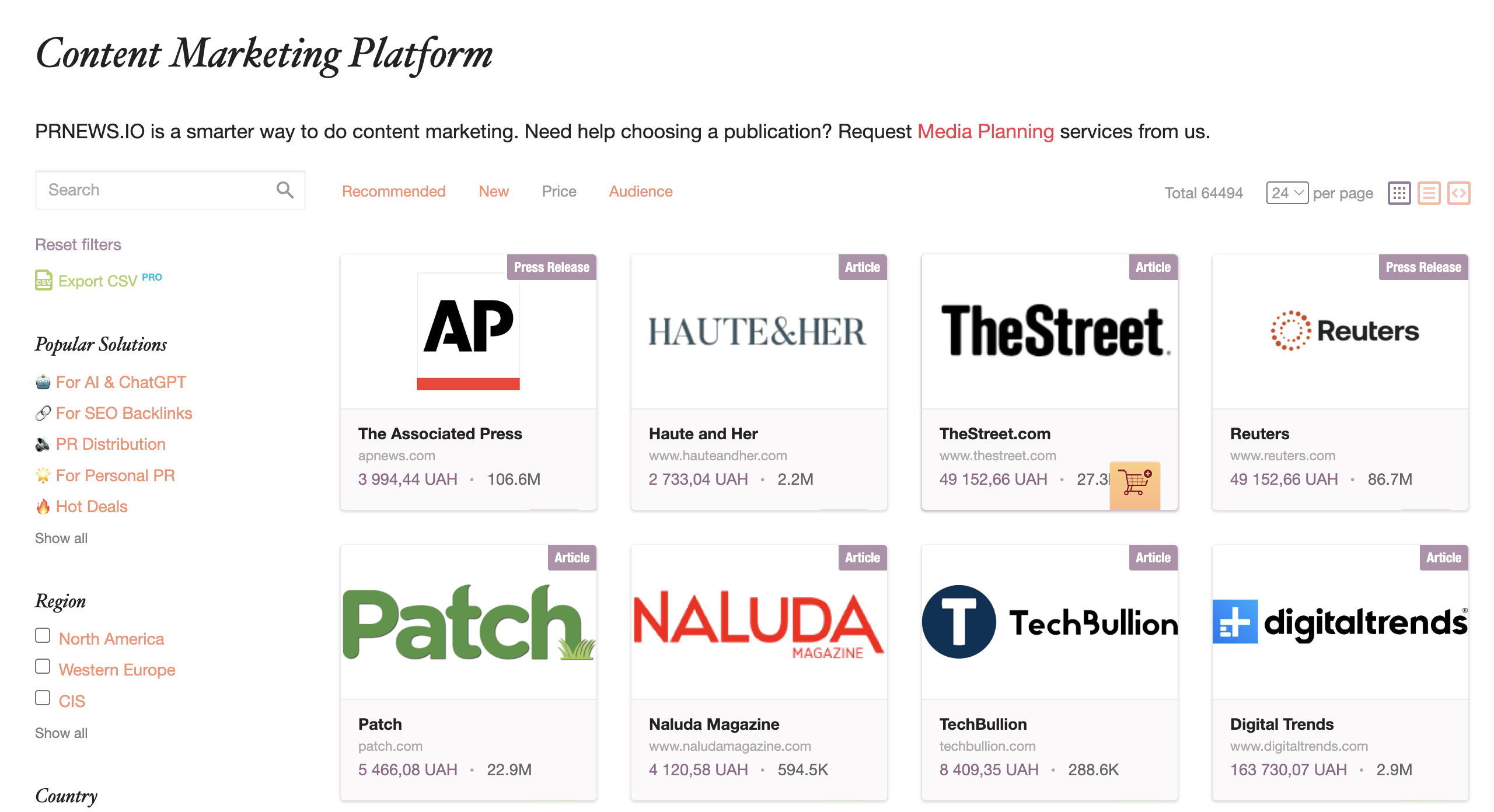
Many of these campaigns succeeded not because of viral creativity alone, but because brands could distribute their narratives through trusted media at scale. Platforms like PRNEWS.IO allow companies to place stories, expert commentary, and brand-led insights directly in relevant publications — creating verifiable signals of credibility that both audiences and AI systems recognize.
The dark side of virality: ethics still matter
Not all viral campaigns age well.
Insensitive provocation, deceptive messaging, or social trivialization may deliver short-term reach—but often cause long-term brand erosion.
Modern PR requires narrative intelligence:
- Predicting backlash
- Understanding cultural context
- Protecting vulnerable audiences
Virality without ethics is not strategy—it’s gambling.
Conclusion: the new laws of viral PR
From Volvo to CeraVe, from Barbie to Patagonia, the last decade makes one principle clear:
Virality is no longer about attention.
It is about connection, credibility, and cultural contribution.
The brands that win are not those that shout the loudest—but those that design experiences people want to pass on.
In an AI-mediated future, authenticity becomes currency, and PR professionals become not message distributors, but architects of meaning.

Frequently Asked Questions
What makes a PR campaign successful?
A successful campaign isn’t just about “going viral.” It’s defined by three core pillars:
- Clear Objectives: Knowing exactly what you want to achieve (e.g., brand awareness, crisis management, or lead gen).
- Audience Resonance: Tapping into a specific emotion or cultural moment that matters to your target demographic.
- Measurable Impact: Using metrics like Share of Voice (SOV), media placements, or social sentiment to prove value.
What is the difference between a PR campaign and an advertising campaign?
While they often work together, the primary difference is earned vs. paid. PR (Earned): Focuses on building reputation through third-party credibility, such as news articles, influencer mentions, or public events. Advertising (Paid): Involves paying for specific space or time (like a billboard or Instagram ad) to control the exact message and timing.
Can small businesses run effective PR campaigns?
Absolutely. You don’t need a “Super Bowl” budget to make an impact. Small businesses often succeed by:
- Hyper-local targeting: Engaging with community news outlets.
- Thought Leadership: Positioning the founder as an expert in a niche industry.
- Guerrilla Marketing: Using creative, low-cost stunts that grab social media attention.
How do I measure the ROI of a PR campaign?
Since PR is often about “reputation,” it can be harder to track than a direct sales ad. However, you can measure it via:
- Media Impressions: The potential number of people who saw the story.
- Website Traffic: Monitoring “Referral Traffic” in Google Analytics during the campaign period.
- Sentiment Analysis: Tracking whether public conversation about your brand shifted from neutral to positive.