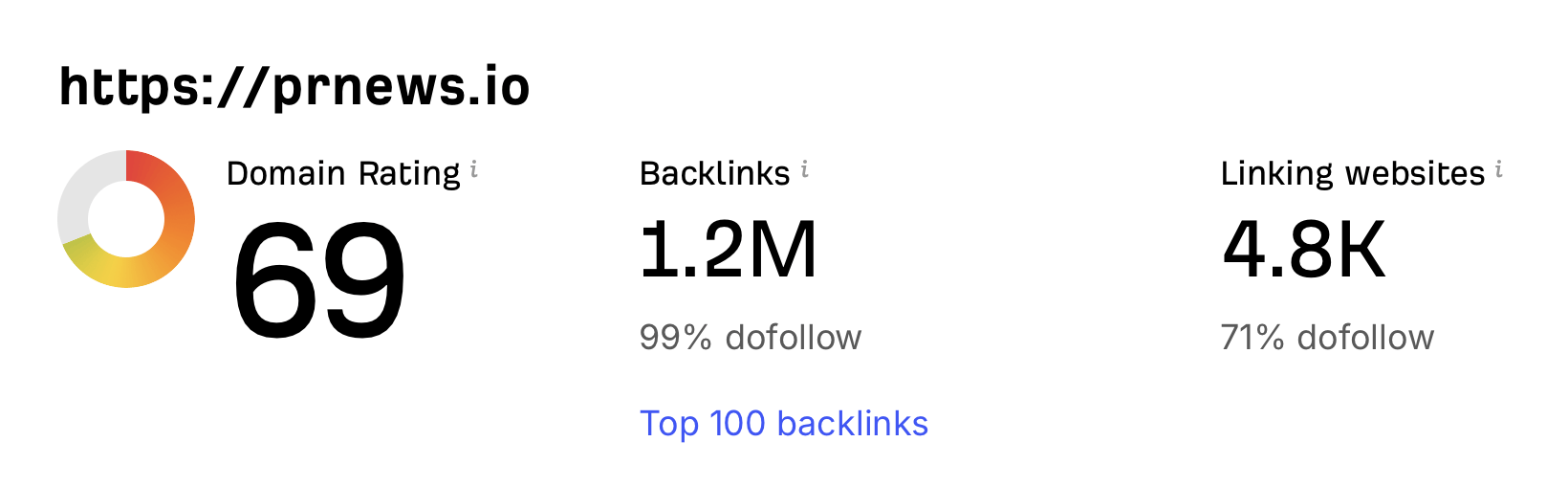
Domain Rating (DR), as defined by Ahrefs, is your go-to metric for assessing the strength of a website’s backlink profile. Measured on a scale from 0 to 100, DR gives SEO pros a quick way to gauge how much “link juice” a domain can pass along to linked sites. It’s essentially a benchmark that lets you compare the authority of one domain to another within Ahrefs’ vast database.
While DR focuses solely on backlinks and doesn’t take into account factors like search traffic, domain age, or brand recognition, it’s still an incredibly useful filter when you’re prospecting for links. Looking at DR helps predict the potential payoff of an acquisition campaign—domains with a higher DR can pass more link equity, meaning they’ve got the power to boost your SEO game.
There’s always chatter about how third-party metrics like DR relate to Google’s internal ranking systems. Google has repeatedly said that they don’t directly use external metrics like Domain Rating (DR) or Domain Authority (DA) to rank sites. But, they’ve also admitted to having an internal sitewide score that aligns with similar concepts.
What we do know is this: a high DR correlates strongly with better keyword rankings in competitive search engine results pages (SERPs). While DR is an Ahrefs-specific metric, it’s clear that what it measures—backlink quantity and quality—matters big time for Google’s algorithms. So, boosting your DR is a smart move if you’re aiming to improve your organic visibility.
DR as a predictor and competitive edge
A high DR means you’ve got a solid backlink profile, but that doesn’t automatically guarantee top search rankings. Your backlink strength needs to work in harmony with other crucial SEO factors like quality content, solid technical optimization, great user experience, and relevance to your niche. A good DR score just ups your odds of ranking well, assuming these other foundational elements are in place.
Think of DR as both a predictive tool and a competitive benchmark. Since it’s relative—meaning it compares your backlinks to everyone else in Ahrefs’ database—it’s not about hitting a magic DR number. The goal should be to accelerate your link-building efforts faster than your competitors. If you stay stagnant while your rivals are collecting stronger backlinks, your DR will likely dip, even if you don’t lose any links yourself. This is why ongoing competitor analysis and rapid link acquisition are crucial for staying ahead.
Breaking down domain rating mechanics: the logarithmic challenge
To make the most out of your link-building efforts and get the best ROI, understanding how Ahrefs calculates Domain Rating (DR) is essential. Think of DR as a cousin to PageRank, but it’s focused on websites rather than individual pages. The DR calculation hinges on three main technical pillars.
The three key pillars of DR calculation
Pillar 1: Quantity of Unique Referring Domains (URDs)
The biggest factor affecting DR is how many unique domains are linking to your site. Ahrefs counts only the unique, root-level domains that provide at least one dofollow link. Getting several links from the same site won’t significantly bump your DR—what matters more is diversity. So, the goal is to get links from as many different domains as possible.
Pillar 2: Quality of Referring Domains
Links from high-DR domains pack a much bigger punch. A link from an authoritative, high-DR domain will pass more link equity than multiple links from smaller, less relevant sites. That’s why it’s crucial to focus on securing backlinks from authoritative domains—sometimes just one link from a powerful source can have more impact than dozens from lesser ones.

Pillar 3: The Dilution Factor (Outbound Links)
Here’s where things get tricky. When a site links out to others, the link equity it passes is divided among all the unique domains it connects to. So, a high-DR site that links to hundreds or thousands of other sites dilutes the link equity it passes on. On the flip side, a domain with a moderate DR but fewer outbound links might have a bigger impact on your DR. For example, a DR 10 domain linking to just three other sites might boost your DR more than a DR 80 domain linking to thousands of others. That’s why it’s critical to look at the outbound link profile of potential link sources. The most effective links come from high-DR sites with a selective linking strategy—those are the links that carry the most value.
Table 1 illustrates the inverse relationship between a linking domain’s dilution and the resultant impact:
| Linking Domain DR | Number of Domains Linked To | Relative Link Equity Passed (Dilution) | Strategic Value |
| DR 90 | 10,000 | Very Low | Low ROI unless placement is free/editorial |
| DR 50 | 50 | High | High ROI due to low dilution |
| DR 10 | 3 | High | High ROI for low-to-mid DR sites |
| DR 80 | 1,000,000 | Negligible | Very Low ROI, highly diluted |
Domain Rating operates on a logarithmic scale, which means the higher your DR, the harder it gets to see incremental gains. Moving from DR 70 to DR 71 will take much more effort than getting from DR 20 to DR 21. This curve makes it clear that your link-building strategy needs to evolve as your domain matures.
Early-Stage Domains (DR 0–40): At this stage, the focus should be on building authority quickly. That means targeting a high volume of quality, low-dilution links from unique domains to establish a solid foundation.
Mature Domains (DR 60+): Once you hit a higher DR, the focus should shift to securing ultra-high-quality links from authoritative sources. As the difficulty of climbing further increases, you need to invest in sophisticated, long-term strategies that target the most selective and high-quality sources to avoid dilution and continue growing effectively.
Building the foundation for growth
Link acquisition is just the execution phase; the real strategy for sustainable DR growth starts with creating high-quality content. Content that’s valuable and linkable is the most effective, organic way to attract the backlinks needed to boost your domain’s authority.
E-E-A-T and credibility
Content must align with Google’s E-E-A-T framework—Experience, Expertise, Authoritativeness, and Trustworthiness. This framework is key to generating link equity because authoritative sources only link to content they deem valuable, accurate, and written by credible authors.
Creating expert-level content that offers real value to your audience naturally encourages popularity and attracts organic backlinks. On the flip side, it’s crucial to avoid low-quality, shallow content or using content farms, as these tactics repel reputable links and harm your credibility. High editorial standards and a focus on quality over quantity are non-negotiable for building a strong, authoritative link profile.
Crafting linkable assets (link bait)
You won’t earn high-DR links from general articles or basic informational content. Instead, you need to create unique, compelling assets that are essential references for journalists, analysts, and other industry leaders.
- Original Research and Proprietary Data: Unique content assets like original studies, proprietary industry surveys, or annual reports are one of the most powerful link-building strategies. When your domain owns original, citable data, it becomes a must-reference source for journalists covering related topics, ensuring high-quality backlinks.
- The Ultimate Guide Structure: Developing comprehensive, authoritative resources that cover a specific topic in-depth helps establish your domain as an expert. If done right, these ultimate guides become the go-to references in your niche, accumulating natural links and citations over time.
- Relevance-First Content and Topical Authority: It’s not just about creating content—it’s about creating content that’s highly relevant to your domain’s niche and to the sites you want links from. A link from a site that’s contextually relevant—like a tech blog linking to software development content—will carry more weight than a link from an unrelated site, like a cooking blog linking to the same content. Although DR is site-wide, the relevance of the linking site amplifies the value of the backlink. So, when planning your strategy, prioritize links that reinforce your content clusters and enhance both your DR and topical authority—two key components of E-E-A-T.
The advanced link acquisition playbook for 2025
Link acquisition in 2025 isn’t about generic guest posting anymore—it’s about embracing more sophisticated, value-driven strategies. Enter Digital PR, the game changer for today’s SEO landscape.
Digital PR: securing high-impact coverage
Digital PR is quickly becoming the go-to white-hat strategy for obtaining high-quality, impactful backlinks. It focuses on leveraging thought leadership, exclusive data, and expert outreach to secure authoritative, relevant backlinks from major publications and trusted news sources. Digital PR isn’t just about getting links—it’s about aligning with modern SEO quality guidelines and minimizing the risks tied to older, less ethical link-building tactics.
Here are some of the key campaigns that are driving success in top-tier Digital PR programs:
- Data Pitching and Reactive PR: This involves actively pitching proprietary research, unique statistics, or expert insights to journalists who are covering trending topics. It’s a strategic way to insert your brand’s voice into the conversation while securing valuable links.
- Unlinked Mention Conversion: By constantly monitoring the web for mentions of your brand (without links), you can reach out to publishers and turn those mentions into full, dofollow backlinks. It’s a simple but effective tactic to capture backlinks from mentions that would otherwise go unlinked.
- Broken Link Building (BLB): This method involves identifying broken links on high-authority sites, informing the site owner about the dead link, and offering your relevant, high-quality content as a replacement. This creates value for the publisher by fixing their technical debt while securing a contextual and highly relevant backlink for your site.
Strategic link development and vetting
When it comes to link acquisition, quality always trumps quantity. It’s critical to focus on the quality of the referring domains, not just the number of links. Low-quality or irrelevant links can actually hurt your site’s credibility and long-term ranking potential.
What makes Digital PR so effective is its ability to secure backlinks from prominent, high-DR media outlets. These links do more than just pass valuable DR equity—they also boost your brand’s chances of being recognized as a trustworthy source by AI systems and Large Language Models (LLMs), a concept sometimes referred to as Generative Engine Optimization (GEO).
| Acquisition Strategy | Description | DR Impact |
| Digital PR (Data) | Pitching proprietary data or expert commentary to top-tier publications. | High: Secures links from major news sources, increasing citation signals. |
| Unlinked Mentions | Converting existing brand mentions in editorial content into dofollow links. | Medium-High: Contextually relevant and quick to secure. |
| Strategic Guest Posting | Providing expert content exclusively to highly relevant, high-authority niche platforms. | Medium: Requires strict vetting of host domain authority and relevance. |
| Broken Link Building (BLB) | Identifying dead links on high-DR sites and suggesting replacement content. | High: Links are contextually relevant and offer value to the publisher. |
| Partner Ecosystems | Securing testimonials, resource citations, and co-branded content from clients, suppliers, and industry partners. | Medium: Strong relevance, reinforces niche expertise. |
Table 2: Advanced Link Acquisition Methods for DR Growth
A link from a respected, authoritative media source that publishes E-E-A-T content signals to search engines that your material is credible and authoritative. This is essential for future-proofing your SEO strategy, especially as search engines continue to evolve and their results shift toward AI-generated summaries and responses.
AI Integration: supercharging link building outreach
AI isn’t just a nice-to-have—it’s an essential tool for scaling link-building efforts and keeping your strategy ahead of the competition. By automating tasks that used to be bottlenecks, AI allows teams to boost their link velocity without the extra manual work.
The AI revolution in link prospecting and outreach
AI tools are transforming the traditionally resource-heavy stages of link building, like competitor backlink analysis, outreach forecasting, lead list creation, and campaign planning. What used to take weeks of manual effort can now be done in a fraction of the time with AI-powered automation.
One of the key benefits of AI in link building is hyper-personalization at scale. Platforms like Instantly, Lemlist, and Reply.io are using generative AI to create custom email pitches, suggest the best follow-up strategies, and manage multi-channel outreach through email and LinkedIn. These tools allow you to keep outreach feeling personal while reaching a massive audience, which in turn boosts response rates and engagement.
Ethical AI usage and quality control
AI should be viewed as a productivity booster, not a replacement for the creativity and strategic relationship-building that humans bring to the table. The best approach is a hybrid model, where senior strategists focus on creating unique, data-driven content (think Digital PR assets) and managing key relationships, while AI takes care of the technical side—like automating sequences and drafting personalized outreach emails.
With AI making outreach more scalable than ever, the real competitive advantage now lies in the quality and originality of the content you’re pitching. The success of AI-driven outreach depends directly on how valuable the content asset is. Avoid generic, AI-generated spam content and cookie-cutter pitches—they’re a fast track to ruining editorial relationships and going against the E-E-A-T guidelines. Human oversight is crucial to ensuring every link pitch is relevant, high-quality, and adds real editorial value.
While organic link building through Digital PR and outreach is a solid long-term strategy, sometimes fast-tracking DR growth requires a more predictable approach. This is where PRNEWS.IO steps in, providing a powerful tool to guarantee link velocity and optimize the cost-per-DR acquisition.
The Strategic Advantage: Why Guaranteed Placement Boosts DR
Traditional link acquisition through cold outreach is often a gamble—negotiations can drag on, editorial timelines are unpredictable, and rejection rates are high. PRNEWS.IO removes these uncertainties by offering a marketplace that provides direct, guaranteed access to publications across a trusted global network.
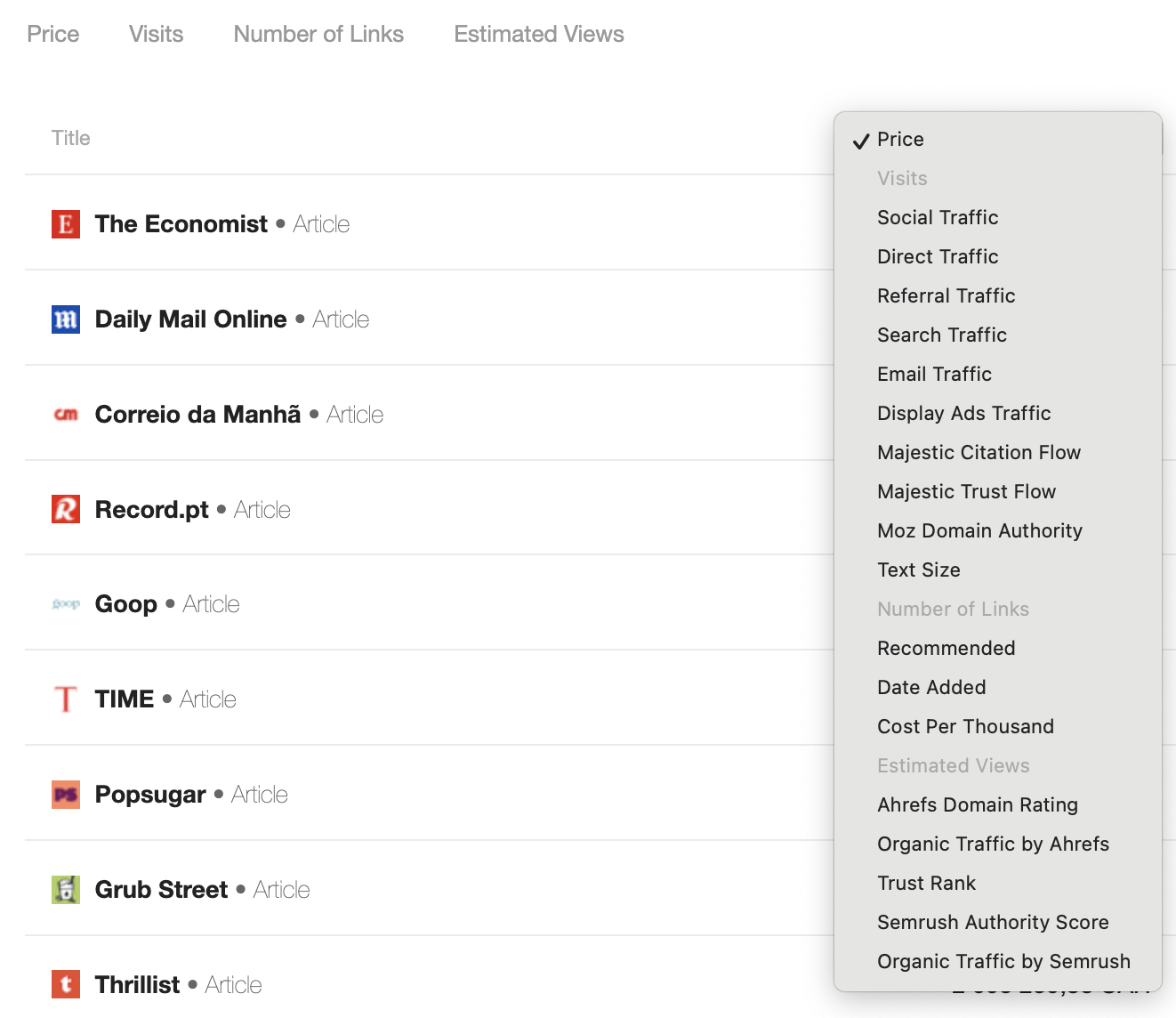
The platform lets strategy teams filter media outlets based on key SEO metrics such as Ahrefs DR, Moz DA, organic traffic, and niche relevance. This level of transparency turns link acquisition into a measurable, low-risk investment. By predicting DR transfer and calculating costs, the platform helps strategists identify the most cost-efficient placements. For executive reporting, this means you can link media spend directly to measurable DR gains, offering a clear advantage over the unpredictability of traditional outreach.

PRNEWS.IO: Tactical Implementation for Maximum DR Growth
Using PRNEWS.IO strategically targets the key technical elements required to drive DR growth:
- Guaranteed Dofollow Links: Every link acquired is dofollow, ensuring that it passes valuable link equity and contributes directly to DR calculation.
- Niche Targeting: The platform’s advanced filtering allows you to select high-DR publications within specific niches, amplifying link equity transfer and reinforcing relevance to your content.
- Full Customization: You can control the anchor text and target URL for each link, optimizing internal linking and keyword relevance.
- Structured Authority Building: PRNEWS.IO offers structured link-building services, like the Link Wheel, which ensures rapid authority growth by quoting and linking a core article across three trusted publications.
- Editorial Quality Control: With PRNEWS.IO’s professional copywriting services, your sponsored articles meet high editorial standards, preserving your brand’s credibility and maintaining strong E-E-A-T signals.
Table 3 provides a detailed overview of the platform’s features relevant to DR campaigns.
| PRNEWS.IO Feature | DR Strategy Benefit | Impact on Acquisition |
| 100,000+ Verified Publications | Access to media outlets globally, including high-DR sites (Forbes, The Guardian). | Guarantees placement on authoritative domains. |
| Filter by DR, DA, Niche, Traffic | Data-driven selection of link sources. | Optimizes investment based on predicted link equity transfer and relevance. |
| Guaranteed Dofollow Placement | Ensures links count towards DR calculation. | Fulfills the primary technical requirement for DR increase. |
| Fixed, Transparent Pricing | Eliminates negotiation and subscription costs. | Allows for precise budgeting and predictable cost-per-DR calculation. |
| Copywriting Services Available | Professional press release creation tailored for editorial standards. | Protects brand E-E-A-T and maximizes publication acceptance rate. |
PRNEWS.IO is a must-have tool for scalable authority building. It allows brands, SEO agencies, and digital marketers to secure native-format mentions and sponsored content directly from a wide range of reputable news sites—without the usual delays of traditional intermediary processes.
The platform’s transparency and guaranteed publication eliminate operational risk, whether you’re launching a new product or executing a sophisticated link-building strategy. By providing reliable, measurable media exposure, PRNEWS.IO accelerates DR growth while staying in line with SEO best practices on link placement and content integrity
Strengthening DR with technical excellence and user experience (UX)
Link equity only works its magic if it’s applied to a high-performance, stable domain. Technical SEO and a seamless user experience (UX) are the critical pillars for fully unlocking the power of a solid backlink profile.
Technical SEO: the engine behind link equity
A technically sound website ensures that search engines can crawl and index the site efficiently, while an optimized user experience keeps visitors engaged and more likely to link back organically.
- Site Speed and Performance UX: Fast loading times and compliance with Core Web Vitals (CWV) are essential for reducing bounce rates and improving user satisfaction. While Google has clarified that CWV isn’t a huge ranking factor, poor performance can annoy users and deter potential link opportunities, undermining the value of the DR you’ve acquired. If users are frustrated by a slow site, they’re less likely to return or link to your content.
- Security and Trust: Security issues—like malware or phishing attempts—can result in penalties or even removal from search results. Since trust is a core component of E-E-A-T, maintaining robust security protocols is non-negotiable for protecting your domain authority.
- Mobile-First Indexing: Ensuring your site is mobile-friendly and fully responsive is a baseline requirement for SEO success in 2025.
Internal Linking: maximizing the flow of link equity
A solid internal linking structure ensures that external link equity is effectively spread across the entire domain. Without it, the value from high-DR backlinks can accumulate on one page, neglecting the broader site.
- Distributing Link Juice: Proper internal linking helps ensure that the authority from high-DR links flows to the most important pages, like core “money pages” and supporting topic hubs. This improves the crawling and indexing process for search engines, enhancing the overall SEO health of the site.
- Anchor Text Optimization: Using keyword-rich and relevant anchor text within internal links signals to search engines what the destination page is about, boosting its authority and helping distribute link equity strategically. By ensuring that the flow of authority is optimized across the site, you can maximize the impact of your external backlinks.
Why publishers should care about growing their DR
If you’re a publisher using the PRNEWS.io platform, you’ve likely noticed that clients often filter websites based not only on content topics or language but also on Domain Rating (DR). This metric plays a significant role in the decision-making process for brands looking to place content. In fact, based on our internal data, we see that most clients set a minimum DR threshold of 35+. This means that domains with higher DR ratings are much more likely to attract attention from brands and secure more orders.
Why DR is important for publishers
Increased Client Visibility and Demand
Publishers with higher DR scores are more likely to appear in client filters and receive more placements. In our experience, websites with DR over 35 are consistently in higher demand. These websites are seen as authoritative sources in their field, which makes them more attractive to brands looking to place their content on trusted platforms. The higher your DR, the more likely clients are to notice and trust your site for backlink placements and sponsored content.
Enhanced SEO and Organic Search Visibility
A higher DR correlates with better rankings on search engines like Google. Websites with higher DR are more likely to rank well for competitive keywords, which, in turn, drives organic traffic. Publishers with stronger DR scores can expect higher visibility in search results, making their content more discoverable to users, increasing traffic, and improving overall site engagement. More traffic means more potential for monetization and ad revenue.
Credibility Among Peers and Clients
DR acts as a form of “social proof” within the publishing and SEO communities. A strong DR score signals to other media outlets, journalists, and potential partners that your site is authoritative, trustworthy, and credible. Publishers with higher DR are often seen as leaders in their niche, leading to more partnerships and collaboration opportunities. High DR sites are also more likely to attract media coverage, citations, and backlinks from other authoritative domains, further boosting their DR and influence.
Monetization Potential
As DR directly impacts visibility and trust, publishers with strong DR scores tend to secure more lucrative deals with brands and advertisers. High DR domains often attract higher-paying campaigns, as brands want their content placed on authoritative sites to boost their own SEO efforts. Thus, improving your DR is not only beneficial for SEO but can also significantly enhance your revenue generation potential through sponsored content and other monetization methods.

What publishers can do to improve their DR
- Focus on Earning Quality Backlinks
A key to improving DR is building a strong backlink profile. Focus on earning backlinks from other high-DR sites within your niche. The more high-quality, authoritative sites that link to you, the higher your DR will grow. Regularly engage in outreach to gain links from trusted sources, and ensure your content is referenced by reputable outlets. - Ensure Technical Health of Your Site
Technical issues such as slow load times, duplicate content, or poor indexing can negatively affect DR. Ensure your site is technically sound—fast, secure, and mobile-friendly. This not only boosts DR but also improves user experience and overall site performance, which are key factors in retaining visitors and gaining backlinks. - Publish Expert-Level, Linkable Content
Content is at the heart of link-building efforts. Publishing high-quality, original, and expert-level content naturally attracts backlinks from other authoritative sources. Topics that are unique, data-driven, or resource-based (e.g., guides, case studies, research) are particularly effective at earning natural backlinks, which, over time, increase your DR. - Stay Relevant and Niche-Focused
For publishers, relevance is key. Ensure that your content is highly relevant to your niche, which increases the likelihood that other authoritative sites in the same field will link back to your content. Focus on building authority within your specific topic area to gain backlinks that add the most value to your DR.
How DR boosts your publisher profile
Our data suggests that publishers with DR over 35 see higher engagement rates from clients, meaning they are more likely to get content orders and long-term partnerships. As your DR grows, you become a more attractive partner for brands, advertisers, and content agencies. Moreover, publishers with strong DR scores are more likely to have their content featured and cited by other authoritative media outlets, creating a snowball effect that propels both traffic and revenue.
In short, growing your DR isn’t just about improving SEO—it’s a strategic move that can lead to more visibility, credibility, and financial success as a publisher. By focusing on the factors that influence DR, you can unlock the full potential of your website and build a stronger, more authoritative online presence.
Achieving a high Domain Rating in 2025 isn’t just about checking technical boxes; it’s the result of a well-rounded, thoughtful digital strategy. To sustain DR growth, you need a holistic approach that brings together four key pillars:
- E-E-A-T Content Excellence: Building credibility and topical authority through expert-driven, unique, linkable content (Section 3).
- Sophisticated Link Acquisition: Focusing on white-hat Digital PR, broken link building, and targeted outreach to secure high-quality, low-dilution links (Section 4).
- AI-Driven Efficiency: Using AI tools to automate link prospecting and scale hyper-personalized outreach, shifting the focus back to content quality (Section 5).
- Technical and UX Foundation: Ensuring a fast, secure, and user-friendly website that optimizes the flow of link equity via solid internal linking (Section 7).
To stay ahead of the competition, it’s crucial to constantly track competitors’ DR growth and proactively invest in high-impact link assets. For those looking for predictable, high-volume authority building, the PRNEWS.IO platform is an invaluable resource. It offers guaranteed, fixed-price placements with transparent metrics, turning what’s often an unpredictable and time-consuming process into a measurable, strategic investment in long-term domain authority.