Article marketing has undergone one of the most dramatic transformations in digital history. What began as a crude link-building exploit — stuffing 400-word articles onto directory sites for cheap backlinks — has evolved into a sophisticated, multi-channel discipline that sits at the intersection of SEO, digital PR, brand authority, and performance marketing.
If you manage content for a brand in 2026, the rules have changed almost completely. Google’s AI Overviews, the September 2025 Spam Update, and the growing influence of platforms like Perplexity and ChatGPT as search surfaces have fundamentally altered what “good” content means — and how it gets distributed. Brands that still treat article marketing as a volume game are not just wasting budget; they are actively accumulating technical debt that can trigger ranking penalties.
This guide synthesises the latest algorithm research, platform data, and field-tested distribution strategies into a single operational framework.
What Is Article Marketing?
Have you ever wondered how articles featuring news about a new smartphone or a new vehicle reach you? It’s very likely these publications are the result of thorough strategic planning. As a result, they reach out to the right audience at the right time. The process of planning, writing, and representing articles to the online community is known as article marketing.
Article marketing is the process of writing short Internet-based articles to submit them to online article directories, which will publish those articles as content for their websites and offer articles as content for other media resources. One of the crucial aspects of article marketing is submitting articles with the author’s bio, which should include at least one link to the company’s website or blog that submitted the article for posting.
Article marketing is an effective way to drive traffic, establish authority, and promote your business/brand.
Why most article marketing fails: a brief history of algorithmic correction
In the early 2000s, search ranking algorithms were primitive by modern standards. Rankings were determined primarily by keyword density, metadata alignment, and raw link volume. Marketers quickly discovered they could game this system by mass-producing short articles and submitting them to public directories like EzineArticles, HubPages, and Associated Content. These platforms served as link factories.
The model worked — until it didn’t. Between 2003 and 2015, Google released a series of increasingly precise algorithm updates that dismantled each layer of the exploit:
| Update | Date | Target | Industry Impact |
|---|---|---|---|
| Florida | Nov 2003 | Keyword stuffing and hidden text | Shift to natural text distributions |
| Jagger | Sep 2005 | Paid links and cross-linking | Rise of organic link acquisition |
| Vince | Jan 2009 | Domain authority and trust signals | Established brands gained ranking advantage |
| Panda | Feb 2011 | Thin content and content farms | Directory traffic collapsed 68–77% overnight |
| Hummingbird | Aug 2013 | Conversational queries and semantic entities | Natural language writing became essential |
| Penguin | Oct 2013 | Link spam and anchor-text manipulation | Editorial backlinks replaced optimised anchors |
| Mobilegeddon | Apr 2015 | Mobile responsiveness | Mobile-first development standardised |
The most seismic event was Panda. In a single 48-hour window in February 2011, the top directory platforms lost between 68% and 77% of their top-10 Google positions. EzineArticles dropped from 1,039 top-10 positions to just 294. Its Sistrix visibility index fell by 90%. Direct traffic dropped by 35%.
The aftermath produced the “hub-and-spoke” model that dominates modern content strategy: a self-hosted domain with deeply structured pillar content at the centre, supported by a network of high-authority external placements. The directory era was over. The authority era had begun.
What article marketing means in 2026: the four-layer framework
Modern article marketing is a four-layer system, each layer building on the one beneath it.
Layer 1 — Original, expert-authored content
Google’s Search Quality Rater Guidelines evaluate main content on four explicit dimensions:
- Effort: The visible human work invested to produce a comprehensive, satisfying resource.
- Originality: Inclusion of primary data, original reporting, first-person case studies, or new evidence not available elsewhere.
- Talent or Skill: Technical accuracy and depth demonstrating that the creator has the background to resolve the user’s intent.
- Accuracy: Strict factual precision, particularly on YMYL topics — health, finance, legal, and safety content.
The May 2026 Core Update intensified enforcement against pages that copy, paraphrase, or summarise existing content without adding unique value.
Layer 2 — Technical distribution integrity
Even outstanding content fails if its distribution architecture is broken. Canonical tag errors, duplicate parameter URLs, and crawl budget waste can prevent your best articles from ranking at all.
Layer 3 — Strategic placement and link acquisition
This layer encompasses guest placements on authoritative domains, digital PR campaigns targeting media outlets, and programmatic native advertising on premium publisher networks.
Layer 4 — Down-funnel performance measurement
This layer connects organic visibility metrics to financial outcomes: customer acquisition cost, customer lifetime value, marketing ROI, and cost per qualified lead.

The generative AI problem: why most AI-written articles are invisible to search
Generative AI has flooded the internet with content. The problem is not that AI writes badly — the problem is that it writes familiarly. When multiple brands use similar prompts based on the same top-ranking results, they produce articles that are topically relevant but functionally indistinguishable from each other. Google calls this “informational redundancy” and demotes it aggressively.
AI-generated pages lack genuine authority because they contain no unique evidence, no original expert interpretation, and no source trails that AI search assistants like Google’s AI Overviews or Perplexity can cite.
The September 2025 Spam Update made this concrete: it specifically targeted templated local service landing pages that only swapped city names.
Safe vs. unsafe AI workflows
| Stage | Safe AI-assisted tasks | Prohibited or high-risk |
|---|---|---|
| Strategic planning | Keyword theme research; outline structuring; headline variants | Bulk-generating topic silos without manual review |
| Editorial production | Formatting data tables; cleaning transcripts; testing layouts | Publishing full drafts without human expert editing |
| Sourcing & verification | Extracting sources from verified internal documents | Publishing text with unchecked claims or hallucinated statistics |
Human editorial oversight is not optional. Every article intended to rank must pass through a subject matter expert.
Technical content syndication: how to distribute without destroying your rankings
Content syndication — the strategic republishing of your original articles on third-party domains — is one of the most powerful tools in article marketing when executed correctly. Done carelessly, it will cause your original content to be outranked by the partner site that republished it.
The four technical failure modes
Internal duplication occurs when identical content is accessible across multiple URLs on your own domain: trailing slash inconsistencies, parameterised URLs, and separate mobile configurations.
External duplication occurs when your article is republished — with or without permission — on a different domain.
Crawl budget depletion happens when bots waste time on duplicate URLs instead of indexing fresh, unique pages.
Authority fragmentation occurs when backlinks pointing at different URL variants split the ranking signals.
The technical remediation protocol
- Open Google Search Console’s Page Indexing report. Export URLs sorted by duplicate status categories.
- Use the URL Inspection tool on a sample URL to see which canonical Google actually selects.
- Compare your declared canonical against Google’s selected canonical. If they diverge, your authority signals conflict.
- Implement the fix: cross-domain
rel="canonical"for syndicated copies; 301 redirects for exact duplicates;noindexfor parameterised pages; sitemaps listing only canonical URLs. - Validate in GSC and request priority re-crawl for high-value pages.
- Verify partner compliance. External publishers syndicating your content must implement canonical or noindex tags — this should be contractually required.
The 80/20 syndication rule: Only syndicate top-performing, evergreen assets to highly relevant, high-authority partner domains. Three placements on genuinely authoritative sites outperform fifty placements on low-traffic blogs.
Guest posting and digital PR: moving beyond link building
Modern search engines ignore links from inactive blogs with no real audience. High-performance link acquisition requires publishing on real, authoritative websites that attract genuine human traffic.
How to evaluate a placement opportunity
- Organic traffic from Ahrefs or Semrush — does the site attract real readers for relevant topics?
- Topical relevance — is the site’s editorial focus genuinely adjacent to your subject matter?
- Publishing frequency — an active editorial team signals a maintained site.
- Link profile quality — what links does the site itself hold?
- Audience engagement signals — comments, shares, and social traction indicate real readership.
Global guest posting marketplaces
| Marketplace | Listed sites | HQ | Key data integrations |
|---|---|---|---|
| PRNEWS.io | 107,000 | Tallinn, Estonia | PR distribution tracking; Ahrefs organic traffic; Similarweb audience data |
| Whitepress.com | 113,000 | Bielsko-Biała, Poland | Ahrefs, Moz, Majestic, Similarweb, Google Analytics |
| Adsy.com | 88,000 | Delaware, USA | Publisher performance data; Similarweb trends; country-level traffic split |
| Guestpostlinks.net | 32,000 | Wyoming, USA | Domain Authority metrics; niche categorisation |
How to use PRNEWS.io for article marketing: a practical workflow
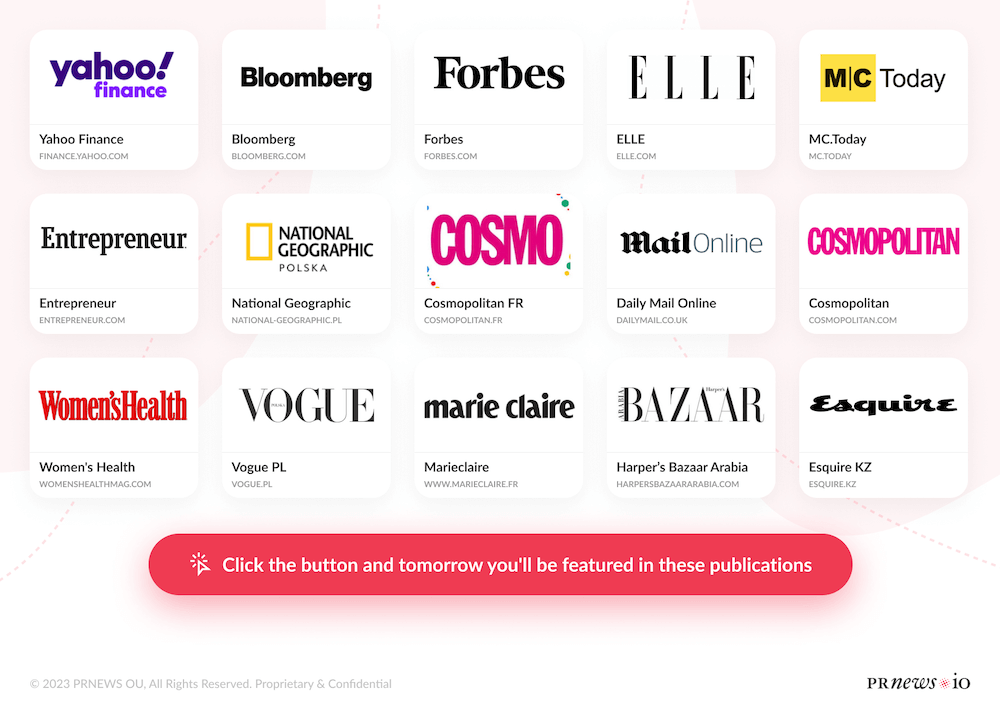
PRnews.io is one of the largest content placement platforms in the world, with over 107,000 publisher sites across 130+ countries. Here is how to integrate it into a professional article marketing workflow.
Step 1 — Define your placement brief
Establish three parameters before entering the marketplace: target keyword cluster, geographic market, and minimum traffic threshold. A useful baseline for link equity value is sites with at least 1,000 monthly organic visitors verified by Ahrefs.
Step 2 — Filter the PRnews.io marketplace
Use PRnews.io’s filtering interface to narrow by:
- Country and language — essential for international campaigns where local domain authority affects regional rankings.
- Topic category — match editorial focus to your content’s subject matter for topical relevance signals.
- Organic traffic tier — PRnews.io displays Ahrefs traffic data directly, eliminating the need for a separate SEO tool check.
- Price range — placements range from under $20 on emerging market publishers to thousands for top-tier media outlets.
- Do-follow vs. no-follow — filter specifically for do-follow when link equity is the primary objective.
Step 3 — Brief and submit your article
Submit a pre-written article or request PRnews.io’s editorial team to produce the content. If submitting your own, ensure it meets current quality criteria: original expert voice, no AI-generated filler, specific data points, and clear topical connection to the publisher’s audience.
Step 4 — Verify canonical and indexation after publication
Once live, confirm the published page includes a canonical tag pointing to your original (if syndicating), and that it is indexed within 7–14 days. Use Google Search Console’s URL Inspection tool to check status.
Step 5 — Track backlink acquisition and traffic flow
PRnews.io provides a backlink report for each placement. Cross-reference with Ahrefs or Semrush to verify the link is being crawled. Monitor referral traffic in Google Analytics to assess whether the placement drives real audience visits.
Step 6 — Build a placement calendar
Treat PRnews.io as ongoing distribution infrastructure, not a one-off campaign. For every major pillar article published on your own domain, schedule two to three supporting external placements. This compounding effect builds durable organic visibility over 12 to 24 months.
Explore the PRnews.io marketplace — 107,000+ publishers, Ahrefs-verified traffic, and placements from $20.
The enterprise content tech stack
| Platform | Core speciality | Key feature | Main trade-off |
|---|---|---|---|
| Ahrefs | Backlink profiling and competitor analysis | 13+ billion crawled pages; 99% GSC correlation | Credit-based system |
| Semrush | End-to-end content workflows | Keyword Magic Tool; One2Target audience intelligence | $139–499/mo; single seat |
| Moz Pro | Domain authority scoring | Brand Authority 1–100; 44.8 trillion link index | Smaller keyword index |
| BuzzSumo | Viral trend discovery | Social Velocity Indexes | No technical site crawler |
| Improvado | Marketing data aggregation | 1,000+ source connectors; 46,000+ metric mappings | Requires database expertise |
| PRNEWS.io | Content placement and PR distribution | 107K publishers; Ahrefs + Similarweb verified | Quality variance across price tiers |
The highest-leverage integration connects your SEO platform to your CRM via a data aggregation layer — tracing a specific article’s organic traffic all the way through to closed revenue.
Quantitative measurement: the formulas that prove article marketing ROI
Customer acquisition cost (CAC)
CAC = Total sales & marketing spend ÷ Number of new customers acquired
Track separately for organic channels to isolate article marketing’s contribution.
Customer lifetime value (CLV)
CLV = Average purchase value × Purchase frequency × Average customer lifespan
Post-purchase content — guides, loyalty updates, user education — directly increases CLV by extending retention.
Marketing return on investment (MROI)
MROI = (Revenue attributed to marketing − Marketing investment) ÷ Marketing investment × 100
Cost per lead (CPL) and cost per click (CPC)
Benchmark against historical performance and channel averages — not evaluated in isolation.
Funnel conversion rate
A drop between awareness and consideration stages typically indicates insufficient mid-funnel content bridging initial discovery to purchase intent.
Strategic operational directives
1. Enforce human editorial accountability
Every published article must pass through a subject matter expert. AI assistance in drafting, formatting, and headline testing is acceptable. AI as the final writer is a search penalty waiting to accumulate.
2. Consolidate your technology stack
Audit subscriptions annually. Build the attribution pipeline connecting search metrics to CRM revenue data. Subscription waste signals a lack of coherent measurement strategy.
3. Implement technical duplication defences as standard infrastructure
Canonical tag management, parameter URL handling, and mobile subdomain configuration should be part of every site’s technical baseline. For any syndication programme, partner canonical compliance must be contractual.
4. Transition distribution budget toward verified, high-authority placements
Legacy blogger outreach on low-traffic independent blogs should be phased out. Distribution budget should shift toward verified placement networks — such as PRNEWS.io — where publisher traffic is independently verified against Ahrefs data, and the resulting backlinks carry genuine algorithmic weight.

Industry Experts about Article Marketing
George Panayides, Digital Marketing Technician at The Digital xx

First article marketing is a fantastic white hat opportunity to generate high-quality backlinks to your site. As a result of this, you will see increased rankings across the pages that are linked back too. To ensure a natural link profile it’s important to spread your links across multiple different pages.
We have used article marketing as a way of creating a natural link profile across our client’s websites and increasing their authority on search engines. Article marketing focuses on generating links from news and highly authoritative sites.
When you create your content it’s important to remember to write for the end user, however, you can also tailor this content around your services as well. For example, you may want to promote a particular service you offer and therefore you can create some statistics or value around this topic and submit this as article marketing.
With this, it allows you control over the information that is being shared around your topic and you can tailor it towards your audience and consumer to help them understand the key points of your business or idea.
David Tile, Founder and CEO of Article Writing.co

Drafting and publishing superior content is tremendously important in building your brand online. Long-form article work helps bring search traffic and new business and it can develop you into a thought leader. But it’s nothing if you just let it sit on your website.
If you build it, will they come? Probably not. You need to run the workout. You need to post it to social media, as many places as reasonable. You need to use it to engage with folks in your target market. You need to send it out to your email list. You need to be smart with content design to maximize the content’s potential vitality.
Only by deploying smart article marketing strategies can you find a winning path in content marketing. Indeed you’re better off publishing way less content and building distribution for the pieces you publish.
Andrew Tsionas, Co-founder and Managing Partner of Kaizenzo Inc

I’ve been using article marketing for a while now, and I can tell you that it’s the real deal. As the co-founder and managing partner of Kaizenzo Inc, I’m always looking for new ways to get our name out there and attract clients. Article marketing has been the most effective way so far!
It’s a great way to build your credibility in the industry and get noticed by people who would otherwise never know about you. You can reach out to publications in your niche and see if they’re interested in publishing an article about your business—and sometimes even pay them to do it!
You can also write articles that relate to your niche or focus on an aspect of your company or services, then post them on sites like LinkedIn Pulse or Medium. This is an easy way to build relationships with influencers in your industry while also getting exposure for yourself.
I’ve found that article marketing works best when combined with other social media strategies (like paid advertising). It helps build up organic traffic on those platforms over time so that people keep coming back, but it also allows you access to publications that may not usually accept advertising from small businesses
Erin Zadoorian, CEO of BudPop

Article marketing is a fantastic way to improve your website’s organic search rankings.
We have used it extensively to promote my business and have seen great results.
Here’s how we did it:
- We found high-quality article directories that were relevant to our niche and submitted well-written articles to them.
- We made sure to include a link to our website in the resource box of each article. This not only helped to improve our search engine rankings but also drove targeted traffic to our website.
- We tracked our results and saw a significant increase in organic traffic and sales as a result of our article marketing efforts.
- We continued to submit articles on a regular basis and saw our rankings and traffic continue to grow. The frequency with which you submit articles will depend on your goals and resources, but we found that offering 1-2 articles per week yielded the best results for us.
Ofir Kruvi, Product Marketer at Jika
Article Marketing is the essence of ranking on Google, as backlinks are Google’s most important metric when authorizing pages. After more than 1000 articles published, here are my insights –
- Find topics that your competitors don’t promote. If your article has more backlinks than theirs, you have a better chance of ranking higher.
- Most times, the harder it is to get your article on a website, the better the quality of the link you get (in the eyes of Google).
- Make sure the articles you’re writing get indexed on Google, otherwise they won’t count.
Laurice Constantine, Digital Managing Editor @ Forbes Middle East

The primary advantage of online article marketing is that it allows you to significantly improve your organic search results.
Article marketing, in particular, emphasizes key phrases that are extremely important and increase their visibility. It does not only attract audiences based on specific keywords, but it also gathers audiences for various keywords.
One of the primary responsibilities is to establish a reputation through promotion and public awareness. This gives the site a distinct look and feels while also making it user-friendly, attracting more visitors by increasing the number of inbound links to the site.
Because all articles you publish as part of your marketing strategy should testify to your experience and inspire Internet users to be interested in your particular niche, the type of articles you write will be determined by that niche.
Jonas Østergaard Pedersen – International SEM Manager at EcoOnline

I’ve used article marketing to promote a business or idea and I’ve found that it works best for me when I approach the subject from a perspective of what I can give to the reader. For example, if I’m writing about how to make your website more accessible, I’ll focus on the benefits of being accessible (more traffic, more customers) and then I’ll offer some tips on how to do it. When I write from this perspective, my articles tend to be more helpful and get better responses.
I also find that it’s important to remember that nobody wants to read a sales pitch. If you’re promoting something, like a product or service, be sure to talk about it in terms of what it will do for readers rather than just how great it is.
Julianne Stone, Co-founder of Cicinia.fr
When I first started using article marketing to promote my business, I was a bit nervous about the process. I knew that it could be an effective way to increase exposure and gain more traction for my ideas, but I wasn’t sure how to get started or what kind of results to expect. Over time, however, I learned a lot about what works and what doesn’t when it comes to this type of promotion..
I found that the key to article marketing success is creating well-written and insightful content that really speaks to my target audience. This means doing a lot of research before I sit down to write so that I can really tailor my messaging and approach to their needs and interests. It also means consistently posting new articles on a regular basis, so that readers know they can always come back for fresh insights and information.
Another critical component of successful article marketing is reaching out to others in your field who are already well-established online. These influencers have large followings and established credibility, making them ideal partners for sharing high-quality content with their audiences. By engaging with these thought leaders through guest posts or joint collaborations on projects, I was able to build awareness for my own brand as well as establish valuable connections that helped me grow my business over time. Overall, article marketing has been instrumental in helping me reach new customers and grow my business successfully.
Marcus Astin, COO of Pala Leather

When I first started using article marketing to promote my business, I was a bit skeptical about its effectiveness. I wasn’t entirely sure what to expect, and I had heard some people say that article marketing wasn’t worth the effort. But after putting in the time and effort to write and submit high-quality articles on a regular basis, I’ve come to realize that article marketing is an incredibly powerful tool.
Not only has it helped me to build brand awareness and drive traffic to my website, but it has also enabled me to reach new audiences and engage with potential customers in a meaningful way. Whether you’re looking to generate leads or simply grow your online presence, I would highly recommend using article marketing as part of your overall marketing strategy. So if you’re ready to take your business to the next level, don’t hesitate – dive in and start writing today!
Robert Burns, Chief Marketing Officer of Kaskaid Hospitality & NULEEV

Organic SEO is a spoke from which article marketing emerges. For any business to generate business from organic search results, they have to publish articles pertaining to their products and industry.
Since we began publishing written content, our conversions from organic searches have tripled in a few months. In addition to each article targeting a specific search, they should tie into popular, high-competition searches. The more topics you cover, the more authority you have, the better your rankings.
FAQs: Frequently Asked Questions
What is article marketing, and how does it work in 2026?
Article marketing is the strategic creation and distribution of expert-authored content across owned, earned, and paid channels to build topical authority, generate backlinks, and drive qualified traffic. Modern article marketing requires genuine expertise, original data, and verified distribution partners — such as PRnews.io, which provides access to 107,000+ publisher sites with independently verified traffic metrics.
Is article marketing still effective for SEO?
Yes — but the definition of effective has changed. Mass submission to directories is permanently obsolete. What works in 2026 is a hub-and-spoke model: deep expert-authored pillar content on your own domain, supported by placements on genuinely authoritative external sites. Volume is dead; quality compounds over time.
How does AI-generated content affect article marketing performance?
AI content that lacks original expert input creates informational redundancy — articles topically relevant but functionally identical to dozens of other pages. Google’s 2025–2026 core and spam updates enforce against this. AI is a legitimate tool for drafting outlines and formatting data; it is not a substitute for human expert editing or original data.
What is content syndication, and how do I avoid the duplicate content penalty?
Content syndication is the authorised republishing of your original article on third-party domains. The technical fix for the duplicate content risk is a cross-domain rel=”canonical” tag on the syndicated copy pointing back to your original URL. If the partner cannot implement this, they must add a noindex meta tag — this should be written into any syndication agreement.
How do I find high-quality publisher sites for content placement?
Use a verified marketplace that integrates independent traffic data. PRnews.io lists over 107,000 publisher sites with Ahrefs organic traffic and Similarweb audience data built into the filtering interface — so you can identify genuinely active sites without running separate tool checks.
What metrics should I use to prove the ROI of article marketing?
Customer Acquisition Cost for organic channels, Customer Lifetime Value, Marketing ROI calculated on attributed revenue, Cost Per Lead for top-of-funnel content, and Funnel Conversion Rate. Connecting these requires an attribution pipeline linking your SEO platform to your CRM.