Growth isn’t just about getting more users. It’s about getting the right users and keeping them for the long term.
For years, marketing success was measured mainly by short-term numbers like Conversion Rate (CR) and Cost Per Acquisition (CPA). These metrics are useful for understanding how well campaigns perform and how efficiently traffic converts. But they only tell part of the story.
A campaign might bring in a lot of new users at a low cost. On paper, that looks like success. But if those users leave shortly after signing up because the product experience is disappointing, the acquisition budget is essentially wasted. High conversions don’t always mean high satisfaction. And strong engagement numbers don’t automatically mean users are happy.
Today, sustainable growth means thinking beyond the first click or purchase. Marketers need to focus on long-term value — metrics like Retention and Customer Lifetime Value (CLV). Real success comes from maximizing the total value a customer generates over time, not just from the initial transaction.
This shift also highlights something critical: great customer experience (CX) is harder to copy than features or pricing. Competitors can match your tools or undercut your prices. But consistently delivering a positive, seamless experience is much more difficult to replicate.
That’s where the HEART framework becomes powerful. It helps companies measure and improve the full user experience — not just acquisition performance. By focusing on Happiness, Engagement, Adoption, Retention, and Task Success, businesses can build a more durable competitive advantage and reduce their dependence on short-term marketing tactics or price competition.
HEART framework
The HEART framework helps bridge the gap between marketing, which focuses on customer acquisition, and product/UX teams, which focus on creating a seamless, valuable user experience. Developed by Kerry Rodden, Hilary Hutchinson, and Xin Fu at Google’s UX research team, the HEART framework was created to provide clear, user-centered metrics that organizations can use to measure user experience at scale, using automated tools.
HEART stands for five key categories of user experience metrics:
- Happiness
- Engagement
- Adoption
- Retention
- Task Success
This framework offers a structured way to measure and improve the user experience by focusing on these five dimensions. By taking this holistic approach, teams get a complete picture of how users interact with their product, allowing them to identify areas for improvement and track the impact of their efforts over time.
For marketing, HEART is particularly valuable because it helps ground acquisition strategies and product decisions in quantifiable metrics that are directly linked to business outcomes. Instead of focusing on simple output metrics (like traffic volume), HEART shifts attention to true outcome metrics, such as whether users actually find value in the product and feel positive after their initial experience. Metrics like Happiness and Engagement show whether a user’s experience justifies a long-term strategy, providing a clearer picture for refining marketing campaigns over time, rather than just focusing on short-term performance.
Breaking down HEART: a marketing perspective
The HEART framework helps teams turn high-level user experience goals into measurable, actionable metrics. By following the Goals-Signals-Metrics (GSM) process, marketers can align user experience goals with specific metrics that track the success of their efforts. Let’s break down each of the HEART components and how they relate to marketing.
Happiness (H): building positive sentiment
Happiness tracks user satisfaction and how they feel about the product. This is usually gathered through surveys or ratings.
The goal is to create loyal, satisfied customers who will recommend your product and reduce the need for expensive ads.
How to measure:
- Signals: A large percentage of users saying they would recommend the product, minimal negative feedback.
- Metrics: Net Promoter Score (NPS), Customer Satisfaction (CSAT), app store ratings, and sentiment analysis from user surveys.
Happy customers are more likely to stick around and even refer others, reducing your Customer Acquisition Costs (CAC) over time. For example, Google used happiness metrics in Gmail to add user-requested features like “undo send,” making users feel heard and improving their experience.
Engagement (E): measuring product stickiness
Engagement tracks how often and deeply users interact with the product, such as how many times they log in or perform key actions.
Engagement helps verify that users are getting the core value from the product. The goal is to keep users interacting with the key features regularly.
How to measure:
- Signals: Frequent logins and users regularly using the key features (the “Aha!” moment).
- Metrics: Frequency of logins per week, how many key actions users take, time spent in the app, etc.
Engagement can be a red flag if your marketing message doesn’t match what users actually do. If an acquisition campaign promises a feature (e.g., “easy reporting”) but users rarely interact with it, this indicates a mismatch between marketing promises and the product experience. Companies like Spotify use engagement data (like listening time) to refine features and improve personalization.
Adoption (A): measuring quality of new users
Adoption tracks how many new users begin using a product or feature, especially right after they sign up.
The goal here is to ensure that newly acquired users complete their onboarding and experience the product’s key value early on.
How to measure:
- Signals: Many new users completing onboarding tasks and getting to their first “Aha!” moment quickly.
- Metrics: Trial-to-paid conversion rates, feature adoption (e.g., users using a specific feature within the first few days), new subscriptions or upgrades.
Adoption shows whether your product is attracting the right users. Effective sales and marketing will help acquire users, but good UX design ensures that those users stick around. The onboarding process must be smooth to keep them engaged long term.
Retention (R): the key to long-term profit
Retention tracks how many users come back after their first experience with the product.
The goal is to minimize churn (people leaving) and maximize the time users spend with the product, ensuring that your initial investment in acquiring a user is worthwhile.
How to measure:
- Signals: Users continuing their subscription or using the product past key milestones (e.g., 90 days).
- Metrics: Monthly or annual churn rate, retention rates at different points in time (e.g., 3-month retention), and Customer Lifetime Value (CLV).
Retention is crucial because it costs much less to keep existing customers than to acquire new ones. When retention is low, it shows that something is wrong — often with the product itself — and marketing alone won’t fix it. A high retention rate ensures that marketing efforts translate into long-term profits.
Task Success (T): optimizing key user actions
Task Success tracks how effectively users complete key tasks, like signing up, upgrading, or completing a purchase.
The goal is to ensure that users are able to easily and efficiently complete actions that drive conversions and maximize marketing ROI.
How to measure:
- Signals: Users completing the critical steps in the conversion funnel without errors or delays.
- Metrics: Task completion rates (e.g., how many users finish the checkout process), error rates (e.g., payment failures), and average time it takes to complete important tasks.
For example, Google used task success metrics to improve the efficiency of its search engine. By understanding how well users found what they were looking for, Google could refine the algorithms to make the process smoother, leading to higher conversion rates.

The Goals-Signals-Metrics (GSM) process for marketing teams
The Goals-Signals-Metrics (GSM) process is a key part of the HEART framework. It turns broad user experience goals into actionable, measurable metrics. This helps teams ensure that marketing efforts focus on improvements that actually drive business results.
The GSM process is all about teamwork, clarity, and focusing on the right goals. Here’s how it works:
Step 1: Define your goals
First, you need to define clear, high-level goals based on the HEART framework. These goals should come from the user’s perspective. For example, if you want to improve the onboarding experience, your goal might be “Increase user happiness with the product’s setup process.” This step ensures everyone — from UX designers to marketing specialists — is aligned on what success looks like.
Step 2: Identify signals
Next, identify the signals that show if you’re on track to achieve those goals. Signals are clues in user behavior that tell you whether your efforts are working. For example, if your goal is to increase user stickiness (Engagement), signals might include things like users logging in frequently or saving personalized settings. These signals provide early indicators of success or failure.
Step 3: Develop metrics
Finally, turn those signals into specific, measurable metrics. These are the numbers you’ll track over time to see how well you’re doing. For example, if a signal is “users are returning four times a week,” the metric would be the “percentage of users who log in at least four times per week.” Metrics should be tailored to your specific goals, so they’re meaningful and easy to track.
Prioritization and flexibility
One of the key strengths of the HEART framework is flexibility. Not all five HEART categories (Happiness, Engagement, Adoption, Retention, Task Success) need to be tracked at once. It’s all about selecting the right metrics based on your immediate goals.
For example, if you’re launching a new feature, you might focus on Adoption (tracking how many people try the new feature) and Task Success (measuring how easily users can complete important tasks with that feature). On the other hand, if you’re optimizing an existing product for long-term growth, you might prioritize Happiness, Engagement, and Retention to ensure users stay and keep coming back.
The GSM process is also iterative. As you start collecting data, you may find new insights that require tweaking your goals, signals, or metrics. This ongoing refinement helps improve the accuracy of your measurements over time.
Aligning teams and reducing risk
Using the GSM process also helps different teams (Product, UX, Marketing, etc.) get on the same page about goals and success criteria before starting a campaign or feature launch. This shared understanding reduces the chances of blame-shifting if things don’t go as planned, fostering better collaboration and accountability across teams.
Additionally, the GSM process helps teams avoid the risks of focusing too narrowly on short-term results. For example, A/B testing often focuses on boosting immediate conversion rates, but that can sometimes lead to changes that harm long-term user engagement. By tracking a broader set of HEART metrics, you can ensure that short-term wins don’t negatively affect long-term user satisfaction and product sustainability.
The Financial impact of HEART: boosting marketing ROI and Customer Lifetime Value (CLV)
For business leaders, adopting a user-focused metric framework like HEART isn’t just about tracking user satisfaction — it’s about directly improving financial outcomes. The HEART framework helps businesses measure key financial indicators like Customer Acquisition Cost (CAC) and Customer Lifetime Value (CLV), which are crucial for long-term success.
The Retention-ROI multiplier: lowering CAC
One of the most powerful financial benefits of the HEART framework is its impact on Retention. When retention is low, companies must spend more on marketing to replace lost customers, which increases Customer Acquisition Costs (CAC) and makes business growth unsustainable.
The real advantage comes when companies focus on improving Retention. The funnel model speaks for itself: retaining customers is 5 to 25 times cheaper than acquiring new ones. By improving Engagement and Happiness — two key drivers of retention — marketing efforts can focus more on keeping customers happy and less on constantly finding new ones.
By investing in a better post-purchase experience (through improved UX, for example), businesses often see a much higher return on investment (ROI) than spending the same amount on ads to acquire new customers. This means marketing budgets should be used strategically to enhance the user experience, which improves engagement and retention, instead of just pushing for new acquisitions.
Increasing customer lifetime value (CLV) through engagement
Customer Lifetime Value (CLV) represents the total revenue a company expects to generate from a customer over their entire relationship with the brand. It’s one of the most important metrics for measuring the long-term success of marketing efforts.
The HEART framework helps increase CLV in two ways:
- Engagement: Users who engage deeply with the product (e.g., frequent usage or adoption of new features) are more likely to stay longer, spend more, and respond well to upsell or cross-sell opportunities. In short, the more a customer interacts with the product, the more likely they are to generate higher CLV.
- Happiness: Happy customers are not only more loyal, but they’re also more likely to recommend the product (organic referrals). This not only reduces your CAC but also increases the profitability of the customer base.
When engagement and happiness are high, customers are more likely to stick around longer, contribute more revenue, and advocate for the product, all of which boost the long-term value a company gets from each customer.
Connecting HEART to financial outcomes
By applying the HEART framework, marketing shifts from focusing solely on acquisition costs to a more sustainable, long-term investment in customer experience. This shift helps businesses better understand the true ROI of their efforts. When retention campaigns lead to higher CLV, the ROI can be easily calculated by comparing the increase in customer lifetime value to the costs of the initiatives.
Here’s how improved HEART metrics impact key financial outcomes:
| HEART Metric | Impact Mechanism | Financial Outcome | Strategic Implication |
|---|---|---|---|
| High Retention & Engagement | Increases customer longevity and revenue per user (through cross-selling). | Maximizes CLV and stabilizes recurring revenue. | CLV is the best metric for evaluating marketing success. |
| High Retention | Reduces need for costly replacement campaigns. | Significantly lowers CAC (5x to 25x less expensive than acquiring new customers). | High retention is more cost-effective than continually acquiring new customers. |
| High Happiness & Task Success | Drives organic referrals (reducing dependence on paid ads) and minimizes customer support needs. | Improves Marketing Efficiency Ratio (MER) and lowers operational costs. | A great user experience is hard to copy and creates a lasting competitive advantage. |
| Task Success (e.g., fixing checkout errors) | Reduces wasted CAC by ensuring users complete conversion paths without issues. | Prevents loss of acquisition cost when errors happen during crucial steps (e.g., failed checkouts). | Investment in fixing product friction provides strong justification for improving UX. |
In short, by tracking Retention, Engagement, Happiness, and Task Success, businesses can reduce their marketing costs while increasing customer value and profitability
Strengthening acquisition quality through strategic media placement
While the HEART framework primarily optimizes post-acquisition experience, its financial impact begins even earlier — at the point of customer acquisition quality. Not all traffic is equal. High-intent users acquired through trusted media environments demonstrate significantly stronger Adoption, Engagement, and Retention metrics compared to low-cost, purely performance-driven traffic.
This is where strategic earned media distribution becomes a measurable growth lever.
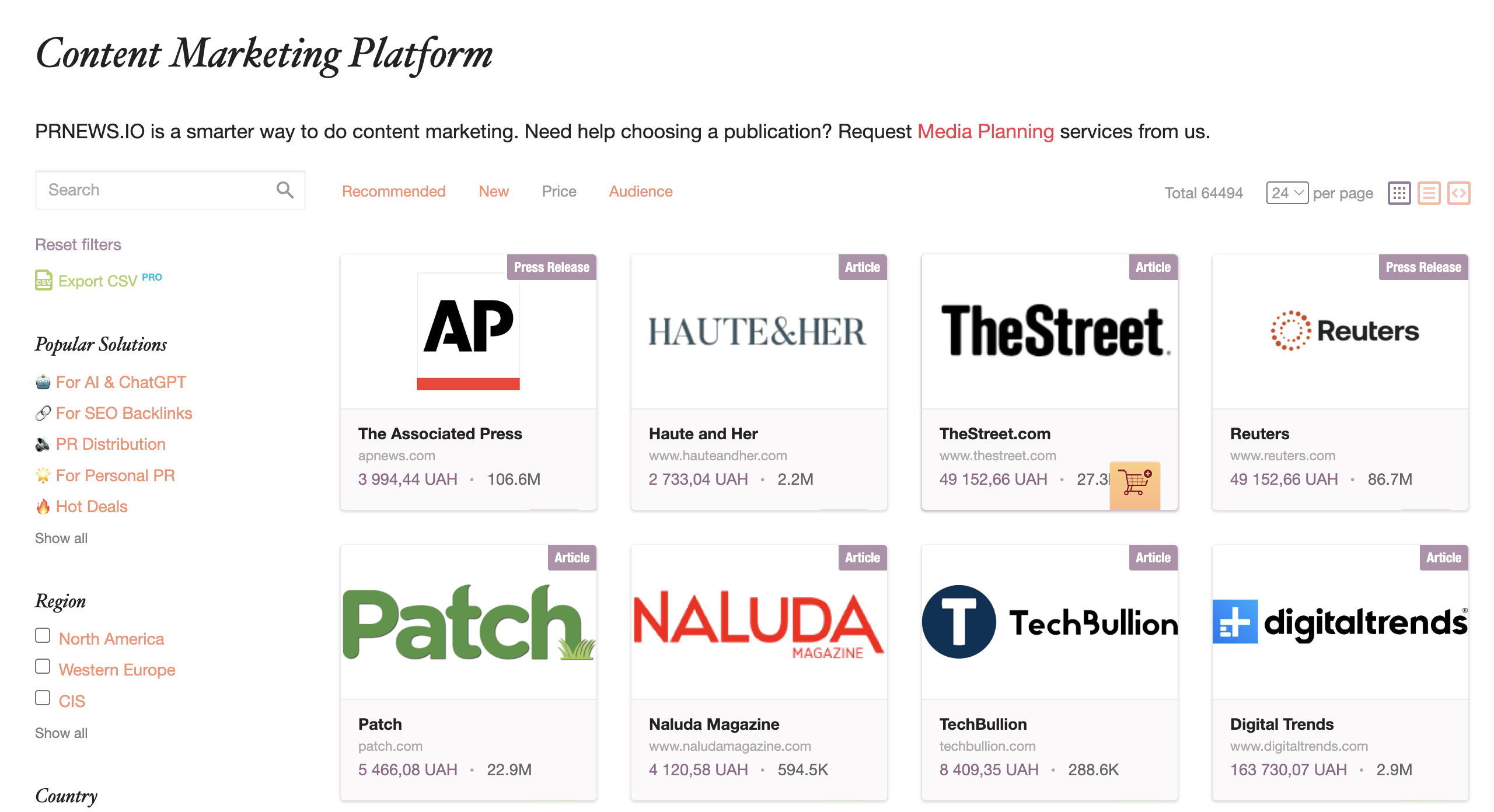
Platforms like PRNEWS.IO enable brands to publish thought leadership, product insights, and expert commentary across authoritative online publications worldwide. Unlike traditional ad impressions that often optimize for clicks, media placements build credibility, authority, and pre-qualified intent — factors that directly influence downstream HEART metrics.
From a quantitative marketing perspective, strategic media distribution impacts:
Adoption (A):
Users who discover a product through trusted editorial content are more likely to convert during onboarding because expectations are aligned with product value.
Happiness (H):
Authority-based discovery reduces perception risk, increasing initial trust and satisfaction.
Engagement (E):
Users acquired through informative content typically demonstrate higher depth-of-use and session frequency.
Retention (R):
Trust-driven acquisition correlates with lower early-stage churn, improving cohort stability and CLV.
In contrast to short-term paid traffic spikes, editorial placements contribute to sustainable brand equity — an intangible but measurable driver of Customer Lifetime Value. When integrated into a HEART-driven measurement system, media distribution can be evaluated not by impressions alone, but by downstream retention curves, engagement depth, and cohort-level profitability.
For marketing leaders adopting HEART, the implication is clear: acquisition channels should not be evaluated solely on CPA, but on their contribution to long-term user quality and lifetime revenue.
Strategic PR distribution, therefore, becomes not a branding expense, but a performance multiplier embedded within the broader quantitative growth model.

Applying HEART in the Digital World: Real-World Examples and Practical Tips
The HEART framework is incredibly versatile — it can be applied to an entire product or even just one feature. Let’s take a look at how two major companies use it to drive real results:
Google Search: Improving Efficiency with Task Success
Google uses Task Success metrics to measure how well users can find information quickly and accurately. By tracking this data, Google was able to improve its search engine’s algorithms and create features like predictive search and search snippets. These improvements made the search experience faster and more intuitive, ultimately increasing user satisfaction and retention. This is a great example of how improving Task Success can lead to massive gains in scale and retention.
Spotify: A Holistic Approach to User Stickiness
Spotify combines all five HEART metrics to create a personalized and “sticky” user experience. Here’s how they do it:
- Happiness is tracked through actions like playlist saves and social sharing.
- Engagement is measured by how much time users spend listening.
- Adoption focuses on how many new users complete the onboarding process.
- Retention is tracked through repeat visits and premium subscriptions.
- Task Success is evaluated by the accuracy of search and playlist creation.
By optimizing all five HEART metrics, Spotify keeps users engaged, boosts retention, and justifies the value of its premium subscriptions. This shows how a well-rounded approach to user experience can lead to strong, long-term customer loyalty.
To fully implement the HEART framework, businesses need a robust data collection system that captures both attitudinal and behavioral data.
Here’s a breakdown of how to track each HEART metric:
| HEART Metric | Data Type | Measurement Tools |
|---|---|---|
| Happiness | Attitudinal/Qualitative | Surveys, NPS/CSAT platforms (e.g., Lyssna), feedback forms. |
| Engagement, Adoption, Retention, Task Success | Behavioral/Quantitative | Product analytics tools (e.g., Google Analytics, Mixpanel), in-app analytics, product adoption tools. |
| Task Success | Usability/Qualitative | Usability testing platforms (remote or in-person) to evaluate task efficiency and errors. |
Behavioral tools track key actions like session duration, feature usage, and purchases. Happiness, on the other hand, requires gathering qualitative data (like surveys or feedback forms) to understand user attitudes. Combining these different data types gives you a complete picture of how users experience your product and helps you improve it over time.
Conclusion
The HEART framework marks a major evolution in how marketing and product management teams approach growth. Developed by Google, it was created to overcome the shortcomings of traditional, output-focused metrics that couldn’t fully capture the complexity of the user experience.
Adopting HEART means that marketing teams no longer focus solely on acquiring customers (like tracking Cost Per Acquisition (CPA)). Instead, they focus on optimizing the quality of the customer experience after acquisition, ensuring that every dollar spent on attracting customers generates the highest possible Customer Lifetime Value (CLV).
The key takeaway here is that true, sustainable growth happens when teams continuously monitor and improve metrics like Happiness, Engagement, and Task Success. By focusing on these areas, organizations can significantly increase Retention, which is much more cost-effective than acquiring new customers. Retaining existing customers, after all, is far cheaper than continuously trying to bring in new ones.
In the end, HEART isn’t just a tool for measuring success—it’s a strategic model that drives long-term, revenue-focused growth. For any product-led business, focusing on user experience through HEART is one of the smartest investments a growth team can make.

Frequently Asked Questions
What is the HEART Framework?
The HEART Framework is a user-centered measurement framework designed to evaluate digital experiences, campaigns, or products. It focuses on metrics that reflect Happiness, Engagement, Adoption, Retention, and Task success, providing a holistic view of performance from both the user and business perspective.
What does each letter in HEART stand for?
- Happiness: Measures user satisfaction and sentiment, often via surveys or NPS scores.
- Engagement: Tracks interactions, frequency, and depth of user involvement.
- Adoption: Indicates the rate at which new users start using a product or feature.
- Retention: Measures how well users continue to use a product over time.
- Task Success: Evaluates whether users can complete specific actions efficiently and effectively.
Why is the HEART Framework important in marketing?
It connects marketing activities to tangible user outcomes, helping marketers understand how campaigns impact engagement, satisfaction, and long-term loyalty. It goes beyond clicks and impressions to focus on meaningful user behavior.
Can HEART be used for digital and offline campaigns?
Yes. While originally designed for digital products, the framework can adapt to offline marketing by measuring satisfaction, adoption, engagement, retention, and task completion in real-world contexts (e.g., event attendance, in-store interactions, repeat visits).
How does HEART differ from traditional marketing metrics?
Traditional metrics often focus on vanity metrics like impressions or reach. HEART emphasizes user-centric outcomes that indicate real value, loyalty, and long-term engagement.
Can HEART be integrated with other marketing frameworks?
Absolutely. HEART works well alongside frameworks like AARRR (Acquisition, Activation, Retention, Revenue, Referral) or OKRs, providing complementary insights focused on user experience and behavior.