Discover the top astrology blogs of 2026 for daily horoscopes, in-depth chart analyses, and practical cosmic guidance. Explore the best sites for beginners, seasoned stargazers, and anyone seeking celestial inspiration.
Astrology has exploded in popularity in recent years, but not all astrology blogs are created equal. Some deliver rigorous, data-driven insights, while others focus on lifestyle, relationships, or personal growth. Whether you’re a beginner trying to decode your first birth chart, a serious student of planetary patterns, or someone seeking practical guidance for everyday life, the right blog can make all the difference.
In this article, we’ve curated the 20 best astrology blogs from the highly technical and research-backed to the stylish, socially conscious, and spiritually empowering. Each site offers a unique perspective, tools, and community, helping you navigate everything from monthly forecasts and compatibility guides to mental health insights and cosmic self-discovery. Whether you’re looking for precision, empowerment, or a little celestial inspiration, there’s a blog here to meet your astrology needs.
Best astrology blogs
The “Professional’s Laboratory” Astrodienst isn’t just a blog; it’s the infrastructure of modern astrology. Founded by Alois Treindl in the early 80s, it serves as the most respected data resource in the industry. While other sites might give you a “vibe,” Astrodienst gives you a mathematically precise map.
This is the high-precision software used by almost every other astrology app to calculate planetary positions. When you use their “Extended Chart Selection,” you have access to professional-grade tools like secondary progressions, solar arc directions, and asteroids that most “casual” sites ignore.
Through its partnership with Liz Greene, the site offers “Psychological Horoscope Analysis.” Unlike standard horoscopes that predict “good luck,” these articles read like a therapy session, focusing on your subconscious motivations, parental complexes, and the “why” behind your life patterns.
This is a wiki-style archive of thousands of birth charts of famous people, graded for accuracy. It’s the ultimate playground for students wanting to research how specific planetary alignments manifest in real world-famous lives.
Best For: Serious students, professional researchers, and anyone who wants a “no-fluff” psychological deep dive.
The “Monthly Playbook” with Susan Miller If Astrodienst is the textbook, Astrology Zone is the long-form magazine. Susan Miller has built a literal empire on her monthly forecasts. In a world of 280-character tweets, Susan remains the queen of the 3,000-word horoscope.
Susan doesn’t just say “you’ll have a busy month.” She breaks down specific dates, explaining exactly which planets are “talking” to each other (e.g., “On the 15th, Mars will trine your Sun, giving you a boost in energy”). Her readers often print out her columns and highlight key dates like a battle plan.
She is particularly famous for her explanations of New Moons, Full Moons, and Eclipses. She views these as “opening doors” or “finalizing endings” and provides practical advice on how to use that energy for career moves, house hunting, or romance.
Best For: Practical planning, understanding monthly trends, and those who enjoy a warm, conversational guide.
Astrology in life | Get Published Here
Language: English
The “Dream & Myth” Interpreter This blog offers a unique blend of traditional astrology and the mystical world of dreams. It is particularly popular for its cross-cultural approach, providing content in both English and Hindi, and focusing heavily on how cosmic energies manifest in our subconscious minds. Unlike most astrology blogs, this site features a robust section on “Dream Interpretation” (Swapna Shastra). It decodes common symbols—like seeing a snake or rain in a dream—and explains what they mean for your current astrological cycle. They provide detailed guides on “Astro-Colors,” suggesting specific colors to wear on certain days of the week to align with the ruling planets (e.g., wearing yellow on Thursdays for Jupiter or red on Tuesdays for Mars). The blog dives into the stories behind the stars, explaining the history of Maha Shivratri, the rituals of the Mahamrityunjaya Mantra, and the legends of the various zodiac signs. Best For: Readers interested in the “hidden” side of astrology—dreams, color energy, and the spiritual rituals that help balance your life.

The “Encyclopedia” for Every Stage Astrology.com is the most accessible “portal” for the general public. It manages to balance high-volume daily content with a massive educational library, making it the perfect starting point for anyone who just discovered their “Big Three” (Sun, Moon, and Rising signs).
They have one of the most organized learning sections on the web. If you want to know “What is a Trine?” or “What does it mean to have Venus in the 8th House?”, they have a clear, concise article ready for you.
Their synastry and compatibility tools are some of the most popular features. They offer quick “Love Matches” that break down the dynamic between any two zodiac signs, which is a great gateway into the deeper complexities of relationship astrology.
Beyond Western astrology, they frequently cover Chinese astrology, Tarot, and Numerology. This “holistic” approach makes it a great one-stop-shop for anyone interested in the broader world of esoterica.
Best For: Beginners, daily check-ins, and people who want to explore different branches of divination (Tarot, Vedic, etc.) in one place.
The “Biting Truth” AI Co-Star disrupted the astrology world by using NASA data and a proprietary “natural-language engine” to deliver horoscopes that feel more like a text from a brutally honest friend than a psychic reading. Their blog serves as a deeper dive into the “techno-rationalist” philosophy that defines their brand.
Co-Star moves away from the “sun-sign-only” horoscopes of the past. Their blog content focuses on the entire natal chart—houses, degrees, and aspects—often delivered with a minimalist, black-and-white aesthetic that strips away the traditional “hippie” tropes of astrology.
Their advice is famously “blunt.” They don’t sugarcoat hard transits; instead, they might tell you to “stop being a martyr” or “clean your room.” This resonates with a generation that values directness and psychological accountability over mystical fluff.
The blog and app use AI to track your friends’ charts alongside yours, turning astrology into a social, real-time experience where you can see how “vibe shifts” in the sky are affecting your whole inner circle.
Best For: Gen Z and Millennials who want an edgy, data-backed approach to self-reflection and relationship dynamics.
The “Activist Astrologer” Chani Nicholas is widely credited with bringing a social justice and “radical self-acceptance” lens to modern astrology. To Chani, the personal is political. Her blog isn’t just about what’s happening to you; it’s about how the planetary shifts of 2026 are fueling collective liberation, humanitarian efforts, and societal change.
Chani’s 2026 forecasts are deeply practical. She provides altar suggestions, guided meditations, and journal prompts that help you “embody” the astrology. It’s not just something you read—it’s something you do.
Having used astrology as a lifeline during a difficult childhood, Chani treats the birth chart as a “map of the soul.” Her blog focuses on how to use your unique planetary placements to heal ancestral wounds and find your specific purpose in the world.
She is known for breaking down major structural shifts, such as the Saturn-Neptune conjunction in February 2026. She interprets these not as “bad luck,” but as a call to dissolve old, harmful boundaries and build something more equitable.
Best For: The spiritually minded seeker who wants their astrology to align with their values of equity, healing, and community care.
Ask Oracle | Get Published Here
Language: English
GEO: USA, India, Thailand, Indonesia, UK
The “AI-Enhanced Personality” Portal Ask Oracle is a high-tech hub that uses AI and a massive database of over 2,600 topics to provide instant, personalized cosmic insights. It feels less like a blog and more like a “digital oracle” where you can search for almost any name or birthday to get an immediate analysis. Their standout feature is the deep-dive analysis of your birth date and name. It combines Western astrology, Chinese zodiac, and Numerology to give you a “Life Path” report, celebrity “twin” charts, and personality facts based on the day you were born. They have introduced an “AI Psychic Chat” that allows users to ask specific questions and receive immediate responses based on current transits and personal birth data. For more advanced users, they offer specialized Vedic “Divisional Charts” (like the D9 Navamsha chart), which are crucial for understanding the finer details of marriage, career, and spiritual growth. The site hosts a large, interactive forum where users discuss everything from “Leo’s negative reputation” to finding a “Size-friendly” partner based on their signs. Best For: Quick, data-rich personality reports and those who want an interactive, community-driven experience.
Jessica Lanyadoo (Ghost of a Podcast)
The “No-Bullshit” Counselor Jessica Lanyadoo brings over 30 years of counseling experience to her blog. As a “triple threat”—astrologer, medium, and animal communicator—her approach is incredibly grounded. She views astrology as a “common-sense” tool for navigating the messy, often painful parts of the human experience.
Jessica’s “hot takes” often center on the relationship to the self. Her blog is a masterclass in using your chart to identify mental health patterns, set healthy boundaries, and take responsibility for your own growth.
Unlike blogs that stay in the “woo-woo” clouds, Jessica provides weekly strategies for navigating the world both personally and politically. She doesn’t shy away from difficult global topics, using astrology to locate the “human side” of current events.
Her blog often features transcriptions from her podcast, where she answers listener questions about everything from stubborn family members to “career crises.” Her “no-nonsense” tone is kind but firm—she will call you out on your “stubbornness” while simultaneously handing you the tools to evolve.
Best For: People who want actionable, “boots-on-the-ground” advice for improving their relationships and their mental health.
The “Hellenistic Scholar” Hosted by Chris Brennan, this is the definitive resource for traditional, Hellenistic astrology. In 2026, as the world navigates the historic Saturn-Neptune conjunction in Aries, Brennan’s blog provides the necessary historical context to understand what these cycles meant for civilizations centuries ago.
Every blog post is essentially a mini-lecture. Brennan treats astrology as a serious historical discipline, often citing 1st-century texts like those of Vettius Valens. This is where you go to learn about “Whole Sign Houses,” “Essential Dignities,” and “Sect”—the concept that your chart behaves differently if you were born during the day versus at night.
Every January (and early February), the site publishes a massive, four-hour-plus video and written forecast. For 2026, they are focused on the “reality distortion field” of the Saturn-Neptune conjunction and the “Uranus Return” of the United States as Uranus enters Gemini.
They are famous for “Electional Astrology”—the art of picking the most auspicious date to start a business, get married, or launch a project based on the planetary alignments of the moment.
Best For: Hardcore students who want to master the complex, traditional techniques that modern “sun-sign” astrology often leaves out.
The “Data-Driven Community” If you love numbers and visual tools, Astro-Seek is your digital playground. While the site is a powerhouse of free calculators, its blog and community forums are where the “astrology nerds” gather to track the most complex movements in the sky.
This is the gold standard for Solar Returns (your “birthday chart” that predicts the themes of your year). The blog provides step-by-step guides on how to interpret where your Return Sun lands and what the “yearly ascendant” means for your energy levels.
Their personalized transit calendar is a favorite for 2026 planners. It allows you to see exactly when planets like Jupiter or Mars will be “hitting” your natal planets, helping you time your biggest moves with surgical precision.
The blog section functions like a high-level forum where users share “Transit Stories.” You can read real-time accounts from people experiencing their Saturn Return or a Pluto Square, making the clinical data feel human and relatable.
Best For: Advanced students who want high-precision tools and a data-heavy community to nerd out with.

The “Inclusive Modernist” Run by Shakirah (Kirah) Tabourn, this blog is a breath of fresh air. Kirah is a champion of diversity, intersectionality, and accessibility. She has a unique talent for taking the heavy, traditional techniques found in Chris Brennan’s work and “grounding” them into content that feels non-intimidating and magical.
Kirah’s blog, NFLUX, and her podcast Time Magic explore how astrology intersects with POC and Queer identities. She doesn’t just talk about “love and money”; she talks about how planetary cycles impact social movements and collective liberation.
Her “Astrology 101” guides are widely considered the best for beginners who want to learn the right way from the start. She explains concepts like “synastry” (relationship compatibility) with a focus on ethics and personal agency.
Kirah treats time itself as a magical resource. Her 2026 content focuses on “navigating these wild times” with a mix of expert cosmic guidance and a “come as you are” vibe that makes you feel like you’re learning from a very smart friend.
Best For: People who want high-level technical accuracy served with a side of social consciousness and community warmth.
The “Lifestyle & Career” Architects Identical twins Ophira and Tali Edut (the official astrologers for ELLE) are the masters of “bringing the stars down to earth.” Their blog is designed for busy professionals and style-conscious readers who want astrology to work for their modern lives.
They recently launched the I*AM Method, a modern personality system (Innovator, Authority, Maven) based on a 13-point astrological algorithm. It’s essentially a cosmic version of the Myers-Briggs or Enneagram, designed to help you optimize how you work and lead.
They are unique in their focus on “Astro-Decor.” They offer guides on how to design your living space based on your sign’s elemental needs—for example, a Fire sign might need bold accents and a dedicated workspace, while a Water sign needs a serene sanctuary for emotional recharging.
Their blog features extensive content on “The Astrology Advantage,” focusing on timing career moves, handling toxic office dynamics, and using your chart to find your specific “professional success archetype.”
Best For: Career-driven individuals and lifestyle lovers who want practical, “savvy and sensible” advice for their day-to-day life.
The “Relationship & Identity” Mirror Founded by Colin Bedell, Queer Cosmos is a groundbreaking portal that deconstructs the traditional, often heteronormative “him/her” language of astrology. Colin views the birth chart as a metaphysical medicine to heal wounds of shame and unworthiness specifically within the LGBTQ+ community.
Drawing on the work of psychologists like Brené Brown and Esther Perel, the blog focuses on “relational intelligence.” It moves beyond “good or bad” compatibility to explore how any two signs can build a healthy, authentic bond.
Colin leaves behind gendered pronouns and assumptions, interpreting planetary energies (like the assertive Mars or receptive Venus) as universal human traits available to everyone regardless of gender identity.
The blog serves as an antidote to loneliness, providing readers with the language to express their unique experiences of desire, resistance, and resilience through the lens of the cosmos.
Best For: Queer-identifying individuals and anyone seeking a modern, inclusive, and psychologically deep approach to relationship astrology.
The “Psychic & Global” Oracle Jessica Adams is a world-renowned psychic astrologer who blends traditional chart-reading with high-level intuition and Tarot. Her blog is the premier destination for “Psychic Astrology,” often predicting major global shifts months or years before they happen.
Jessica is famous for her “validated news headline” forecasts. For 2026, her blog is currently focused on the massive Saturn-Neptune conjunction in Aries and its impact on international relations, currency shifts (like Bitcoin), and the future of global leaders.
She is one of the few astrologers who applies her craft to major sporting events. Her 2026 archives already feature detailed psychic takes on the 2026 FIFA World Cup, using Tarot and Oracle cards to predict which nations (and media organizations like Fox) are set for a financial or competitive windfall.
Her horoscopes aren’t just based on math; they include psychic hits and spirit world “confirmations.” She encourages readers to tune into their own “sixth sense” alongside their chart to navigate the year’s sudden shocks and “Uranus in Gemini” surprises.
Best For: News junkies, sports fans, and those who want a mix of psychic intuition and astrological data to understand world events.
The “Vedic Authority” AstroSage is the premier global destination for Jyotish (Vedic astrology). While Western astrology focuses on the Sun, AstroSage centers its wisdom on the Moon sign and the Nakshatras (Lunar Mansions). In 2026, their “Special Coverage” provides detailed AI-powered analysis of the upcoming year for every sign.
Their blog is the best place to learn how to read a North or South Indian style birth chart. They provide a “Brihat Horoscope” that is hundreds of pages long, detailing every aspect of your life—from your Vimshottari Dasha (the major planetary periods of your life) to specific Doshas like Mangal Dosha or Shani Sade Sati.
It is the ultimate resource for the lunar calendar. If you need to know the exact date and time for Purnima (Full Moon) or Amavasya (New Moon) for rituals or fasting, their blog provides the most accurate astronomical data.
Best For: Anyone wanting to dive into traditional Indian astrology, track lunar cycles, or understand their soul’s long-term timing through Dashas.
The “Spiritual Solutionist” Astroyogi excels at “remedial astrology.” It treats a birth chart not just as a map of fate, but as a diagnosis for wellness. If you’re feeling “stuck,” their blog provides practical, ancient tools to shift your energy.
They specialize in teaching readers how to balance malefic planets. For example, if you’re struggling with a “Mars Dosha” (anger or relationship friction), they might suggest reciting the Hanuman Chalisa or donating red lentils on Tuesdays.
A large portion of their blog is dedicated to Vastu—the Indian “science of architecture” similar to Feng Shui. They offer tips on where to place your bed, office desk, or main entrance to ensure that positive energy flows through your home and enhances your career or health.
They bridge astrology with Numerology, helping readers calculate their “Destiny Number” or “Maturity Number” to understand their life’s purpose and even suggesting minor name spelling changes to better align with planetary vibrations.
Best For: Practical seekers who want to “fix” planetary imbalances using home design, mantras, and daily lifestyle adjustments.
The “Cosmic Influencer” Run by internationally syndicated astrologer Joanne Madeline Moore, Boho Astro is the most visually “charismatic” site on this list. It blends high-level astrology with the world of fashion, music, and celebrity culture.
Joanne has a “Boho Astro Blog” dedicated to the birth charts of icons like Stevie Nicks, Kate Bush, and Florence Welch. She explains how their planetary placements (like “Uranus on the Midheaven”) manifest in their art, fashion, and public personas.
The site is a pioneer in “astrostyling”—choosing your wardrobe and home decor based on your sign and your Ascendant (Rising sign). It’s where “bohemian” meets “celestial,” suggesting brands and colors that resonate with your specific zodiac energy.
Her daily and weekly forecasts are famous for being “to the point.” They are designed for the modern reader who wants a quick cosmic weather report without wading through pages of text.
Best For: Modern, style-conscious readers who love pop culture and want a visual, charismatic approach to their weekly stars.
Why You Should List Your Astrology Blog on PRNEWS.IO
If you run an astrology blog, PRNEWS.IO is your gateway to reaching a wider, engaged audience while growing your influence. Here’s what you get:
- Get Discovered: Your horoscopes, forecasts, and cosmic insights reach readers who are actively looking for astrology content.
- Build Trust: Being part of a respected platform adds credibility to your work.
- Monetize Your Expertise: Attract collaborations, sponsorships, and clients interested in your unique astrological perspective.
- Boost Your SEO: More visibility means higher search rankings and more traffic to your site.
- Connect & Collaborate: Network with fellow bloggers, influencers, and brands in the spiritual and lifestyle space.
Explore a variety of astrology blogs in the PRNEWS.IO catalog, perfect for sharing your content and ideas with a wider audience. Each blog comes with its own publication guidelines, detailed on their respective pages.
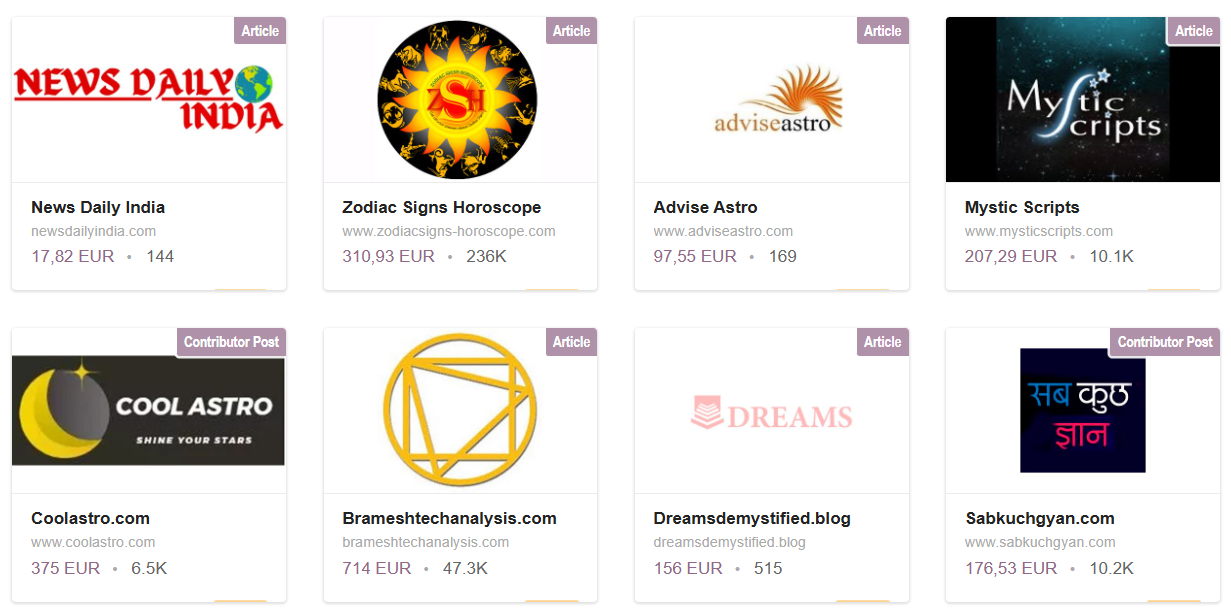
Whether you offer daily horoscopes, deep chart analyses, or tips for living in sync with the cosmos, this is the platform to share your content, grow your audience, and amplify your voice in the astrology community.
Conclusion
By following astrology blogs, reading expert insights from professional astrologers, or exploring in-depth horoscope analyses and cosmic trends, you’ll steadily expand your understanding of astrology. These blogs are free, easy to access from any device, and offer valuable content for practitioners, learners, and astrology enthusiasts alike. With our curated selection, you now know which astrology blogs are truly worth your attention and time.