⚡️ OpenAI has launched a real-time search feature in ChatGPT, which operates independently, without using Bing. Currently, it is not available in newer models (o1), but it is accessible in 4o for paid accounts. It is also available in mobile apps.
When asking questions in conversational mode, the chat can use internet search to generate responses. To improve answers, the bot can utilize the entire dialogue context.
? Birth of a Google Killer?: SearchGPT is OpenAI’s new search engine aiming to compete with Google.
SearchGPT: A Potential Google Killer?
OpenAI’s SearchGPT has entered the market as a possible competitor to Google, offering an innovative approach to search by integrating real-time data and providing comprehensive answers that pull from multiple sources.
Unlike traditional search engines that often present fragmented information across several links, SearchGPT aims to deliver cohesive responses in a single output. For instance, when asked about current stock market conditions, SearchGPT was able to deliver up-to-date information, showing that it can handle live data effectively.
Strengths of SearchGPT
Real-Time Information
One of the standout features of SearchGPT is its ability to stay current with live events, such as stock market updates or political polling data. This capability sets it apart from traditional search engines, which often require users to sift through multiple sources to piece together the latest information.
SearchGPT distinguishes itself from Google and other traditional search engines by its ability to handle real-time data integration effectively. This is demonstrated through several key features:
- Live Updates and Contextual Relevance: Unlike Google, which typically pulls from indexed web pages that may not always reflect the most current events, SearchGPT is designed to provide up-to-date information directly from live sources. For example, when asked about the current state of the stock market, SearchGPT accurately reported on the market’s turbulence, including specific statistics like the S&P 500’s performance from just two weeks prior. This capability allows SearchGPT to offer more contextually relevant and timely answers.
- Multi-Perspective Responses: SearchGPT doesn’t just deliver static answers but incorporates various perspectives within its responses. For instance, it provides detailed answers by including multiple data points such as national polls, battleground state results, and demographic breakdowns in a single, cohesive response. This approach contrasts with Google’s search results, where users often need to navigate multiple links and sources to get a comprehensive view of an issue.
- Dynamic Call-to-Actions: SearchGPT uses dynamic calls-to-action, which direct users to specific resources that are most relevant to their queries. For example, in one instance, SearchGPT linked directly to a product page for a stove after providing detailed information about the product. This approach integrates search with actionable insights, making it easier for users to move from query to decision without needing additional searches.
Overall, SearchGPT’s approach to real-time data is more integrated and dynamic compared to Google’s traditional search engine, which relies heavily on indexed data and less on live, continuously updated information streams. However, while this makes SearchGPT potentially more useful in time-sensitive scenarios, its accuracy issues, such as data hallucination, remain a significant hurdle to overcome.

Comprehensive Answers
SearchGPT’s ability to combine information from various data points into a single, cohesive answer can save users time. For example, instead of providing a list of links for a query about presidential election polling, SearchGPT aggregates detailed information from national polls, battleground state polls, and demographic breakdowns, offering a holistic view in one response.
Challenges and Limitations
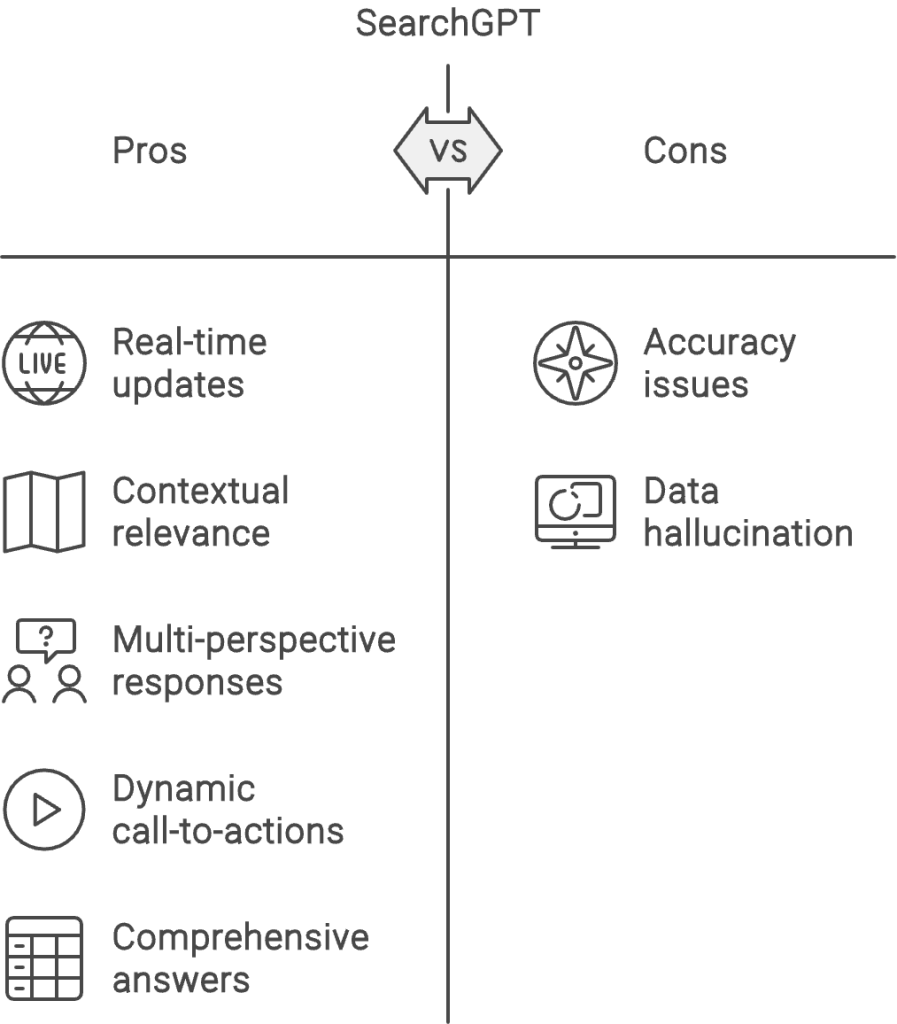
Despite its potential, SearchGPT is not without its shortcomings.
Data Hallucination
One of the most critical issues with SearchGPT is data hallucination, where the AI generates incorrect or misleading information as though it were factual. This problem is common in large language models and can lead to users receiving inaccurate answers. For example, SearchGPT provided incorrect train departure times, stating the first train from Lagarra to Barcelona departs at 6:00 a.m., while the correct times are 5:56 a.m. and 6:26 a.m. Such discrepancies can have practical implications, like causing users to miss their trains due to incorrect information.
Mismatched Data
SearchGPT also struggles with matching the right data to the correct context. In one instance, when asked about new AI books released in June 2024, SearchGPT incorrectly listed multiple books as being released in that month, whereas only one book was actually released in June 2024. This type of error undermines the reliability of the search engine, especially for users seeking precise and accurate information.
Reliability of Sources
SearchGPT sometimes uses questionable sources or lacks proper citation for its answers. For example, it cited a SparkNotes article for historical events from medieval Europe but failed to mention many relevant events that should have been included, suggesting that even when sources are cited, they might not comprehensively cover the query’s scope. This raises concerns about the reliability of the data provided, as users often expect search engines to be authoritative and accurate.
Inconsistent Content Presentation
SearchGPT’s presentation of data can also be inconsistent. While it sometimes combines multiple perspectives into a single response, it lacks the ability to always link back to relevant or primary sources, making it difficult for users to verify the accuracy of the information. This is particularly problematic for complex queries that require detailed and sourced answers, as users might receive responses that are factually incorrect or oversimplified without proper validation.
Overall, these accuracy challenges highlight the ongoing difficulty of using AI-driven search engines like SearchGPT for reliable information retrieval. If users repeatedly encounter errors or misinformation, it could significantly erode trust in the platform, making it a less viable alternative to more established search engines like Google, which are known for their emphasis on accuracy and reliable data sourcing.
Monetization and Market Position
SearchGPT also faces uncertainty regarding its monetization strategy. OpenAI is reportedly burning through cash and may soon need to find ways to make SearchGPT financially viable. Possible options include incorporating paid ads into search results or adopting a subscription model similar to other AI-powered tools. However, these strategies could limit its appeal, especially when free alternatives like Google and Bing are readily available.
Furthermore, OpenAI’s partnerships with major publishers raise questions about content prioritization and the future of smaller content creators. By prioritizing content from licensed publishers, SearchGPT could potentially marginalize smaller voices in the online publishing landscape, fundamentally altering the distribution of information on the web.
Ad Integration Challenges
One potential monetization route for SearchGPT is to include paid ads within its search results. However, this could be problematic because SearchGPT’s format is designed around delivering comprehensive, AI-generated answers rather than traditional blue links seen on Google and Bing. The integration of ads could disrupt the user experience and diminish the perceived value of the AI-generated content, making it less appealing compared to ad-supported but familiar formats offered by Google.
Subscription Model Limitations
Another option is for OpenAI to implement a subscription model similar to the one used by other AI services like Perplexity. However, this approach could also limit SearchGPT’s user base, as many people might prefer to stick with free search engines like Google and Bing. A paid model could restrict SearchGPT’s ability to capture a significant market share, especially if it cannot offer a distinct enough advantage over free alternatives.
The choice of monetization strategy will directly influence user adoption. If SearchGPT opts for a model that feels restrictive or less user-friendly compared to the free and ad-supported models of Google and Bing, it may struggle to attract a broad user base. Moreover, if the monetization negatively impacts the quality or reliability of search results, users may be less likely to make the switch from more established and trusted platforms.
PRNEWS.IO & SearchGPT: Enhancing Media Placements for Greater Visibility
As OpenAI integrates fresh, reliable news from reputable sources like Associated Press, The Atlantic, Reuters, and Condé Nast into ChatGPT’s search results, it highlights the importance of securing media placements in leading outlets. When your brand is mentioned in these prestigious publications, it enhances your chances of appearing in real-time search results on platforms like ChatGPT. This increased visibility not only boosts your brand’s credibility but also opens the door to wider audience reach, ensuring that your story is seen by potential customers, investors, and partners.
PRNEWS.IO enables businesses to distribute press releases and media content across a broad range of publications, including many of those partnered with OpenAI, like Reuters and Financial Times. With the integration of SearchGPT, having your press releases published in such outlets becomes even more valuable. These placements are likely to appear in search results within ChatGPT, enhancing your brand’s presence and authority in the digital space.
Whether you’re looking to promote a new product, increase brand awareness, or manage your public image, PRNEWS.IO can connect you with the right media outlets. As OpenAI’s collaboration with major news providers continues to grow, the opportunity to get your brand featured in leading publications becomes even more powerful, ensuring that your business is visible when it matters most.
Future Outlook
The future of SearchGPT will likely hinge on its ability to overcome accuracy issues and find a sustainable business model. As it stands, the AI search market is becoming increasingly competitive, with players like Google’s Gemini, Microsoft’s Co-Pilot, and other AI-driven search engines vying for dominance. While SearchGPT does not need to dethrone Google entirely to be successful, carving out even a small niche in the market could provide significant financial returns for OpenAI.
Ultimately, the success of SearchGPT will depend on its ability to build trust with users by consistently providing accurate and reliable information. As the race for AI search supremacy heats up, SearchGPT’s ability to innovate and adapt will be critical in determining its place in the future search landscape.
Conclusion
SearchGPT represents a bold new step in the evolution of search engines, offering real-time data integration and comprehensive answers that could revolutionize how we access information online. However, it also faces significant challenges, particularly regarding accuracy and monetization.