Search engine optimization isn’t the old checkbox game anymore. Keyword stuffing and technical gymnastics have officially retired. The spotlight has shifted to something far more practical: making the person on your site genuinely happy. That’s how SXO — Search Experience Optimization — walked onto the stage. Think of it as giving your website a tiny superpower: it not only answers the search query but also makes the whole visit smooth, pleasant, and, dare we say, satisfying. Because search engines have one job — match people with what they actually want — and SXO plays beautifully into that.
Why Google Loves When Users Are Happy
Search algorithms have gotten smarter than that one friend who only texts you when they need something. Instead of counting links and keywords like it’s 2009, they’re watching how real users behave. Do people stick around? Do they explore? Do they bounce faster than you from a boring Zoom call?
Google basically mirrors what users love, and if users love your site — boom — you win. So if your content solves the question and makes the experience painless, you’re already ahead. That’s why UX and SEO have turned into inseparable partners. Technical speed, clean design, and smart content aren’t separate “departments” anymore — they’re all pulling the same cart. And if your teams still live in different universes… well, your rankings will feel it.
Technical SEO Has a New Name: Behavioral SEO
Here’s the plot twist: search engines no longer care about how perfect your site looks in a controlled lab environment. They care about how real humans experience it in the wild — old phones, spotty Wi-Fi, weird device sizes and all.
So modern technical SEO? It’s basically Behavioral SEO. It’s about improving the experience for the actual 75th percentile of users, not a shiny score that only exists on a developer’s laptop. When you fix what slows down real people, not theoretical robots, your rankings respond. Because nothing says “reward me, Google” like a site that feels fast, stable, and pleasant for the humans using it.
In short: make life easier for your visitors, and search engines will high-five you for it.

Core Web Vitals and Page Experience Signals
Core Web Vitals are basically the heartbeat of modern Search Experience Optimization. They’re the technical scorecard Google uses to figure out whether your site feels good to use — not just “loads eventually,” but actually delight-your-visitors good. If you nail these metrics, Google smiles at you. If you don’t… well, you know how Google gets.
And here’s the twist: your scores don’t come from a fancy lab setup your dev team handcrafted. Nope — they come from real humans browsing your site on real devices with real-life Wi-Fi that sometimes behaves like it’s powered by potatoes. That’s why hitting “good” across all three Core Web Vitals for the 75th percentile is the golden ticket. You’re optimizing for actual users — not the fastest phones on the planet.
Meet the CWV Trio: LCP, INP & CLS (aka the three judges on Google’s UX talent show)
These three metrics decide whether your site rocks or flops for visitors — and for rankings. Nail them, and everything else gets easier: conversions feel smoother, ads perform better, and your marketing team suddenly thinks you’re a genius.
Here’s the vibe:
| Metric | What It Measures | “Good” Threshold | Why It Matters |
| LCP | How fast the main thing loads | ≤ 2.5s | If the biggest content chunk pops in quickly, users stay happy. |
| INP | How fast your site reacts | ≤ 200ms | Lag-free interactions = fewer rage clicks and more conversions. |
| CLS | How steady the layout is | ≤ 0.1 | No jumpy buttons = fewer accidental “oops I didn’t mean to click that!” moments. |
1. Largest Contentful Paint (LCP)
LCP is the “first impression” metric — the moment when the main content actually shows up. You want this under 2.5 seconds so users don’t bail before the party even begins. How to make it happen? Faster servers, leaner CSS, and images that don’t weigh as much as a medieval castle.
2. Interaction to Next Paint (INP)
Say hello to INP, the younger, smarter sibling that replaced FID in 2024. While FID only checked if the first interaction worked, INP evaluates the whole session. Basically: your site can’t look fast only on the first click — it has to stay fast.
Keep INP under 200ms, and users will glide through your interface like it’s buttered glass.
This shift also means Google is done rewarding “fast at first, sluggish later” websites. If your JavaScript behaves like a toddler with too much sugar, INP is going to expose it. Continuous performance budgeting is no longer a nice-to-have — it’s survival.
3. Cumulative Layout Shift (CLS)
CLS measures how much your page jumps around while loading. High CLS is the digital equivalent of someone suddenly pulling the chair from under you. Keep it under 0.1 to avoid jump scares.
Reserve space for images, tame your ads, and stop letting elements teleport around the screen.
CWV Is Just One Slice of the Page Experience Cake
Core Web Vitals are important — but they’re not the whole show. They sit inside a broader Page Experience ecosystem that includes:
- Mobile-friendliness: If your site can’t handle mobile… welcome to the bottom of the rankings.
- HTTPS: No security = no love from Google.
- No annoying pop-ups: If your site slaps users with walls of ads before they even blink, Google notices — and not in a good way.
Google rolled out Page Experience ranking for mobile in 2021, then extended it to desktop in 2022. In short: this stuff matters everywhere your users are.
Better Performance = More Revenue (and we have receipts)
Technical performance isn’t just a “SEO nerd” obsession — it makes money. Real money.
Check out these wins:
- Vodafone pumped their CWV and watched sales climb 8%.
- Yelp shaved down their FCP and saw +15% conversions.
- Akamai found that a tiny 100ms delay dropped conversions by 7% (ouch).
- Pfizer slashed bounce rates 20% after enforcing a strict speed budget.
- And one site that rebuilt their stack with hybrid rendering hit a perfect 100 CWV score, then rode that wave to:
- +300% organic traffic
- +900% top-10 keywords
in one year.
- +300% organic traffic
Basically: fast sites don’t just rank better — they sell better, retain better, and grow better. Speed is revenue. Period.

The Behavioral Economy: Where User Actions Spill the SEO Tea
Once someone actually lands on your page, Google immediately slips into detective mode. Speed and stability matter, sure — but what people do after they click? That’s where the real story unfolds. These post-click signals act like tiny truth-tellers, quietly reporting back to the algorithm about whether your page is a delight… or a disaster.
Engagement 101: CTR, Bounce Rate & That Dreaded Pogo-Stick Shuffle
Google’s RankBrain isn’t just a fancy name — it’s a full-on mind-reader for user behavior. And it absolutely watches how people interact with your page.
- CTR (Click-Through Rate): When lots of people choose your result in the SERP buffet, it usually means your title and description promised exactly what they wanted. Gold star.
- Bounce Rate & Pogo-Sticking: Now for the bad news. If users click in and immediately nope-out, that’s a bounce. If they turbo-back to Google and click something else? That’s pogo-sticking — the SEO equivalent of being ghosted mid-sentence.
This combo — high CTR, instant regret — tells Google your page made big promises and then tripped on its shoelaces. Not great for rankings. The cure? Hit users with value immediately. Quick visuals, straightforward structure, fast loading. Make users feel like: “Ah, yes. This is exactly what I came for,” not “Wrong door, bye.”
Let’s Talk Dwell Time (a.k.a. The Long Click Mystery)
Dwell time measures how long someone hangs around before running back to the SERP. Google claims it’s not an official ranking factor… but conveniently tracks “long clicks” anyway. Sure, Jan.
Even if the metric doesn’t have a VIP pass in the algorithm, it’s still one of the best real-world indicators that your content actually hits the mark. Longer reading time = happier humans = stronger relevance signals.
You can’t measure dwell time directly, but the clues are easy:
- Low time on page?
- High bounce rate?
- Zero or one page per session?
Congrats — you’ve got a dwell time problem. Most good pages keep people reading for 2–4 minutes. If yours barely reaches “microwave popcorn,” it’s time to rethink structure, clarity, and value delivery.
Content That Matches Intent… or Bust
Here’s the classic SEO facepalm:
High CTR (everyone’s excited!) → terrible engagement (everyone’s disappointed!).
This means your headline wrote a check your content couldn’t cash. When this happens, it’s not a “tweak the keywords” moment — it’s a “rethink the strategy” moment.
The new rule of content:
Don’t just answer what users search for — answer why they searched for it in the first place. Are they looking to learn? Buy? Compare? Escape chaos? Your content should show them the answer instantly, before they even think about leaving.
Even the fastest, prettiest, most technically perfect page won’t save you if the content misses the mark. SXO is all about making sure the user reads your first sentence and thinks, “Oh yes. This is exactly what I needed.”
Where Site Structure Meets “Don’t-Make-Me-Think”
A site can have world-class content, gorgeous branding, and a UX designer who meditates on white space… but if the architecture is a mess, Google will treat it like a basement full of unlabeled boxes. Good SXO starts with a structure that’s clean, logical, and easy for both humans and crawlers to navigate.
Google’s “Mobile or Nothing” World
Google doesn’t check your desktop site first. It checks your mobile version — the tiny, pocket-sized one — and whatever’s there becomes the source of truth. With most people browsing on their phones anyway, the logic is simple: if your mobile experience flops, your SEO flops too.
To keep things fair, Google expects parity — a fancy way of saying the mobile and desktop versions should match like perfectly coordinated outfits.
Here’s what absolutely must stay in sync:
- Images: High quality. Proper alt text. No “mobile downgrade mode.”
- Structured Data: If you use rich snippets or schema markup on desktop, your mobile version better show up with the same energy. And yes, the URLs inside that schema have to match the mobile version too. Developers adore this part. Truly.
Google’s crawler isn’t a magician — it can’t tap, swipe, or guess. Anything hidden behind a click or gesture is basically invisible to it. Which means:
- Fancy tabs? Risky.
- Accordions that reveal key content only after a user taps? Even riskier.
- Anything that loads only after interaction? Straight to SEO jail.
Designers get to have fun keeping pages pretty while making sure Google sees everything. CSS tricks are your friend here — hide visually, not structurally.
More mobile-first rules you can’t dodge:
- Robots Tags: Mobile and desktop must use the same ones. A random noindex on mobile can nuke your entire site from search.
- Resource Access: Don’t block images, scripts, or styles on mobile with robots.txt. If Google can’t see it, it won’t rank it. Simple.
Internal Linking: Your Website’s Secret Superpower
A great internal linking strategy is like giving your users a treasure map and giving Google the instruction manual.
Menus should follow your site’s hierarchy — not your designer’s mood board. Clean navigation helps visitors breathe, helps crawlers understand structure, and boosts everything from relevance to authority.
If you want to level up, build topic clusters — your site’s version of shared cinematic universes. Each cluster revolves around a main pillar page (the “hero”) supported by related content pages (the “cast”). Everything links to everything else. Beautiful.
Topic clusters deliver double magic:
- UX Bliss: Users land in a mini-library of everything they need, which keeps them reading longer and exploring further.
- SEO Muscle: Google immediately understands who’s the boss on that topic — and starts ranking your cluster higher.
And don’t forget: contextual links inside your content are the real MVPs. No vague “click here” energy. Use anchor text that actually tells Google what the destination is about.

Content UX: Readability, Accessibility, and Information Hierarchy
Let’s be honest: even the fastest site on Earth won’t save content that feels like homework. How users experience your content—the flow, the structure, the clarity—is a huge part of what keeps them around (and what makes search engines nod approvingly).
Visual Structure and Engagement
Great content isn’t just smart; it treats users like humans with limited patience and thumbs that get tired of scrolling. Long, unbroken paragraphs? That’s how you send people sprinting back to the search results.
The fix is simple and delightful:
- Short paragraphs: Because nobody wants to scale Mount Text.
- Clear subheadings: Instant orientation without needing a compass.
- Bullet points: Snackable info bites instead of a three-course essay.
- Above-the-fold value: Hit users with the good stuff right away so they know they’re in the right place. Think of it as your content saying, “Yes, yes, you clicked correctly.”
And links? They’re not decorations. They’re mini-teleports. Add them where they actually help the reader, not just because you feel like sprinkling SEO glitter.
Accessibility as a Ranking Factor (WCAG Compliance)
Accessibility isn’t a nice-to-have. It’s the secret handshake that makes your content work for everyone—humans, screen readers, and search engines alike. And here’s the twist: when you make your content easier for people with disabilities, you quietly buff your SEO at the same time. Double win.
WCAG-friendly moves that also make Google raise an eyebrow (the good kind):
- Alt text that actually describes images: Screen readers love it. Google loves it. Users love it. You get a universal hug.
- Video captions and audio transcripts: People can watch silently, search engines can finally understand your video—everyone’s happy.
- Proper heading hierarchy: Helps users navigate and signals your content’s structure without needing a decoder ring.
- Color contrast and keyboard navigation: This isn’t only about accessibility—it just makes your site feel better to everyone.
Following these guidelines also sets you up beautifully for the future where AI, voice search, and various mysterious algorithms eat structured content for breakfast. Clean semantics = happy robots = more visibility.
But here’s the kicker: even the most technically perfect article will flop if you didn’t first figure out what your users actually need. UX research isn’t optional. Test your ideas, check how people consume information, and only then hit Publish. It’s the difference between content that lives quietly in a corner and content that actually gets read.
Bonus: Strengthen SXO with Strategic Content Distribution (PRNEWS.IO)
Great SXO doesn’t end once the content is written — it also depends on how effectively that content earns trust, visibility, and high-quality traffic signals. One of the fastest ways to reinforce these behavioral and authority signals is through strategic content distribution.
Platforms like PRNEWS.IO help brands publish articles, thought leadership, reviews, and announcements across thousands of reputable media outlets. This supports SXO in three important ways:
- Improves behavioral signals: Referral traffic from credible publications tends to engage longer, bounce less, and convert higher — exactly the kind of user behavior search engines reward.
- Strengthens topical authority: Publishing expert-level content in niche media reinforces your brand as a reliable source, which indirectly boosts relevance and E-E-A-T signals.
- Creates a discoverability loop: Users who see your brand on external platforms and then search for it later send strong intent signals to Google.
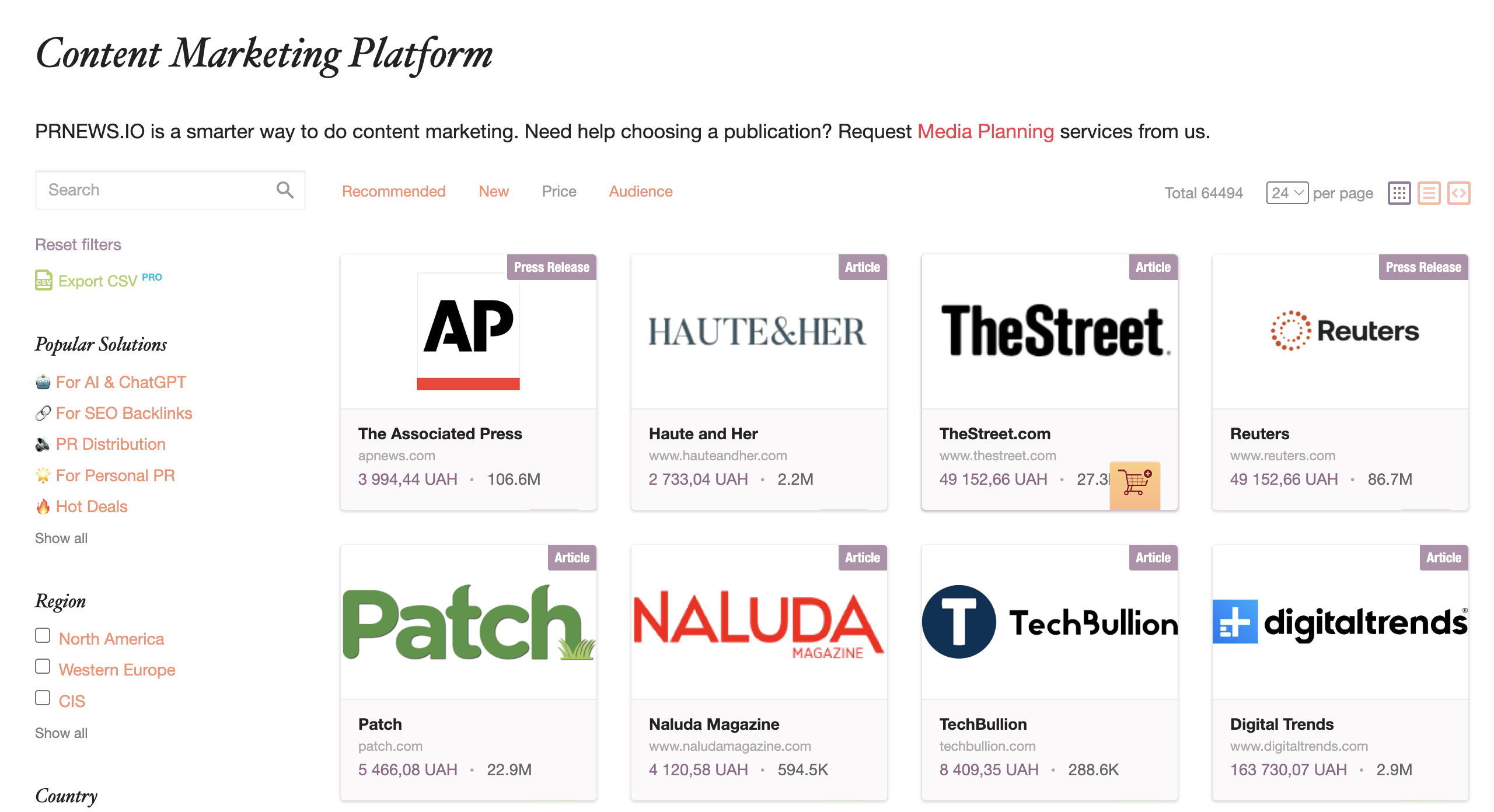
In short, combining great on-site UX with strategic off-site content amplification accelerates both user trust and search performance. PRNEWS.IO makes this distribution seamless — no pitching, no waiting, just instant placement.
Measurement, Diagnosis, and Iterative Optimization
SXO isn’t a “fix it once and brag forever” kind of game. It’s more like tending a very temperamental digital garden: measure what’s happening, figure out what’s breaking, fix it, and repeat until everything hums like a well-oiled spaceship. The magic happens when numbers meet real human behavior — that’s where the truth usually hides.
First up, the cold, hard numbers — your trusty dashboard of digital reality checks:
- Google Search Console: Your control room. This is where Core Web Vitals whisper their secrets, rankings tell you how much they adore (or ignore) you, and mobile compatibility errors appear out of thin air.
- Google Analytics (or anything similar): This one shows you how humans behave: Do they hang out? Do they bounce? Do they explore? Your organic traffic basically leaves you a diary here.
- Technical Auditors like Screaming Frog: Think of this as your cyber-vacuum cleaner. It crawls through every corner of your site and points out everything messy — broken links, duplicate content, rogue redirects, and all those little gremlins blocking search engines.
Together, these tools give you the “what happened” story. Now you just need the “why.”
Qualitative Diagnosis: Identifying Friction Points
Numbers tell you the symptoms. But qualitative tools? They show you the drama.
Heatmaps and session recordings (yes, Hotjar, we’re looking at you) let you watch users in their natural habitat: clicking, scrolling, rage-clicking, and occasionally giving up on life because a button won’t move.
This is where you spot things like:
- People frantically clicking on something that looks clickable but isn’t.
- Users scrolling like they’re on a treadmill trying to find the actual answer.
- Layout shifts that make content jump around like a caffeinated squirrel.
- Pop-ups that crash into the experience like unexpected guests.
Pair those observations with metrics, and you suddenly have a roadmap, not guesswork.
Continuous Optimization and the Conversion Rate Mandate
SXO doesn’t retire. It’s a loop. Your audience is changing every day, their devices are changing, their networks are changing — and search engines are definitely changing. If you’re not A/B testing, watching field data, and tweaking regularly, performance will quietly slip away.
And the business impact? Let’s just say UX pays its bills:
- Agrofy dropped abandonment by 76%.
- Pfizer trimmed bounce rates by 20%.
- Vodafone celebrated 8% more sales.
When you make life easier for users, conversions follow. That’s why SXO shouldn’t be judged by “yay, we moved from position 12 to 10.” Measure it by what matters: leads, sales, revenue, and fewer people storming out of your pages.
Conclusions and Recommendations
When you connect all the dots — technical, behavioral, structural, emotional, and everything in between — one truth stands tall: search performance is user experience. The two are married now. No divorce papers incoming.
So here’s your high-impact SXO checklist:
- Optimize for Real Humans, Not Lab Robots: Focus on the 75th percentile of actual users. If your LCP, INP, and CLS feel smooth for them, you’re winning. If not — welcome to the penalty box.
- Tear Down the Silos: SEO, UX, content, dev — everyone works together or nobody wins. Yes, that means shared KPIs. Yes, that means people talking to each other.
- Fix Intent-Matching Failures: High bounce rates? Don’t guess. Watch session replays, find the moments of confusion, and redesign your content to give people the answer right away.
- Go Mobile-First Without Cutting Corners: No hidden content. No downgraded images. No lazy-loaded key content. If crawlers can’t see it, it doesn’t exist.
- Make Accessibility a Non-Negotiable: WCAG compliance = happier users + better rankings + future-proofing for voice search and AI. Also… it’s just the right thing to do.
- Measure SXO by How Much Money It Makes: More conversions, higher-quality leads, smoother journeys. If your improvements don’t move real business numbers, they’re just fancy decorations.
Recommended Tools to Support SXO Execution
If you want to operationalize SXO instead of treating it like theory, here are tools worth adding to your workflow:
- Google Search Console – for UX field data and indexing.
- Hotjar or Clarity – for qualitative behavior insights.
- Screaming Frog – for structural and technical diagnostics.
- PRNEWS.IO – for distributing high-quality content across trusted media, increasing brand authority, generating engaged referral traffic, and strengthening behavioral signals that support SXO.
SXO isn’t just what happens on your website — it’s also about how users discover you and how much trust they bring with them. Strategic distribution helps both.