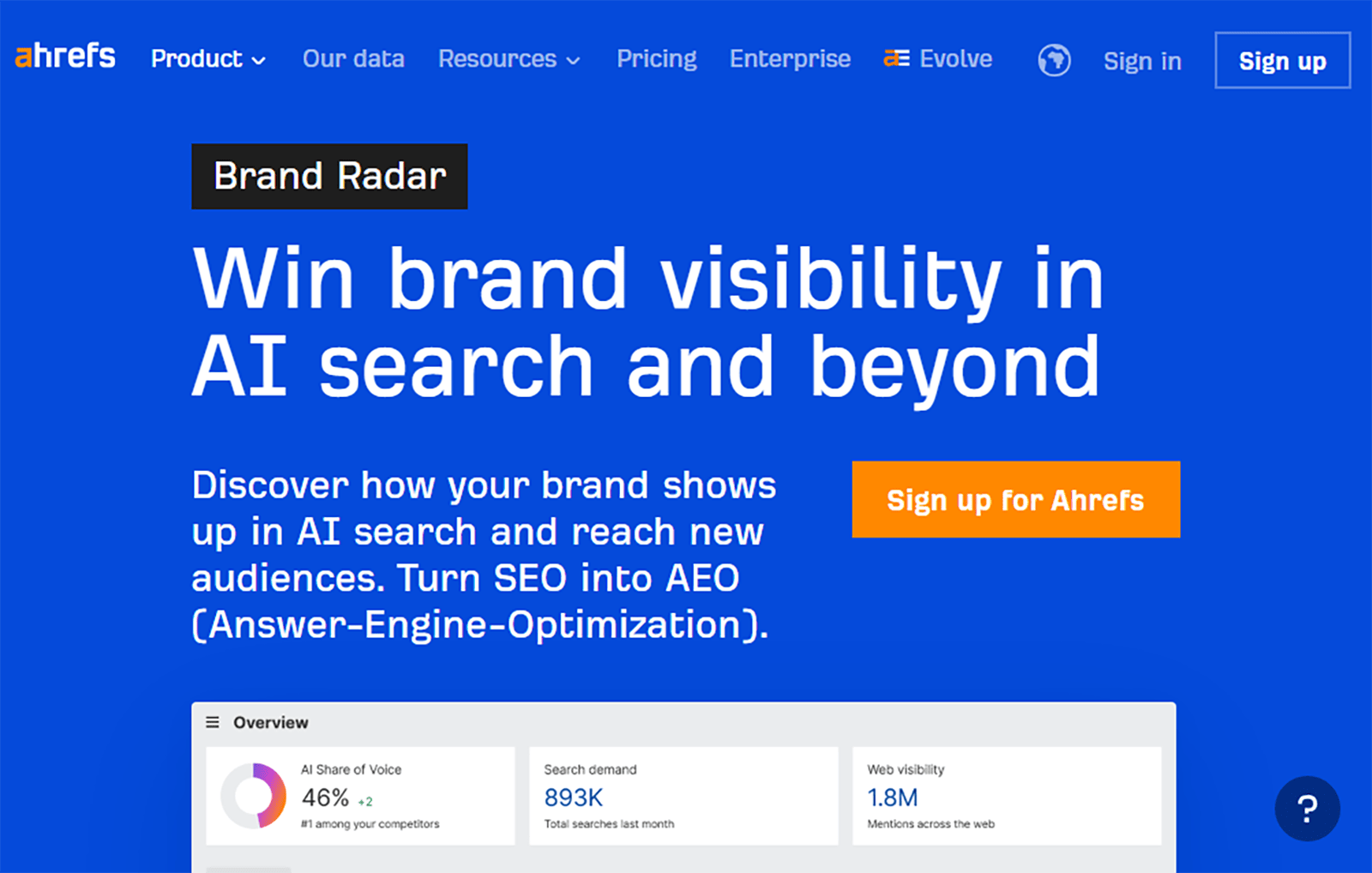
Both Ahrefs and Profound offer AI visibility and brand monitoring capabilities. While Profound focuses on AI responses and custom workflows, Ahrefs includes its Brand Radar tool — which provides visibility into how brands appear in AI answers and also combines this with real search demand data, web visibility, and UGC platform mentions like YouTube, TikTok, and Reddit. This integrated view helps brands connect AI visibility with broader marketing and SEO metrics rather than treating them in isolation.
How Are You Defining Visibility Today?
The real question in 2025 is whether search rankings are still your only measure of visibility. Or are you tracking how your brand name spreads through real-world chatter across the internet?
Ahrefs gives you a structured view of your digital presence in Google: keyword positions, backlink profiles, referring domains, and content performance. It’s the first place SEO teams look to track impact and refine strategy. They recently complemented this with their own AI visibility tool that analyzed brand mentions across AI platforms.
Profound, on the other hand, focuses on analyzing conversational signals such as podcast mentions, social discussions, or newsletter citations — particularly within its defined prompt and workflow scope.
AI Visibility: Methodology & Data Scope
Ahrefs’ Brand Radar leverages search-backed prompts from its extensive keyword database, giving it a much larger AI visibility dataset than most competitors. It covers over 250+ million prompts across 6 AI indexes, derived from real search queries and verified search volume data — not just synthetic or licensed conversational data. This approach enables brands to see visibility grounded in actual user search behavior, rather than a limited sample of conversation transcripts.
Profound, in contrast, uses licensed conversation datasets and limits the number of tracked prompts based on plan tier (e.g., 50–100 prompts per month in entry/mid tiers), which can constrain visibility scope and breadth.
Profound’s prompts are also synthetic, meaning those AI-generated prompts can likely overestimate the search volume of a query.
| Feature | Ahrefs | Profound |
| AI brand monitoring | ✅ Yes (Brand Radar, wide scope) | ✅ Yes |
| AI dataset size | 250M+ search-backed prompts | 150M+ synthetic prompts |
| Data methodology | Based on real search queries | Licensed conversation data |
| Search demand tracking | ✅ Yes (Historical from 2015) | Limited/only Enterprise |
| Web presence tracking | ✅ Websites + web mentions | Agent analytics only |
| YouTube/TikTok/Reddit visibility | ✅ Yes | Not core |
| Entity analysis | Topics, products, regions | Focus on brand |
| Content workflows | Outside core tool | Included |
Ahrefs combines AI visibility with broader brand health signals — from search demand to UGC platform mentions — while Profound focuses on AI-centric visibility and content workflows.
Why Digital PR Needs a Wider Radar
Modern digital PR isn’t just about getting links — it’s about building presence in places that traditional SEO tools don’t track. A guest quote in a podcast, a shoutout in a newsletter, or a viral social thread can shape how your brand is perceived long before it shows up in Google. That’s where Profound becomes a powerful asset.
By default, Ahrefs captures part of this wider PR impact through the search demand (the search volume growth of brand’s branded keywords) and web search, helping teams connect off-SERP attention with measurable demand and authority signals. Only recently, they’ve introduced video visibility (YouTube + TikTok) and Reddit visibility as a way to monitor all the signals that influence a brand’s presence, rivaling Profound’s offering.
Different Mindsets, Different Missions
This isn’t just about feature sets — it’s about worldview.
- Ahrefs is for the web that’s crawlable + conversational.
- Profound is for the internet that’s conversational only.
Best Use Cases
Let’s be clear: Ahrefs is the foundation. Without it, you’re blind to SEO opportunities. Here’s how they complement each other:
Ahrefs is best for:
- Organizations that want AI visibility integrated with real search demand and web presence.
- Teams needing visibility across AI results and other channels like YouTube, Reddit, and web mentions.
- Marketers who value search-backed data with a broad prompt set and data connected to SEO workflows.
Profound is best for:
- Teams that value specialized AI workflows, content optimization, and dedicated support.
- Enterprises needing structured AI prompt analysis or automation workflows.
- Those primarily focused on AI conversation patterns within platform limits.
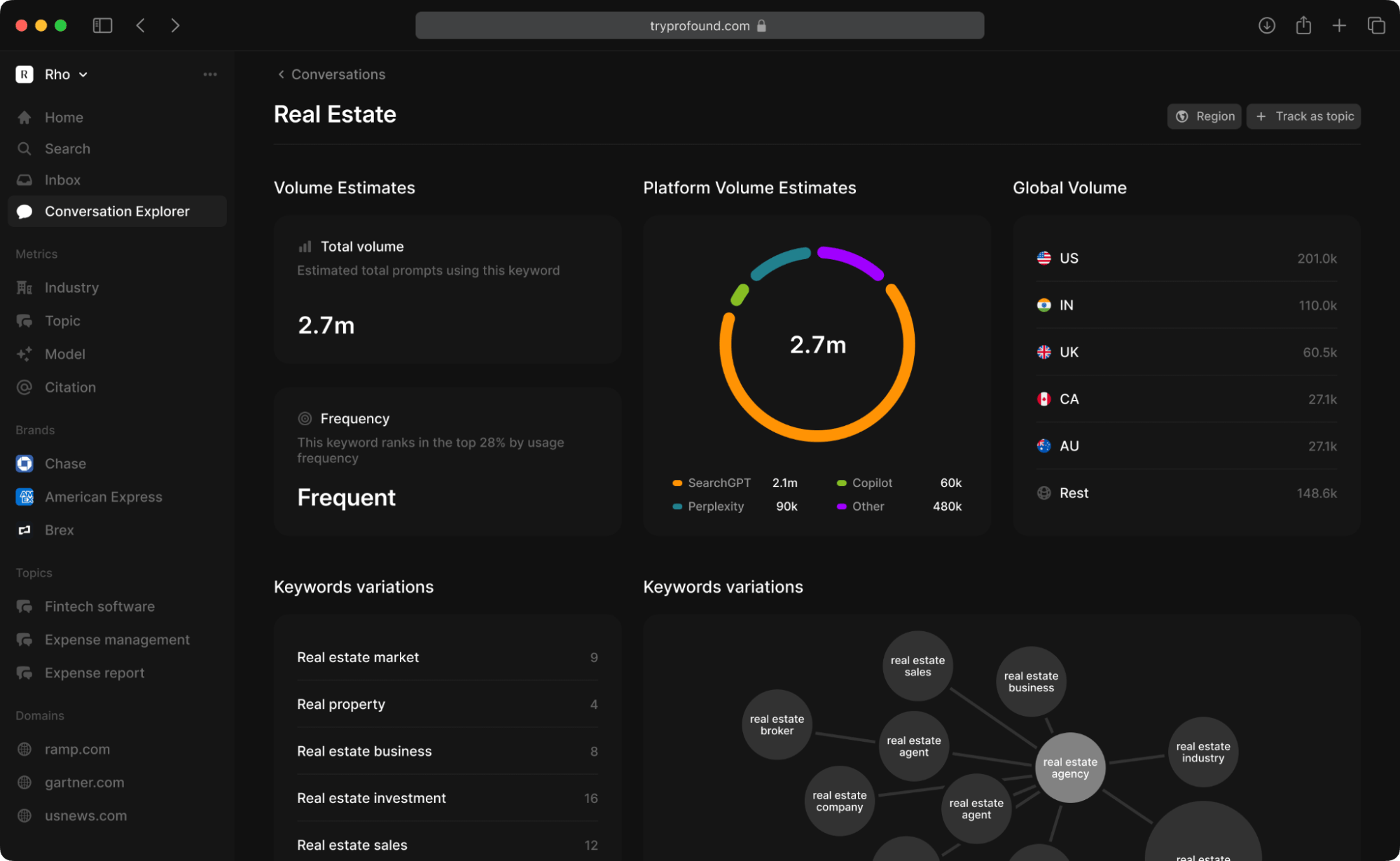
Pricing and plan structure also reflect each tool’s focus: Ahrefs Brand Radar provides unlimited prompt tracking across chosen AI indexes and additional visibility signals (search demand, UGC mentions) as part of its broader platform pricing, while Profound’s tiers limit prompt counts (e.g., 50–100 monthly prompts) and required license scale, particularly at higher multi-index coverage.
The Bigger Picture
Ultimately, both tools offer AI visibility, but they serve different strategic needs: Profound emphasizes AI-side workflows and content automation, whereas Ahrefs Brand Radar situates AI visibility within the wider context of search demand, web presence, and UGC citation data, giving brands actionable insights across both AI and traditional discovery channels.
And if you’re looking for more insights and tools that track how visibility really works today, BloggerJet is a great place to start.