In the world of Paid Search, things change daily. Between Google’s shifting AI automation and the death of third-party cookies, you need blogs that don’t just report news, but explain how to adapt your strategy.
Here are 15 of the best PPC blogs to stay ahead of the curve, categorized by their expertise.
Language: English
GEO: USA, India, Philippines, Pakistan
CamRojud is a digital marketing agency and resource hub that blends paid media expertise with broader SEO and online growth strategies. The site serves both as a service showcase for its digital marketing offerings — including PPC campaign management, Google Ads optimization, paid social media advertising, and data‑driven paid search — and as a blog platform covering key topics in digital marketing.
Search Engine Land (PPC Section)
Search Engine Land is the most cited news source in the world of search, often considered the “New York Times” of PPC. Their journalists have direct access to Google, Microsoft, and Meta, allowing them to report first on platform outages, algorithm updates, and new ad formats.
The core philosophy is speed and accuracy—they deliver the “what,” “when,” and “how” of industry news so PPC professionals are never caught off guard by platform changes.
From their coverage, you’ll receive immediate alerts on Google Ads policy updates, breaking news on antitrust cases affecting advertising, and expert commentary on new feature rollouts.
Search Engine Land is best suited for PPC professionals who need to stay informed to protect their clients’ or company budgets from sudden platform changes.
Search Engine Journal (Paid Search)
While Search Engine Land focuses on industry news, Search Engine Journal (SEJ) emphasizes education. It serves as a vast repository of “how-to” content, covering everything from beginner guides to advanced scripts for paid search.
The core philosophy is making search marketing accessible. SEJ believes that even the most complex PPC concepts can be taught effectively through well-structured guides, tutorials, and webinars.
From SEJ, you’ll learn step-by-step instructions for tasks like setting up GA4 for PPC, strategies for broad match keywords, and checklists for auditing new ad accounts.
SEJ is best suited for junior to mid-level account managers who need a reliable manual for day-to-day campaign management.
PPC Hero, run by Brainlabs, is the go-to resource for the “nerds” of the PPC world. Rather than just reporting on new features, they stress-test them, combining a highly technical approach with a slightly irreverent tone that prioritizes data over conventional “best practices.”
The core philosophy is to question everything. Just because Google recommends a setting doesn’t mean it’s profitable—they rely on rigorous testing to uncover what truly works.
From PPC Hero, you’ll learn advanced Excel and Google Sheets formulas for PPC, deep dives into bid management strategies, and experimental results from high-spend accounts.
This resource is best suited for advanced practitioners and data analysts who want to push the limits of what’s possible within an ad account.

WordStream has spent over a decade collecting data from thousands of small-to-medium business ad accounts, giving them a unique “bird’s-eye view” of the advertising landscape that few other blogs can match.
The core philosophy is data transparency. They believe that for a business to succeed, it must understand how it compares to the competition.
From their blog, you’ll find their renowned Google Ads Benchmarks, updated annually, including average Cost Per Click (CPC), Click-Through Rate (CTR), and Conversion Rate (CVR) across more than 20 industries.
WordStream is best suited for business owners and agencies who need to set realistic KPIs and justify ad spend budgets to stakeholders.
AdExchanger is a leading resource for understanding the “big picture” of digital advertising. It goes beyond keywords to focus on ad tech, data privacy, and the complex ecosystem of automated ad buying and selling across the web.
The core philosophy is transparency and control in the age of automation. AdExchanger emphasizes understanding the advertising “supply chain” to make smarter, data-driven decisions.
From their coverage, you’ll learn about Supply Path Optimization (SPO), the implications of a cookieless future, and the major business deals between tech giants like Google, Amazon, and Meta.
AdExchanger is best suited for media buyers and ad tech enthusiasts who want to grasp the infrastructure underpinning the internet’s advertising economy.
Search Engine Magazine | Get Published Here
Language: English
GEO: India, USA, Pakistan, Hong Kong, Bangladesh
Search Engine Magazine is a long‑form digital marketing publication and industry blog focused on search engine marketing, SEO, and broader online advertising strategies. It publishes news, how‑to guides, expert analysis, and trend commentary to help marketers, business owners, and digital professionals stay informed about the latest developments in search and paid media. The site covers a wide range of topics — from SEO fundamentals and content strategy to detailed paid media coverage such as PPC tactics, display campaigns, paid search platforms, and advertising trends — positioning it as a practical resource for anyone looking to enhance their paid advertising expertise.
KlientBoost is known for its high-energy, visual style and its focus on the Breadcrumb Technique for multi-step forms. They emphasize that a click is wasted if the landing page isn’t designed to convert.
The core philosophy is that smart PPC combined with clever CRO drives positive ROAS. They advocate going beyond just generating traffic to ensuring every visitor has the highest chance of converting.
From their blog, you’ll learn how to design high-converting landing pages, implement “Message Match” strategies to align ad copy with page copy, and apply aggressive A/B testing tactics.
KlientBoost is best suited for growth hackers and performance marketers who are frustrated by high traffic but low sales.
As Google shifts toward full automation, Solutions 8 has become a leading resource on Performance Max campaigns. While many marketers worry about the “black box” of Google’s AI, this blog teaches how to guide and influence it effectively.
The core philosophy is that automation is inevitable, but control is optional. Solutions 8 emphasizes feeding the AI the right “signals” (data) to achieve optimal results.
From their content, you’ll learn how to structure PMax campaigns, leverage Audience Signals to train Google’s algorithm, and determine when it’s better to stick with Standard Shopping campaigns.
Solutions 8 is best suited for Google Ads specialists who feel like they’re losing control to automation and want to learn how to lead the AI.
Run by Kirk Williams, ZATO Marketing is a boutique agency focused almost exclusively on Google Shopping and retail. They are known for a thoughtful, “anti-hype” approach to e-commerce growth.
The core philosophy is strategy over shortcuts. ZATO emphasizes the long-term health of an e-commerce account, with a particular focus on product feed quality and pricing strategy.
From their blog, you’ll learn masterclasses in Google Merchant Center, how to manage “synthetic keywords,” and how to navigate the transition from Standard Shopping to Smart Shopping campaigns.
ZATO Marketing is best suited for e-commerce store owners and retail marketing directors seeking a measured, expert perspective on Google Shopping.
Brainlabs approaches marketing as a math problem, pioneering the concept of “Scientific Marketing.” They use custom scripts, statistical modeling, and data-driven automation to outperform competitors.
The core philosophy is to apply the scientific method to everything: test, measure, and automate.
From their blog, you’ll learn how to use Python and JavaScript scripts for automated bidding, track competitors over time with data scraping, and apply advanced probability to predict campaign outcomes.
Brainlabs is best suited for technical PPC managers and analytically minded marketers who want to leverage code and data for a competitive advantage.
Jon Loomer is widely regarded as the leading independent authority on Meta (Facebook and Instagram) advertising. Rather than chasing hacks, he focuses on understanding the Meta algorithm and technical infrastructure at a deep level.
The core philosophy is “Campaign Minimalism.” Jon advocates consolidating ad sets and trusting the algorithm, often emphasizing that the best approach depends on testing and experimentation to discover what works for each unique situation.
From his blog, you’ll learn how to master the Conversions API (CAPI), implement advanced custom event tracking, and transition from traditional manual targeting to Advantage+ and algorithm-driven strategies.
Jon Loomer is best suited for advanced Meta advertisers who want to refine their technical skills and avoid over-optimizing minor details.
Tens Web Marketing | Get Published Here
Language: English
Tens Web Marketing is an online marketing blog and digital marketing resource that publishes content related to internet marketing, SEO, paid search, and broader digital advertising topics. The site features practical articles designed to help business owners, marketers, and entrepreneurs improve their online presence and understand key aspects of both organic and paid traffic strategies.
While Social Media Examiner covers organic social, their paid social guides are considered industry-standard for multichannel creative strategy. They excel at showing how to adapt your “hook” and story for different platforms, including TikTok, Pinterest, and Instagram.
The core philosophy is that creative is the new targeting. As platforms become increasingly automated, the visual and narrative hook of your ad largely determines its success.
From their content, you’ll learn how to build scroll-stopping video ads, develop frameworks for User-Generated Content (UGC), and leverage AI tools for rapid ad creative production.
Social Media Examiner is best suited for marketers who want to stay ahead of creative trends across all social platforms, not just Facebook.
AdEspresso, part of Hootsuite, specializes in the science of split testing. They regularly run large-scale experiments, spending thousands of dollars to test specific hypotheses—such as whether social proof truly increases ROI.
The core philosophy is never assume; always test. Their focus is on understanding the psychological triggers—like Scarcity, Social Proof, and Authority—that drive clicks and conversions.
From their blog, you’ll learn data-backed insights on what makes a winning ad image, how to structure A/B tests that yield statistically significant results, and in-depth analyses of ad psychology.
AdEspresso is best suited for small-to-medium business owners and agencies who need practical, plug-and-play testing frameworks for paid social campaigns.
Run by the team at Tamarind, B2B House is one of the few blogs focused almost exclusively on the high-stakes world of LinkedIn Ads. With LinkedIn being an expensive platform, this blog teaches you how to maximize ROI and avoid wasted spend.
The core philosophy is to target the decision-maker, not just a demographic. In B2B marketing, lead quality is far more important than the cost per click.
From their content, you’ll learn LinkedIn-specific benchmarks, how to use Lead Gen Forms to reduce friction, and advanced Account-Based Marketing (ABM) strategies using uploaded company lists.
B2B House is best suited for B2B marketers and enterprise SaaS teams where a single lead can be worth thousands of dollars.
Run by Frederick Vallaeys, one of Google’s first 500 employees, Optmyzr is the go-to resource for “Automation Layering” in PPC. The blog bridges the gap between Google’s AI-driven “black box” and the manual control experts need to drive results.
The core philosophy is don’t fight the machines—guide them. Optmyzr promotes automation layering, adding human-defined rules and scripts on top of Google’s native automation to prevent wasted spend and manage performance spikes effectively.
From their content, you’ll learn how to use PPC scripts to automate tedious tasks like pausing broken URLs, manage Performance Max campaigns with precision, and apply rule engines to adjust bids based on real-world signals such as weather or stock levels.
A unique feature of the blog is their Masterclass series, which breaks down complex automation workflows into practical, repeatable steps for agencies and in-house teams.
Optmyzr is best suited for advanced PPC managers who want to automate workflows without losing strategic control over their accounts.
Adverity operates at the intersection of PPC and data science, focusing on the “Big Data” side of marketing. Their blog goes beyond spreadsheets to show how to build a single, unified view of your entire marketing ecosystem.
The core philosophy is that data is only as good as its foundation. Adverity emphasizes Data Harmonization—the process of cleaning and connecting fragmented data from hundreds of sources, including Google Ads, Facebook, CRMs, and Amazon, into one reliable “source of truth.”
From their content, you’ll learn how to integrate ad spend data with CRM and BI tools like Snowflake or Tableau to track the full customer journey, leverage AI for predictive analytics, and overcome data silos in large organizations.
A unique insight is their roadmap for “Analytical Maturity,” guiding businesses from simple reporting toward sophisticated, AI-driven marketing intelligence.
Adverity is best suited for CMOs, data analysts, and enterprise marketers who need to demonstrate the true ROI of multichannel campaigns at a high level.
Top Reasons to Add Your Media Outlet to PRNEWS.IO
Adding a website or media outlet to the PRNEWS.IO catalog can provide several benefits, particularly in terms of visibility, credibility, and potential income.
- Boost Visibility: Get discovered by a larger audience.
- Enhance Credibility: Join a trusted platform for media outlets.
- Earn Income: Attract clients looking to publish content.
- Improve SEO: Benefit from increased traffic and rankings.
- Expand Opportunities: Build connections and partnerships.
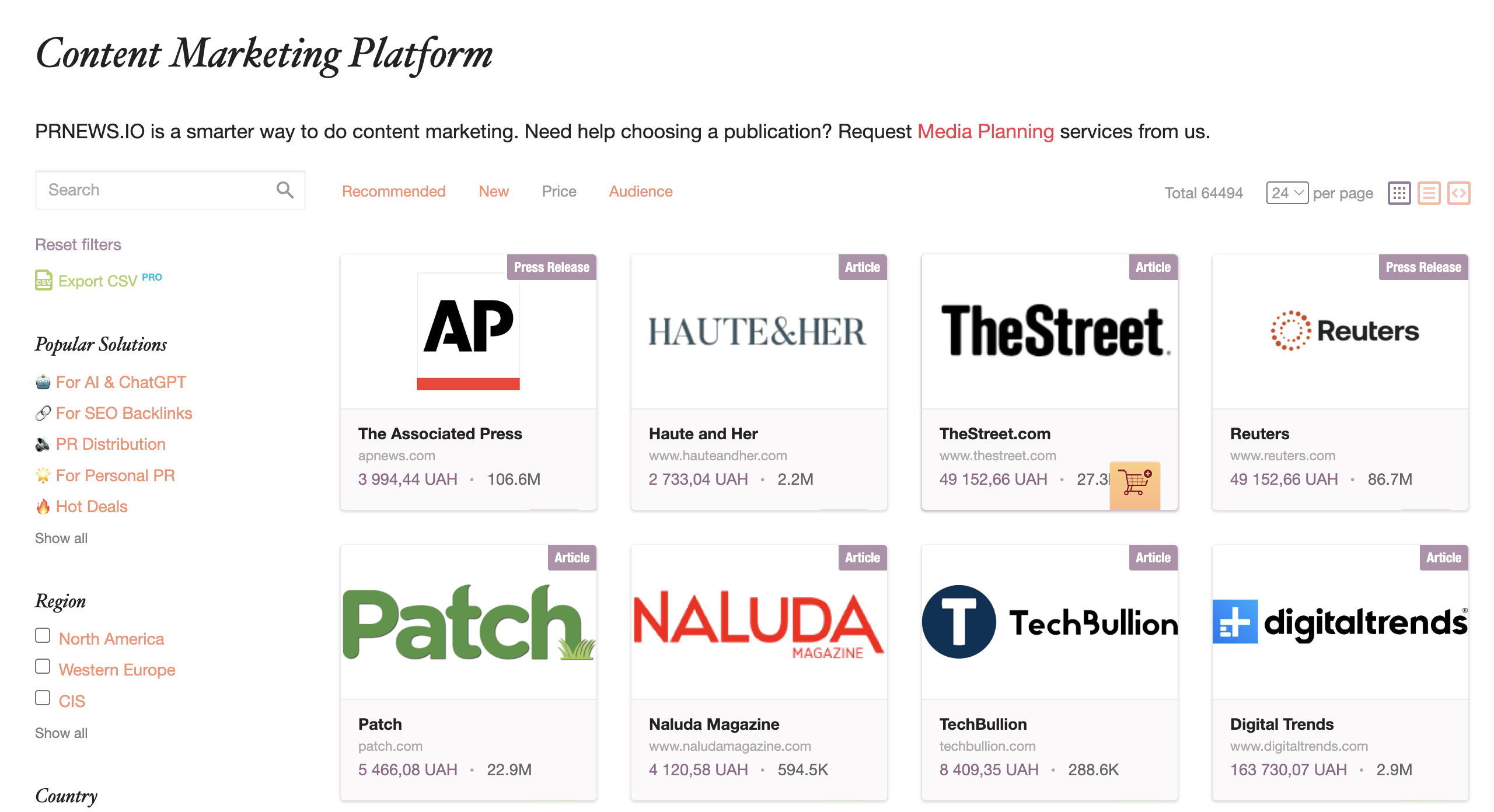
Explore a variety of PPC blogs in the PRNEWS.IO catalog, perfect for sharing your content and ideas with a wider audience. Each blog comes with its own publication guidelines, detailed on their respective pages.
Whether you’re running campaigns, analyzing performance metrics, or simply staying up to date with the latest in digital advertising, PPC blogs provide a valuable space to learn, share, and connect. Dive into expert insights, join discussions with fellow marketers, and stay ahead in the fast‑moving world of paid search and online advertising.
Conclusion
By following PPC blogs, reading expert insights from top marketers, or exploring case studies and campaign analyses, you’ll find your knowledge of paid advertising steadily growing. These blogs are free, easy to access from any device, and provide valuable content for professionals, business owners, and digital marketing enthusiasts alike. With our curated selection, you now know which PPC blogs are truly worth your attention and time.