Staying ahead of the curve requires a deep understanding of how Google’s algorithms evaluate and rank websites. Recent leaks of Google’s algorithm data have offered unprecedented insights into the intricacies of these ranking mechanisms, providing a clearer roadmap for optimizing SEO strategies, particularly in the realm of link building.
This article synthesizes key takeaways from the leaked data, offering actionable conclusions that can enhance your SEO performance and ensure that your website remains competitive in search rankings.
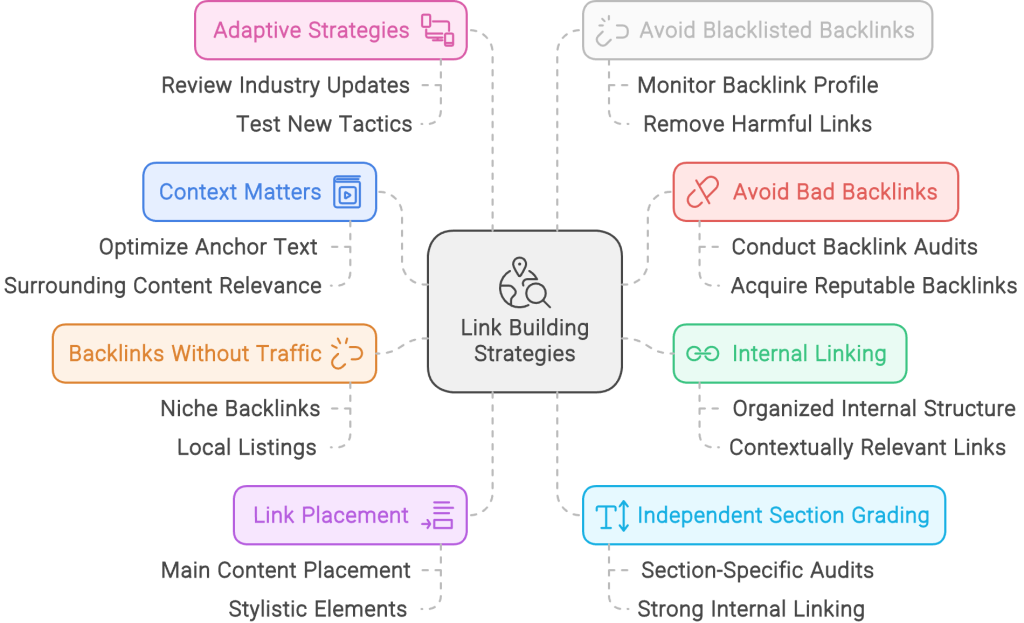
Context Matters: Optimize Anchor Text and Surrounding Content
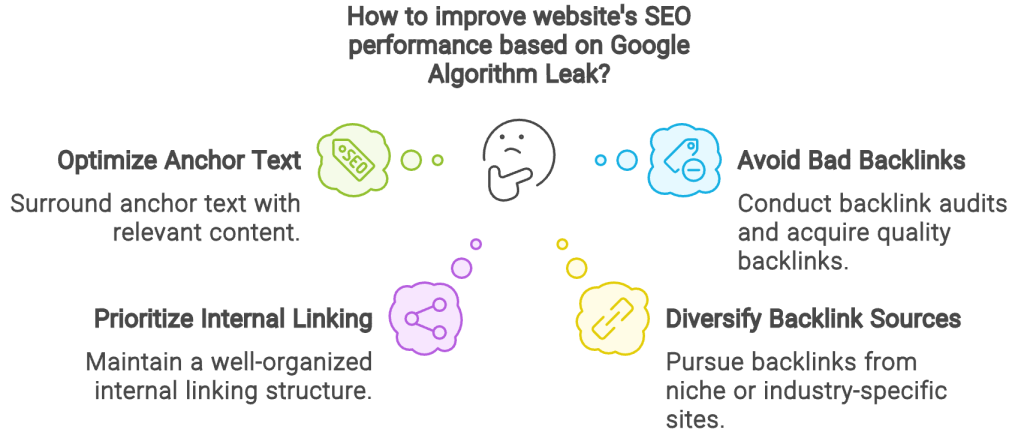
One of the most critical revelations from the Google data leak is the importance of context surrounding anchor text. Google’s algorithm does not evaluate anchor text in isolation; it also assesses the content that surrounds it. This means that both the left and right context of an anchor text contribute to the link’s relevance and its impact on SEO. To maximize the effectiveness of your links:
- Ensure the surrounding content is highly relevant to the anchor text.
- Use descriptive, keyword-rich anchor text that accurately reflects the content of the linked page.
- Regularly review and refine the content around key anchor texts to maintain contextual relevance.
Google uses attributes like “matched score” and “phrase score” to evaluate anchor text. These scores help determine if a link is natural and relevant. When creating links, choose anchor text that is descriptive and closely related to the content of the linked page.
Avoid the Pitfalls of Bad Backlinks
Google’s algorithm actively penalizes sites with poor-quality backlinks or mismatched anchor text profiles. This underscores the importance of not just acquiring backlinks but acquiring the right kinds of backlinks. To protect and enhance your site’s ranking:
- Conduct regular backlink audits to identify and disavow harmful links.
- Focus on acquiring backlinks from reputable, relevant sources that align with your site’s content.
- Prioritize natural link-building strategies over those that might generate questionable or spammy backlinks.

Internal Link Building Remains Crucial
Despite Google’s removal of explicit guidance on internal linking in 2016, the leaked data confirms that internal link structures still play a vital role in SEO. Google evaluates internal links similarly to external ones, meaning a robust internal linking strategy can significantly boost your site’s SEO performance. To leverage this:
- Maintain a well-organized internal linking structure that enhances user navigation and spreads link equity across your site.
- Ensure that internal links are contextually relevant and placed within content that is closely related to the linked page.
Backlinks Without Traffic Can Still Boost SEO
A common myth in SEO is that backlinks from low-traffic sites are of little value. However, the leaked data reveals that Google’s algorithm can still boost a site’s ranking through backlinks from sources that do not generate significant traffic. This insight should encourage a broader approach to link building:
- Pursue backlinks from niche or industry-specific sites that may have lower traffic but are highly relevant to your content.
- Don’t dismiss opportunities for backlinks from local listings, press releases, or other less-trafficked sources, as they can still provide SEO value.
Link Placement and Style Influence SEO Impact
The placement and styling of links within your website’s content significantly affect how Google evaluates them. Links embedded within the main body of content are more valuable than those placed in headers, sidebars, or footers. Additionally, the visual style of the link, such as bolding or font size, can also influence its effectiveness. To optimize your link placement:
- Place important links within the main content of your pages where they are more likely to be seen and clicked by users.
- Use stylistic elements, like bold or italicized text, to make key links stand out, but do so sparingly to avoid over-optimization.
Google Grades Website Sections Independently
The leaked data indicates that Google grades different sections of a website independently, meaning a poorly optimized section can drag down the overall ranking of your site. Each section is evaluated on its own merits, with factors like site rank authority, content relevance, and internal linking structure playing crucial roles. To ensure your entire site performs well:
- Audit and optimize each section of your website to ensure it meets high SEO standards.
- Focus on strong internal linking within and between sections to enhance the overall site structure.
Each chunk of your website is graded using normalized site rank authority scores, chunk-specific confidence, and page weight scores. Google also logs whether a chunk falls into the “Your Money or Your Life” (YMYL) category, which requires higher standards for accuracy and trustworthiness. Optimize each chunk by ensuring that it is well-linked both internally and externally.
Stay Adaptive to Google’s Ongoing Algorithm Changes
SEO is not static, and neither are Google’s algorithms. The leaked data highlights the importance of staying current with Google’s changes and adapting your strategies accordingly. Practices that may have been de-emphasized in the past, like internal link building, can regain importance. To keep your SEO strategy relevant:
- Regularly review industry updates and adjust your strategies to align with the latest best practices.
- Be proactive in testing and implementing new tactics that respond to changes in Google’s algorithm.
Avoid Blacklisted Backlinks Like the Plague
Backlinks from blacklisted or low-quality sources can severely damage your site’s ranking. Google’s algorithm is vigilant in identifying and penalizing such links. To safeguard your SEO efforts:
- Use tools to monitor your backlink profile and quickly identify any potentially harmful links.
- Proactively remove or disavow blacklisted backlinks to maintain a clean, healthy link profile.
Effective Link Building Requires a Contextual Approach
Both internal and external links should be naturally integrated into the content, rather than being arbitrarily placed. Google rewards links that are contextually relevant, meaning they should be embedded in related content that adds value to the user experience. To optimize your link building:
- Ensure that all links are placed within relevant content that enhances the reader’s understanding of the topic.
- Use Google search to find the most appropriate content on your site for internal linking, ensuring that these links are both helpful and contextually appropriate.
Conclusion
The recent Google algorithm leak has provided invaluable insights that can guide your SEO and link-building strategies. By understanding and applying these lessons, you can optimize your website’s structure, improve the quality and placement of your links, and stay ahead in the competitive landscape of search engine rankings. Regular audits and a proactive approach to adapting to Google’s ongoing changes will be crucial in maintaining and enhancing your site’s visibility and performance. As SEO continues to evolve, the ability to apply these insights effectively will be key to achieving sustained success.
Read more:
- Tiered Link Building: A Strategic Approach To SEO Success
- The Power Of The Skyscraper Technique In Link Building
- Understanding Differences Between Link Building And Digital PR
- Advantages Of Link Earning Over Traditional Link Building