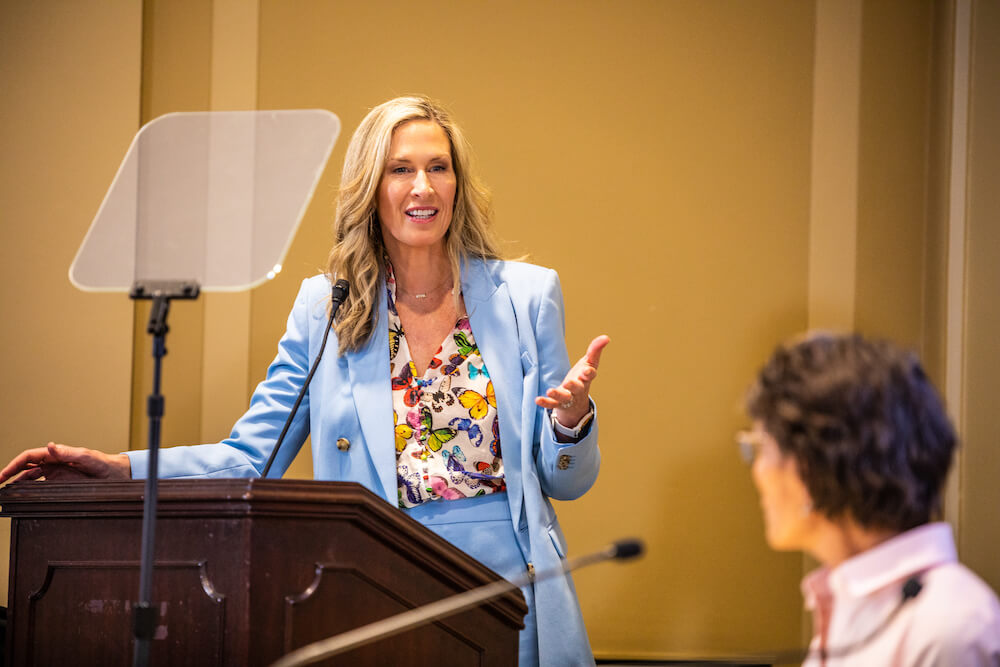
We at PRNEWS.IO are excited to bring you another installment of our Her PR Journey series, where we showcase the stories of outstanding women in the PR industry. Today, we’re thrilled to introduce you to Laura Evans Manatos, a powerhouse in the world of media and public relations.
Laura is the CEO of Laura Evans Media, a seasoned media strategist, a gifted storyteller, and a podcast host. Her journey from Emmy award-winning journalist to PR executive is not just inspiring—it’s a testament to the power of following your passion and adapting to change.
In this interview, Laura shares her unique approach to PR, her thoughts on women’s roles in the industry, and valuable insights for aspiring professionals. Get ready to dive into the world of solution-based storytelling and learn from one of the best in the business!
How Laura Evans Manatos is Transforming PR
Can you please introduce yourself and tell us about your journey from being an Emmy award-winning journalist to founding Laura Evans Media?
First, thank you for asking me to be part of the Her PR Journey series! My name is Laura Evans Manatos. I’m President and CEO of Laura Evans Media, a mom of 3 kids, and a believer in the power of effective storytelling. I made the move from the newsroom to the PR world more than 7 years ago when I took a close look at how I was combining my passion and purpose.
What inspired you to transition from news reporting to focusing on media relations and storytelling for change-makers and social impact organizations?
I made the move to PR really by accident. It was fueled by my passion for inspiring stories with a focus on solutions. After spending nearly 3 decades as a news anchor and reporter, I reached a point where I did not want to cover one more crime story. The media outlet I was with was serving up a daily news menu of death and destruction with few to no solutions. The focus was on the worst of the worst in our communities – rarely the best of the best. I felt that the approach was not a realistic representation of what is actually happening. So in 2017, I made the jump from the anchor desk without a parachute.
A few weeks after leaving, I was approached by an incredible organization called Lazarex Cancer Foundation asking if I could help tell their story. They had been around for 10 years and weren’t getting any attention. So with a deep knowledge of the news business, and what reporters want and need, an arsenal of contacts, and a passion for producing stories that inspire people to be part of the solution, I agreed to help. Laura Evans Media was born. I started as a solopreneur and now, 7 years later, my team has grown to 15 – mostly women and former journalists. LEM is based in Washington, DC, but we have team members all over the country.
As the President of Laura Evans Media, how do you approach public relations differently compared to traditional PR firms?
We are different from traditional PR firms in the way we approach client stories. As former journalists, we not only have a robust understanding of media from the inside out, we also know how powerful storytelling comes together effectively – from the critical elements that make a story compelling, to the tricks to getting the client’s message heard. We also understand the rapidly changing media landscape. Traditional PR isn’t as effective as it once was. Media is different, every client is different, every story is different, and every strategy is different. Thinking outside the box every single day is essential.
How do you view the role of women in the PR industry today, and what unique perspectives do they bring to the field?
I believe women play a pivotal role in PR on many levels shaping the profession meaningfully. First, when it comes to leadership and representation, women often bring a collaborative and empathetic approach. This is not only valuable in managing client relations, team dynamics, and organizational culture, but also helpful in fostering strong bonds with clients, media professionals, and stakeholders.
Women tend to excel in communications and storytelling – at the heart of PR. They bring a nuanced understanding of the narrative and empathy to storytelling, helping to craft compelling messages that connect with diverse audiences. In a fast-paced, demanding industry, I see firsthand our team of women finding effective solutions and unique approaches.
I see many women in PR using their positions to advocate for causes they believe in, whether it’s gender equality, diversity in the workplace, or social justice issues. This advocacy adds depth and purpose to their work, resonating with both clients and audiences.

Your company emphasizes finding solution-based stories and highlighting inspirational change-makers. Can you share a notable example of a successful PR campaign that achieved these goals?
We take on clients who are helping make our world kinder, healthier, more equitable, and more connected. We work with a diverse range of clients and campaigns – each one is different.
I mentioned Lazarex Cancer Foundation earlier – our first client. They were virtually unknown when we started as their external comms team in 2017. The nonprofit had had no media coverage whatsoever, a meager following on social media, confusing messaging, and they were having trouble making desired policy changes in Washington. Within five months we were able to develop and pitch compelling patient stories and secure multiple media hits including NBC Nightly News. Since 2017, we’ve launched multiple campaigns, landing dozens of national and local media hits, in both broadcast and print. There have been policy changes to help patients and accelerate their work. Through our work on their social media, we have helped them grow their audience and expand their voice. We have written dozens of patient stories and produced multiple videos to demonstrate the organization’s impact. Additionally, we created and produced a live annual event – now in its 7th year – called Disrupting the System, through which we have been able to help develop their thought leadership, elevate their voice, reach new audiences, and engage with stakeholders. We have further elevated Lazarex thought leadership through LinkedIn, Op Eds and blogs, and we created a Wikipedia page for the organization’s Founder.

How do you leverage articles in the media as a strategic PR tool for your clients? What are the key elements you focus on to ensure effective media coverage?
To successfully leverage media coverage requires strategic planning and execution. First, we focus on the audience we want to reach on our client’s behalf, then build a robust and diverse media list, assemble a media kit, and tailor our outreach to targeted outlets and reporters. We develop the stories we pitch – approaching each story from a reporter’s perspective – identifying a good peg, ensuring the story pitch is compelling, and has a unique angle worthy of coverage. The majority of the time, our focus is on targeted pitching, but when it warrants, we launch blast pitching and we develop and distribute press releases. Our team has deep relationships with writers, reporters, producers, and influencers and we work to continue to foster those relationships and cultivate new connections.
Ahead of any coverage, we provide media training for our clients, review the messaging documents we’ve developed, and ensure the client is set up for success. Following any interview, we monitor metrics and review what’s working and what isn’t. When we need to pivot or refine our efforts, we do.
With your extensive experience, how do you navigate the challenges of managing crises and presenting complex issues to diverse audiences through media?
Breaking down complex issues is a skill our team honed daily as journalists, and now we continue to practice as PR professionals. Team LEM excels at developing straightforward, easy-to-understand, creative and consumer-friendly messaging on behalf of our clients. Additionally, having been on the other side of the camera, we are acutely aware of the tough questions a reporter will ask, so we can get ahead of any crisis and navigate it with an appropriate strategy
Could you discuss the impact of storytelling in PR and how it contributes to building a positive public image and brand reputation?
Storytelling is critical. It shapes how a brand is perceived and can foster a positive public image.
By crafting narratives that resonate with audiences on an emotional level, we can help people connect emotionally with a brand, making them more likely to remember it and form positive associations.
Storytelling offers authenticity and transparency – highlighting the client’s values, mission, and history on a genuine level, humanizing the organization.
We use storytelling to not only communicate core messages but to differentiate the clients and help them stand out from the crowd. Oftentimes a story can offer that third-party endorsement that’s critical to driving engagement, and loyalty and creating a lasting impact
What advice would you give to aspiring PR professionals, especially women looking to make a mark in the industry?
Stay true to your values and your passion. Ask yourself what kinds of clients you want to work with. When you feel good about the campaigns you’re working on, it leads to greater success. It’s hard to pitch a story or develop a campaign that you don’t truly care about.
Network! Find a mentor and ask for help and guidance both within and outside your organization. Ask questions and be proactive about learning from someone else’s experiences.
Develop excellent communication skills. Practice writing, learn the most effective ways to pitch, understand how media professionals work and network to build connections. Stay up to date on industry trends and keep thinking outside the box.
Advocate for yourself by looking for opportunities for growth while also encouraging and uplifting other women in the industry. I firmly believe collaboration and solidarity can contribute to collective advancement.

Looking ahead, what trends do you foresee shaping the future of PR, and how is Laura Evans Media preparing to adapt to these changes?
Overall, PR is evolving to become more dynamic, data-driven, integrated, and socially responsible. Successful PR professionals must embrace these changes, continually adapt to new technologies and trends, and maintain a deep understanding of audience preferences and industry developments.
Laura Evans Media is staying ahead of industry trends, mastering new technologies and paying close attention to the rapidly changing media landscape so we can continue to meet the evolving needs of our clients and stakeholders.