A data-driven guide to building a scalable, algorithm-proof growth engine on every major platform
Social media marketing has undergone a fundamental transformation. What began as a free, experimental channel in the early 2010s has evolved into a highly professionalized, capital-intensive attention marketplace where brands compete not just with competitors, but with algorithms designed to maximize user satisfaction — often at the direct expense of organic brand reach.
Here is the central paradox of 2026: global social media usage is approaching universal penetration, with billions of new interactions happening daily, yet the ability of brands to reach their own followers organically has hit an all-time low. Instagram’s average organic reach now sits at roughly 7.6% per post. Facebook company pages often reach less than 2% of their audience. LinkedIn Pages fare no better at around 2%, even as personal profiles enjoy 20–30% reach.
The brands winning in this environment are not spending more — they are thinking differently. They have embraced a hybrid model that balances artificial intelligence, data-driven paid amplification, and hyper-authentic community management. This guide will walk you through every layer of that model, from strategic goal-setting and platform selection to content systems, influencer partnerships, and AI-powered optimization.
Start with strategy, not content
The single most common failure in social media marketing is launching into content creation before defining what success actually looks like. A strategy is not defined by what you post — it is defined by the measurable outcomes that your content facilitates. Research shows that marketers who formally document their goals are 376% more likely to report successful outcomes than those operating without a defined roadmap.
Define Your Primary Mission With the SPACES Model
Before you post a single piece of content, you need to decide what role social media plays in your business. The SPACES model provides a clear framework for this:
| Function | Strategic Focus | Primary Business Value |
|---|---|---|
| Support | Peer-to-peer help and FAQ resolution | Lower support costs; better customer satisfaction |
| Product | User feedback and innovation loops | Improved product-market fit; R&D insight |
| Acquisition | Advocate-driven referrals; top-of-funnel reach | Lower Customer Acquisition Cost (CAC) |
| Contribution | UGC and content collaboration | Scaling community-generated assets |
| Engagement | Relationship building; high-touch interaction | Improved brand loyalty; reduced churn |
| Success | Education, tutorials, product adoption | Increased Lifetime Value (LTV) |
The power of this model is that it forces focus. A brand cannot be everything to everyone across six platforms simultaneously. Choosing a primary mission for each channel ensures resources are allocated where they drive the most business value.
Build SMART Goals, Not Vague Aspirations
Once your mission is defined, translate it into specific, measurable targets. Instead of “increase engagement,” commit to a 20% increase in active community participation quarter-over-quarter through platform-native initiatives. Instead of “grow our audience,” target 5,000 net new followers on LinkedIn within 90 days through an employee advocacy program. Every tactical decision — from which AI tools you use to how you allocate your influencer budget — must ladder up to these objectives.
Key Insight: If the goal is social commerce, prioritize TikTok Shop or Instagram’s native checkout to reduce purchase friction. If the goal is B2B lead generation, focus on LinkedIn thought leadership and professional groups. Strategy determines tactics — never the reverse.
Audit your current presence before adding more
Launching new content on a weak foundation is like renovating a house with a cracked foundation. Before expanding your social media effort, conduct a rigorous audit of what you already have. This six-phase process will reveal quick wins, identify hidden weaknesses, and establish realistic benchmarks.
| Audit Phase | Action | Key Insight |
|---|---|---|
| Branding Review | Check visual identity and bio consistency | Find outdated logos, broken links, off-brand messaging |
| Performance Analysis | Identify top 5 posts per platform | Determine which formats (Reels vs. Carousels) drive results |
| Audience Deep-Dive | Review demographic and behavioral data | Confirm whether actual audience matches target buyer persona |
| Channel Mission | Assign a unique purpose to each platform | Eliminate redundant posting across mismatched channels |
| Competitor Benchmarking | Track industry averages for engagement | Set realistic KPIs based on sector norms |
| Action Planning | List quick wins and long-term fixes | Prioritize high-ROI activities like updating bio links |
A critical step often overlooked: account cataloging. Many brands discover they have dormant profiles, neglected regional accounts, or even unofficial imposter pages quietly diluting their brand equity. These should be consolidated or officially claimed before you invest in any new content.
Understand Your Competitive Landscape
Categorize competitors across three tiers: direct competitors (similar products), indirect competitors (different products solving the same problem), and aspirational competitors (brands in unrelated industries that excel at social media execution). The goal is not to copy them — it is to identify content gaps, topics or formats that your audience finds valuable but that are underserved in your market.
Know your audience beyond demographics
In the matured social ecosystem of 2026, demographic data is merely the starting point. Knowing your audience is 25–34 years old, urban, and college-educated tells you almost nothing about how they actually use social media. Effective strategy requires understanding platform-specific behaviors and consumption motivations.
Map Psychographic Profiles, Not Just Demographics
Advanced audience research uses a combination of platform-native tools — like Meta Audience Insights — and social listening suites such as Brandwatch or Meltwater. These platforms allow you to map what practitioners call the “Dark Funnel”: the hidden journey where buyers consume content in private groups, DMs, and Discord servers before they ever appear in your CRM.
A robust 2026 audience persona must answer behavioral questions like these:
- Which “side” of a platform does this person inhabit? (“Sustainability TikTok” is a completely different world from “High-Performance Tech TikTok”)
- What specific challenges are they discussing in community forums like Reddit or Quora?
- When are they passively scrolling versus actively researching a purchase?
- What triggers them to save a post versus share it versus comment on it?
These answers shift your content approach from broadcasting a message to facilitating a dialogue — one that addresses real-world pain points at the exact moment your audience is experiencing them.
Users don’t just scroll — they actively share content with friends, from articles and memes to entertainment links like the Suicide Squad game available at casino.com in the UK.
Choose platforms strategically — not all of them
The most expensive mistake in social media marketing is attempting to maintain a high-quality presence on every available platform. In 2026, the resource requirement for compelling, platform-native content is so significant that strategic focus is the primary driver of success. Here is a clear-eyed view of where each platform excels:
| Platform | Monthly Active Users | Strategic Strength | Best Content Formats |
|---|---|---|---|
| 3.07 Billion | Broad demographics; advanced ad targeting; Group communities | Reels, Stories, Group posts, Live video | |
| 3.00 Billion | Visual branding; influencer ecosystem; social commerce | Reels, Stories, Carousels | |
| YouTube | 2.60 Billion | SEO power; deep educational content; long-form storytelling | Long-form video, Shorts, Live streaming |
| TikTok | 1.99 Billion | Trend-native virality; Gen Z reach; discovery for new accounts | Short-form video, Duets, Challenges |
| 1.1 Billion | B2B authority; thought leadership; employee advocacy | Articles, polls, video, carousel posts | |
| 578 Million | Visual search engine; retail and lifestyle commerce | Idea Pins, product pins, infographics | |
| 3.00 Billion | Customer support; private broadcasting; high-trust sales | Broadcast lists, status updates, DMs |
One counterintuitive finding worth highlighting: on LinkedIn, personal profiles currently achieve 20–30% organic reach while company pages average around 2%. This makes employee advocacy programs — where team members share and comment on company content from their personal profiles — one of the highest-ROI tactics available to B2B brands.
The Rise of “Dark Social” Platforms
Do not overlook Reddit, Discord, and private Facebook Groups. The rise of “dark social” — private, untrackable sharing — has elevated the importance of these spaces. Brands that participate authentically in niche Reddit communities or create exclusive Discord servers for their most engaged customers often build deeper loyalty than any broadcast channel can achieve.
Build a content system that scales
Content is the primary currency of the social media economy. In 2026, algorithms have become sophisticated at filtering out “low-value noise,” which means quality and relevance now outperform volume in almost every category.
Anchor Your Strategy With Content Pillars
Professional content strategies are built around 3–5 content pillars: broad themes that represent your brand’s expertise and values. These pillars ensure consistency, help algorithms categorize your content for discovery, and prevent the creative team from starting from scratch every week. A typical pillar structure looks like this:
| Content Pillar | Engagement Strategy | Best Formats |
|---|---|---|
| Education | Solve specific audience pain points; tutorials; how-to guides | Carousels, long-form video, infographics |
| Inspiration | Share brand values, customer success stories, vision | Storytelling video, high-quality photography |
| Entertainment | Humorous, relatable, or trend-driven content | Memes, Reels with trending audio, behind-the-scenes |
| Connection | Encourage dialogue through questions and polls | Interactive Stories, Q&A, Live sessions |
| Promotion | Highlight product benefits and social proof | UGC, testimonials, shoppable posts |
Follow the 80/20 rule: 80% of your content should inform, educate, or entertain, while only 20% should directly promote your brand. Audiences follow accounts that give them value — not accounts that sell to them constantly.
Video: The Undisputed Format of 2026
Video dominates social content, but the approach has bifurcated into two distinct styles that serve different strategic purposes.
Short-form video (under 60 seconds on TikTok, Reels, and YouTube Shorts) operates on the principle of the immediate hook. The first 2–3 seconds determine whether a viewer continues watching or swipes away. Three non-negotiables for short-form:
- Vertical-first design (9:16 ratio) — users almost never rotate their phones
- On-screen text and captions for the significant portion of users who watch without sound
- Authenticity over production value — “iPhone-shot” content routinely outperforms studio production by appearing more relatable
Long-form video is staging a resurgence in 2026, partly as a reaction to the saturation of short-form “AI slop.” YouTube and LinkedIn long-form formats are increasingly preferred for deep storytelling, tutorials, and community-building. Live streaming, particularly on TikTok and Instagram, has also become central to social commerce — live selling creates real-time urgency that static posts simply cannot replicate.
Understand the algorithmic reality — and respond to it
Organic reach across every major platform has declined precipitously, and the trend shows no signs of reversing. Here is the current state:
| Platform | Est. Organic Reach (2026) | Strategic Implication |
|---|---|---|
| ~7.6% per post | Reels remain the only high-reach organic lever | |
| ~5.9% (often below 2%) | Groups and paid ads are now primary drivers of reach | |
| LinkedIn (Personal) | 20–30% | Personal authority dramatically outperforms brand pages |
| LinkedIn (Page) | ~2% | Requires paid boost for meaningful visibility |
| X (Twitter) | ~3% | Focus on real-time engagement and thread formats |
| TikTok | ~2.5% engagement rate | Trend-native content is essential as platform matures |
The Hybrid Marketing Response
The strategic response to reach decline is not to abandon organic content — it is to integrate it with paid amplification. Think of it in two roles: organic content builds your brand’s equity, providing social proof, community interaction, and authentic credibility. Paid social acts as the growth engine, guaranteeing reach, targeting new audiences, and scaling your highest-performing organic assets to people who have never heard of you.
The most effective 2026 practice is to identify your top-performing organic posts through 7–14 days of testing, then boost them with paid budget. You are not creating ads — you are amplifying content you already know the audience values.
Social SEO: Search Is the New Discovery Feed
Here is a shift with enormous strategic implications: approximately 25% of adults now begin product discovery via social search rather than Google or Bing. TikTok, Instagram, and YouTube are increasingly being used as search engines for reviews, tutorials, and recommendations. To capture this traffic, optimize every discovery signal available:
- Write captions as descriptive, informative summaries using natural search phrases — not just captions
- Ensure core keywords appear both on screen (text overlays) and are spoken aloud in video, since AI now indexes both
- Include primary category keywords in usernames, bios, and handles
- Align social keywords with your website’s SEO strategy for a cohesive discovery journey across platforms
Leverage micro-influencers over celebrities
Influencer marketing has matured from celebrity endorsements into a professionalized system of niche advocacy. The shift is data-driven: micro-influencers (1,000–100,000 followers) consistently deliver higher engagement rates and deeper community trust than macro-influencers, at a fraction of the cost.
How to Vet Influencers Professionally
Fake engagement is rampant. Protect your budget with a structured vetting process. A professional 100-point scorecard allocates weight as follows:
| Category | Weight | What to Evaluate |
|---|---|---|
| Engagement Quality | 40 points | ER above 3%; genuine comments (not just emojis); creator responds to DMs |
| Audience Fit | 30 points | Demographic and geographic match with your target buyer persona |
| Content Quality | 20 points | Aesthetic consistency; storytelling quality; posting frequency |
| Brand Safety | 10 points | History free of controversy; alignment with company values |
Move away from rigid scripts. Provide influencers with “collaborative briefs” — documents that outline your key message points while leaving creative execution to the creator. Audiences immediately detect over-scripted content, and it undermines the authenticity that makes micro-influencers effective in the first place.
The Surge Campaign Tactic
One of the most effective influencer tactics in 2026 is the Surge Campaign: send personalized product bundles to 25–50 micro-influencers simultaneously to create a concentrated wave of organic content around a specific product launch or SKU. The result is a multi-platform groundswell that mimics organic virality while being strategically coordinated.
Deploy AI as a strategic partner, not just a writing tool
By 2026, AI has moved well beyond basic copywriting assistance. Enterprise-grade AI tools now manage advertising budgets, predict creative performance before publication, and autonomously optimize campaigns in real time. Here is the core toolkit:
| AI Tool Category | Leading Platforms | Strategic Function |
|---|---|---|
| Budget Allocation | Marin Software, Madgicx, AdStellar | Rebalances spend across platforms to maximize ROAS |
| Performance Prediction | Anyword, Madgicx | Scores copy and creative before publication using historical data |
| Autonomous Optimisation | Albert.ai, Revealbot | Pauses poor-performing ads and scales winners automatically |
| Cross-Channel Attribution | Cometly, Improvado | Tracks the full customer journey from social click to CRM conversion |
As teams scale, many begin evaluating more flexible tools — often looking for a Hootsuite alternative that offers stronger AI capabilities, better analytics, or more cost-efficient collaboration features.
The most forward-thinking brands are now prioritizing “Explainable AI” tools — platforms that not only make automated decisions but also provide the rationale behind them. This allows human strategists to learn from AI decisions and refine overall marketing direction, rather than simply accepting black-box recommendations.
One emerging metric that AI makes trackable: “Share of LLM” — how frequently your brand appears in AI-generated search answers on tools like ChatGPT, Perplexity, and Google’s AI Overview. As AI-mediated discovery grows, brand visibility in these answers will become as strategically important as traditional SEO rankings.
Another platform that modern marketers are leveraging is PRNEWS.IO, which allows brands to distribute press releases, media content, and promotional articles across hundreds of outlets worldwide. By connecting your social media strategy with earned media, PRNEWS.IO helps amplify high-value content, increase brand visibility, and generate backlinks that improve SEO.
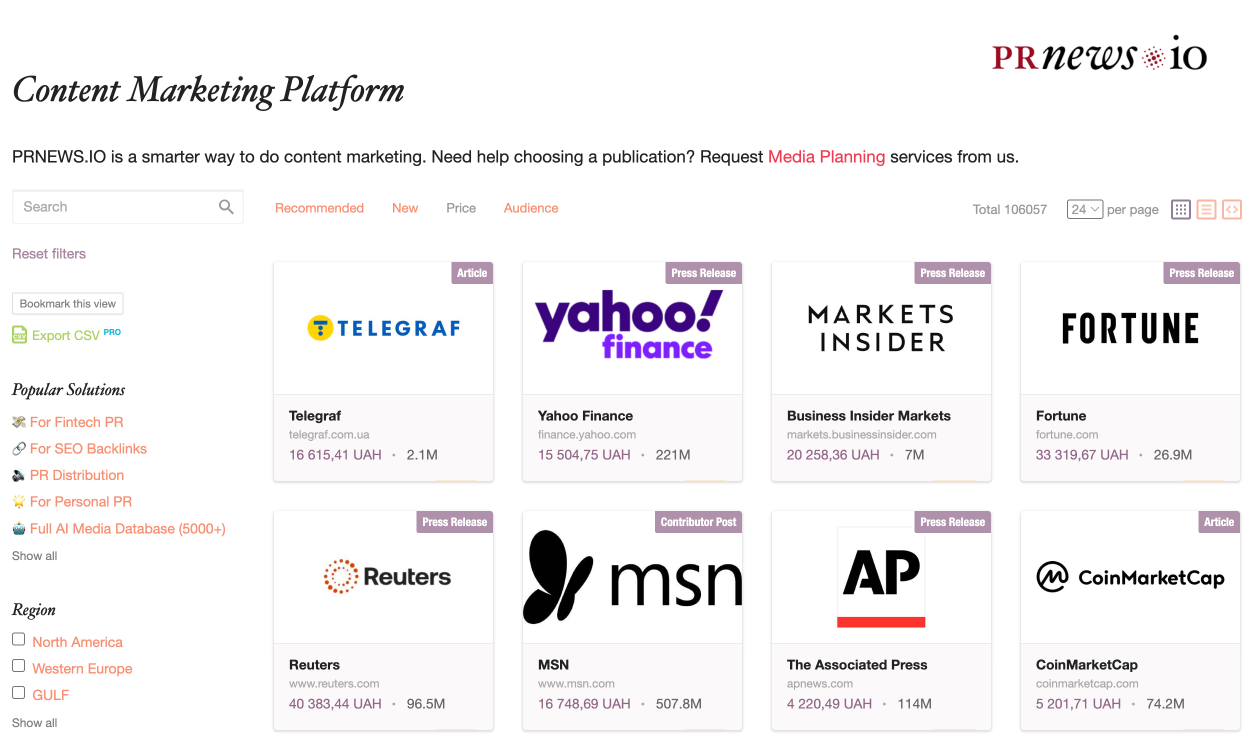
For teams balancing organic, paid, and community-driven initiatives, PRNEWS.IO serves as a strategic partner—ensuring that content reaches both audiences and journalists efficiently while supporting credibility and authority in your niche. Integrating this tool into a hybrid growth model allows brands to scale visibility without compromising authenticity or overextending internal resources.
Build community, not just an audience
Community management is the human antidote to the rise of AI-generated content — and in 2026, it is the primary differentiator between brands that retain customers and brands that constantly re-acquire them. An audience watches. A community participates. The difference in business value is enormous.
The Four Pillars of Community Architecture
1. Clear Purpose. Every community must have a reason to exist that benefits the member — not just the brand. “Follow us for deals” is not a purpose. “Get insider access to our product team and help shape the roadmap” is.
2. Structured Onboarding. High-ticket brands and SaaS companies use welcome sequences to orient new members — introducing them to community guidelines, key resources, and their first low-barrier way to participate.
3. Gamification and Recognition. Badges, leaderboards, and member spotlights reward the behaviors you want to encourage: helping other members, contributing user-generated content, and sharing expertise.
4. Private Inner Circles. The most loyal brand advocates are increasingly nurtured in private environments — exclusive DM groups, Discord servers, or private Facebook Groups. The sense of exclusivity deepens loyalty in ways that public-facing content never can.
Working With Participation Inequality
A natural feature of any online community is that a small percentage of members contribute the majority of content while most people “lurk.” Rather than fighting this, design for it. Make it easy for lurkers to make their first low-stakes contribution through polls, simple questions, or reaction-based formats. Once someone crosses the participation threshold once, they are far more likely to continue.
Measure what actually matters
In 2026, social media metrics are sharply divided between “vanity metrics” — likes, follower counts, impressions — and “impact metrics” that connect directly to business outcomes. Sophisticated marketing teams report on the latter:
| Metric | Business Value | What It Reveals |
|---|---|---|
| Conversion Rate | Direct ROI evidence | Social media’s actual contribution to revenue |
| Engagement by Reach | Content quality signal | How well content resonates with people who actually see it |
| Save Rate | High-value interest indicator | Content the audience finds valuable enough to revisit later |
| CSAT / Response Time | Brand health measure | Efficiency and quality of the community care team |
| Share of LLM | Future visibility | Brand presence in AI-generated search answers — the next SEO |
Solving the Attribution Challenge
The death of third-party cookies and the rise of dark social have made attribution increasingly complex. The industry standard response is first-party data activation — building direct relationships through email lists, loyalty programs, and SMS — combined with UTM parameters on every social link to track the user journey from a specific post to a final conversion event.
Multi-touch attribution models, enabled by tools like Cometly and Improvado, allow brands to understand not just which touchpoint closed the sale, but the full sequence of social interactions that influenced the decision. This is the data required to justify social media investment at the executive level.
The integrated playbook
Marketing a business on social media in 2026 is no longer about going viral. It is about building a scalable, predictable growth engine that operates consistently across multiple platforms, time zones, and audience segments.
The brands winning in this environment operate with a “Search-Led, Social-Amplified” approach. They identify audience needs through search behavior data, create high-value native content to build trust and authority, and use paid media strategically to ensure that content reaches the right eyes at the right moment.
The key shift in mindset: prioritize on-platform value over traffic extraction. Platforms reward brands that make users want to stay. Brands that treat social media as a pipeline for extracting people to their website are swimming against the algorithmic current. Brands that make social media itself a valuable destination — a community, a resource hub, an entertainment channel — are building something algorithms actively want to promote.
The ultimate goal of social media marketing in 2026 is the transition of a passive follower into a brand advocate. That transition requires consistency, authenticity, and a relentless focus on providing genuine value to the community — not just to the business.
The technology will keep changing. Platforms will rise and fall. Algorithms will shift. But the brands that will win across every iteration of the social media landscape are the ones that genuinely understand their audience and build something worth belonging to.
Tips from the experts how to promote your business in social networks
Victor Chirilas, Director at Mainmark UK

Using Instagram can be easy for contractors and construction companies because of our ability to take high-quality photos of the work we do. After a job, simply snap a picture and publish it so everyone can see the quality of work you do and what you have been doing for your clients.
Publish consistent content and build a strong portfolio for viewers to look at when they visit your profile. High-quality images of the work you do can really help you get noticed and gain traction on Instagram.
My recommendation would be to add your website link in your bio so it is just a click away for followers and new visitors. Then, when you publish new photos on Instagram, you can tell viewers to “see more on your website”. Share more photos on your website and include other things like videos, text, testimonials, and more to build a place for people to see what you’re all about.
But it all starts on Instagram and consistently sharing high-quality images and directing people toward your website where they can see more is a great strategy to promote your website and business on Instagram