Finding the right Conversion Rate Optimization (CRO) blogs is about more than just finding “tips”—it’s about finding data-driven insights that help you understand why people convert.
Here are 15 of the best CRO blogs, categorized by their specific strengths.

Language: French
GEO: France, Canada, Morocco, Switzerland, Belgium
Blog‑UX.com is a French‑language resource focused on user experience (UX), user interface (UI) design, design thinking, and ergonomics, offering easy‑to‑digest articles, best practices, and real‑world advice for digital professionals. By helping you understand how users interact with interfaces and how to design smoother, more intuitive journeys, the blog provides content that’s indirectly valuable for conversion rate optimization — because effective UX/UI is a proven pillar of better engagement and higher conversions. A great pick for CRO curators who want to include UX‑centric content that supports persuasion, usability, and decision‑making in digital products.
CXL (formerly ConversionXL) is well-known for its “Original Research” series. Rather than repeating common best practices, they conduct their own eye-tracking studies, click-map tests, and survey analyses to determine whether conventional advice—like “use red buttons”—actually works.
Their core philosophy is that CRO is a process, not a checklist of tactics. They advocate the ResearchXL framework, which emphasizes thorough qualitative and quantitative research before any testing begins.
From the CXL Blog, you’ll learn advanced techniques, including technical Google Analytics setups, neuromarketing applications, and statistical modeling for A/B testing.
CXL is best suited for intermediate to advanced practitioners who want to build a career in experimentation and data-driven optimization rather than focusing solely on growth hacks.
Conversion Rate Experts (CRE) is a premium consultancy that has worked with companies like Google, Amazon, and Apple. Their blog is renowned for its transparency—they don’t just claim to increase conversions, they show “before” and “after” designs and explain the reasoning behind every change.
Their core philosophy emphasizes focusing on the “big wins.” CRE argues that many marketers waste time testing minor details, like button colors, instead of experimenting with bold, high-impact changes to the business offer itself.
From their content, you’ll learn how to design and structure high-stakes A/B tests and how to communicate the value of CRO to executive stakeholders.
CRE is best suited for business owners and marketing directors who need concrete, real-world proof of ROI at scale.
For anyone in e-commerce, Baymard Institute is essential. Unlike typical blogs, they conduct over 200,000 hours of usability research and provide authoritative guidance on how checkout pages, search bars, and mobile menus should function.
Their core philosophy is that good UX is the foundation of high conversion—no amount of persuasion can compensate for a frustrating or confusing site.
From their research, you’ll learn highly specific guidelines, such as identifying placement issues that cause 68% of users to miss the “Guest Checkout” option. They also provide benchmark data comparing the world’s top 100 e-commerce sites.
Baymard Institute is best suited for UX designers, product managers, and e-commerce store owners who want to eliminate technical friction and create seamless user experiences.

Owned by MECLABS, MarketingExperiments approaches marketing as a hard science. They are best known for the MECLABS Conversion Heuristic, a “patented formula” used to calculate the probability of a conversion.
Their core philosophy is that you don’t simply optimize a webpage—you optimize a thought sequence. The goal is to guide the user’s mind step by step toward saying “yes.”
From their blog, you’ll learn how to apply the Conversion Heuristic to audit any page and pinpoint exactly where it’s failing, such as determining if friction outweighs incentive.
MarketingExperiments is best suited for data-driven marketers and strategists who enjoy working with frameworks and mapping psychological triggers.
Talia Wolf’s core belief is that “people buy based on emotions and justify with logic.” Her blog is a masterclass in shifting from a business-centric perspective to a truly customer-centric approach.
Her philosophy emphasizes that CRO isn’t about tweaking button colors—it’s about understanding the emotional state of your user before they even arrive on your page.
From her content, you’ll learn how to conduct emotional audits, use “mirroring” to reflect customer desires in your copy, and create social proof that feels authentic rather than forced.
GetUplift is best suited for copywriters and brand strategists who want to forge a deep, human connection with their audience.

Language: French
GEO: France, Senegal, USA, Belgium
UX‑UI.fr is a French blog dedicated to User Experience (UX) and User Interface (UI) design, offering practical tips, guides, and resources for designers and developers. While its focus is on creating intuitive and visually appealing digital experiences, the insights shared here are highly valuable for conversion rate optimization. By following UX‑UI.fr’s strategies for clear navigation, effective layouts, and user-centric interfaces, marketers and designers can enhance engagement, reduce friction, and ultimately improve conversion performance. A must-read for anyone looking to combine design excellence with measurable CRO impact.
WiderFunnel is known for bringing a structured, repeatable framework to the often “messy” world of human psychology. Their blog offers a clear, systematic lens for analyzing and improving any webpage.
The core philosophy is that every element on a page either adds “fuel” to the conversion or creates “drag” that slows it down.
From their content, you’ll learn how to apply the LIFT Model—covering Value Proposition, Relevance, Clarity, Urgency, Anxiety, and Distraction—to pinpoint exactly why a landing page may be losing conversions.
WiderFunnel is best suited for marketing managers who need a logical, structured way to communicate and justify their optimization decisions to stakeholders.
Founded by Brian Massey, famously known for appearing in a white lab coat, Conversion Sciences approaches websites as laboratories where data and behavioral psychology intersect.
The core philosophy is that your opinion doesn’t matter—only the data does. The blog emphasizes “Digital Body Language,” which involves tracking subtle user movements, hesitations, and pauses to understand intent.
From this resource, you’ll learn how to interpret qualitative data, such as session recordings, to uncover the “silent killers” of conversion, and how to build a high-velocity testing environment for continuous optimization.
Conversion Sciences is best suited for data-driven marketers and CRO specialists who thrive on the scientific method and rigorous experimentation.

Unlike traditional blogs, The Wheel of Persuasion, created by Bart Schutz, functions as a comprehensive map of the human brain, organized around hundreds of cognitive biases.
The core philosophy is that the human brain relies on heuristics—mental shortcuts—to make decisions. By understanding these shortcuts, designers can create interfaces and experiences that align with the way people naturally think.
From this resource, you’ll learn detailed explanations of concepts such as the Decoy Effect, Loss Aversion, and Scarcity. Each technique includes both a scientific explanation and practical marketing applications.
The Wheel of Persuasion is best suited for UX researchers and designers who want to support their design decisions with insights from neuroscience and behavioral psychology.
VWO (Visual Website Optimizer) is one of the world’s leading A/B testing platforms, and their blog reflects a “big data” approach, providing benchmarks that most individual marketers could never calculate on their own.
The core philosophy is that CRO is a continuous cycle of Plan → Hypothesize → Analyze → Test. VWO emphasizes building a robust testing pipeline rather than relying on guesswork.
From their blog, you’ll find industry-specific benchmarks (for example, what constitutes a good conversion rate for SaaS versus e-commerce), technical guides on applying Bayesian statistics in testing, and strategies for multivariate experiments.
VWO is best suited for serious experimenters and enterprise teams looking to scale their testing frequency while maintaining data integrity.
Unbounce pioneered the concept of the dedicated landing page, and their blog has grown into a hub for Conversion Intelligence (CI)—the combination of AI with human marketing intuition.
The core philosophy is that every campaign deserves its own landing page; sending ad traffic to a homepage is seen as wasted opportunity and budget.
From their blog, you’ll learn how to craft high-converting headlines, understand “The Anatomy of a Landing Page,” and leverage AI to dynamically route visitors to different page versions based on their behavior.
Unbounce is especially valuable for performance marketers and PPC specialists who are focused on maximizing landing page conversion rates.
Le Blog Techno | Get Published Here
Language: French
GEO: France, Morocco, Switzerland, Belgium, Spain
Le‑Blog‑Techno.fr is a French technology blog covering a wide range of digital topics, from software and apps to tools, tips, and tech trends. While its core focus isn’t strictly conversion rate optimization, the blog regularly publishes practical guides and actionable insights on tools, platforms, SEO, UX, and digital workflows that can help marketers and product teams improve user engagement and conversion outcomes. It’s a useful resource for anyone looking to combine tech knowledge with optimization strategy in a CRO toolkit.
Hotjar revolutionized the industry by making qualitative data—what users actually do—as accessible as quantitative data. Their blog is heavily focused on User Experience (UX) and understanding user behavior beyond the numbers.
The core philosophy is that while numbers show what is happening on a site, tools like heatmaps and session recordings reveal why. Hotjar emphasizes identifying and removing “friction”—the points where users get confused, frustrated, or abandon a process.
From their blog, you’ll learn how to run exit-intent surveys that generate meaningful responses, analyze session recordings to uncover bugs or usability issues, and create customer journey maps that pinpoint exactly where users drop off.
Hotjar is best suited for product managers and UX designers who want to experience their website from the perspective of a real, often frustrated, user.
Founded by Neil Patel and Hiten Shah, Crazy Egg was one of the first heatmapping tools. Their blog is broader than the others, acting as a bridge between SEO, Content Marketing, and CRO.
Core Philosophy: Website optimization shouldn’t be a mystery. It should be a practical, daily habit of making small, impactful changes to the user interface.
What You’ll Learn: While they cover general digital marketing, they excel at “Visual Analysis”—teaching you how to use scroll maps to see if users are even seeing your Call-to-Action (CTA) and how to fix “dead clicks.”
Best For: Small business owners and solo entrepreneurs who need a “holistic” view of how marketing and conversion work together.
Managed by Joanna Wiebe, who coined the term “conversion copywriting,” this blog is considered one of the industry’s most authoritative resources on persuasive writing. It treats copy as a discipline grounded in research and testing, not just creativity or clever wording.
The core philosophy is that copy is the real “salesperson” on the page, while design simply provides the “salesroom.” Instead of writing what sounds good, the focus is on writing what customers are already thinking and saying in their own words.
From this resource, you’ll learn how to use Voice of Customer (VoC) data—such as Amazon reviews, support tickets, and survey responses—to capture and reuse the exact language your customers use. It also offers practical frameworks and formulas for headlines, call-to-action buttons, landing pages, and high-converting emails.
A standout insight is their teaching on the “Three Stages of Awareness,” which explains why messaging must change depending on whether someone is unaware of their problem, actively seeking solutions, or comparing you directly with competitors.
This blog is best suited for freelance copywriters, founders, and content marketers who want to move beyond engagement and consistently turn readers into buyers.
The Shopify Plus Blog is designed for high-volume, multi-million-dollar brands, unlike the standard Shopify blog, which is primarily aimed at beginners. It focuses on the technical and strategic challenges involved in scaling an e-commerce business.
Its core philosophy is that success at scale comes from removing every possible friction point in the customer journey, from global shipping complexities to optimizing the mobile checkout experience.
From this blog, you’ll learn through deep dives into omnichannel commerce, checkout extensibility and customization of the final sale, and the use of automation tools such as Shopify Flow to manage complex operations like inventory control and fraud prevention.
A unique insight offered by Shopify Plus is its high-level reports on global commerce trends, which help readers understand how developments like “Buy Now, Pay Later” and social commerce are reshaping consumer spending behavior.
The Shopify Plus Blog is best suited for e-commerce managers, developers, and growth leaders working at large-scale retail brands.
Invesp is one of the oldest CRO agencies in the world, widely known for its blog and for developing “The Conversion Framework,” a systematic approach to auditing and improving websites.
Their core philosophy is that CRO is not a collection of quick “hacks,” but a rigorous scientific process. They emphasize that most A/B tests fail because they are not grounded in strong, well-formed hypotheses.
From Invesp, you’ll learn highly technical aspects of CRO, including in-depth guides on A/B testing statistics and how to determine whether results are truly valid. You’ll also get a deep dive into the Invesp Conversion Framework, which covers eight key areas such as trust, incentives, and personas.
A unique insight they strongly promote is the idea of building a “culture of experimentation,” helping organizations shift away from decision-making driven by the HIPPO (Highest Paid Person’s Opinion) and toward evidence-based optimization.
This makes Invesp especially valuable for strategists and technical CRO leaders who want to build a professional-grade optimization program from the ground up.

Top Reasons to Add Your Media Outlet to PRNEWS.IO
Adding a website or media outlet to the PRNEWS.IO catalog can provide several benefits, particularly in terms of visibility, credibility, and potential income.
- Boost Visibility: Get discovered by a larger audience.
- Enhance Credibility: Join a trusted platform for media outlets.
- Earn Income: Attract clients looking to publish content.
- Improve SEO: Benefit from increased traffic and rankings.
- Expand Opportunities: Build connections and partnerships.
Explore a variety of CRO blogs in the PRNEWS.IO catalog, perfect for sharing your content and ideas with a wider audience. Each blog comes with its own publication guidelines, detailed on their respective pages.
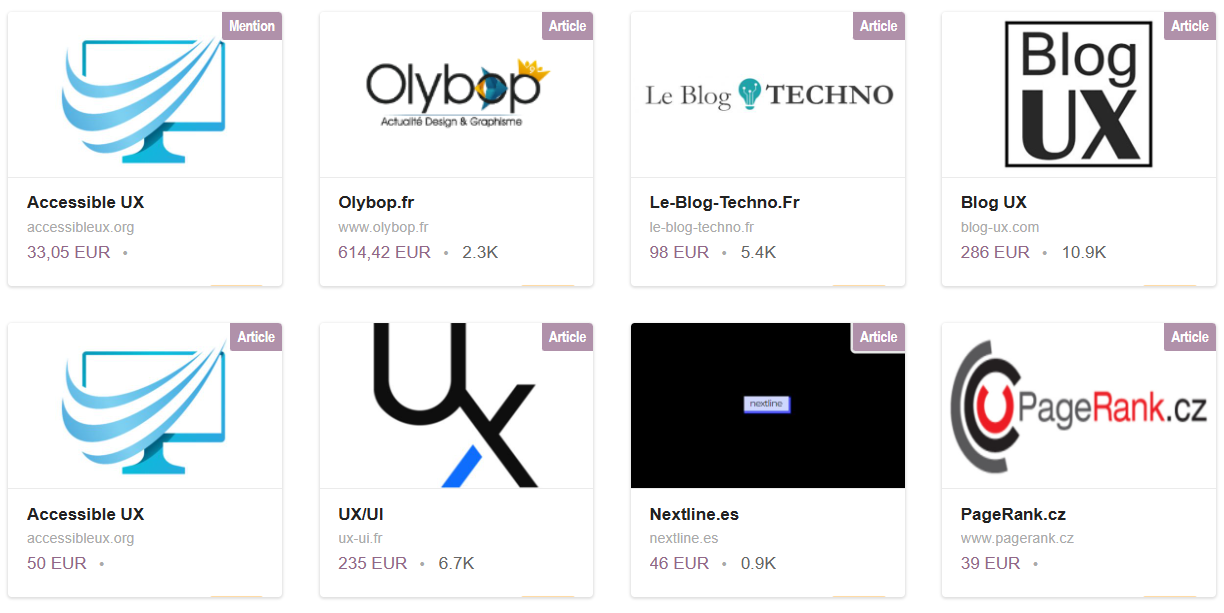
Whether you’re a marketer optimizing campaigns, an analyst reviewing user behavior, or a digital enthusiast exploring the latest conversion strategies, CRO blogs offer a valuable space to connect with fellow professionals and growth-minded marketers. Share your insights, join discussions, and make your voice heard in the conversion optimization community!
Conclusion
By following CRO blogs, exploring expert insights from leading optimization specialists, and diving into case studies, experiments, and data-driven strategies, your understanding of conversion rate optimization will steadily grow. These blogs are free, easily accessible from any device, and packed with practical knowledge for marketers, product teams, founders, and growth enthusiasts alike. With our curated selection, you now know which CRO blogs truly deserve your attention and can help you turn traffic into measurable results.