In the vast and unique ecosystem of China’s internet, Baidu stands as the undisputed leader of search engines. While Google dominates much of the global market, Baidu reigns supreme in the world’s most populous country, capturing approximately 70% of organic traffic for B2B companies in China. This staggering market share dwarfs that of its closest competitor, Bing China, which holds only about 20% of the market.
Popular Search Engines
Worldwide:
- 91.47% Google
- 3.42% Bing
- 1.78% Yandex
- 1.10% Yahoo (from Bing crawler)
- 0.83% Baidu
- 0.54% DuckDuckGo
USA:
- 87.48% Google
- 7.85% Bing
- 2.34% Yahoo!
- 1.87% DuckDuckGo
- 0.17% Yandex
- 0.09% AOL
China:
- 61.11% Baidu
- 17.5% Bing
- 6.86% Haosou
- 5.58% Sogou
- 3.13% Yandex
- 2.88% Shenma
The Baidu Ecosystem
Baidu’s dominance is not merely a matter of market share; it’s deeply rooted in a comprehensive ecosystem of services that cater specifically to Chinese internet users. Unlike Western search engines, Baidu has developed a network of interconnected platforms that keep users within its digital realm. This ecosystem includes:
Key Baidu Services:
- Wenku: An online library similar to Google Books and Scholar.
- Baijiahao: A content publishing platform akin to Google News and Blogger.
- B2b: A business platform for wholesale purchases, similar to Google My Business.
- Video Search and Image: Search functionalities for videos and images.
- Baike: Baidu’s version of Wikipedia.
- ZhiDao: A Q&A platform.
- Tieba: A forum similar to Google Groups.
- Jingyan: A platform for sharing experiences and advice.
- Wen: A service for finding answers to questions.
- Mbd: A discount and coupon service.
- Haokan: Baidu’s own video-sharing platform, like YouTube.
- Baobao: A platform for parents.
- Hanyu: A service for learning Chinese.
- Fanyi: A machine translation service, similar to Google Translate.
The prevalence of these Baidu-owned services in search results is striking. Recent analysis shows that Baidu’s proprietary platforms occupy up to 35% of the top 10 search results, a significant increase from 25% in 2020. This strategic approach not only enhances Baidu’s dominance but also creates a cohesive user experience within the Baidu universe.

Language and Cultural Considerations
One of Baidu’s key strengths lies in its deep understanding of the Chinese language and culture. The search engine primarily caters to Mandarin-speaking users in mainland China, favoring content in simplified Chinese characters. This focus contrasts with the traditional Chinese characters used in Hong Kong and Taiwan, highlighting Baidu’s specific target audience.
Domain and URL Insights
Contrary to popular belief, having a .cn domain is not crucial for high rankings in Baidu. In fact, .com domains lead the pack, appearing in 73.59% of top search results. The .cn domains have seen significant growth, rising from 3.8% in 2020 to 14.06% in 2023, but they’re still not dominant. Interestingly, URLs containing Chinese characters are rare, appearing in only 0.8% of ranked URLs, with Baidu officially discouraging their use.
Technical Best Practices
When it comes to technical aspects, Baidu has its own set of best practices. The average URL length for top-ranking pages is 48.25 characters, with an average of 2.3 directory levels. Title tags typically contain 25 Chinese characters, while meta descriptions average 86 characters. These lengths ensure optimal display in Baidu’s search results without truncation.
Ranking Factors and SEO
Baidu’s ranking factors align with modern SEO practices, emphasizing user experience and content relevance. The search engine values well-structured, relevant content over simple keyword inclusion. There’s also a strong positive correlation between the number of referring domains and improved rankings, underlining the importance of backlinks.
Key Takeaways for Baidu SEO:
- Focus on creating high-quality, relevant content in simplified Chinese
- Optimize technical elements like URL structure, title tags, and meta descriptions
- Build a strong backlink profile from reputable Chinese websites
- Consider obtaining an ICP license, but know it’s not mandatory for ranking
- Ensure fast loading speeds, especially if hosting outside of mainland China
Advancements in AI
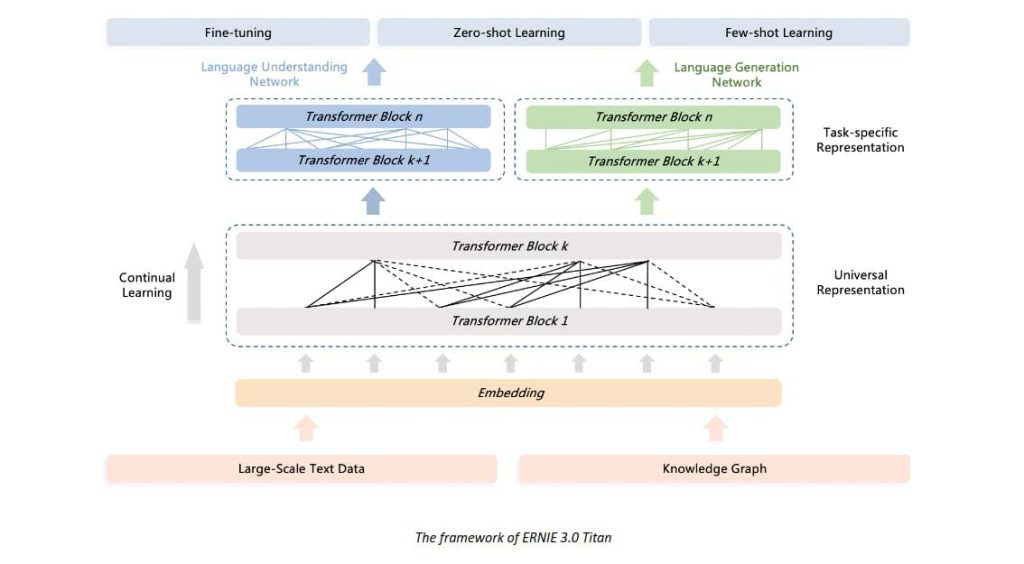
In recent years, Baidu has made significant strides in artificial intelligence, particularly with its ERNIE model, which outperforms Google’s BERT in understanding the nuances of the Chinese language. This advancement allows Baidu to deliver more accurate and contextually relevant search results to its users.
Baidu’s Chatbot Reaches 100 Million Users in China
Since its debut in August, Baidu’s neural network, Ernie Bot, has amassed over 100 million users, accounting for around 7% of China’s population. While ChatGPT achieved 100 million users in just two months, Ernie Bot took four months to reach the same milestone, despite being available exclusively to Chinese users.
This shift signals a potential transformation where the chatbot might replace traditional search engines and possibly even web browsers.
Licensing and Hosting Considerations
It’s worth noting that while having an ICP (Internet Content Provider) license is often associated with better performance in Baidu, only 48% of top-ranking pages display this license. Moreover, contrary to common misconception, websites hosted outside mainland China can rank in Baidu, although they may face challenges with loading speeds, which can impact their positioning.
Case Study: Baidu Search Algorithm and the Dilemma of Black-Hat SEO
Source: X.com
Baidu engineers found themselves in court once again, explaining their search algorithm. This time, the case revolved around a tale of doorways, misinformation, and a demanding client, involving a black-hat SEO agency and a Chinese court.
A sizable training company in China sought a digital marketing agency with a specific requirement: “When people search on Baidu, we want at least one or two results to lead to our site.” The agency and the training company signed a contract worth over 140,000 yuan (almost $20k).
What Did the Agency Do?
Did they create exceptional content? Not quite. Instead, the agency built 24 doorway sites designed to “dominate every SERP.”
Did It Work?
Of course not. Baidu’s algorithm has been combating such practices for 20 years, with sophisticated updates like “Blue Sky” and “Hurricane.” Thus, the training company’s frustration grew as their pages were de-indexed by Baidu’s search engine.
With the sites falling one by one and traffic dwindling, the company terminated the contract. However, the marketing agency was undeterred and sued the company for payment, taking the case to a Chinese court.
The Court Case:
To clarify the situation, the court requested Baidu engineers to explain how their algorithm functions. They explained: “We assess the relationship between search queries and web pages, evaluate their relevance, including the quality and timeliness of the site itself. Using these methods, a more comprehensive algorithm is formed, ultimately resulting in a ranking score.”
In its ruling, the judge noted that “this method essentially disseminates [the same] information among a large number of internet users, depriving ordinary internet users of the right to know and choose through various means.”
The court concluded that both parties acted to the detriment of consumer interests and dismissed the case.
The Outcome:
In this situation, the sole victor was Baidu.
Conclusion
In conclusion, Baidu’s dominance in China’s search landscape is a result of its tailored approach to the Chinese market, comprehensive ecosystem of services, and advanced understanding of the Chinese language. For businesses and marketers looking to penetrate the Chinese market, understanding Baidu’s unique features and requirements is crucial.
Important Ranking Factors on Baidu:
- Chinese Domain Zones and URLs: Domains and URLs should be in Chinese, similar to Cyrillic in URLs.
- Structured and Relevant Content: Content needs to be well-structured and pertinent to the topic.
- Exact Keyword Placement in Titles: Keywords should be precisely placed in titles. (Average title length is 25 Chinese characters; description length is 86 characters.)
- Use of Hierarchical Hx Tags: Proper use of hierarchical Hx tags and relevant keywords within them.
- Content Length: The length of the content is a significant factor.
- Importance of Images: Images play a crucial role.
- Backlinks: Backlinks remain a vital ranking factor.
Success in Baidu requires not just adherence to general SEO principles, but a nuanced approach that takes into account the cultural, linguistic, and technical specificities of China’s leading search engine.