If you’ve been applying traditional SEO playbooks to your SaaS product and wondering why the results feel flat, you’re not alone — and you’re not wrong to be frustrated. The problem isn’t your execution. The problem is the framework itself.
SaaS SEO operates on fundamentally different economic logic than e-commerce or lead-generation SEO. In traditional search marketing, a conversion is a transaction — someone buys, the job is done. In SaaS, a conversion is the beginning of a relationship. Your customer needs to onboard, adopt, expand, and renew. That changes everything: what you write, who you write it for, how you measure success, and how long you play the game.
Research consistently shows that SEO-driven SaaS customers are 40–60% cheaper to acquire than those from paid or outbound channels. More importantly, unlike paid advertising — which stops the moment you stop spending — organic search builds compounding equity. A well-ranked article from two years ago still generates qualified demos today. That’s not an expense. That’s infrastructure.
This guide breaks down the complete architecture of a modern SaaS SEO strategy: from how to map buyer intent across complex committees, to technical foundations that scale, to measurement frameworks that actually reflect recurring revenue reality.
The SaaS buyer is not one person
One of the most common and costly mistakes in SaaS content strategy is writing for a single, imaginary “ideal customer.” In reality, B2B SaaS purchase decisions involve an average of 6.8 stakeholders, and the buying journey spans roughly 211 days and 76 distinct touchpoints.
Think about what that means for search. A developer searching for “REST API authentication best practices” and a CFO searching for “enterprise SaaS ROI calculator” might both be evaluating the same product — but they are in completely different mental contexts, need completely different information, and will judge the content by completely different standards. Your SEO strategy has to address all of them.
This is why effective SaaS SEO is not keyword-first. It’s intent-first. You’re not trying to rank for a list of terms; you’re trying to be present at every meaningful checkpoint across a long, multi-stakeholder decision process.
Intent mapping with the jobs-to-be-fone framework
The sharpest tool for SaaS keyword research isn’t a volume-based spreadsheet — it’s the Jobs-to-Be-Done (JTBD) framework. The core insight is simple but powerful: users don’t “buy” software. They “hire” it to accomplish a specific job. Understanding what that job is — in precise, human terms — unlocks keyword opportunities your competitors aren’t even looking for.
Every job follows a predictable sequence. Mapping SEO content to each step surfaces a rich layer of under-served, high-converting queries:
| Job Step | What the User Is Doing | Example Search Query |
|---|---|---|
| Define | Setting goals and planning | “how to set project KPIs” |
| Locate | Gathering resources and data | “project management templates” |
| Prepare | Setting up the environment | “integrating Slack with Jira” |
| Confirm | Verifying readiness | “system migration checklist” |
| Execute | Doing the core task | “automated reporting tool” |
| Monitor | Assessing results | “track team productivity metrics” |
| Modify | Adjusting to improve outcomes | “how to reduce SaaS churn” |
| Conclude | Wrapping up the job | “archive project data best practices” |
The real value here is in the “Execute” and “Modify” steps. Instead of going after high-difficulty category terms like “CRM software,” a JTBD approach surfaces specific queries like “how to prevent lead follow-up drops” — terms that align directly with the moment a user most needs your product, and where competition is dramatically lower.
The three dimensions of every search
Beyond the functional job, every search query carries emotional and social weight that shapes how content should be written:
Functional queries need precision and speed. Someone searching “compress images without losing quality” wants the answer immediately, not a 2,000-word essay.
Emotional queries need trust. Someone searching “feeling confident about data security” is really looking for reassurance. Case studies, compliance badges, and reliability statistics answer this query — not feature lists.
Social queries need status. Someone searching for “executive-ready reporting dashboards” wants to know your product will make them look good in the boardroom. Lean into professional-grade outputs and visible results.
To extract these dimensions at scale, mine customer voice data: support tickets, sales call transcripts, onboarding interviews, and user reviews. The “struggle language” your customers use naturally is your keyword goldmine.
Product-led content: closing the conversion gap
Here’s a problem every SaaS content team eventually runs into: the blog has solid traffic, but almost none of it converts. The culprit is usually a strategy that over-indexes on top-of-funnel education without ever naturally pointing toward the product as the answer.
Product-Led Content (PLC) solves this. The philosophy is simple: every piece of content should function as a demonstration vehicle, not just an educational resource. Your product isn’t a CTA at the bottom — it’s a character in the story.
Practically, this means:
- Contextual demonstration: When describing a workflow your product solves, show it — with real screenshots, short video walkthroughs, or interactive elements. Don’t describe how a feature works; show it solving the exact problem the article addresses.
- Hyper-specific topics: Skip broad “what is project management” articles in favor of tightly scoped “how to manage cross-functional sprints with remote teams.” The specificity creates a natural opening for your product.
- Natural positioning: Introduce the product where it genuinely fits the user’s workflow — not as an interrupt, but as the logical next step.
Companies using PLC effectively report 30–40% shorter sales cycles, because prospects arrive at their first demo already understanding how the product fits their world. That’s the compound return on content done right.

Funnel architecture: content for every stage
Sustainable SaaS SEO isn’t just about writing great individual pieces — it’s about having the right content at every stage of the buyer journey, for every stakeholder on the committee.
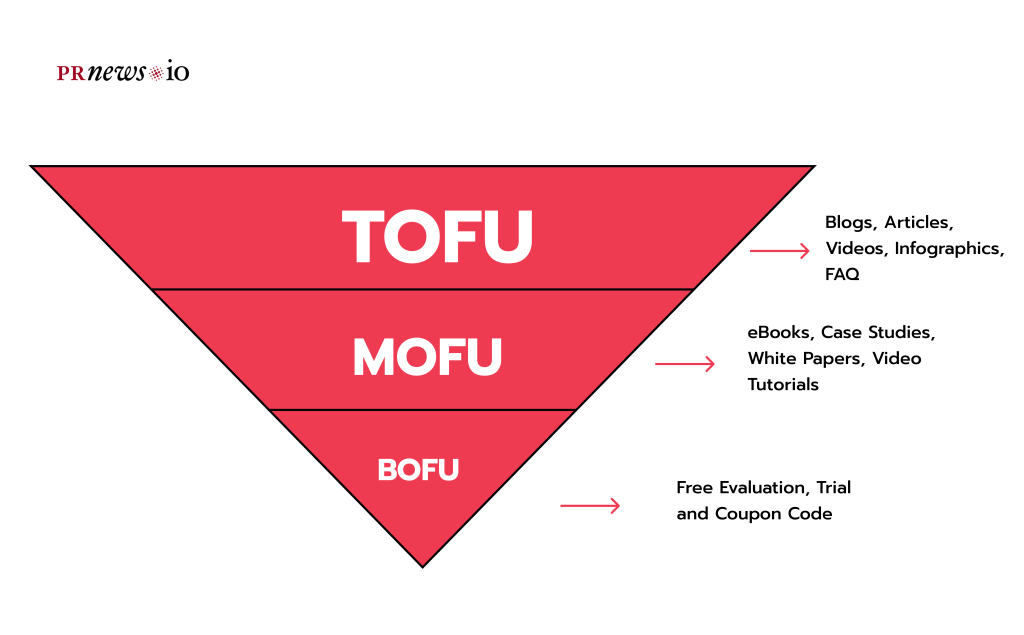
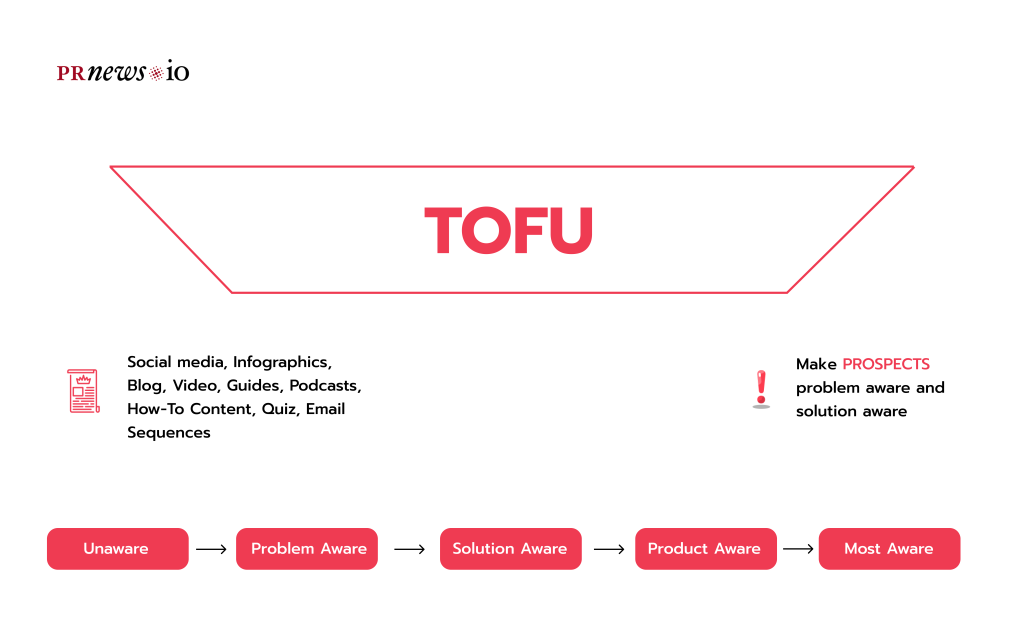
Top of Funnel (TOFU) content targets problem-aware users who don’t yet know what solution category they need. Expert guides, industry benchmarks, and “how-to” frameworks live here. The goal is brand discovery and building authority in your niche — not immediate conversion.
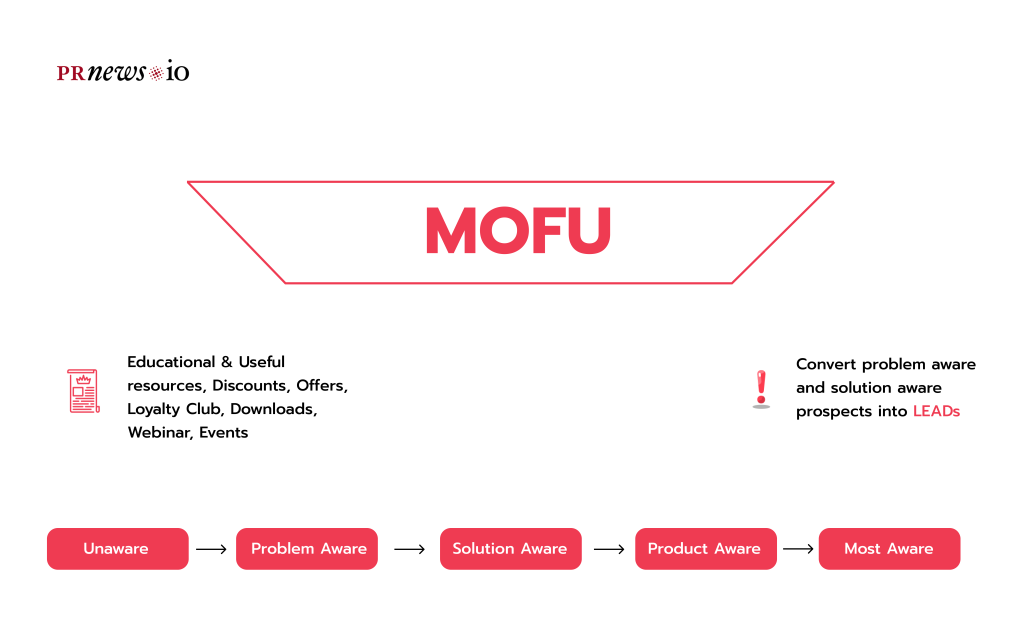
Middle of Funnel (MOFU) content targets users who are actively evaluating options. Comparison pages, “best software” listicles, and use-case breakdowns are the workhorses here. One especially powerful MOFU format is the “Best [Category] Tools” article. Users searching for “best project management tools” want to compare options — and if you rank for that term, you’re embedded in their evaluation process before they’ve even visited your site directly.
Bottom of Funnel (BOFU) content targets users who are ready to decide. Pricing pages, ROI calculators, integration guides, and customer case studies reduce friction and answer final objections. This is where the business gets won or lost, so these pages deserve disproportionate investment in copy quality, trust signals, and conversion optimization.
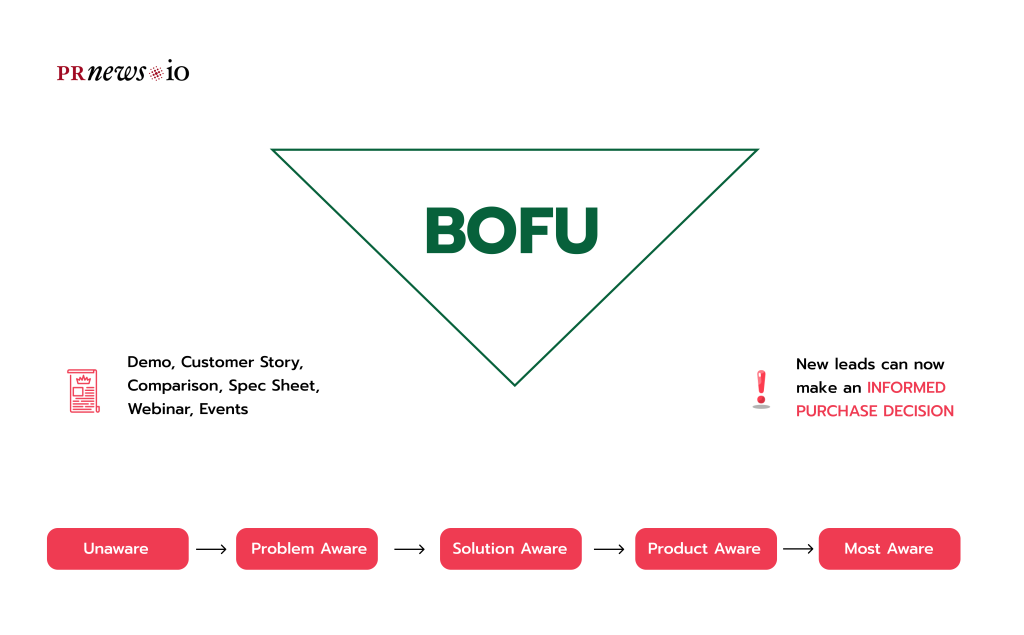
The critical strategic point: you need all three layers. TOFU content without BOFU is an awareness machine that never closes. BOFU content without TOFU means you’re only capturing demand that already exists, instead of building it.
Technical SEO: the foundation that scales
Great content on a broken technical foundation won’t rank. For SaaS products — which often span marketing sites, web apps, documentation portals, and developer hubs — technical architecture deserves serious strategic attention.
Subdirectory vs. Subdomain: stop debating, start consolidating
The question of whether to host your blog at yoursite.com/blog (subdirectory) or blog.yoursite.com (subdomain) has a clear, evidence-backed answer for most SaaS companies: use subdirectories.
Subdirectories inherit the authority of your primary domain directly. Pages published there rank faster and benefit from every backlink pointing at your root domain. Subdomains, by contrast, are often treated as separate entities by search engines, dispersing your authority across multiple properties and slowing ranking velocity.
Reserve subdomains for situations where genuine technical separation is required: separate development teams managing distinct tech stacks, regional variants with different localization requirements, or authentication-walled application portals that you don’t want indexed anyway.
JavaScript and rendering: the silent rankings killer
Modern SaaS marketing sites frequently use React, Vue, or Angular — and this creates an invisible risk. Search engine crawlers don’t always execute client-side JavaScript before indexing. If your critical content or internal links only exist after JavaScript renders, crawlers may index blank or incomplete pages.
The solution is Server-Side Rendering (SSR) or dynamic rendering for all marketing and blog content. This ensures that raw HTML — including all text, headings, and links — is delivered to crawlers immediately, without waiting for JavaScript execution. Auditing your site for “blank page” crawling scenarios should be a standing item on every technical SEO checklist.
Core Web Vitals: performance is revenue
Google’s Core Web Vitals are both a ranking signal and a direct driver of conversion rates. For B2B SaaS, where your audience is often technically sophisticated and time-pressured, performance issues have outsized impact.
| Metric | Target | What to Fix |
|---|---|---|
| LCP (Largest Contentful Paint) | Under 2.5 seconds | Compress hero images; eliminate render-blocking CSS |
| INP (Interaction to Next Paint) | Under 200ms | Reduce JavaScript from heavy third-party tools (chat widgets, analytics) |
| CLS (Cumulative Layout Shift) | Under 0.1 | Lock dimensions on banners and web fonts to prevent visual jumps |
A delay of a few hundred milliseconds on a trial sign-up button can measurably increase abandonment. The performance budget isn’t abstract — it directly touches your demo conversion rate.
Schema markup: speaking search engines’ language
Structured data (Schema markup) is how you communicate product-specific information to search engines in a machine-readable format. For SaaS, a multi-schema approach is the standard:
SoftwareApplication / WebApplication Schema identifies your product, its version, and its cloud-based nature — helping search engines categorize it correctly.
Product & Offer Schema on pricing pages can surface your tier structure and pricing directly in search results, improving click-through rates for high-intent queries.
FAQ Schema on MOFU and BOFU pages lets you address common objections directly in SERPs — before users even click.
AggregateRating Schema adds star ratings to your search listings, building immediate credibility with prospects who haven’t heard of you yet.
Implement all schema in JSON-LD format, which is Google’s preferred method and the most maintainable for development teams.
Off-page authority: ecosystem link building
The most effective link building strategy for SaaS isn’t guest posting — it’s ecosystem integration. Authority grows naturally when you become a recognized, functional part of the technology stack your customers already use.

Integration partners as link sources
When your product integrates with platforms like Salesforce, Slack, HubSpot, or AWS, you unlock high-authority backlink opportunities that carry extra algorithmic weight — because they represent real business relationships, not manufactured content links:
- Partner app marketplaces: Getting listed in official integration directories of established platforms.
- Co-marketing case studies: Collaborative content that lives on both your site and your partner’s, showing the integration solving a real customer problem.
- Technical documentation: Integration guides that link bidirectionally between platforms.
These links are durable, editorially earned, and reflect genuine product utility — exactly the signals modern search algorithms increasingly prioritize.
Software review platforms as satellite properties
G2, Capterra, Software Advice, and similar directories frequently own the top organic positions for high-intent category searches. A dual strategy is required: optimize your listing profiles on these platforms to rank highly within their internal search, and build external links to these profiles to reinforce their own authority. Effectively, you’re ensuring your brand is visible across the entire SERP landscape — your own site, third-party lists, and AI-generated summaries.
Measuring what actually matters: attribution for recurring revenue
Attribution is where most SaaS marketing teams hit a wall. The standard first-touch or last-touch models fail because they can’t account for a 211-day journey across 76 touchpoints. An organic blog post that introduced a prospect to your brand six months before they signed up gets zero credit in a last-touch model — making SEO look underperforming when it’s actually doing significant heavy lifting.
The solution is multi-touch attribution (MTA), with models matched to your actual sales cycle length:
| Model | Logic | Best For |
|---|---|---|
| U-Shaped | 40% first touch, 40% last touch, 20% middle | 3–6 month cycles |
| W-Shaped | 30% each at first touch, lead creation, opportunity creation | 6+ month enterprise cycles |
| Time Decay | More credit to interactions closer to conversion | Shorter cycles, final-stage nurture |
| Full-Path (Z-Shaped) | Credits all major milestones: first, lead, opp, close | Complex enterprise with account mapping |
Triangulate MTA data with marketing mix modeling (MMM) and self-reported attribution (“How did you hear about us?”). This combination is the most reliable way to surface the true influence of top-of-funnel SEO on pipeline generation, even when direct click tracking fails.
The KPIs That Actually Reflect Business Health
Move beyond traffic and rankings. The metrics that matter for SaaS SEO:
Trial/Demo conversion rate by intent cohort — not just aggregate conversion rate. Informational traffic converts differently than transactional traffic, and conflating them hides important quality signals.
Organic MRR contribution — the monthly recurring revenue attributable to organic search as entry point. This is the number that justifies the SEO investment in board-level conversations.
Organic CAC vs. LTV ratio — are you acquiring customers through organic search at a cost that makes long-term unit economics work? This is the ultimate efficiency test.
Preparing for the AI search transition
The rise of AI-driven search experiences — Google SGE, Perplexity, and their successors — is reshaping what it means to rank. AI search engines synthesize answers from multiple sources rather than presenting a list of links, which means the rules for what content gets cited are evolving rapidly.
Two things are becoming simultaneously more important and more scarce: originality and structure.
On originality: AI can generate generic explanations of any concept. What it cannot generate is your proprietary customer data, your original research findings, your team’s direct product experience, or your users’ verbatim feedback. These “originality nuggets” are the signals that distinguish your content from AI-generated noise — and they’re precisely what AI search engines are learning to prioritize for citation.
On structure: AI crawlers extract product facts, pricing, compatibility data, and key claims most efficiently when they’re cleanly marked up with structured data. The technical investment in Schema markup you make today is simultaneously an investment in AI search visibility tomorrow.
The underlying principle remains unchanged: be genuinely useful, be specifically expert, and be technically accessible. Everything else is execution.
The Strategic Bottom Line
SaaS SEO in 2025 is not a traffic play. It’s a compounding revenue architecture. The companies that win treat organic search as infrastructure — not a campaign, not a channel, and not a content calendar exercise.
The framework is straightforward in principle, demanding in practice:
Map your buyers’ intent across every stage and stakeholder. Build content that demonstrates your product solving real problems — not just explaining concepts. Ensure your technical foundation can be crawled, rendered, and understood by search engines at scale. Build authority through ecosystem integration, not manufactured links. And measure what actually connects to recurring revenue, not what’s easy to report.
The reward for getting this right isn’t a spike on a traffic chart. It’s a durable acquisition engine that compounds year over year, costs far less per customer than any paid channel, and keeps generating pipeline even when market conditions shift.
That’s the SaaS SEO moat — and it’s worth building.

Frequently Asked Questions
What Is SaaS SEO?
SaaS SEO refers to all the activities and efforts you put into your web pages to increase ranking on search engines. These activities include doing keyword research, creating relevant content for your SaaS offering, technical SEO optimization, audits, and more.
How to Improve SEO for SaaS Companies?
-
In order to improve SEO for your software as a service offering, you must start optimizing your website for relevant keywords that your customers are searching for.
At the same time, you should create content that is interesting for your audience and think about their User Experience on the website as well – search engine algorithms take your UX, design, and mobile responsiveness into considerations when it comes to rankings.
How Important Is SEO in a SaaS Business?
In this day and age, search engine optimization is extremely important for SaaS businesses. Consistent traffic and growth are the factors that guarantee your business success and SEO is one of the most effective ways to achieve this result.
How Can PRNews.io Help?
At PRNews.io, we are aware of all the challenges that come with improving your SaaS company’s website rankings for search engines and gaining higher domain authority to boost sales. We have helped multiple companies worldwide get guaranteed placements of sponsored content in international online publications. With this strategy, you will increase awareness about your SaaS offerings and get higher rankings by acquiring high-quality backlinks for your website. Sounds interesting? Take a look at the list of our news sources for your placements, and reach out to us if you have any questions.